
Last updated: May 4, 2026
In this article
Are Peace Lilies Toxic to Cats? What Cat Owners Must Know
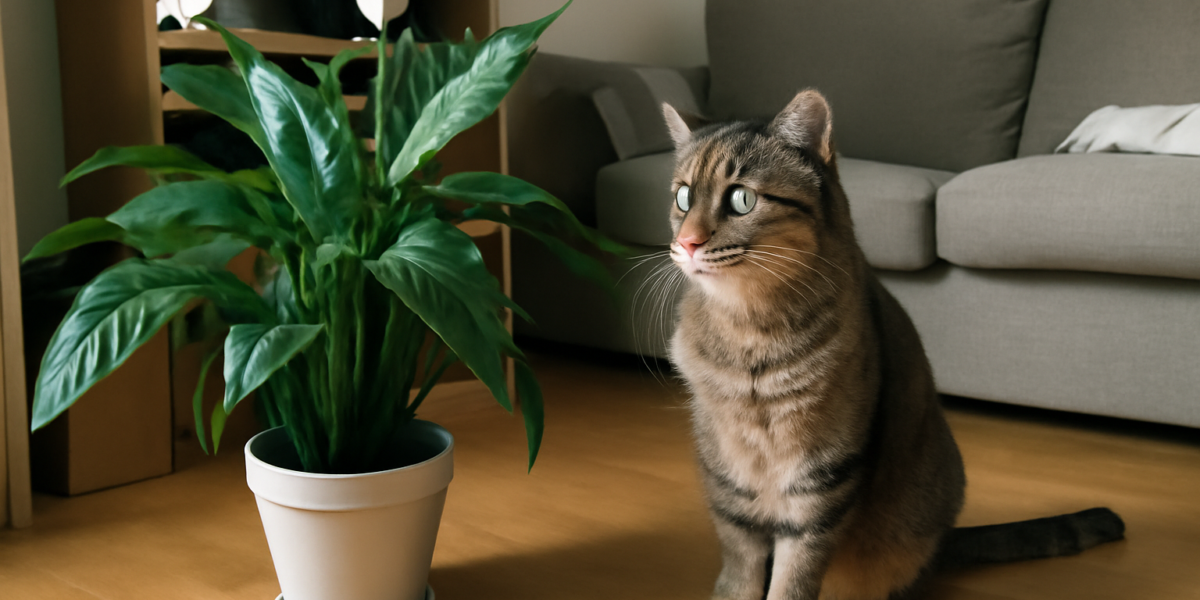
Peace lilies are among the most popular houseplants in the world. They are elegant, low-maintenance, and they thrive in low-light conditions that defeat most other plants. With their glossy dark green leaves and graceful white spathes, they bring a touch of calm sophistication to any room. Unfortunately, if you share your home with a cat, peace lilies come with an important caveat: they are toxic to felines.
The good news is that peace lily toxicity is quite different from the deadly true lily toxicity that cat owners rightfully fear. Peace lilies will not cause kidney failure like Easter lilies or tiger lilies can. But they can cause genuine pain and discomfort for your cat, and understanding the difference is essential for every cat owner. Let us break down exactly what happens when cats encounter peace lilies, how to respond, and how to keep your home both beautiful and safe.
Understanding Peace Lily Toxicity in Cats
Peace lilies (Spathiphyllum spp.) are toxic to cats because they contain insoluble calcium oxalate crystals. These microscopic, needle-shaped crystals are packed into specialized cells called idioblasts found throughout the plant — in the leaves, stems, roots, and the distinctive white spathes that many people think of as the flower.
When a cat bites into a peace lily, the mechanical action of chewing ruptures the idioblasts and releases thousands of these tiny crystal needles. The crystals immediately penetrate the soft tissue of the mouth, tongue, lips, and throat, causing intense pain and irritation. Think of it as being jabbed by hundreds of microscopic needles all at once — it is no wonder that most cats spit out the plant almost immediately and do not go back for a second bite.
This is actually a key distinction that sets peace lilies apart from more dangerous plants. The intense, immediate oral pain acts as a natural deterrent, so cats rarely ingest enough plant material to cause severe systemic toxicity. Most exposures involve a single bite or a few chews before the cat drops the plant and retreats. The primary danger is localized irritation and swelling of the mouth and throat rather than widespread organ damage.
That said, peace lily exposure should never be brushed off as “no big deal.” Significant swelling of the mouth, tongue, and throat can make it difficult for your cat to eat, drink, and in rare severe cases, breathe. The pain and discomfort can be considerable, and some cats may need veterinary intervention to manage swelling and ensure they stay hydrated during recovery.
It is crucial to understand that peace lilies are NOT true lilies. True lilies — those in the Lilium and Hemerocallis genera, such as Easter lilies, tiger lilies, and daylilies — contain an unknown compound that causes acute kidney failure in cats and can be fatal even from tiny exposures. Peace lilies, despite having “lily” in their name, belong to the Araceae family and work through an entirely different mechanism. Both are dangerous, but true lilies are in a completely different league of severity.
Symptoms of Peace Lily Exposure in Cats
The symptoms of peace lily exposure in cats are typically immediate and dramatic, which can be frightening for owners but actually works in the cat’s favor by discouraging continued chewing. Here is what you can expect to see.
The most immediate symptom is intense oral pain and discomfort. Your cat may paw frantically at their mouth, shake their head, rub their face against surfaces, and vocalize. The calcium oxalate crystals cause an immediate burning, stinging sensation that is very distressing. Excessive drooling is one of the most prominent signs — your cat may drool heavily, sometimes producing thick, ropy saliva in significant quantities.
Swelling of the lips, tongue, and oral tissues develops quickly, often within minutes of exposure. The tongue may appear visibly swollen, and you might notice your cat having difficulty closing their mouth completely. In more pronounced cases, the swelling can extend to the throat, which raises the concern of airway compromise — though this is rare.
Difficulty swallowing (dysphagia) is common and directly related to the oral and throat swelling. Your cat may gag, retch, or make repeated swallowing motions. Vomiting can occur, particularly if some plant material was actually swallowed. Loss of appetite is typical and can last for twelve to twenty-four hours or even longer as the oral irritation gradually subsides.
Some cats develop eye irritation if they rubbed their face after chewing on the plant, transferring sap or crystal particles to the eye area. You might notice squinting, tearing, or redness in one or both eyes.
Behavioral changes include hiding, reluctance to be touched (especially around the face and mouth), decreased grooming, and general listlessness. Most cats want to be left alone while they are dealing with the discomfort. Some cats may become vocal and seem agitated, particularly in the first hour after exposure.
In the vast majority of cases, symptoms are self-limiting and resolve within twenty-four hours as the irritation subsides. However, cats that swallowed more material or experienced significant swelling may need supportive care to get through the worst of it comfortably.
What to Do If Your Cat Bites a Peace Lily
If you catch your cat chewing on a peace lily or notice the telltale signs of oral irritation, here is how to respond effectively.
Remove the plant from your cat’s reach immediately, and remove any remaining plant material from your cat’s mouth if you can do so safely. Be gentle — your cat’s mouth is already irritated and painful, and they may resist having it handled. If your cat will not let you near their mouth, do not force it.
Rinse your cat’s mouth gently if they will tolerate it. You can use a syringe (without a needle) to carefully flush the mouth with water, which can help wash away some of the irritating crystals. Do not force water into your cat’s mouth, as this could cause aspiration. Some cats will accept a damp cloth gently wiped across the lips and gums.
Offer your cat something cool and soothing. A small amount of plain yogurt, milk, or even tuna water (the liquid from a can of tuna packed in water) can help coat the irritated oral tissues and provide some relief. This is one of the few situations where a small amount of dairy is actually recommended for cats, since the protein in milk and yogurt can help bind and neutralize some of the calcium oxalate crystals.
Call your veterinarian to report the exposure. Describe what happened, when it occurred, how much plant material you think your cat consumed, and what symptoms you are observing. Your vet will advise whether a clinic visit is needed or whether home monitoring is sufficient based on the specific circumstances.
Watch for signs of significant swelling, especially around the throat. If your cat appears to be having difficulty breathing — open-mouth breathing, audible wheezing, or visible distress — this is an emergency and you should go to the vet immediately. While severe airway swelling from peace lily exposure is rare, it is the one symptom that demands urgent intervention.
If you are thinking about adopting a cat, take the time before bringing your new companion home to replace any toxic houseplants with safe alternatives. Cats are curious by nature, and a freshly adopted cat exploring a new environment is especially likely to investigate and taste-test every plant they find.
Veterinary Treatment for Peace Lily Exposure
Most cases of peace lily exposure in cats can be managed at home with monitoring and comfort measures. However, your vet may recommend a clinic visit if your cat consumed a significant amount of plant material, if swelling is pronounced, or if your cat is unable to eat or drink.
At the veterinary clinic, treatment focuses on managing pain, reducing swelling, and preventing dehydration. Pain management may include anti-inflammatory medications to bring down the oral and throat swelling. Some veterinarians will administer antihistamines, which can help reduce the inflammatory response to the calcium oxalate crystals.
If your cat is unable to eat or drink due to oral pain and swelling, subcutaneous or intravenous fluids may be given to prevent dehydration. This is particularly important for cats that go twelve or more hours without drinking, as dehydration can develop quickly in cats.
For cats with eye irritation from crystal exposure, the vet will flush the eyes with sterile saline and may prescribe eye drops to address inflammation and prevent secondary infection. If corneal damage is suspected, a fluorescein stain test will be performed to check for scratches on the eye surface.
Gastroprotective medications may be given if your cat swallowed plant material and is experiencing nausea or vomiting. Anti-nausea medications can help keep food and water down once the oral irritation has subsided enough for your cat to consider eating again.
The prognosis for peace lily exposure is excellent. The overwhelming majority of cats recover completely within twelve to twenty-four hours, with the worst of the symptoms passing within the first few hours. Complications are rare, and long-term effects are essentially unheard of. The biggest risk is dehydration from inability to drink, which is easily managed with fluid support.
Preventing Peace Lily Exposure in Your Home
Cats and houseplants have a complicated relationship. Cats are naturally attracted to greenery — whether it is to nibble, bat at, or simply knock off a shelf for entertainment — so prevention requires understanding your cat’s behavior and tendencies.
The most foolproof approach is simply to remove peace lilies from your home. If you love the aesthetic, there are visually similar non-toxic plants that can fill the same role in your decor without any risk to your cat. We will cover those in the next section.
If you are determined to keep your peace lily, placement is everything. Put it in a room that your cat absolutely cannot access — not a room with a door that is “usually” closed, but one that is reliably, consistently sealed off. Remember that cats can open lever-style door handles, push through doors that are not fully latched, and squeeze through gaps that seem impossibly narrow.
Hanging planters can work if they are high enough and there is no furniture, shelf, or surface that your cat could use as a launch pad to reach them. Cats are remarkably athletic jumpers and climbers, so “high enough” is higher than most people initially estimate. Also consider that hanging plants can drop leaves, which can land within your cat’s reach.
Deterrent sprays with bitter or citrus scents can be applied to the plant’s pot and surrounding area. Many cats dislike citrus, and bitter apple spray can discourage chewing. However, these deterrents are not effective with all cats and should not be relied upon as your primary prevention strategy.
Providing cat-safe plants that your cat is allowed to interact with can redirect their attention away from forbidden foliage. Cat grass (wheatgrass), catnip, and silver vine are all safe options that many cats enjoy. A dedicated “cat garden” of safe plants can satisfy your cat’s desire to interact with greenery.
Browse our cat breeds directory for breed-specific insights on behavior and care, including which breeds tend to be the most plant-curious and may need extra supervision around houseplants.
Safe Houseplant Alternatives to Peace Lilies
If you love the look of peace lilies — the dark green foliage, the elegant white blooms, the ability to thrive in low light — you have several beautiful and cat-safe alternatives to choose from.
Parlor palms (Chamaedorea elegans) are one of the best substitutes. They share the peace lily’s love of indirect light, they have lush green fronds that bring a tropical feel to any room, and they are completely non-toxic to cats. They are also very forgiving of inconsistent watering, making them great for busy households.
Calathea and Maranta species (prayer plants) are stunning, cat-safe options with patterned leaves that add visual interest far beyond what a peace lily offers. They fold their leaves up at night and open them in the morning, providing a living decoration that changes throughout the day. They prefer similar light and humidity conditions to peace lilies.
African violets (Saintpaulia) give you flowering beauty without toxicity. They produce blooms in purple, pink, white, and bicolor combinations and are perfectly safe for cats. They prefer bright indirect light but can tolerate lower light conditions.
Cast iron plants (Aspidistra elatior) are virtually indestructible, non-toxic houseplants with glossy, dark green leaves. They thrive in low light and tolerate neglect remarkably well, making them ideal for dimmer corners where a peace lily might otherwise go.
Boston ferns bring lush, cascading greenery to hanging baskets and shelves and are completely safe for cats. Their fronds can be tempting for playful cats to bat at, but at least there is no health risk involved. Spider plants are another safe trailing option, though many cats find them irresistible to chew — the good news is they are non-toxic, so the worst that happens is a slightly tattered plant.
Orchids (Phalaenopsis and most other common varieties) are elegant, long-blooming, and non-toxic to cats. They can provide the same sophisticated aesthetic as a peace lily’s white spathe while being completely safe for your feline housemate.
Frequently Asked Questions
Are peace lilies as dangerous as true lilies for cats?
No, and this is a critically important distinction. True lilies — species in the Lilium and Hemerocallis genera, such as Easter lilies, tiger lilies, and daylilies — cause acute kidney failure in cats and can be fatal even from the smallest exposure. Peace lilies (Spathiphyllum) are in a completely different plant family and cause localized oral and throat irritation from calcium oxalate crystals, not kidney damage. While peace lily exposure is painful and unpleasant, it is far less dangerous than true lily exposure. Both should be taken seriously, but true lily exposure is a life-threatening emergency.
Will my cat need to go to the hospital if they bite a peace lily?
Most cats do not require hospitalization for peace lily exposure. The majority of cases involve mild to moderate oral irritation that resolves on its own within twelve to twenty-four hours with home monitoring and comfort care. However, you should still call your veterinarian to report the exposure. A vet visit is recommended if your cat has significant swelling of the mouth or throat, is unable to eat or drink for more than twelve hours, shows signs of difficulty breathing, or if a large amount of plant material was consumed. Your vet can guide you on whether a visit is necessary based on your cat’s specific situation.
How long do symptoms last after a cat bites a peace lily?
Symptoms from peace lily exposure typically peak within the first one to four hours and then gradually improve. Most cats are back to normal within twelve to twenty-four hours. The initial intense drooling and pawing at the mouth usually subsides within a few hours as the sharp crystals become less active in the tissue. Reduced appetite may persist for a full day as the mouth heals. If symptoms have not shown significant improvement within twenty-four hours, or if they seem to be getting worse rather than better, contact your veterinarian for a reassessment.
Can peace lily exposure affect my cat’s eyes?
Yes, if your cat rubs their face after chewing on a peace lily, they can transfer calcium oxalate crystals to the eye area. This can cause eye irritation including redness, tearing, squinting, and swelling of the eyelids. If you notice any eye symptoms, flush the eye gently with clean water or sterile saline and contact your veterinarian. Eye involvement should be evaluated by a professional to rule out any damage to the cornea and to provide appropriate treatment such as medicated eye drops.
My cat knocked over my peace lily but did not eat it — should I still be concerned?
If your cat only knocked the plant over without chewing on it, the risk is minimal. The toxic calcium oxalate crystals are released when the plant tissue is broken by chewing, so simply touching or knocking over the plant is unlikely to cause problems. However, check your cat’s paws and fur for any sap residue, and watch for any signs of oral irritation in case they took a taste you did not witness. Clean up the spilled soil and plant material promptly to prevent your cat from investigating further and potentially taking a nibble while you are not watching.
Are peace lilies toxic to dogs as well?
Yes, peace lilies are toxic to dogs through the same mechanism — insoluble calcium oxalate crystals that cause oral irritation, drooling, and gastrointestinal symptoms. Dogs that chew on peace lilies will experience similar mouth pain, swelling, and drooling as cats. If you have both dogs and cats in your household, the safest approach is to replace peace lilies with non-toxic alternatives. Visit our dog breeds directory for more information on keeping your canine companions safe and healthy.
Can I keep a peace lily in my office if I do not have pets there?
Absolutely. Peace lilies are only a concern in spaces where cats or dogs have access. If your office or workspace is entirely pet-free, peace lilies make excellent office plants — they tolerate fluorescent lighting, purify indoor air, and require minimal care. Just be mindful if coworkers ever bring pets to the office, and consider the safety of any visitors’ pets if you work from home and occasionally have pet-owning guests.


