Last updated: May 16, 2026
In this article
- Reassurance First: Coriander Plants Are Generally Safe Around Pets
- Meet Coriandrum Sativum: One Plant, Two Famous Names
- The Aromatic Chemistry of Coriander
- Critical Identification: Coriander Versus Poison Hemlock
- The Whole Plant Is Edible and Pet-Safe in Normal Quantities
- What “Generally Safe” Means in Practice
- Symptoms That Would Warrant a Vet Call
- Coriander/Cilantro for Pets in Food: The Reasonable Picture
- Companion Pet-Safe Herb-Garden Plants
- Growing Coriander with Pets: Practical Tips
- Frequently Asked Questions
Reassurance First: Coriander Plants Are Generally Safe Around Pets
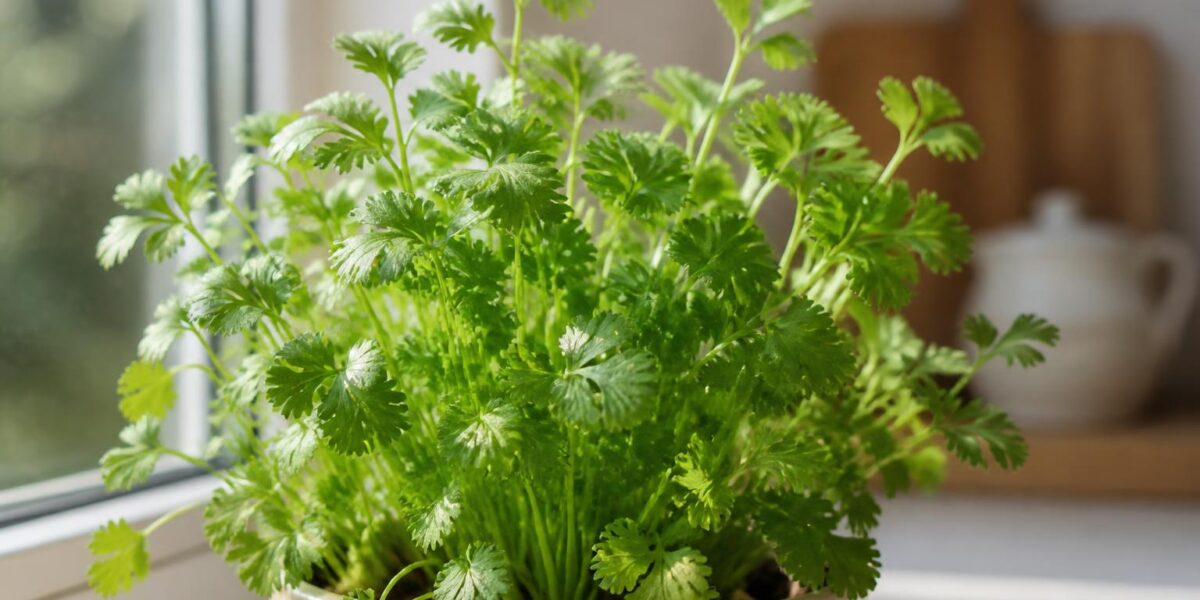
If you grow coriander (Coriandrum sativum) — the same plant Americans more often call cilantro — in your kitchen herb garden, the live plant itself is generally considered safe around dogs and cats per ASPCA framing. ASPCA does not list Coriandrum sativum as toxic to either species. The leaves (cilantro), the seeds (coriander spice), the flowers, and the stems are all part of one plant, and a pet that nibbled a leaf or pulled at a stem is unlikely to develop more than possible mild GI upset from the simple act of eating plant material outside its normal diet.
Two things are worth naming up front. First, “coriander” and “cilantro” are the same plant — coriander typically refers to the seeds (used as a whole or ground spice) and cilantro typically refers to the fresh leaves and stems (used as a fresh herb). Both are Coriandrum sativum and both are pet-safe in normal kitchen exposure. Second, do not confuse coriander seeds with poison hemlock seeds — both plants are in the carrot family, Apiaceae, and visual confusion at the seedling stage has occasionally caused tragic consequences. Identification before harvest matters; this article devotes a section to it.
Meet Coriandrum Sativum: One Plant, Two Famous Names
Coriandrum sativum is an annual herb in the carrot family, Apiaceae — the same family as carrots, parsley, dill, fennel, celery, and parsnip. It grows quickly from seed to flowering plant, with a typical life cycle of just a few months in warm weather. Young plants produce the broad, tender leaves used as cilantro; as the plant ages and stems elongate (“bolts”), the leaves narrow and the plant produces lacy white flower umbels followed by round, ridged seeds. Those mature seeds are coriander.
The flavor profiles of leaf and seed are completely different. Cilantro leaves have a fresh, citrusy, slightly soapy taste that famously divides the population — a small percentage of people perceive cilantro as soapy due to a genetic variation in olfactory receptors. Coriander seeds taste warm, lightly citrus, vaguely lemony, and are used in everything from Indian curry blends to Belgian witbier. Pets are generally indifferent to the flavor in either form, neither attracted to the leaves nor especially repelled.
The Aromatic Chemistry of Coriander
The leaves and seeds contain different aromatic profiles. Cilantro leaf oil is dominated by aldehydes, particularly the long-chain aldehydes like decanal and dodecenal, which produce the bright, slightly soapy aroma. Coriander seed oil is dominated by linalool, with smaller amounts of pinene, camphor, and limonene. These compounds are present at culinary-relevant concentrations in fresh material and at much higher concentrations in distilled essential oils.
For pets, the fresh-plant exposure scenario is reassuringly mild. ASPCA does not list cilantro/coriander as toxic, and veterinary literature does not flag specific concerns for the plant in normal use. Concentrated essential oils are a different exposure category and would be handled with the same caution as other Apiaceae and Mediterranean-herb oils. Most home gardeners and home cooks will never encounter concentrated coriander oil; the realistic safety picture is the kitchen-and-garden picture, and that picture is reassuring.
Critical Identification: Coriander Versus Poison Hemlock
This deserves its own section because the consequences of a mix-up are severe. Coriandrum sativum is in the family Apiaceae, and that family includes some of the most dangerously toxic plants in temperate gardens — poison hemlock (Conium maculatum), water hemlock (Cicuta species), and fool’s parsley (Aethusa cynapium) among them. All produce lacy white flower umbels and finely divided ferny leaves that, at certain growth stages, can superficially resemble cilantro or parsley.
- Coriander/cilantro (Coriandrum sativum) — Smooth green stems. Lower leaves rounded and broader; upper leaves finely divided. Lacy white flower umbels on slender stems. Fresh leaves smell strongly citrusy when crushed.
- Poison hemlock (Conium maculatum) — Stems with distinctive purple or red blotches and streaks. Tall (3 to 8 feet at maturity) with finely divided ferny leaves. Lacy white flower umbels. Crushed leaves have a characteristic mousy, unpleasant odor. SEVERE-tier toxic — coniine alkaloid causes paralysis, respiratory failure, and death.
- Water hemlock (Cicuta species) — Hollow stems, often with purple streaks. Grows in wet areas. White flower umbels. SEVERE-tier toxic — cicutoxin causes seizures and death.
The takeaway: if you forage wild “cilantro-looking” plants for food or your dog roams in wild areas where these plants grow, stem coloration and crushed-leaf smell are the quick-check identifiers. If a pet ingests an unknown carrot-family plant from a wild area or roadside, treat it as a possible hemlock exposure and call your veterinarian, ASPCA APCC at 888-426-4435, or Pet Poison Helpline at 855-764-7661 right away.
The Whole Plant Is Edible and Pet-Safe in Normal Quantities
One of the practical attractions of coriander for kitchen gardeners is that almost the whole plant is usable and reasonably safe in pet households. Leaves go into salsa, curry, chutney, and salads. Stems are tender and contribute to leaf-flavored uses. Roots are used in Thai cooking as a fragrant aromatic for curry pastes. Flowers are edible and lightly cilantro-flavored. Seeds (coriander) are used dried as a spice. Sprouts (microgreens) are used as a fresh garnish.
Pets that lick up a small amount of any of these are unlikely to have problems. The bigger questions in shared kitchen scenarios are usually about the rest of the dish — whether onion, garlic, salt, chili, or other co-ingredients are concerning. Plain coriander on its own is one of the lower-priority items on a kitchen-spill checklist for pet households.
What “Generally Safe” Means in Practice
Calling coriander “generally safe” still leaves room for the same handful of practical caveats that apply to any kitchen herb:
- Volume effects. A pet that nibbled a leaflet is fine. A pet that demolished a whole pot of cilantro could develop GI upset purely from volume.
- Seed-handling concerns. Whole coriander seeds are small but firm; large amounts swallowed quickly could mechanically irritate the gut, particularly in small pets. Ground coriander spice in normal kitchen quantities is non-issue.
- Apiaceae-family awareness. Some Apiaceae plants can produce furanocoumarins that make skin photosensitive when contacted and then exposed to sun. Coriander is not a major furanocoumarin producer, but pets that brush against bolting cilantro and then sit in the sun are at very low risk for mild contact dermatitis.
- Concentrated essential oil. The fresh plant is mild; distilled coriander oil is concentrated. Use in diffusers around cats deserves the standard cat-essential-oil caution.
None of these turn cilantro/coriander into a hazard. They are the watch-for-this list for outlier scenarios.
Symptoms That Would Warrant a Vet Call
For most pets and most coriander interactions, no veterinary intervention is needed. Call your vet if you see:
- Repeated vomiting or persistent diarrhea over 12 to 24 hours after a large plant or seed ingestion
- Apparent abdominal pain or refusal to eat
- Lethargy or weakness — particularly relevant if there is any chance the ingested plant might have been hemlock instead of cilantro
- Drooling that does not resolve within a few hours
- Rapid breathing, weakness, tremors, or any neurological signs after a wild-foraged “cilantro-looking” plant ingestion (treat as possible hemlock — emergency)
For any wild Apiaceae ingestion where the species is not absolutely confirmed, do not wait — call ASPCA APCC at 888-426-4435 or Pet Poison Helpline at 855-764-7661 with the best plant photo you have. Cultivated kitchen-garden cilantro from your own pot is a low-priority watch-at-home situation.
Coriander/Cilantro for Pets in Food: The Reasonable Picture
Some pet owners ask whether coriander is safe to add to a dog’s food in small quantities. ASPCA does not flag the plant as toxic, and small fresh sprigs are not specifically problematic. Trace amounts in homemade dog food, sprinkled fresh on top of a meal as a garnish, are generally tolerated by most healthy dogs.
The recommendations get more cautious for cats. Cats are obligate carnivores and herbal additions to their food are generally unnecessary; the cat may simply ignore cilantro or eat around it. Cats with sensitive digestion can have mild GI reactions to any new food addition, herb included. As with any dietary change, ask your vet before making cilantro a regular addition rather than an occasional accidental sample.
Companion Pet-Safe Herb-Garden Plants
Coriander/cilantro fits squarely in the safe-for-pets quadrant of the kitchen herb-garden landscape. Other Apiaceae cousins covered on Walk Me Home Rescue with similar reassuring framing include dill, fennel, and parsley. The four of them — coriander, dill, fennel, parsley — are the workhorse Apiaceae kitchen herbs for pet households.
Outside the carrot family, the other reassurance-tier kitchen herbs worth knowing are basil and lemongrass. For broader pet-safe planting decisions, the cat-safe houseplants guide and dog-safe houseplants guide are the right starting points. Coriander is one of the easier herbs to grow indoors year-round on a sunny kitchen windowsill, and its short life cycle means a single packet of seed produces a year’s worth of staggered plantings.
Growing Coriander with Pets: Practical Tips
Coriander is straightforward to grow but bolts (goes to flower and seed) quickly in hot weather. The kitchen-garden trick is staggered plantings: sow new seed every two to three weeks during the growing season so a new patch is always producing tender leaves while the older patch is producing seeds. Choose slow-bolting cilantro varieties for hot climates, and grow in part shade once summer temperatures climb above 80 degrees.
For pet households, the layout decisions are simple. Coriander is a small plant happy in a 6 to 8-inch pot or a corner of an outdoor bed. Sweep dropped leaves and seed heads promptly — not for toxicity reasons, but to keep the kitchen tidy and avoid encouraging dogs or cats to graze the area. Allow some plants to fully bolt and produce seed; the dried seed is the spice itself, and a single mature plant produces more coriander seed than most kitchens will use in a year. Save the harvest in a closed jar.
Frequently Asked Questions
Is cilantro the same as coriander?
Yes — same plant, Coriandrum sativum. In American English, “cilantro” usually refers to the fresh leaves and stems and “coriander” usually refers to the dried seeds. In British English, “coriander” can mean either. They are not separate plants.
Can I share cilantro from my garden with my dog?
Plain fresh cilantro in small quantities is generally well-tolerated by most healthy adult dogs. Skip the dish-sharing approach if the cilantro is mixed with onion, garlic, salt, or chili — those are the bigger concerns. Talk to your vet before making it a regular dietary addition.
What if my cat ate a chunk of coriander seed?
Whole coriander seeds in small amounts are unlikely to cause more than mild GI upset. Watch for vomiting, gagging, or appetite changes for 24 hours and call your vet if anything progresses. Larger volumes — say, a tipped-over spice jar that the cat got into — warrant a quicker call to ASPCA APCC at 888-426-4435 or Pet Poison Helpline at 855-764-7661.
How do I tell cilantro from poison hemlock in the wild?
The reliable quick-checks are stem coloration and smell. Cilantro stems are smooth and green; hemlock stems are blotched with purple or red. Cilantro leaves smell brightly citrusy when crushed; hemlock leaves smell mousy and unpleasant. Hemlock is also typically much taller (3 to 8 feet) than cilantro at the same age. If you forage in wild areas with pets, do not eat or feed unknown carrot-family plants without confident identification.
Is coriander essential oil safe to diffuse around cats?
Skip it. The same cat-specific essential-oil caution applies as for cinnamon, bay laurel, and lemongrass. Cats lack the liver enzymes to clear certain aromatic compounds efficiently, and diffuser residue settles on fur the cat then grooms. Use the fresh plant freely; skip the oil bottle.