Last updated: April 11, 2026
In this article
Few dogs command as much respect — and as much caution — as the belgian malinois. Sleek, focused, and seemingly inexhaustible, this breed has earned a reputation as one of the premier working dogs in the world. It serves alongside military special operations units, police departments, border patrol agencies, and search-and-rescue teams across the globe, often performing tasks that no other dog could handle. That resume is genuinely impressive. It is also a warning. The belgian malinois is not a dog you choose because it looks athletic or because you saw one on a documentary. It is a dog you choose when you are fully prepared to meet its extraordinary demands every single day — and when you have the experience and lifestyle to back that commitment up.
| Origin | Belgium (city of Malines) |
|---|---|
| Size | Medium to Large |
| Weight | 40–80 lbs |
| Height | 22–26 inches at the shoulder |
| Lifespan | 14–16 years |
| Coat | Short, dense double coat; fawn to mahogany with black overlay and black mask |
| Temperament | Intense, driven, loyal, highly intelligent, alert, protective |
| Good With | Experienced, active owners; requires extensive early socialization with children and other pets |
Personality & Temperament
The belgian malinois is not a dog with an “off” switch. Where other breeds can settle into a comfortable pace of life — some exercise, some rest, some affection — the Malinois operates at a different level entirely. This breed is built for relentless purpose. It is observant to the point of being hypervigilant, driven to the point of being obsessive, and loyal to the point that it will follow your lead into nearly any situation without hesitation. In the right hands, those qualities produce one of the most extraordinary partnerships in the canine world. In the wrong hands, they produce a dog that becomes destructive, anxious, and potentially dangerous.
With its person or family, the Malinois is deeply bonded and intensely devoted. It is not the kind of dog that tolerates indifference well — it wants engagement, direction, and a clear sense of purpose. It is not aggressive by nature, but it is protective, alert, and confident enough to act on its own judgment if it perceives a threat. That instinct must be channeled through rigorous training and socialization from a very early age.
This is emphatically not a breed for casual or first-time dog owners. This working dog needs an owner who understands working dog psychology, who can provide consistent and firm leadership, and who is prepared to dedicate real time every day to training and exercise. For those owners, it is one of the most rewarding breeds imaginable. For everyone else, it is a dog that is far better admired from a distance.
Appearance
In appearance, the Malinois is a study in functional elegance. It has the lean, muscular build of a true athlete — nothing wasted, nothing exaggerated. Standing 22 to 26 inches at the shoulder and weighing between 40 and 80 pounds, it is lighter and more agile than it sometimes appears, capable of explosive bursts of speed and remarkable endurance over distance.
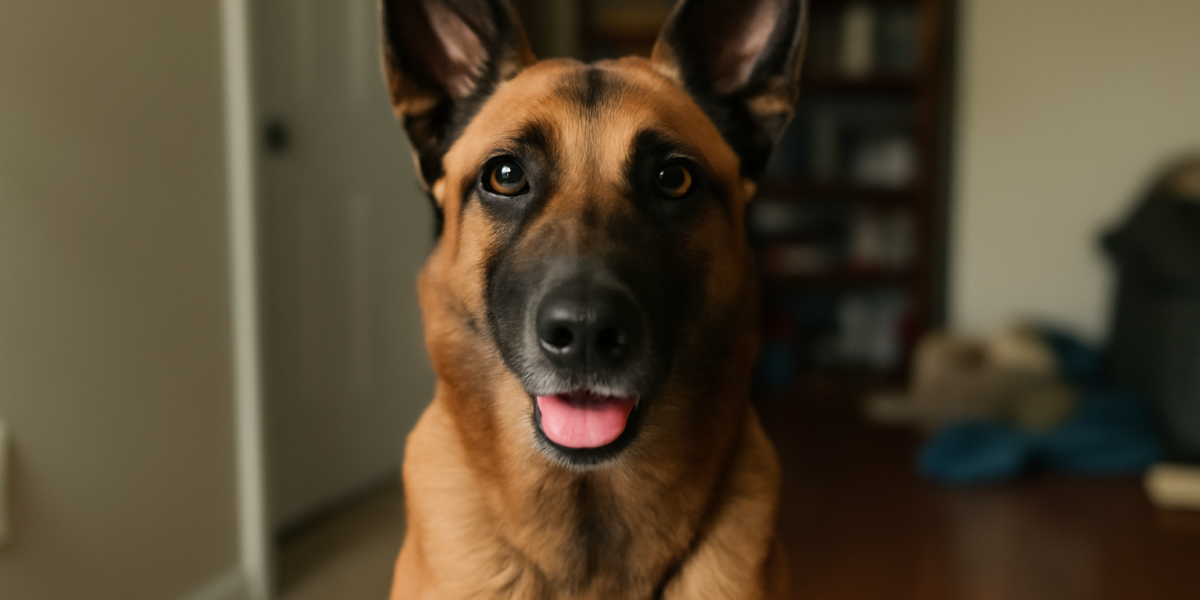
The coat is short and dense, ranging in color from a warm fawn through rich mahogany, typically overlaid with black-tipped hairs that deepen in shade across the back and sides. The defining characteristic of the Malinois face is the black mask — a dark coloring that covers the muzzle and ears and gives the dog an intense, focused expression that matches its personality precisely. The eyes are dark brown, almond-shaped, and alert.
The breed is frequently compared to the German Shepherd, and while there is a superficial resemblance, experienced eyes will note the differences quickly. The Malinois is squarer in build, lighter in bone, and carries its body with a more upright, forward energy. Where the German Shepherd has a more sloping topline and a heavier frame, the Malinois is taut, level, and always appears ready to move.
Exercise Needs
If there is one thing that prospective owners must understand before bringing a belgian malinois home, it is this: this breed’s exercise requirements are not a suggestion, and they are not comparable to those of a typical active dog. The Malinois was bred to work all day, and its body and mind expect to do exactly that.
A minimum of two hours of vigorous exercise daily is not unusual for this breed — and that exercise needs to be genuinely demanding. A brisk walk does not cut it. Running, cycling, hiking, agility training, Schutzhund (protection sports), tracking, nose work, and obedience competitions are all excellent outlets. Many Malinois owners discover that organized dog sports are not just helpful but essential: they provide structured physical and mental challenge that casual exercise cannot replicate.
The phrase commonly used in working dog circles is that the Malinois needs a job. It is not enough to drain its energy — it needs to feel purposeful. A Malinois that is under-exercised or under-stimulated will redirect its considerable drive into behaviors that most owners find unmanageable: relentless pacing, destructive chewing, obsessive behaviors, and in some cases aggression born of frustration. A well-exercised Malinois, by contrast, is focused, responsive, and genuinely joyful. For more guidance on meeting high-energy breed needs, visit our dog care blog.
Grooming Needs
Relative to the intensity of everything else about this breed, grooming is refreshingly straightforward. The breed’s short, dense double coat is designed for practicality — it repels dirt and moisture reasonably well, does not mat or tangle, and requires only modest maintenance during most of the year.
Weekly brushing with a firm bristle brush or a rubber grooming tool is sufficient to remove loose hair and keep the coat in good condition. The Malinois does shed year-round at a moderate level, with heavier shedding occurring twice a year during seasonal coat changes in spring and autumn. During those periods, daily brushing will help manage the volume and keep loose hair from accumulating on furniture and clothing.
Bathing is needed only occasionally — roughly every six to eight weeks, or when the dog is genuinely dirty after outdoor work. Beyond the coat, standard routine care applies: check and clean the ears weekly to prevent debris buildup and early signs of infection, trim nails every three to four weeks or as needed, and maintain regular dental hygiene. Teeth brushing several times a week significantly reduces the risk of periodontal disease over the dog’s lifetime. Given that the Malinois is a working dog that may be spending significant time outdoors in varied terrain, routine checks for cuts, thorns, and other minor injuries to the paws and skin are also a sensible habit.
Health & Common Issues
The Malinois is, on balance, a hardy and long-lived breed. Its history as a working dog selected for genuine performance rather than aesthetic characteristics has helped preserve a relatively robust gene pool, and its average lifespan of 14 to 16 years is impressive for a dog of its size and activity level. That said, there are health conditions that prospective owners and adopters should be aware of going in.
Hip and elbow dysplasia are the most commonly discussed orthopedic concerns in the Malinois. These are developmental conditions in which the relevant joints do not form correctly, leading to discomfort, reduced mobility, and arthritis over time. Responsible breeders screen for both conditions, and maintaining a healthy weight with appropriate exercise throughout puppyhood reduces long-term risk considerably.
Progressive retinal atrophy (PRA) is an inherited degenerative eye disease that causes gradual vision loss and can progress to complete blindness. DNA testing can identify carriers and affected dogs, which is why health-tested breeding programs remain important even in working lines.
Cataracts can also develop in the breed, sometimes appearing in younger dogs rather than only in seniors. Annual eye examinations by a veterinary ophthalmologist are a worthwhile investment. Additionally, as with many high-drive working breeds, the Malinois can be susceptible to anxiety-related conditions if its needs for exercise and mental stimulation are chronically unmet — another reason why proper management of this breed matters deeply to its long-term wellbeing.
Are Belgian Malinois Good With Kids and Other Pets?
The honest answer is: it depends entirely on the dog’s upbringing, the owner’s experience, and the household’s ability to manage interactions carefully and consistently. This is not a naturally gentle, easygoing family dog in the way that a Golden Retriever or Labrador might be. Its herding instincts, high prey drive, and intense energy require a level of supervision and structure that not every household can realistically provide.
With older children who understand how to behave around a dog — reading its signals, not roughhousing unpredictably, respecting its space — a well-trained and well-socialized Malinois can coexist successfully and even form strong bonds. The breed’s loyalty and protectiveness can make it genuinely devoted to the children in its family. However, interactions with toddlers and very young children should always be closely supervised. The Malinois’s speed, intensity, and herding instinct can easily overwhelm small children without any aggressive intent whatsoever.
With other pets, early socialization is critical. The Malinois’s prey drive is significant, and cats, small animals, and even other dogs can trigger chase responses if the dog has not been carefully introduced and trained from a young age. Experienced owners who socialize their Malinois thoroughly from puppyhood tend to report better outcomes with multi-pet households, but it is never something to take for granted with this breed.
Training Tips
This breed is one of the most trainable dogs on the planet — which is precisely why it is so widely used in professional working roles. It picks up new behaviors quickly, retains what it learns with impressive reliability, and thrives on having a clear and challenging task to perform. That trainability, however, comes with a caveat: a dog this intelligent needs training that respects its intelligence. Repetitive, slow, or inconsistent sessions will lose its attention fast.
Positive reinforcement is the most effective training foundation for the Malinois. High-value rewards — food, toys, or the opportunity to engage in a favorite activity — paired with clear, consistent commands produce excellent results. Harsh corrections or punishment-based methods tend to backfire with this breed, either creating anxiety and defensiveness or eroding the trust that makes the dog such a responsive partner. Structure and high expectations are essential; arbitrary or harsh discipline is counterproductive.
Early socialization is non-negotiable. Begin exposing your Malinois puppy to a wide variety of people, environments, sounds, and other animals as early and as positively as possible. Enroll in obedience classes, continue training into adolescence, and seriously consider pursuing a dog sport or structured working activity that gives the dog a legitimate outlet for its drive. Many Malinois owners find that the commitment to formal training transforms not just the dog’s behavior but the entire relationship — creating a level of communication and partnership that is genuinely extraordinary.
History & Origin
The breed takes its name from the Belgian city of Malines (known in Flemish as Mechelen), where it was developed in the late nineteenth century as one of four varieties of Belgian Shepherd. The four varieties — the Malinois, Tervuren, Groenendael, and Laekenois — were all developed in different regions of Belgium and distinguished primarily by coat type and color. The Malinois’s short, fawn-to-mahogany coat with its distinctive black mask made it particularly practical for working in the field.
Belgian shepherds were originally bred as herding and farm dogs, and the Malinois proved to be among the most driven and versatile of the group. As herding gave way to other demands, the breed’s intelligence and trainability brought it rapidly into police and military work in Belgium and across Europe in the early twentieth century. During World War I, Belgian Malinois served as messenger dogs, ambulance dogs, and cart pullers on the front lines.
In the decades that followed, the breed’s working applications only expanded. Today, the belgian malinois is the dog of choice for many of the world’s most elite military and law enforcement units. It gained widespread public attention when a Malinois named Cairo accompanied the U.S. Navy SEALs on the 2011 operation that resulted in the death of Osama bin Laden. That moment crystallized, for many, just how seriously the world’s most demanding operators take this breed — and why.
Frequently Asked Questions
Is the belgian malinois a good family pet?
This working dog can be a deeply loyal and rewarding companion for the right family, but it is not a good fit for the average household. Families with significant dog experience, an active outdoor lifestyle, and the time to commit to rigorous training and daily exercise will find the Malinois exceptional. Families looking for a relaxed, adaptable pet that slots easily into a busy modern schedule will find it overwhelming. The breed’s needs are real, constant, and non-negotiable — and that is not a criticism of the dog, simply an honest description of what it requires.
How is the belgian malinois different from the German Shepherd?
While the two breeds are sometimes confused at a glance, they are distinct in build, energy level, and temperament. The Malinois is lighter and more square-bodied, with a shorter coat and a more intense, higher-octane working drive. German Shepherds are generally considered somewhat more adaptable to family life and slightly easier to manage for the average experienced owner. The Malinois is typically preferred in elite military and police roles precisely because its drive is so concentrated — but that same quality makes it more demanding as a household companion. Both breeds are intelligent, loyal, and trainable; the Malinois simply operates at a higher intensity across the board.
How much exercise does a belgian malinois need?
Plan for a minimum of two hours of vigorous exercise daily, and understand that mental stimulation must accompany physical activity. Running, hiking, agility, tracking, nose work, and protection sports are all appropriate outlets. A Malinois that receives only casual walking or yard time will become bored, anxious, and destructive. Many owners who have successfully kept this breed describe exercise as the central organizing principle of their day — and they would not have it any other way.
Are belgian malinois used by the military and police?
Yes — extensively. The belgian malinois is the dominant breed in many military and law enforcement working dog programs around the world, including those of the U.S. military, the FBI, the Secret Service, and numerous international agencies. Their combination of intelligence, trainability, athleticism, agility, and intense drive makes them ideally suited to roles including patrol, detection, search and rescue, and personal protection. The breed’s fame grew considerably after its role in the 2011 Navy SEAL raid became publicly known, though working Malinois had been serving in these capacities for decades before that moment brought them into the spotlight.
Adopt a Belgian Malinois
If you have the experience, the lifestyle, and the genuine commitment that the belgian malinois requires, adoption is always worth exploring first. Malinois do appear in shelters and breed-specific rescues — often surrendered by owners who were captivated by the breed’s reputation but unprepared for its daily reality. Those dogs deserve a second chance with someone who truly understands what they need.
Browse available dogs on the Walk Me Home dog adoption page to see working breeds and high-energy dogs currently looking for homes. You can also explore our dog care blog for practical guidance on bringing a demanding breed into your home, building a training foundation, and creating the kind of structured, enriching life that a dog like the Malinois needs to thrive. The right match, made thoughtfully, is one of the most rewarding partnerships in the world of dogs.
Looking to adopt a Belgian Malinois Breed Profile?
Browse Belgian Malinois Breed Profile dogs and mixes available for adoption from shelters and rescues near you.
Find Belgian Malinois Breed Profile Dogs for Adoption