Last updated: May 4, 2026
In this article
- Akita vs American Akita at a Glance
- History and Origin
- Size and Appearance
- Temperament and Personality
- Trainability and Mental Stimulation
- Exercise Needs
- Grooming and Coat Care
- Health and Lifespan
- Rescue Availability and Cost
- Living Day-to-Day with an Akita
- Compared with Other Japanese and Primitive Breeds
- Which Is Right for You
- Adoption Process and Preparation
- Frequently Asked Questions
Akita vs American Akita at a Glance
The akita vs american akita comparison is genuinely confusing for most adopters because the two are recognized differently depending on where you live. In the United States, the AKC recognizes a single breed called the “Akita” — that breed is what the rest of the world calls the American Akita. The original, smaller, more fox-like Japanese form is recognized by the FCI and Japan Kennel Club as the “Akita Inu” or Japanese Akita. Functionally, you are choosing between two distinct types within one historical breed, and the daily-life implications are real.
In short: the Akita Inu (Japanese form) is the smaller, more fox-faced original — typically 65 to 90 pounds, with a narrow color range (red, sesame, brindle, or pure white) and a slightly more refined temperament. The American Akita is the larger Western-divergent type — 80 to 130 pounds, broader head, broader color range including black mask and pinto, and a more guard-dog-oriented temperament.
Below we compare them across origin, build, temperament, training, exercise, health, grooming, and rescue realities so you can understand which type you are actually meeting in adoption.
History and Origin
The Akita originated in the mountainous Akita Prefecture of northern Japan, where the breed was developed for hunting large game (bear, boar, and elk) and for guarding. The breed was nearly lost twice — during a 1920s rabies cull and during World War II, when food scarcity and military demand for fur drove most Japanese dogs to slaughter. Postwar restoration efforts focused on returning the breed to its original Japanese type.
American servicemen stationed in Japan after WWII brought Akitas home, and the breed was bred forward in the US along somewhat different selection lines — larger, broader-headed, and accepting of color patterns that the Japanese standard rejects. By the 1990s, the FCI recognized the two types as separate breeds (Akita Inu vs American Akita), while the AKC continues to recognize a single breed under the name “Akita” (effectively the American Akita standard).
Helen Keller is famously credited with bringing the first Akita to the United States in 1937. The story of Hachiko — the loyal Akita who waited daily at Shibuya Station for his deceased owner from 1925 to 1935 — remains the breed’s most famous cultural reference.
Size and Appearance
Japanese Akitas (Akita Inu) stand 24 to 27 inches at the shoulder and weigh 65 to 90 pounds. The fox-like face is narrower than the American type, and the accepted colors are red (with white markings called “urajiro”), sesame, brindle, and pure white. The tail is a tightly curled signature. The build is athletic and balanced.
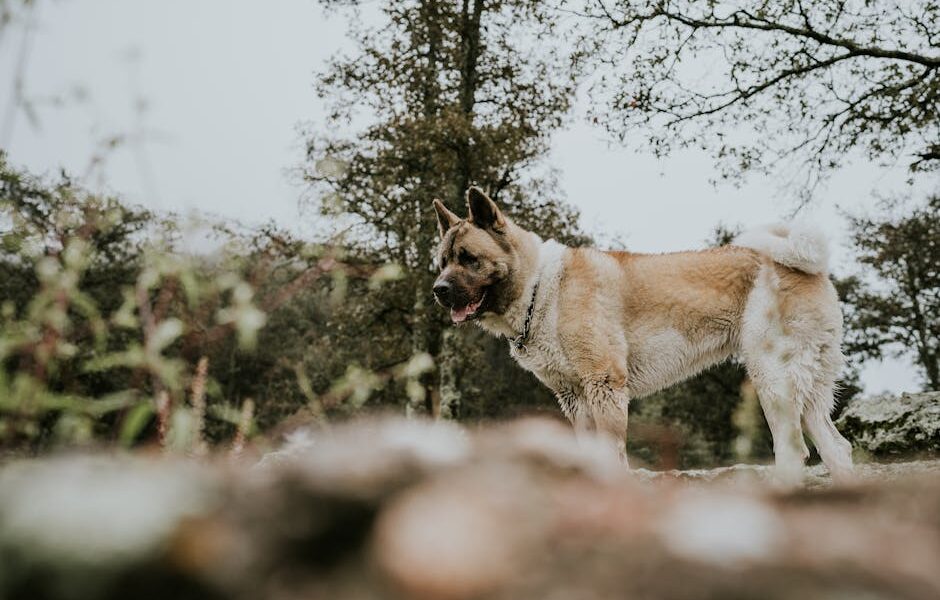
American Akitas stand 24 to 28 inches and weigh 80 to 130 pounds — meaningfully heavier and more bear-like in head shape. The accepted color range is much broader and includes any color with or without mask or markings, including pinto and black mask. Build is heavier-boned and more substantial overall.
Read the Akita breed profile for the full breed background. Note that there is no separate American Akita profile on the site; the linked profile applies to both types.
Temperament and Personality
Both types share the core Akita temperament: independent, loyal, dignified, and reserved. Akitas are not greeters — they tend to assess strangers carefully and bond intensely with their family. Same-sex dog aggression is well-documented in the breed; many Akitas do best as the only dog or with carefully matched opposite-sex housemates.
Japanese Akitas are typically slightly more refined in temperament — somewhat more aloof, somewhat less guard-oriented than the American type. American Akitas tend to be more overtly protective, more substantial in physical presence, and more demanding to handle in public spaces.
Both types are Japanese primitive breeds — independent decision-makers, less treat-motivated than pet breeds like Labradors, and capable-owner-required for adult-rescue placement. Read the Shiba Inu breed profile for context on the Japanese primitive group.
Trainability and Mental Stimulation
Both types are intelligent but independent. They learn cues quickly and decide whether to comply based on their assessment of the situation — a primitive-breed trait. Force-free, reward-based methods are essential; harsh corrections damage trust permanently with this breed and can produce reactivity.
Both need 20 to 30 minutes of daily mental work — puzzle feeders, scent games, or short structured training sessions. Compliance over the lifetime of the dog requires consistent expectations and respect for the breed’s independent nature.
Adult Akitas in rescue are particularly well-suited to experienced primitive-breed owners. Read our adopting a rescue Akita guide for placement insights.
Exercise Needs
Both types need 45 to 60 minutes of daily moderate exercise — leash walks, hikes, off-leash play in safe enclosed areas. Akitas are not jogging dogs typically; they prefer purposeful walking and exploration over endurance running.
Off-leash recall is unreliable for both types — same-sex dog aggression and prey drive make secure-fenced areas the realistic baseline. Yard fencing should be six feet minimum and dig-proof.
Grooming and Coat Care
Both types have a thick double coat that sheds moderately year-round and blows heavily twice a year. Brushing two to three times weekly is the baseline; daily brushing during coat blow keeps the house manageable. Bathe every two to three months. Never shave an Akita — the double coat regulates temperature in both heat and cold.
Both types need standard nail, dental, and ear care. They are typically clean, low-odor dogs.
Health and Lifespan
Both types typically live 10 to 13 years. Common health concerns include:
- Hip and elbow dysplasia — see our elbow dysplasia in dogs guide.
- Progressive retinal atrophy and other inherited eye conditions.
- Autoimmune diseases — Akitas are over-represented in autoimmune skin and thyroid conditions.
- Bloat (GDV) — large deep-chested breed, elevated risk.
- Sebaceous adenitis — a skin condition more common in this breed.
American Akitas typically face elevated rates of joint issues from larger size and bone load. A baseline vet exam and breed-specific genetic screening are essential for any adopted dog.
Rescue Availability and Cost
Both types turn up in rescue regularly, often as adult surrenders from owners who under-estimated the size, dog-aggression potential, or independent temperament. Akita-specific rescue networks operate nationwide in the US and are typically the best route for adult-Akita placement. Adoption fees run $300 to $600 through breed-specific or all-breed rescues.
Read the all-breed vs breed-specific rescue comparison for what to expect, and browse current listings at adopt a dog.
Foster-based rescues commonly handle Akitas and produce the most reliable placement information. A foster home that has lived with the dog for weeks knows whether the dog tolerates other dogs, cats, kids, vet visits, and household routines. Read our foster-based rescue explained walkthrough and the adopting from a foster guide.
Living Day-to-Day with an Akita
The honest reality of living with either Akita type is that the breed retains a guardian instinct and an independent decision-making brain throughout adulthood. Visitors to the home are assessed; strangers approaching the dog or owner trigger the dog’s protective awareness; resource guarding (food, beds, toys, sometimes people) is a documented breed concern that needs proactive management.
Both types are typically calm and dignified in the home once routines are established. They are not high-energy demand dogs — most Akitas are content with daily structured exercise plus quiet observation time. They are also clean dogs, often described as cat-like in their grooming and bathroom habits.
Same-sex dog aggression and prey drive are the two daily-management realities. Most successful Akita homes are single-dog or carefully matched opposite-sex households with experienced handling. Off-leash work in dog parks is generally not appropriate for either type. Secure-fenced yards (six feet minimum) and leash discipline are the realistic baseline.
Compared with Other Japanese and Primitive Breeds
Both Akita types get cross-shopped against the smaller Japanese breeds and other primitive guardians. Compare the Shiba Inu — the smaller, more popular Japanese spitz — in our Shiba Inu breed profile, and the rarer Shikoku in our Shikoku breed profile. The Shiba Inu is often a more realistic choice for first-time primitive-breed owners.
The Akita is one of the most demanding rescue placements in the dog world — the combination of size, independence, dog-aggression potential, and guardian instinct narrows the appropriate-home pool significantly. Rescue-side honesty about each individual dog is more important for Akitas than for almost any other breed. Use the 3-3-3 rule framework when settling in any rescue and the dog body language guide to read the breed’s subtle warning signals.
Which Is Right for You
If you live in the US, you are most likely meeting American-type Akitas in rescue regardless of how the listing is labeled. Choose an Akita only if you have prior primitive-breed or guardian-breed experience, a household that can manage a 90+ pound independent decision-maker, and the patience for force-free training across the lifetime of the dog.
Same-sex dog aggression and prey drive mean most Akitas do best as only-dog or carefully-matched households. Use the 3-3-3 rule framework when settling in any rescue.
For most family adopters, the Akita is not the right pick. Consider the Shiba Inu or other Japanese primitive breeds with smaller scale before committing to an adult Akita.
Adoption Process and Preparation
Adopting either Akita type is among the more demanding rescue processes in the dog world. Akita-specific rescues require detailed applications, references (including a vet reference for other animals), phone screenings, and home checks. Many require evidence of prior primitive-breed or guardian-breed experience. The screening exists because mismatched placements are dangerous — for the dog, the household, and the wider rescue community.
Preparation before bringing the dog home includes: securing the yard (six-foot fencing minimum, dig-proof bottom edge), planning single-dog or carefully-matched household composition, lining up a force-free trainer experienced with primitive guardians, and budgeting for size-appropriate veterinary care. Read our rescue adoption application walkthrough for the application side and our first week with a rescue dog guide for the settling-in side.
Frequently Asked Questions
Are the Akita Inu and American Akita the same breed?
It depends on where you ask. The AKC recognizes a single breed called “Akita” (effectively American type). The FCI and Japan Kennel Club recognize Akita Inu and American Akita as separate breeds. Functionally, they are two divergent types within the same historical lineage.
Which is better with kids?
Both can do well with respectful older children in households where the dog has been socialized from puppyhood. Adult-rescue Akitas with unknown histories should be matched carefully — many are unsafe with young children. Rescue input on individual dogs matters most.
Can they live with other dogs?
Many cannot. Same-sex dog aggression is well-documented in the breed. Most Akitas do best as only-dog or with carefully matched opposite-sex housemates. Rescue evaluation is essential.
Are they good first dogs?
No. Both types require experienced primitive-breed or guardian-breed owners. Adult-rescue Akitas particularly benefit from owners who understand the breed’s independent decision-making.
How much do they shed?
Heavily. Both types blow coat twice a year and shed moderately year-round. Daily brushing during coat blow and weekly brushing otherwise is the realistic baseline.
Looking to adopt a Akita vs American Akita Comparison?
Browse Akita vs American Akita Comparison dogs and mixes available for adoption from shelters and rescues near you.
Find Akita vs American Akita Comparison Dogs for Adoption