
What Elbow Dysplasia Means
Elbow dysplasia in dogs is an umbrella term for several developmental abnormalities of the elbow joint that lead to lameness, pain, and progressive arthritis. The elbow is a complex hinge formed by three bones (the humerus, radius, and ulna) that must fit together with near-perfect precision. When growth goes slightly off track, the surfaces no longer match, and the joint suffers.
In this article
The condition is most commonly diagnosed in young large and giant breed dogs. Labrador Retrievers, Golden Retrievers, German Shepherds, Bernese Mountain Dogs, Rottweilers, and Newfoundlands are among the breeds with the highest reported prevalence. Smaller breeds can be affected occasionally, and the condition often runs in families, suggesting strong genetic factors.
Elbow dysplasia dogs typically begin showing signs between four and twelve months of age, though some are not diagnosed until they are older. Both elbows are affected in many cases, sometimes with one side more obvious than the other.
The Components of Elbow Dysplasia
Elbow dysplasia is not one disease but several conditions that can occur singly or together. The four classic components are fragmented coronoid process (FCP), ununited anconeal process (UAP), osteochondrosis of the medial humeral condyle (OCD), and elbow incongruity (a mismatch in the joint surfaces).
Fragmented coronoid process is the most common component, particularly in Labradors and Goldens. A small piece of cartilage and bone on the inner side of the ulna fails to develop normally and may detach, causing pain and arthritis. Ununited anconeal process is more typical of German Shepherds, where a growth center at the back of the elbow fails to fuse with the rest of the bone.
Osteochondrosis dissecans of the elbow is a defect in the cartilage of the humeral condyle. Elbow incongruity describes a mismatch between the two halves of the trochlear notch, often related to differing growth rates of the radius and ulna. Many dogs have more than one component, and the combinations influence the treatment plan.
How It Develops
The exact cause of elbow dysplasia remains under study, but genetics, growth rate, nutrition, and biomechanics all contribute. Puppies that grow rapidly, particularly large-breed males, are at higher risk. Excess body weight during the rapid growth phase is a known risk factor, and overfeeding or supplementing with calcium can worsen joint development.
Once the joint surfaces fail to fit smoothly, abnormal forces cause cartilage damage and bone remodeling. The body responds with low-grade inflammation, and the cycle of arthritis begins early. Even with treatment, most dogs with elbow dysplasia will develop some degree of arthritis over their lifetime.
This is why early diagnosis matters. Catching the problem before significant cartilage damage occurs gives the best chance of preserving long-term joint function.
Recognizing the Signs
The most common sign is forelimb lameness in a young large-breed dog. The lameness may be intermittent, worse after rest, worse after exercise, or both. Many owners describe a “warm-up” pattern where the dog is stiff at first and then loosens up after a few minutes of moving. Reluctance to play, slow stair climbing, and lying down more than usual are also common.
Some dogs stand with their feet pointed slightly outward and their elbows held away from the body, an attempt to redistribute pressure off the painful inner side of the joint. Muscle loss in the affected forelimb develops over weeks to months. Touching or flexing the elbow may produce a flinch or whimper.
Bilateral disease can be sneaky. If both elbows hurt similarly, the dog may not appear to limp at all, just slow and reluctant. Owners sometimes describe these dogs as lazy or simply less playful than their breed should be. A careful orthopedic exam usually catches it.
Diagnosis
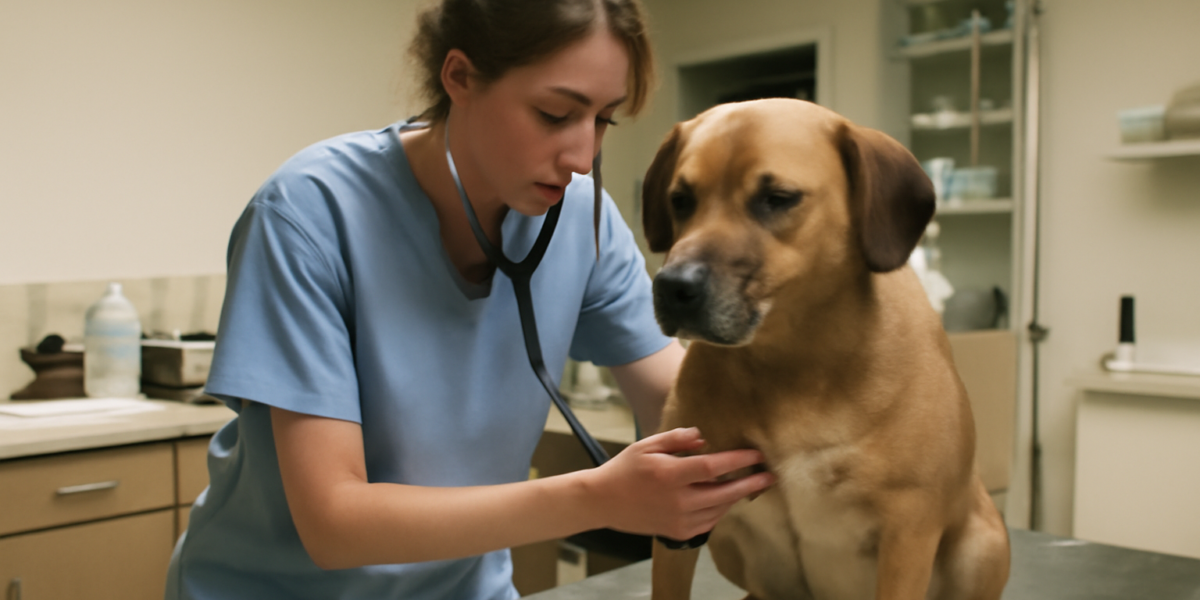
Your veterinarian will start with an orthopedic exam, watching the dog walk and trot, palpating the elbows for swelling and pain, and assessing range of motion. Most affected dogs flinch on full flexion of the elbow, which puts pressure on the medial coronoid area. Comparing left and right elbows side by side is part of the exam.
Radiographs are the next step. Standard views include flexed lateral, extended lateral, and anteroposterior projections. They show changes such as osteophytes around the joint, fragmentation of bony processes, and signs of incongruity. However, plain x-rays often underestimate the severity of disease, particularly in dogs with fragmented coronoid process.
CT scanning is the gold standard for diagnosing elbow dysplasia in many cases, especially when surgery is being considered. CT provides cross-sectional images that reveal small fragments and joint surface abnormalities not visible on radiographs. Arthroscopy, in which a small camera is inserted into the joint, is often used both for diagnosis and treatment.
Conservative Management
For dogs with mild disease, older dogs, or owners who cannot pursue surgery, conservative management focuses on weight control, controlled exercise, pain medication, and joint-supportive care. The cornerstones are the same as for general arthritis: lean body weight, low-impact exercise, omega-3 fatty acids, and appropriate pain control.
Veterinary anti-inflammatory medications are prescribed as needed. Adjunctive medications such as gabapentin or a monoclonal antibody injection targeting nerve growth factor are available for chronic pain. Always follow your vet’s prescription exactly and never give human pain medications without guidance.
Physical rehabilitation is particularly valuable for elbow dysplasia. Underwater treadmill therapy, controlled exercise, range-of-motion work, and laser therapy can all reduce pain and slow progression. A certified rehabilitation therapist can build a tailored plan.
Surgical Options
Several surgical approaches are available, and the choice depends on which components of elbow dysplasia are present. Arthroscopic removal of fragmented coronoid pieces is one of the most common procedures and produces good short-term results. The arthroscope also allows the surgeon to assess and treat cartilage lesions seen on imaging.
Subtotal coronoidectomy, in which a portion of the medial coronoid process is removed, is sometimes used for more involved disease. For ununited anconeal process, the loose fragment can sometimes be reattached with a screw, or removed if reattachment is not feasible. OCD lesions are typically debrided arthroscopically.
For dogs with significant elbow incongruity, more complex procedures such as proximal abducting ulnar osteotomy (PAUL), sliding humeral osteotomy (SHO), or biceps ulnar release procedure (BURP) may be considered. These reshape the joint mechanics. Total elbow replacement is available at some specialty centers for severely affected dogs but remains technically challenging.
Recovery and Rehabilitation
Recovery from elbow surgery depends on the procedure performed. Arthroscopic debridement typically requires four to eight weeks of restricted activity, while osteotomy procedures need eight to twelve weeks and recheck radiographs to confirm bone healing. Pain control, controlled exercise, and gradual return to activity are essential.
Physical rehabilitation accelerates recovery and improves long-term outcomes. Range-of-motion exercises, controlled walking, balance work, and underwater treadmill therapy build muscle and confidence on the operated leg. A certified rehab therapist can guide the program.
Most dogs return to comfortable activity within three to four months after arthroscopic procedures. Recovery from osteotomies takes longer. Almost all dogs with elbow dysplasia will continue to need long-term joint support, regardless of whether surgery was performed.
Long-Term Outcomes
The honest reality is that elbow dysplasia tends to progress over time, even with the best surgical care. Some degree of arthritis develops in most affected joints, and lifelong management is the norm. That said, many dogs do very well with early intervention, weight control, appropriate exercise, and ongoing pain management.
The dogs that struggle most are usually those whose disease was diagnosed late, who carry too much weight, or whose owners did not pursue ongoing care. With consistent attention, the majority of dogs lead good-quality lives even with significant joint changes on imaging.
Realistic expectations help. Your dog may not be a working dog or a sport competitor, but with thoughtful management, daily life can be comfortable. Plan on ongoing weight, exercise, and medication adjustments as your dog ages.
Prevention and Breeding Considerations
Because elbow dysplasia has a strong genetic component, breeding programs that screen for the condition can reduce its incidence over generations. The Orthopedic Foundation for Animals (OFA) and similar registries grade elbow radiographs in breeding dogs, and only dogs with normal elbows should be used for breeding in at-risk breeds.
For owners of growing puppies in predisposed breeds, controlling growth rate is important. Feed an appropriate large-breed puppy diet, avoid calcium and other supplements unless prescribed, and keep exercise moderate during the rapid growth phase. Avoid forced running, jumping, and high-impact activity in young puppies.
If you are adopting a young large-breed dog, the rescue may have information about elbow screening from the parents. The adopt a dog hub covers breed-specific health considerations and what to ask shelters about a dog’s history.
Related Conditions
Elbow dysplasia shares features with hip dysplasia, and dogs with one developmental orthopedic disease often have others. Osteoarthritis is the near-universal long-term consequence, and management overlaps significantly. Some dogs also develop cruciate ligament disease later in life, particularly if elbow pain alters their gait and stance.
For broader reading on canine joint health and senior care, the dog care blog covers many related topics including weight management, supplements, and rehabilitation. Building a network of supportive resources is part of long-term joint care.
Frequently Asked Questions
What age does elbow dysplasia show up?
Most affected dogs first show signs between four and twelve months of age, though some are not diagnosed until adulthood. Any young large-breed dog with persistent forelimb lameness should be evaluated for elbow dysplasia even if signs are subtle.
Is surgery always needed?
No. Mild cases and older dogs can often be managed with weight control, exercise modification, and medication. Surgery is most beneficial for younger dogs with clear signs and identifiable lesions, particularly when arthroscopic procedures can address fragments early.
How is elbow dysplasia different from hip dysplasia?
Both are developmental orthopedic diseases, but they affect different joints. Hip dysplasia involves the hip socket and femoral head; elbow dysplasia involves the elbow joint and has several distinct components. Some dogs are affected by both conditions due to shared genetic and developmental factors.
Will my dog be in pain forever?
With consistent management, most dogs with elbow dysplasia live comfortably for years. Some pain medication and ongoing support are usually needed long term, but the goal is good-quality, active life rather than complete absence of disease. Many dogs do remarkably well.
Can I prevent elbow dysplasia in my puppy?
Choose a breeder who screens for elbow dysplasia, feed an appropriate large-breed puppy diet, control growth rate, avoid excessive exercise during the growth phase, and keep your puppy at a lean body condition. These steps reduce risk but do not eliminate the genetic component.
When should I call my veterinarian?
Call if your young large-breed dog develops persistent forelimb lameness, stiffness after rest, or reluctance to play. Earlier evaluation generally means more treatment options. If you already manage a known case, call for any sudden worsening or new pain.


