
What the Cruciate Ligament Does
The cranial cruciate ligament, often called the CCL or simply the cruciate ligament dogs see torn most often, is a small but vital band of tissue inside the stifle (knee) joint. It anchors the femur to the tibia and stops the tibia from sliding forward when the knee bears weight. When the ligament is intact and healthy, the knee is a stable hinge. When it tears, the joint becomes unstable and painful with every step.
In this article
The canine equivalent of the human ACL injury is one of the most common orthopedic problems veterinarians see. Unlike people, where the ACL usually tears acutely from a sports injury, dogs more commonly develop a slow degenerative weakening of the ligament that eventually fails. That is why a dog can come up lame after a simple trot in the yard with no obvious trauma; the ligament has been weakening for months.
Any breed can be affected, but Labrador Retrievers, Golden Retrievers, Rottweilers, Newfoundlands, and Mastiffs are among the most commonly diagnosed. Smaller breeds, terriers, and even toy dogs can also tear cruciates, particularly if they have other orthopedic predispositions.
How a Cruciate Tears
The classic story is a sudden yelp during play, often when the dog plants a back leg and twists. The owner sees a sharp lameness, sometimes with the dog refusing to put any weight on the affected leg. The injury can also appear gradually, with intermittent stiffness and limping that worsens over weeks before the ligament fails completely.
Partial tears are common. The ligament may be 30%, 50%, or 70% torn before it fails fully. Owners often describe a dog that is sore for a few days, recovers, and then re-injures the same leg a few weeks later. Each episode reflects further damage to an already compromised ligament.
Once the ligament tears, the joint becomes unstable. Every step lets the tibia slide forward under the femur, pinching the menisci (the cushioning cartilage discs) and irritating the joint lining. Without surgical stabilization, this instability drives rapid arthritis and persistent pain.
Recognizing the Signs
Acute cases are usually obvious: your dog is suddenly limping on a back leg, often holding it slightly off the ground. Many dogs sit with the affected leg out to the side rather than tucked under, a hallmark of stifle pain. Touching or flexing the knee is uncomfortable, and your dog may resent handling around the joint.
Chronic or partial tears are more subtle. You might notice stiffness after rest, reluctance to jump, or a slight head bob when your dog trots. The thigh muscle on the affected side often shrinks (atrophies) within weeks, leaving one leg visibly thinner than the other. Some dogs develop a swelling on the inside of the knee, a firm thickening called a medial buttress.
If both knees are affected, which is common because the underlying degeneration is bilateral, the dog may simply seem old, slow, and reluctant to move. Owners often think the problem is general arthritis until imaging reveals two torn cruciates.
Diagnosis
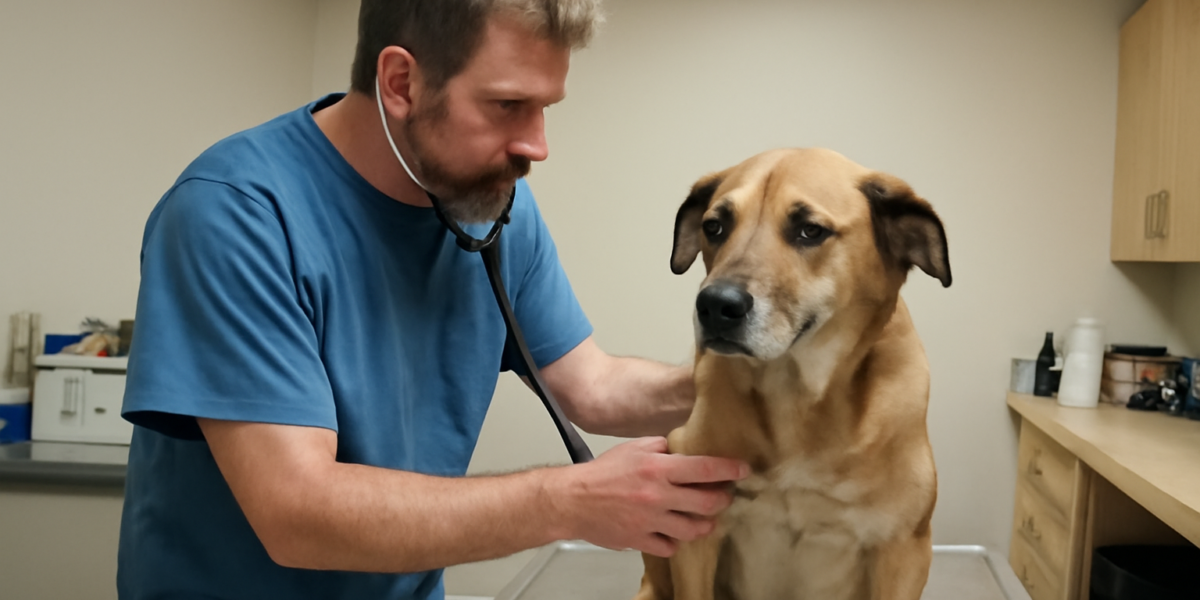
Your veterinarian will start with a careful orthopedic exam. The key test is the cranial drawer sign, in which the vet stabilizes the femur and gently moves the tibia forward. Excessive forward motion confirms cruciate instability. The tibial compression test is a similar maneuver that tests for the same problem with the dog under sedation.
Many dogs are too tense or muscular for these tests in the exam room, so sedation is often used to relax the muscles and get a reliable feel. Radiographs are taken of the affected knee, and sometimes both knees, to evaluate joint effusion, arthritis, and any underlying conformation issues. Advanced imaging like MRI is used in some cases to confirm partial tears or assess the menisci.
If there is any doubt, your veterinarian may recommend referral to a board-certified surgeon for a definitive opinion. Most general practitioners are comfortable making the diagnosis but will refer for surgery itself.
Conservative Management
Strict rest, anti-inflammatory medications, and physical rehabilitation are sometimes recommended for very small dogs (typically under 15 pounds), older dogs with significant other health issues, or owners who cannot pursue surgery. Conservative management means at least eight to twelve weeks of leash-only activity, weight management, and gradual rebuilding of strength.
The reality is that most medium and large dogs do not return to normal function with conservative care alone. The unstable joint develops arthritis quickly, and chronic lameness is common. For dogs over about 30 pounds, surgery is generally the recommended path to long-term comfort and function.
Custom stifle braces are sometimes considered for dogs that are not surgical candidates. Their effectiveness varies, and they require professional fitting and consistent use. They are not a substitute for surgery in most cases but can help selected patients.
TPLO Surgery
Tibial Plateau Leveling Osteotomy, or TPLO, is currently the most commonly performed cruciate surgery in medium and large dogs. The principle is clever: rather than trying to replace the ligament, the surgeon changes the geometry of the knee so that the joint no longer needs the cruciate ligament to stay stable when bearing weight.
The surgeon makes a curved cut in the top of the tibia, rotates the bone fragment to flatten the slope of the tibial plateau, and secures it with a custom plate and screws. Once the bone heals in its new orientation, the dog’s body weight no longer drives the tibia forward with each step. The knee becomes mechanically stable.
TPLO has a strong track record for predictable outcomes and rapid return to function. Most dogs are bearing weight within days and approaching normal activity within four to six months. The surgery requires specialized equipment and training, so it is performed by board-certified surgeons or experienced surgical practices.
TTA and Other Options
Tibial Tuberosity Advancement, or TTA, is another osteotomy procedure that addresses the same biomechanical problem from a different angle. The surgeon advances the tibial tuberosity forward, which changes the angle of the patellar tendon and neutralizes the forward shear force on the joint. Outcomes are generally good, and recovery is similar to TPLO.
Lateral suture or extracapsular repair places a heavy suture outside the joint to substitute for the torn ligament. This technique is most useful in small dogs under 20 pounds. In larger dogs, the suture eventually stretches or fails, which is why osteotomy procedures have become standard for medium and large breeds.
Newer techniques, including the CBLO (CORA-Based Leveling Osteotomy) and various modifications of TPLO and TTA, are offered by specialty surgeons. Your surgeon will discuss which approach best fits your dog’s size, age, conformation, and lifestyle.
The Recovery Timeline
Recovery from cruciate surgery is a marathon, not a sprint. The first two weeks are about rest, incision care, and gentle leash walks for elimination only. Pain control is provided by your veterinary team, often a combination of NSAIDs and adjunctive medications. Most dogs are bearing partial weight within a week.
From weeks two to eight, leash walks gradually increase in length. Many surgeons recommend a structured rehabilitation program, with formal physical therapy at a rehab facility or a home plan you follow daily. Range-of-motion exercises, controlled walking, and balance work rebuild muscle and confidence.
Recheck radiographs around eight weeks confirm bone healing in osteotomy procedures. From weeks eight to sixteen, off-leash activity is gradually reintroduced, with full return to normal exercise typically around four to six months post-surgery. Rushing the recovery is the most common cause of complications.
Risks and Complications
Cruciate surgery is generally safe in experienced hands, but every surgery carries risk. Infection at the surgical site occurs in a small percentage of cases and may require antibiotics or revision surgery. Implant problems, including loosening or breakage, are uncommon but possible, particularly if activity restrictions are not followed.
Meniscal injury is a frequent companion of cruciate disease. The medial meniscus can tear at the same time as the ligament, or after surgery if the joint was unstable for too long. Many surgeons inspect the menisci during the cruciate procedure and remove damaged portions to reduce later pain.
Approximately half of dogs with one cruciate tear will eventually tear the contralateral one, often within one to two years. Owners of recovering dogs should be alert for signs in the other leg and pursue evaluation early if lameness develops.
Long-Term Outcomes
The vast majority of dogs do very well after cruciate surgery, returning to normal or near-normal activity within six months. Mild arthritis develops in the affected knee regardless of surgical technique, but it is usually well managed with weight control, exercise, and joint-supportive care. Many dogs go on to live active, happy lives.
Long-term joint health depends heavily on weight management. An overweight dog after cruciate surgery is set up for chronic problems; a lean dog usually does well. Continued low-impact exercise, regular vet checks, and ongoing attention to the contralateral knee are part of the lifetime plan.
Many cruciate patients eventually develop some osteoarthritis in the affected stifle, which is part of why post-surgery care emphasizes weight, muscle, and joint support. The dog care blog covers related orthopedic and senior wellness topics in more detail.
Considering Adoption of a Recovering Dog
Dogs recovering from cruciate surgery sometimes appear in shelters and rescues, especially if their original owners could not manage the post-surgery rehabilitation. With patience and clear veterinary guidance, these dogs make wonderful adoptees and usually go on to thrive. The adopt a dog hub has guidance on questions to ask the rescue about surgical history and what kind of recovery support the dog still needs.
If you are adopting a dog with one repaired cruciate, ask about activity restrictions, recheck timelines, and any current medications. Be prepared to keep activity controlled for several weeks while the new bond forms. Most dogs adapt beautifully and become deeply attached during the slow walks of recovery.
Frequently Asked Questions
Is cruciate surgery worth it?
For medium and large dogs, surgery offers the best chance of returning to comfortable, normal activity. Without surgery, most dogs develop chronic lameness and significant arthritis. The investment in surgery generally pays off in years of better mobility and quality of life.
How long is the recovery from TPLO?
Most dogs are using the leg well by two weeks, walking comfortably on leash by eight weeks, and returning to full activity around four to six months. Rehabilitation milestones are guided by your surgeon and confirmed with recheck radiographs.
Can a torn cruciate heal on its own?
No. Unlike some ligaments, the cranial cruciate has poor blood supply and does not heal once torn. The instability persists and arthritis develops rapidly without intervention. Surgical stabilization or, in small dogs, careful conservative management, is needed for long-term comfort.
Will my dog tear the other knee?
About half of dogs with one cruciate tear will tear the other within one to two years. Maintaining a lean body weight, building muscle, and avoiding sudden high-impact activity reduce the risk. Tell your vet promptly if you notice lameness in the other leg.
How much does cruciate surgery cost?
Costs vary widely by region, technique, and the surgeon’s practice. TPLO at a specialty center is typically the most expensive option but has the strongest track record. Discuss costs and financing options with your veterinary team early in the process.
When should I call my veterinarian after surgery?
Call right away if the incision becomes red, swollen, or oozing, if your dog suddenly stops using the leg again, or if pain medication is not keeping your dog comfortable. Routine rechecks and recheck radiographs are scheduled at specific intervals, so follow your surgeon’s plan.


