Last updated: April 11, 2026
In this article
15 Best Large Dog Breeds for Families, Homes, and Active Lifestyles
There is something undeniably special about sharing your life with a large dog. Whether it is the weight of a big head resting in your lap, the confidence of a dog that fills a room, or the loyalty that only a large breed seems to offer in full measure, big dogs have earned a devoted following among dog lovers everywhere. But choosing the right breed is about more than size. The best large dog breeds combine temperament, trainability, exercise needs, and compatibility with your lifestyle into one well-matched package.
At Walk Me Home Rescue, we work with large breed dogs every day. We see firsthand how the right match between a dog and a family transforms both lives. This guide is designed to help you understand what sets each breed apart, what you should realistically expect, and how to find a large dog that fits your home. If you are ready to open your door to one of these wonderful animals, visit our adoption page to see who is currently available.
What to Consider When Bringing a Large Dog Home
Before diving into the best large dog breeds, it is worth pausing to think honestly about what large dog ownership involves. These dogs typically weigh between 50 and 150 pounds or more, and their physical and emotional needs scale accordingly.
Space: Large dogs do not necessarily require a mansion, but they do need room to move. A home with a fenced yard is ideal, though many large breeds adapt well to apartment living when given sufficient daily exercise.
Cost: Food, veterinary care, medications, and boarding all cost more for larger dogs. Factor in potential breed-specific health concerns such as hip dysplasia or bloat, which are more common in large and giant breeds.
Training: A 90-pound dog that has not been trained is not just inconvenient — it can be unsafe. Large breeds benefit enormously from early socialization and consistent obedience training. The good news is that most large breeds are intelligent and eager to please.
Lifespan: Larger dogs generally have shorter lifespans than small breeds, often living 8 to 12 years. This is an emotional reality that prospective owners should acknowledge and prepare for.
With these factors in mind, let us look at the 15 best large dog breeds and what makes each one worth considering.
The 15 Best Large Dog Breeds
1. Labrador Retriever
The Labrador Retriever has held the top spot on popularity charts for decades, and for good reason. Labs are friendly, outgoing, and remarkably adaptable. They thrive with families, singles, seniors, and first-time dog owners alike. Their eagerness to please makes training straightforward, and their love of water and fetch means exercise is rarely a chore. Labs do shed year-round and need regular activity to prevent weight gain, but their affectionate, even-tempered nature makes them one of the most dependable choices among the best large dog breeds available today.
2. Golden Retriever
Golden Retrievers are the gold standard of family dogs. Gentle with children, patient with strangers, and deeply loyal to their people, Goldens bring a warmth to a household that is hard to replicate. They excel as therapy dogs, service dogs, and simply as devoted companions. They require daily exercise and thrive when given a job to do, whether that is carrying a bag, learning tricks, or competing in agility. Their long coats need regular brushing, but owners consistently say the extra grooming is more than worth it.
3. German Shepherd
German Shepherds are one of the most versatile working breeds in the world, and they bring that same capability home. Confident, courageous, and highly intelligent, they excel at obedience, protection, herding, and search and rescue. They form intense bonds with their families and can be reserved with strangers, which makes early socialization essential. German Shepherds need a meaningful amount of daily mental and physical stimulation. In an active household that provides structure and engagement, they are outstanding companions and among the most capable of the best large dog breeds.
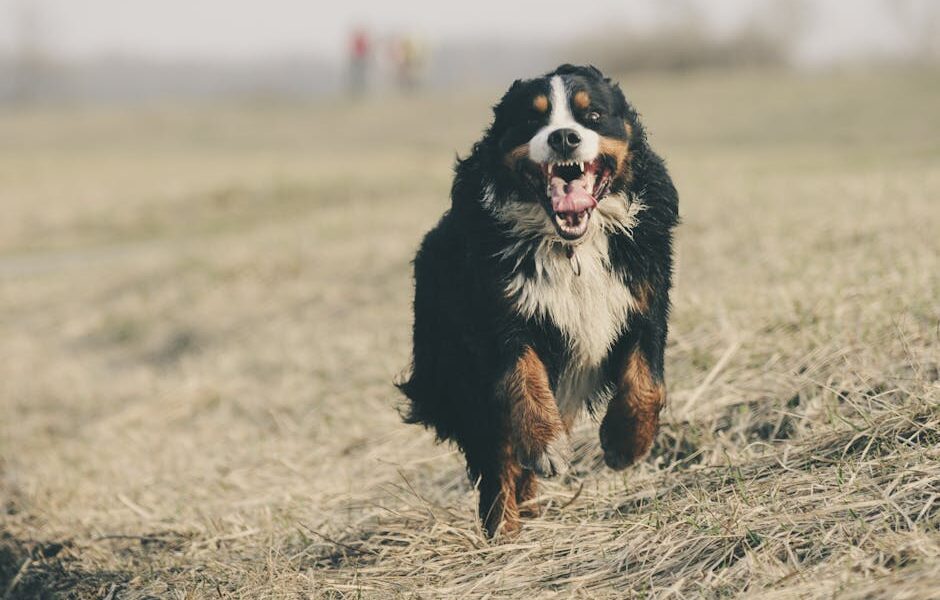
4. Bernese Mountain Dog
The Bernese Mountain Dog is a gentle giant with a tricolor coat and a calm, affectionate temperament. Originally bred as Swiss farm dogs, Berners are patient, good-natured, and devoted to their families. They are particularly gentle with children and tend to get along well with other animals. They do best in cooler climates, given their thick double coat, and they shed considerably. Their lifespan is shorter than many other large breeds, averaging 7 to 10 years, so cherish every season with them. Their quiet loyalty makes them a top pick among large breed families.
5. Great Dane
Few breeds command attention the way a Great Dane does. Standing up to 32 inches at the shoulder, the Great Dane is one of the tallest breeds in the world, yet it carries the nickname “the gentle giant” with complete accuracy. Despite their imposing size, Great Danes are affectionate, patient, and surprisingly good with children. They are relatively low-energy indoors, though they do need daily walks. Their large size means they eat a lot and take up significant space, but owners consistently describe life with a Great Dane as a uniquely rewarding experience.
6. Newfoundland
The Newfoundland is a massive, sweet-natured breed with a history as a working water dog and lifeguard. Calm, gentle, and deeply patient, Newfoundlands are exceptional family dogs, particularly for households with young children. They are famous for their instinct to protect, and many Newfoundland owners report their dogs naturally watching over children in and around water. Their thick, water-resistant coat requires regular grooming, and they do drool. But for families seeking a calm, devoted, and gentle large breed companion, the Newfoundland is hard to surpass.
7. Rottweiler
The Rottweiler is a powerful, loyal, and confident breed that thrives under experienced ownership. Often misunderstood, a well-bred and properly socialized Rottweiler is calm, courageous, and deeply devoted to its family. They are natural protectors and can be wary of strangers, making early and ongoing socialization critical. Rottweilers respond exceptionally well to firm, consistent training and reward-based methods. They need regular exercise and mental challenges to stay balanced. In the right hands, Rottweilers are among the most loyal and impressive of the best large dog breeds.
8. Doberman Pinscher
Sleek, athletic, and highly intelligent, the Doberman Pinscher is one of the most capable working dogs ever developed. Originally bred for personal protection, today’s Dobermans are loyal family dogs who bond closely with their people. They are sensitive and responsive to training, often excelling in obedience and dog sports. Dobermans need substantial daily exercise and thrive when given a role or purpose. They can be reserved with strangers but are rarely aggressive without cause. For active owners who want a sharp, trainable, and deeply loyal companion, the Doberman delivers on every front.
9. Boxer
Boxers are exuberant, playful, and endlessly entertaining dogs with a heart as big as their personality. They are patient and protective with children, making them one of the better large breed choices for young families. Boxers are highly energetic and require daily vigorous exercise to stay out of trouble. They are also highly trainable, though their playful nature means sessions should be kept engaging. Boxers are known for their characteristic “kidney bean” wiggle when greeting people they love, and that enthusiasm rarely fades with age. Their loyalty and goofiness make them deeply endearing.
10. Irish Setter
The Irish Setter is a strikingly beautiful breed with a mahogany coat and an equally vibrant personality. Energetic, friendly, and outgoing, Irish Setters love people and are particularly playful with children. They were bred as bird dogs and retain strong stamina and a need for extensive daily exercise. Without adequate activity, they can become restless and mischievous. Irish Setters are sensitive dogs that respond best to gentle, positive training. For active families who can meet their exercise requirements, an Irish Setter is a joyful and affectionate companion that brings energy and elegance to any home.
11. Rhodesian Ridgeback
The Rhodesian Ridgeback is a dignified, athletic breed originally developed in southern Africa to track lions. Strong-willed and independent, they are not the easiest breed for first-time owners, but in experienced hands they are exceptionally loyal and devoted. Ridgebacks are protective of their families and can be reserved with strangers. They need a good deal of daily exercise and do best with confident handlers who establish clear boundaries early. Their short coat is low-maintenance, and their general hardiness means fewer veterinary concerns than many other large breeds. A committed owner will find the Ridgeback deeply rewarding.
12. Weimaraner
The Weimaraner, often called the “Gray Ghost” for its distinctive silver-gray coat and pale eyes, is an athletic and energetic hunting breed that bonds intensely with its owner. Weimaraners are highly intelligent and can become anxious or destructive if left alone for long periods or under-exercised. They thrive in active households where they are treated as full family members rather than backyard dogs. Early training and firm, consistent boundaries are essential. For runners, hikers, and hunters, the Weimaraner is an ideal partner whose endurance and drive are genuinely impressive over long distances.
13. Standard Poodle
The Standard Poodle is frequently underestimated because of its elegant appearance, but it is one of the most intelligent and athletic of all large breeds. Originally developed as a water retriever, the Standard Poodle excels at obedience, agility, tracking, and therapy work. They are non-shedding dogs, which makes them a popular choice for allergy-sensitive households, though their coats do require regular professional grooming. Poodles are deeply social, playful, and eager to learn. They adapt well to various living situations and get along with children and other pets. Their intelligence and versatility make them standout companions.
14. Akita
The Akita is a noble, powerful Japanese breed with a dignified bearing and fierce loyalty to its family. Akitas are not dogs for everyone — they are strong-willed, independent, and can be aggressive toward other dogs if not properly socialized. However, with an experienced, confident owner, an Akita is extraordinarily devoted and deeply bonded. They are naturally protective and reserved with strangers. Akitas require consistent training, firm leadership, and meaningful daily exercise. They tend to be quieter than many large breeds but communicate clearly through body language. Their loyalty and presence are unmatched for those prepared for the commitment.
15. Great Pyrenees
The Great Pyrenees is a majestic, patient livestock guardian breed with a calm and gentle temperament that makes it an excellent family dog. Bred to protect flocks independently through the night, Pyrs are confident, patient, and naturally watchful. They can be stubborn and are not always eager to please in the way retrievers are, so training requires patience and consistency. They shed heavily, particularly in spring, and their thick coats need regular brushing. Great Pyrenees are especially gentle with children and smaller animals. For families with space, a Pyrenees brings quiet nobility and steadfast loyalty to the household.
Space and Exercise: What Large Breeds Really Need
One of the most common misconceptions about the best large dog breeds is that they all require enormous homes and sprawling properties. In reality, a dog’s exercise needs depend far more on breed temperament and energy level than on size alone. A Great Dane may be content in a city apartment if walked consistently, while a Weimaraner will be miserable without an outlet for its high energy regardless of how large the house is.
As a general guideline, most large breed dogs benefit from at least 45 to 90 minutes of meaningful daily exercise. This can include walks, off-leash play, swimming, hiking, or structured dog sports. Mental enrichment — puzzle feeders, training sessions, scent work — is equally important for intelligent breeds like German Shepherds and Standard Poodles.
A securely fenced yard is a significant advantage but not a strict requirement. What matters most is consistency, commitment, and an honest understanding of the breed’s needs before bringing any large dog home. For guidance on daily care routines, visit our dog care blog.
Frequently Asked Questions About Large Dog Breeds
What is the best large dog breed for families with young children?
Several breeds stand out for family compatibility, but the Labrador Retriever, Golden Retriever, Bernese Mountain Dog, and Newfoundland are consistently cited as the top choices. Each of these breeds combines patience, gentleness, and a natural affinity for children. The key factor is not just breed selection but also training and early socialization, which help any dog learn appropriate behavior around children. Supervision between large dogs and young children is always recommended regardless of breed.
Are large dog breeds harder to train than smaller dogs?
Size does not determine trainability. Many of the best large dog breeds — including the Standard Poodle, German Shepherd, Golden Retriever, and Doberman — are among the most trainable dogs of any size. What large breeds do require is consistent early training, simply because a 90-pound dog with poor manners presents a greater physical challenge than a 10-pound dog in the same situation. Starting training early, using positive reinforcement, and maintaining consistency are the most important factors regardless of size.
Can large dog breeds live comfortably in apartments?
Yes, many large breeds adapt well to apartment living when their exercise needs are met. Breeds like the Great Dane, Greyhound, and Basset Hound are surprisingly low-energy indoors and can thrive in smaller spaces. The critical factor is not the size of your home but the amount of daily exercise and mental stimulation you provide. That said, breeds like the Weimaraner, Rhodesian Ridgeback, and Irish Setter have very high activity requirements and generally do better in homes with access to outdoor space.
Where can I adopt a large dog breed?
Walk Me Home Rescue regularly has large breed dogs of all ages available for adoption, including purebreds and large breed mixes. Adopting a rescue dog is one of the most meaningful decisions you can make, and many rescue dogs are already house-trained and accustomed to family life. Visit our adopt a dog page to browse currently available dogs and begin the application process. Our team is happy to help match you with a large breed companion that fits your lifestyle, home, and experience level.
Looking to adopt a 15 Best Large Dog Breeds?
Browse 15 Best Large Dog Breeds dogs and mixes available for adoption from shelters and rescues near you.
Find 15 Best Large Dog Breeds Dogs for Adoption