Last updated: May 4, 2026
In this article
12 Best Guard Dogs: Top Protection Breeds and What Makes Them Different
Few decisions carry as much weight as choosing a dog to help protect your home and family. The best guard dogs are not simply large or intimidating — they are confident, trainable, loyal, and capable of distinguishing a genuine threat from an everyday visitor. Get that match right, and you gain not just a protector but a devoted family companion. Get it wrong, and you may end up with a dog whose needs far exceed what your lifestyle can support.
At Walk Me Home Rescue, we work with dogs of all breeds and backgrounds, including many powerful working breeds that are extraordinary in the right home. This guide covers everything you need to know before choosing a guardian breed: the important distinctions between dog types, detailed profiles of the 12 best guard dogs, and honest answers to the questions families ask most often.
Guard Dog vs. Watch Dog vs. Protection Dog: An Important Distinction
These three terms are used interchangeably in everyday conversation, but they describe meaningfully different roles — and confusing them can lead to a poor match between dog and owner.
A watchdog is any dog that alerts its owners to the presence of a stranger or unusual activity. Almost any breed can serve this function. A Chihuahua barking at the doorbell is acting as a watchdog. Size, strength, and training are irrelevant — alerting behavior is the only requirement.
A guard dog goes further. In addition to alerting, a guard dog is willing and able to physically intervene if it perceives a direct threat to its territory or family. Guard dogs are typically large, strong, and possess a stable temperament that allows them to act decisively without being reckless or indiscriminately aggressive. Most of the breeds on this list fall into this category. They do not require the same level of specialized training as a protection dog, but they do need consistent obedience training and proper socialization from an early age.
A protection dog — sometimes called a personal protection dog or IPO/Schutzhund dog — is a guard dog that has received extensive, formalized training in bite work, control, and scenario-specific responses. These dogs are trained by professionals and are held to strict standards of obedience. They are a specialized tool and represent a significant financial and time investment. The average family looking for home security does not need a protection dog — a well-trained, well-socialized guard dog breed is almost always sufficient.
Understanding where your needs fall on this spectrum is the first step toward choosing the right dog.
12 Best Guard Dog Breeds
The following breeds consistently rank among the best guard dogs based on their protective instincts, physical capability, trainability, and capacity to thrive as family companions when properly raised and socialized.
1. German Shepherd
The German Shepherd is arguably the most recognized guard dog breed in the world, and the reputation is well earned. These dogs are highly intelligent, deeply loyal, and naturally protective of their family and territory. German Shepherds are used by police and military forces globally precisely because they combine physical capability with extraordinary trainability. They respond exceptionally well to consistent obedience work and thrive when given a clear role and daily mental stimulation. Confident without being reckless, a well-socialized German Shepherd is one of the best guard dogs for families with children. They require significant daily exercise and do not do well when left alone for long periods.
2. Rottweiler
The Rottweiler is a powerful, self-assured breed with a natural guarding instinct that goes back centuries to its origins as a cattle-driving and cart-pulling dog in Germany. Modern Rottweilers are calm and confident under pressure, which makes them reliable protectors rather than reactive ones. They are deeply devoted to their families and can be wonderfully gentle with children they are raised alongside. Rottweilers require firm, experienced handling and early socialization to channel their protective instincts appropriately. Without proper training, their size and strength can become a liability. With it, they are among the most dependable guard dogs available.
3. Doberman Pinscher
The Doberman was purpose-bred in the late 19th century as a personal protection dog, and that heritage shapes every aspect of the breed. Dobermans are alert, athletic, fast, and exceptionally intelligent. They are natural sentinels — always aware of what is happening in their environment — and will move decisively to protect their family if necessary. Despite their fearsome reputation, well-bred and well-socialized Dobermans are affectionate family dogs that bond closely with their people. They need daily vigorous exercise and consistent mental engagement. Dobermans are among the best guard dogs for owners with experience handling working breeds.
4. Bullmastiff
The Bullmastiff was developed in 19th-century England by crossing Bulldogs with Mastiffs specifically to deter poachers on large estates. The result is a breed that is massive, fearless, and surprisingly quiet — Bullmastiffs typically rely on their physical presence and controlled restraint rather than aggression or excessive barking. They are gentle and affectionate within the family but will not hesitate to block or physically restrain a threat. Bullmastiffs are relatively low-energy compared to other guard breeds, making them more manageable in suburban homes. Early socialization is important given their size and natural wariness of strangers.
5. Giant Schnauzer
The Giant Schnauzer is a bold, intelligent, and intensely loyal working breed that is often overlooked in conversations about the best guard dogs. Originally developed in Bavaria as a versatile farm and driving dog, Giant Schnauzers were later adopted by police forces across Europe for their trainability and protective instincts. They are highly energetic dogs that demand significant daily exercise and mental stimulation. Giant Schnauzers are dominant by nature and require a confident, experienced handler who can establish clear boundaries. When those needs are met, they are outstanding home protectors and devoted family companions with a commanding presence that deters trouble on its own.
6. Cane Corso
The Cane Corso is an ancient Italian Molosser breed with a history of guarding property and hunting large game. These are large, muscular dogs with a stable, calm temperament and a serious, focused demeanor. Cane Corsos are naturally protective and territorial, and their size alone is a significant deterrent. They are not prone to excessive barking or random aggression, but they are assertive and will act when they perceive a genuine threat to their family. Cane Corsos need early socialization, consistent training from an experienced owner, and a family that understands the responsibility of managing a large, powerful guardian breed. They are deeply loyal and form strong bonds with their household.
7. Belgian Malinois
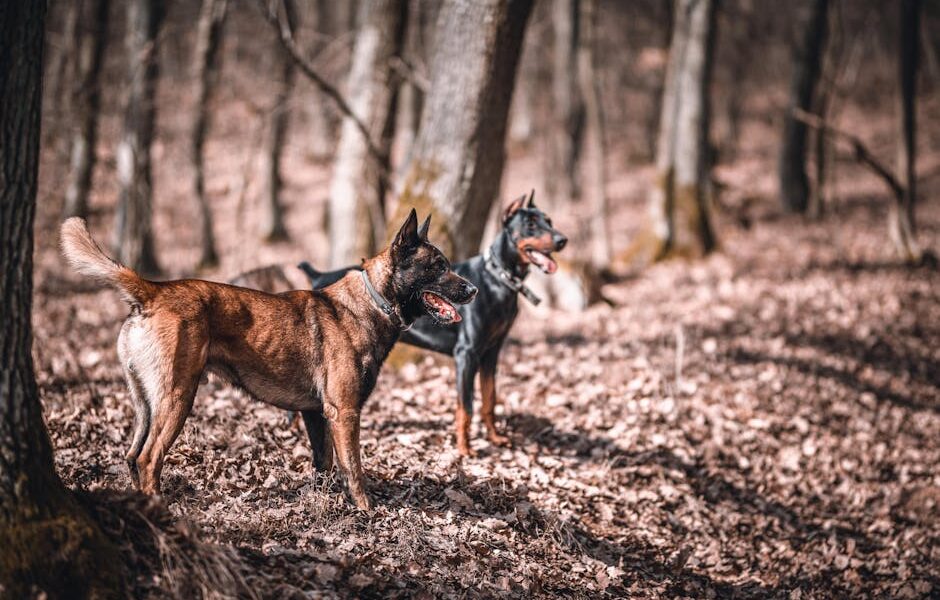
The Belgian Malinois has surged in public awareness as the breed favored by elite military and law enforcement units worldwide, and for good reason. Malinois are extraordinarily driven, athletic, and intelligent — they operate at a level of intensity that sets them apart even among working breeds. They are among the best guard dogs in terms of raw capability, but that same drive makes them a demanding pet. A Malinois without a job, sufficient exercise, and consistent training is a problem waiting to happen. They are not the right choice for first-time dog owners. In the right hands, however, they are unmatched in focus, loyalty, and protective reliability.
8. Rhodesian Ridgeback
Originally developed in Southern Africa to track lions and guard homesteads, the Rhodesian Ridgeback is a striking, powerful breed with natural guarding instincts and exceptional physical endurance. Ridgebacks are independent and strong-willed, which means they require patient, consistent training rather than heavy-handed correction. They are affectionate with family but reserved with strangers — a temperament that makes them reliable and discriminating protectors. Ridgebacks are not excessive barkers, which makes them well-suited to residential environments. They do need substantial daily exercise to stay balanced. Among guard breeds, they are notable for combining athleticism, loyalty, and a calm, dignified temperament.
9. Akita
The Akita is Japan’s national dog and one of the oldest guard dog breeds in existence. Revered for centuries as protectors of royalty and nobility, Akitas are bold, deeply loyal, and intensely devoted to their immediate family. They are instinctively suspicious of strangers and will not hesitate to defend their territory. Akitas are known for being quiet — they rarely bark without cause — but when they do react, they mean it. They are independent dogs that require confident, experienced ownership and thorough early socialization, particularly around other dogs, as they can be same-sex aggressive. In a committed home, an Akita is one of the most steadfast guardian companions a family can have.
10. Great Pyrenees
The Great Pyrenees is a gentle giant with a millennia-long history of guarding livestock against wolves and bears in the Pyrenean mountains. These dogs are calm, patient, and deeply nurturing with those they consider their flock — which in a domestic setting extends to children, other pets, and family members. Their protective instincts are strong but measured: they are more likely to place themselves between a threat and their family than to attack without clear cause. Great Pyrenees are independent thinkers and can be challenging to train with conventional methods. They also bark, especially at night. For families with land and experience with livestock guardian breeds, they are exceptional protectors.
11. Anatolian Shepherd
The Anatolian Shepherd is one of the oldest and most capable livestock guardian breeds in the world, developed over thousands of years in Turkey to independently protect flocks against wolves, bears, and human predators. These dogs are large, fast, and extraordinarily self-sufficient — they do not need direction from their handler to recognize and respond to a threat. Anatolian Shepherds are reserved and independent rather than affectionate in the traditional sense, and they bond more to their territory and charges than to individual people. They require experienced ownership, extensive space, and early socialization. For rural families seeking a serious, capable guardian, few breeds come close.
12. Kangal
The Kangal is widely regarded by working dog experts as one of the most powerful and capable livestock guardian breeds on the planet. Originating in the Sivas region of Turkey, Kangals have been refined over centuries specifically to confront apex predators independently. They are calm and affectionate with family but utterly fearless when faced with a genuine threat. Kangals are large — males regularly exceed 120 pounds — and their bite force is among the highest measured in domestic dogs. They require significant space, experienced handling, and early socialization. For the right owner with the right environment, the Kangal represents the pinnacle of natural guardian capability among all guard dog breeds.
Are Guard Dogs Safe with Families?
This is the question most families ask first, and the honest answer is: yes, with the right breed, the right upbringing, and the right owner — absolutely. The best guard dogs are not dangerous animals looking for a reason to bite. They are confident, stable dogs that are deeply bonded to their families and reserve their protective instincts for genuine threats.
The key factors that determine how safe and balanced a guard dog is within a family setting are socialization, training, and responsible ownership. A German Shepherd, Rottweiler, or Cane Corso that is raised alongside children, exposed to a wide variety of people and situations from puppyhood, and given consistent obedience training is typically gentle, patient, and protective in a controlled way. The same dog raised in isolation, with inadequate training and no socialization, can be unpredictable and dangerous.
It is also worth noting that many of the breeds on this list are naturally gentle with the people they consider family. Rottweilers are known for being affectionate and even goofy at home. Bullmastiffs are famously patient with children. Great Pyrenees are nurturing and calm. The imposing exterior and the family-friendly interior are not contradictions in a well-raised guardian breed — they are two sides of the same loyal, deeply bonded dog.
If you are considering adding one of these breeds to your household, professional obedience training early in the dog’s life is strongly recommended. A professional trainer who specializes in working breeds can make an enormous difference in how safely and effectively a guard dog integrates into your family dynamic.
Frequently Asked Questions
What is the number one best guard dog for a family with young children?
The German Shepherd is consistently regarded as the top choice for families with children. Their combination of intelligence, trainability, loyalty, and stable temperament makes them highly adaptable to family life. When properly socialized and trained, German Shepherds are patient with young children while remaining fully capable of protecting the household. Rottweilers and Bullmastiffs are also frequently recommended for families, provided the owners are committed to consistent training and early socialization.
Do guard dogs need professional training?
Professional obedience training is strongly recommended for any guard dog breed, especially large and powerful ones. Basic obedience training — sit, stay, come, leave it, heel — gives owners reliable control in any situation and builds a clear communication framework with the dog. Formal bite work or personal protection training is a separate discipline and is not necessary for most families. What matters most is that the dog understands boundaries, responds to its owner’s commands reliably, and has been thoroughly socialized to distinguish normal everyday situations from genuine threats.
Can I adopt a guard dog breed from a rescue?
Yes, and it is often a rewarding experience. Many excellent guard dog breeds end up in rescue through no fault of their own — owner surrenders due to life changes, housing situations, or simply underestimating the breed’s needs. At Walk Me Home Rescue, we assess each dog individually for temperament, behavior, and household compatibility. Visit our adopt a dog page to see available dogs, or explore our dog care blog for guidance on preparing your home and family for a large or working breed. Adopting a rescue guard dog can be a deeply fulfilling choice for the right family.
How do I know if a guard dog breed is right for my lifestyle?
Start by being honest about your daily schedule, living situation, physical activity level, and experience with dogs. Most of the best guard dogs require substantial daily exercise, consistent mental stimulation, and firm but fair leadership. If you work long hours, live in a small apartment, or have never owned a large working breed before, some of these dogs may be a poor fit. That does not mean a guardian breed is off the table entirely — it means you need to match your lifestyle to the right dog’s needs. Reach out to a rescue organization or a reputable breed-specific advisor who can help you identify which guard dog breed aligns with your real day-to-day life.
Looking to adopt a 12 Best Guard Dog Breeds?
Browse 12 Best Guard Dog Breeds dogs and mixes available for adoption from shelters and rescues near you.
Find 12 Best Guard Dog Breeds Dogs for Adoption