Last updated: May 4, 2026
In this article
Few dog breeds make an impression quite like the Cane Corso. Massive in frame, quiet in demeanor, and unmistakably purposeful in everything it does, the cane corso is an ancient Italian Mastiff that carries centuries of working history in its bones. Long used as a war dog, a big-game hunter, and a property guardian in rural Italy, this breed was built for serious work and shaped by serious people. Today, the cane corso has found its way into devoted family homes across the world — but it remains a breed that is best understood on its own terms. Gentle with those it loves, deeply loyal to its household, and reserved with strangers to a degree that demands thoughtful management, the cane corso is not a dog for everyone. This profile covers everything a prospective owner or adopter needs to know before bringing one home.
| Origin | Italy |
|---|---|
| Size | Large to Giant |
| Weight | 90–120 lbs (females); 100–130+ lbs (males) |
| Height | 23–28 inches at the shoulder |
| Lifespan | 9–12 years |
| Coat | Short, dense, stiff; black, gray, fawn, red, brindle, or chestnut |
| Temperament | Confident, loyal, protective, intelligent, reserved |
| Good With | Experienced dog owners; families with older children; those who can provide firm, consistent leadership and early socialization |
Personality & Temperament
The cane corso is not a breed that wears its heart on its sleeve. Where some dogs are exuberantly social with anyone they meet, the cane corso is measured, observant, and fundamentally serious about its role in the household. This is a dog that thinks before it acts, watches before it approaches, and reserves its deepest affection for the people it has decided to trust. That trust, once given, is total — and it manifests as a loyalty that few breeds can match in depth or consistency.
Confidence is perhaps the most defining trait of a well-bred cane corso. This is not a nervous breed, and it does not startle easily or react to the world with anxiety. A properly raised corso carries itself with calm self-assurance, projecting authority without aggression. That confidence is backed by a natural protective instinct that is ancient and deeply embedded — the cane corso does not need to be trained to guard; it guards because guarding is what it was shaped to do across hundreds of years of selective breeding.
With family, the cane corso is affectionate in a quiet, devoted way. It will follow its people through the house, position itself at the door when a stranger approaches, and rest its enormous head on a loved one’s knee with genuine tenderness. This is a dog of serious character, not a clown or a social butterfly — and that seriousness, properly understood and properly managed, is one of its greatest qualities. It makes the cane corso a deeply stable and trustworthy presence for the household that earns its respect.
Appearance
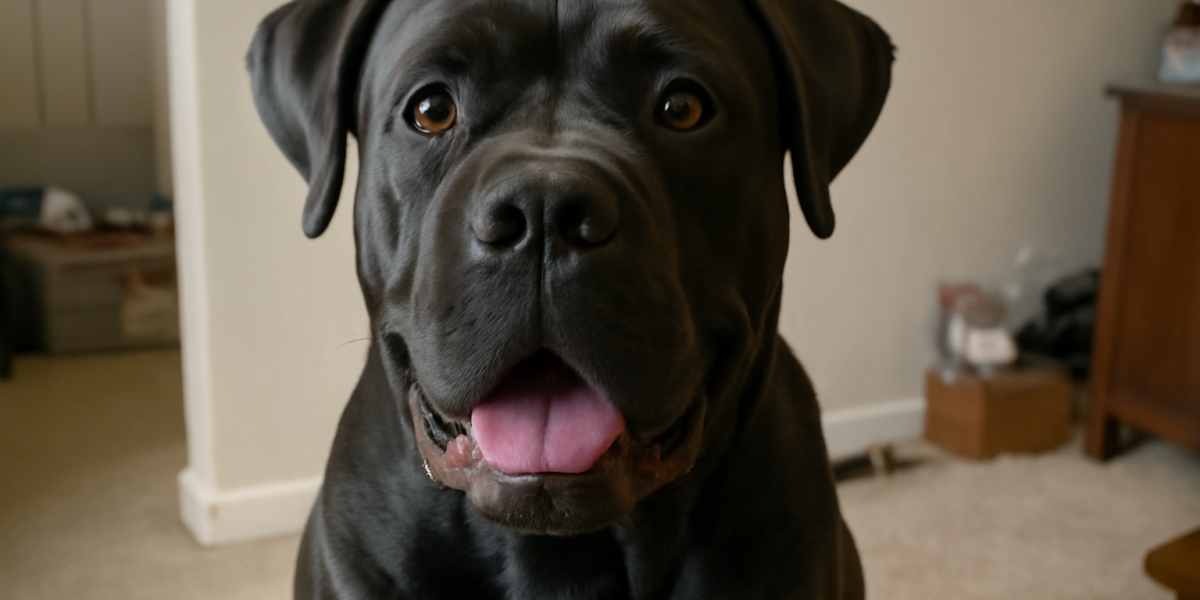
The cane corso is an imposing animal by any measure. Large, heavily muscled, and built with the kind of structural solidity that communicates purpose at a glance, this breed belongs to the mastiff family and shows it in every line of its body. The chest is broad and deep, the neck powerful and arched, and the hindquarters provide the drive for a movement that is surprisingly efficient and ground-covering for a dog of this mass. The overall impression is one of contained power — a body built not for speed alone but for strength and endurance over demanding terrain.
The head is large and distinctive, with a broad skull, a well-defined stop, and a wide, deep muzzle that gives the breed much of its characteristic look. The facial skin is somewhat loose, particularly around the muzzle and lips, contributing to the breed’s serious, ancient expression. Ears are naturally medium-sized and drop forward; historically they were cropped to a short, triangular shape, a practice that remains common in the United States but is increasingly restricted or banned in other countries. Both cropped and natural ears are correct for the breed, and the choice carries no bearing on temperament or health. The short, stiff coat comes in a wide range of colors including black, various shades of gray, fawn, red, brindle, and chestnut.
Exercise Needs
The cane corso is a working breed with real exercise requirements, but it is not as high-energy as some large breeds of similar size. An adult corso typically needs between 45 minutes and one and a half hours of moderate exercise per day — structured walks, outdoor play sessions, hiking, and supervised off-leash time in a securely fenced area all serve the breed well. Unlike herding breeds or sporting dogs that seem to need constant motion, the cane corso can settle comfortably in the home after adequate exercise has been provided.
What the cane corso needs just as much as physical activity is mental engagement. This is an intelligent, thinking breed that becomes bored and restless without purpose. Obedience training sessions, tracking games, structured play, and any activity that requires the dog to use its mind alongside its body are all excellent outlets. A cane corso that receives consistent exercise and mental stimulation is calm, focused, and a pleasure to live with. One that is confined, under-exercised, and left without engagement will channel that energy into behaviors that make a dog of this size very difficult to manage. Puppies should have exercise kept low-impact until growth plates close around 18 months. Visit our dog care blog for guidance on age-appropriate exercise for large breeds.
Grooming Needs
The cane corso’s short, dense coat is one of the more practical aspects of owning the breed. Shedding occurs year-round at a moderate level, with heavier periods during seasonal transitions in spring and fall. A weekly brushing with a rubber grooming mitt or a firm bristle brush removes loose hair efficiently and keeps the coat looking healthy. During peak shedding periods, increasing to two or three brushings per week manages the output noticeably.
Bathing is needed roughly every four to six weeks, or as circumstances demand. The corso’s coat dries relatively quickly and does not trap odors the way longer-coated breeds can. Beyond coat care, the breed’s facial skin folds and lip folds require regular attention — moisture and debris can accumulate in these areas and lead to skin irritation or infection if not kept clean and dry. Ears should be checked weekly and cleaned as needed to prevent wax buildup. Nails should be trimmed every three to four weeks — at the corso’s weight, overgrown nails create meaningful joint strain and affect the dog’s gait. Dental hygiene through regular brushing or dental chews rounds out a routine that is manageable in practice despite the breed’s size.
Health & Common Issues
The cane corso is generally a sturdy breed, but several health conditions appear with enough regularity that any prospective owner should understand them before committing to the breed.
Hip dysplasia is the most common orthopedic concern, involving malformation of the hip joint that leads to pain and progressive arthritis. Maintaining a lean, healthy body weight is one of the most effective preventive measures available, as excess weight accelerates joint deterioration dramatically in large breeds. Regular screening through OFA-certified evaluations is recommended for breeding animals.
Bloat — formally known as gastric dilatation-volvulus — is a life-threatening emergency in which the stomach fills with gas and rotates on itself. The cane corso’s deep chest puts the breed at elevated risk. Owners should know the signs: a distended abdomen, unproductive retching, restlessness, and rapid deterioration. Preventive gastropexy surgery is worth discussing with a veterinarian.
Cherry eye, a prolapse of the third eyelid gland, occurs with some frequency in the breed and is typically corrected surgically. Ectropion — outward rolling of the lower eyelid — is also seen in the cane corso and can lead to chronic irritation and increased risk of infection if left unaddressed. Regular eye checks are a standard part of caring for this breed.
Are Cane Corsos Good With Kids and Other Pets?
The cane corso can be an excellent family dog, but that outcome depends entirely on the foundation built through socialization, training, and experienced ownership. With the children in its own household, a well-raised corso is typically patient, watchful, and protective in a way that many families find deeply reassuring. These dogs tend to form particularly strong bonds with the younger members of the family and can be remarkably gentle given their size — though supervision is always required when any large dog interacts with small children, simply because of the physical differential involved.
The critical word in all of this is socialization. A cane corso that has been exposed from puppyhood to a wide range of people, children, environments, and other animals is a fundamentally different dog from one that has been isolated or inadequately socialized. Without that early work, the breed’s natural reserve and protective instinct can tip toward wariness or reactivity — which is a serious management challenge in a dog of this size and strength.
With other pets, compatibility depends on the individual dog and the quality of introductions. Corsos raised alongside other animals from puppyhood generally coexist well. Adults being introduced to established pets require careful, gradual management and a confident owner. This breed is best suited to experienced dog owners who understand how to read canine body language and manage inter-animal dynamics thoughtfully.
Training Tips
Training a cane corso is not optional — it is a fundamental responsibility of ownership. At 100 pounds or more of muscle and confidence, an untrained corso is not merely inconvenient; it is a genuine liability. The good news is that this breed is intelligent, willing to work with a handler it respects, and capable of learning an extensive range of commands and behaviors when training is approached correctly.
The cane corso responds best to calm, consistent, positive reinforcement-based training. This breed does not respond well to harsh corrections or intimidation — a confident corso may simply disengage from a handler who relies on force, or, in the worst cases, push back. What the breed does respond to is clear, fair leadership: an owner who sets consistent expectations, rewards the behavior they want, and follows through calmly and predictably every single time.
Early socialization is non-negotiable. The window between eight and sixteen weeks is critical, and exposure during this period to diverse people, environments, sounds, and animals builds the foundation for a stable adult dog. Socialization should continue actively through adolescence — the corso goes through a prolonged adolescent phase during which previously learned behaviors may be tested. Obedience classes, leash manners, a reliable recall, and a solid “leave it” are essential tools. Many owners of this breed pursue advanced obedience, protection sports, or Canine Good Citizen certification as ongoing structure for their dog’s energy and intelligence. For more training resources, visit our dog care blog.
History & Origin
The cane corso’s history reaches back to antiquity. The breed’s ancestors are the ancient Roman war dogs known as Canis Pugnax — large, fearless mastiff-type dogs that marched with the Roman legions into battle, wore armor into combat, and were used to charge enemy lines alongside soldiers. These were not pets; they were weapons, working partners in some of the ancient world’s most brutal conflicts. The name “cane corso” itself is believed to derive from the Latin “cohors,” meaning guardian or protector — a name earned through centuries of genuine working service.
As the Roman Empire declined, the descendants of these war dogs spread across Italy and adapted to new roles on the farms and estates of the Italian countryside. The cane corso became a versatile and indispensable working dog — used for hunting wild boar and other large game, driving livestock to market, guarding farms and homesteads, and protecting rural families from the genuine dangers of the pre-modern countryside. It was a true Italian mastiff, distinct from the heavier Neapolitan mastiff, built for endurance and agility as much as for power.
The breed declined sharply through the 20th century, particularly following World War II, and came perilously close to extinction by the 1970s. Italian breed enthusiasts, led by figures like Giovanni Bonnetti and Dr. Paolo Breber, undertook a systematic recovery effort — locating surviving dogs in remote southern Italian regions and establishing a breeding program that would bring the cane corso back from the edge. The breed was recognized in Italy in 1994 and achieved full American Kennel Club recognition in 2010. It has grown rapidly in popularity since and is now consistently ranked among the most registered breeds in the United States.
Frequently Asked Questions
Is the cane corso a good family dog?
The cane corso can be an outstanding family dog for the right family — one with experienced dog owners, older children who understand how to interact respectfully with a large dog, and the time and commitment to provide proper training and socialization. This is not a breed recommended for first-time dog owners or households that cannot commit to consistent structure. For families that put in the work, the cane corso’s loyalty, stability, and protective nature make it an exceptional companion.
How much does a cane corso weigh?
Adult males typically weigh between 100 and 130 pounds or more, while females range from approximately 90 to 120 pounds. Despite this size, the cane corso is not an excessively bulky or awkward dog — the breed’s structure is athletic and well-proportioned, built for both power and endurance. That said, prospective owners should have a realistic sense of what managing a dog of this weight means day-to-day, particularly on leash and at the veterinarian.
Does a cane corso need a lot of exercise?
The cane corso needs regular, consistent exercise — typically between 45 minutes and 90 minutes daily for an adult dog — but is not the highest-energy breed in the large-dog category. Daily structured walks, outdoor play, and mental stimulation through training or interactive activities meet the breed’s needs well. The cane corso’s exercise requirement is real and must be taken seriously, but it does not demand the level of constant high-intensity activity required by herding or sporting breeds of similar size.
Can you adopt a cane corso from a rescue?
Yes. Cane corsos and cane corso mixes appear in shelters and rescue organizations more often than many people expect. The breed is frequently surrendered by owners who were unprepared for its size, strength, training demands, or exercise needs. Rescue organizations with experience in the breed are often able to assess individual dogs thoroughly and match them to suitable homes with confidence. Adopting an adult cane corso whose temperament is already known can be a rewarding and practical path to bringing this remarkable breed into your life.
Adopt a Cane Corso
If this profile has confirmed that the cane corso is the right breed for your household, the next step is finding the right dog — and we hope that step leads you to adoption. Cane corsos and cane corso mixes enter shelters and breed-specific rescues regularly, often through no fault of their own. The dog waiting in a rescue kennel has the same loyalty, intelligence, and heart as any dog from a breeder. It simply needs the experienced, committed owner that the breed has always deserved.
Browse dogs currently available through our Walk Me Home dog adoption page to find cane corsos and large-breed mastiff mixes looking for their permanent home. For guidance on bringing a large, powerful working breed into your life — from the first days home through long-term training and care — visit our dog care blog. The right match is out there, ready for a household that will meet this extraordinary breed with the commitment it requires.
Looking to adopt a Cane Corso Breed Profile?
Browse Cane Corso Breed Profile dogs and mixes available for adoption from shelters and rescues near you.
Find Cane Corso Breed Profile Dogs for Adoption