Neapolitan Mastiff Overview
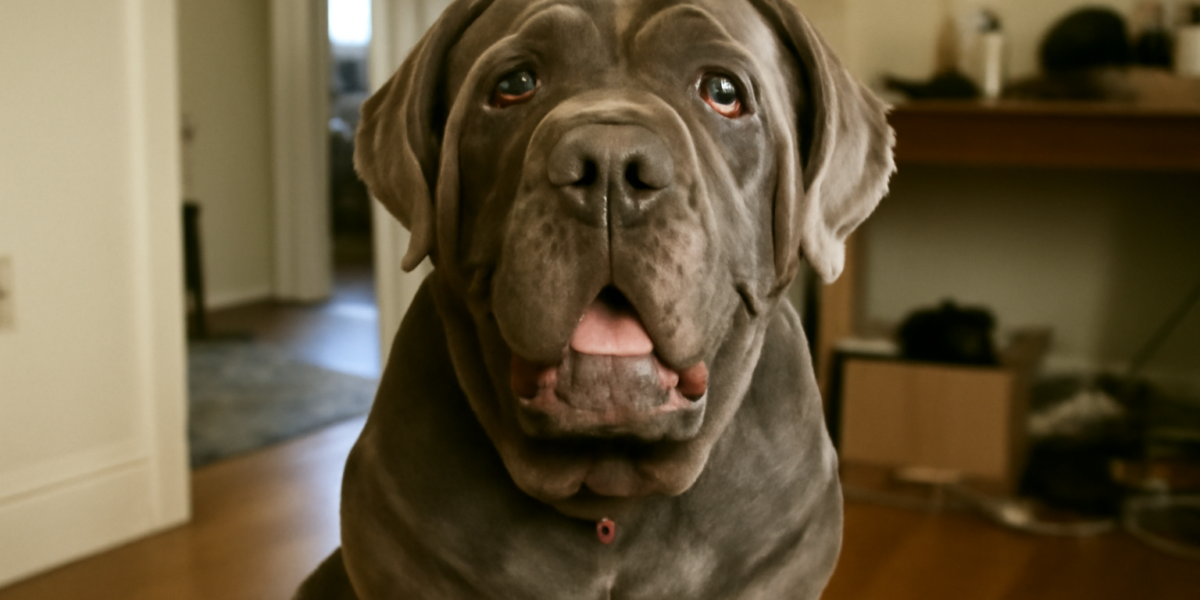
This Neapolitan Mastiff breed profile covers one of the most visually dramatic dogs in the world, an ancient Italian estate guardian whose loose folds, dewlap, and massive frame trace back to the molossus dogs of imperial Rome. The modern Neapolitan, sometimes called the Mastino Napoletano, was rebuilt in the mid-twentieth century from southern Italian estate dogs by breed advocate Piero Scanziani and remains a serious commitment for owners who understand what they are signing up for.
In this article
- Neapolitan Mastiff Overview
- Temperament and Personality
- Size and Appearance
- Exercise and Activity Needs
- Grooming and Care
- Health and Lifespan
- Roman Heritage and Modern Reconstruction
- Daily Life with a Neapolitan Mastiff
- Adopting a Neapolitan from Rescue
- Is the Neapolitan Mastiff Right for You?
- Frequently Asked Questions
This is not a casual family dog. Neapolitans are massive, slow-moving, deeply attached to their family, and physically demanding to maintain. They drool. A lot. Their wrinkles need cleaning. Their lifespan is short by dog standards. Their veterinary bills can rival a used car. Read this profile carefully before falling for the look.
Quick facts: giant size, working/guardian group, very short coat with extreme skin folds, lifespan typically in the seven-to-nine-year range, low exercise needs, intensive grooming despite the short coat, capable-experienced-owner-only breed. Significant drool. Heat sensitivity. Gentle giant temperament with family, deeply suspicious of strangers.
Temperament and Personality
With family, the Neapolitan is famously affectionate, calm, and almost sloth-like indoors. They follow their people from room to room, lie on feet, and make companionable groans and rumbles. They are not high-energy or demanding of activity, and they tend to bond especially closely with one or two primary humans.
With strangers they are reserved at best and openly suspicious at worst. The breed was developed to defend Italian estates against intruders, and the wariness is wired in. A well-socialized Neapolitan accepts people the family welcomes, but they will never be a tail-wagging greeter for the delivery driver. Owners must manage introductions, visitors, and household traffic with intent.
With other dogs Neapolitans can be selective, particularly same-sex pairs of intact adults. They are typically tolerant of children they grow up with, though their sheer size and the drool factor make them better suited to families with older kids. Early and ongoing socialization is essential to a stable adult.
Size and Appearance
Adult males stand twenty-six to thirty-one inches at the shoulder and commonly weigh one hundred fifty pounds, with some males significantly heavier. Females are slightly smaller but still firmly in giant-breed territory. The build is heavy, loose-skinned, and rectangular, with a massive head, pronounced dewlap, and wrinkles across the face and body.
The coat is short and dense, in solid colors of black, blue (gray), mahogany, or tawny, sometimes with brindling. The wrinkles and skin folds are a defining feature and a maintenance challenge. The eyes are deep-set with hanging lower lids, a configuration that contributes to the breed’s eye health issues. The tail is traditionally docked in some countries; check current regulations.
The breed’s appearance is so distinctive that Neapolitans are immediately recognized. They are not subtle dogs in any sense — physical, visual, or emotional. Their size and the loose skin can be intimidating to people unfamiliar with the breed, even when the dog is being calm and friendly.
Exercise and Activity Needs
Compared to most working breeds, Neapolitans need very little structured exercise. Two to three short walks per day at moderate pace is plenty for a healthy adult. They are not jogging companions, they are not hiking partners, and they should not be encouraged into high-impact play.
Puppies in particular need careful exercise management. Forced running, repetitive jumping, or stair climbing during the long growth phase can permanently damage joints. Free-form yard play on soft surfaces is far better than structured running until the dog is well past two years old.
Heat is a serious concern. The heavy build, short muzzle, and dense skin make Neapolitans struggle in hot weather. Plan walks for cool morning or evening hours, ensure shade and water access at all times, and keep the home air-conditioned during summer. Heat stroke is a real and frequent risk in this breed.
Grooming and Care
The short coat needs only weekly brushing, but the wrinkles and folds need much more. Plan to wipe and dry every fold, especially around the face, neck, and underbody, several times per week. Trapped moisture and debris cause skin infections that range from minor irritations to chronic problems requiring veterinary care.
The drool is constant and substantial. Owners typically keep “drool rags” in every room, on shoulders, in the car. After the dog drinks, after meals, after a head shake, expect drool flung in unexpected directions. This is not a fixable trait; it is a feature of the head structure.
Eye care matters because the loose lower lids predispose Neapolitans to cherry eye, ectropion, and entropion. Regular checks for redness, discharge, or visible third-eyelid changes catch problems early. Many Neapolitans need surgical correction for one or more of these issues during their lives. Talk to a veterinarian familiar with the breed.
Health and Lifespan
Neapolitan health is the hardest part of ownership. The lifespan is typically seven to nine years, sometimes shorter, occasionally a bit longer with attentive care. Owners should go in with eyes open about this.
Major concerns include hip and elbow dysplasia, cardiac disease including dilated cardiomyopathy, and gastric dilatation-volvulus. Bloat is a top emergency for deep-chested giants; our bloat guide covers symptom recognition and prophylactic gastropexy considerations. Eye conditions including cherry eye, ectropion, and entropion are common and often surgical.
Skin fold dermatitis, demodectic mange in young dogs, and orthopedic injuries from the heavy frame are additional concerns. Reputable breeders screen for orthopedics and cardiac issues with OFA, CHIC, or equivalent certifications and disclose results. Pet insurance is worth pricing before bringing a Neapolitan home.
Roman Heritage and Modern Reconstruction
The Neapolitan’s lineage is one of the oldest in the dog world, and it is also one of the most contested. Roman writers including Columella and Virgil described huge molossus dogs guarding villas and accompanying soldiers, and statuary from the imperial period shows mastiff-type dogs that resemble the modern Neapolitan in head shape and dewlap. Whether modern Neapolitans descend in an unbroken line from those Roman dogs is debated by cynologists. What is certain is that southern Italian estates kept large guardian dogs continuously through the medieval, Renaissance, and modern periods.
The breed nearly vanished in the chaos of World War II. Piero Scanziani gathered surviving working dogs from villages around Naples in the late 1940s and drafted the first modern standard, which the Italian Kennel Club accepted in 1949. Subsequent decades saw the Neapolitan refined as a show breed, sometimes at cost to the working temperament and the structural soundness. Reputable modern breeders work to preserve a Neapolitan that is dramatic in appearance but functional in movement, free of extreme exaggeration that compromises health.
Daily Life with a Neapolitan Mastiff
A Neapolitan in a settled home is a quiet presence punctuated by deep snores, soft groans, and the occasional thunderous alarm bark when something disturbs the territory. They prefer to lie near their family on cool tile or hardwood, sometimes claiming a couch as their permanent station, and they are not the dog you take on weekend backpacking trips.
The size affects everything. Doors need to be wider than tight apartment doorways. Cars need to be SUVs or vans rather than sedans. Veterinarians need to be selected partly for their ability to handle a 150-pound patient on a stainless-steel table. Stairs become a daily concern as the dog ages and joints stiffen, and many homes adapt by adding ramps or by relocating the dog’s resting area to ground level.
Visitor management is part of the routine. A Neapolitan should be introduced to new people on the dog’s terms, not asked to greet a stream of strangers at the door. Many owners use a baby gate at the entry, allowing the dog to assess from a calm distance before deciding to engage. This is not a breed for households with constant traffic, frequent contractors, or a busy social calendar of unfamiliar guests.
Adopting a Neapolitan from Rescue
Neapolitans appear in rescue more often than the breed’s rarity might suggest, and the surrender stories follow predictable patterns. Owners underestimate the drool, the wrinkle maintenance, the medical bills, or the lifespan grief. A common surrender age is three to five, when the dog is still healthy but the household has tired of the upkeep, or seven to nine, when serious medical issues hit the family budget.
Shelter staff often know the basics about a surrendered Neapolitan, including whether the dog is housetrained, comfortable with other pets, and friendly with the staff. They are less likely to know about cardiac status, joint condition, or eye history without veterinary records, and a thorough vet workup is part of the rescue process for any adopted Neapolitan. Mastiff-specific rescues exist in most regions and are worth contacting directly. Reading our rescue mastiff guide covers the practical questions to ask.
Behavioral rehabilitation in a Neapolitan rescue typically focuses on building trust with the new family, managing the protective instincts in a new environment, and adjusting to household routines. Force-free methods work well; harsh corrections can damage the family bond and make the dog more reactive, not less. Reading the 3-3-3 rule sets reasonable expectations for the settling-in period.
Is the Neapolitan Mastiff Right for You?
Neapolitans suit experienced large-breed owners with the physical strength to manage a giant dog, the financial resources to handle inevitable veterinary costs, and the emotional readiness for a shorter lifespan. They thrive in homes with steady routines, climate control, and one or two primary humans who lead calmly.
This is not a beginner breed, not a family-with-toddlers breed, and not a budget breed. Read our guide to adopting a rescue mastiff for rescue-specific considerations. For broader giant-breed rescue context, see adopting a rescue Saint Bernard and our Great Dane profile.
Compare with related mastiff types in this batch: Bullmastiff, Boerboel, and Spanish Mastiff show different temperaments within the molosser family. To browse currently listed dogs, visit our adopt-a-dog hub.
Frequently Asked Questions
How much do Neapolitan Mastiffs drool?
A lot. Constantly. After drinking, after eating, after a shake, on furniture, on visitors, on ceilings (yes, really, when they shake their heads). If drool bothers you, this is not your breed.
Are Neapolitan Mastiffs aggressive?
They are protective and reserved with strangers, not indiscriminately aggressive. A well-bred, well-socialized Neapolitan is calm and stable. A poorly bred or under-socialized one can be a serious management problem.
What is the Neapolitan Mastiff lifespan?
Typically seven to nine years. Some live longer with excellent care; some have life cut short by cardiac disease, bloat, or orthopedic emergencies. The short lifespan is the breed’s hardest feature for owners.
Are Neapolitans banned anywhere?
Some jurisdictions list mastiff-type breeds in dangerous-dog ordinances, and homeowner insurance often excludes them. Check your local laws and your insurance policy before bringing one home.
Can Neapolitans live with other dogs?
Often yes, with thoughtful introductions and ideally with opposite-sex pairings. Same-sex intact adults can be confrontational. Cats and small pets are case-by-case based on the individual dog’s prey drive.
Looking to adopt a Neapolitan Mastiff Breed Profile?
Browse Neapolitan Mastiff Breed Profile dogs and mixes available for adoption from shelters and rescues near you.
Find Neapolitan Mastiff Breed Profile Dogs for Adoption