
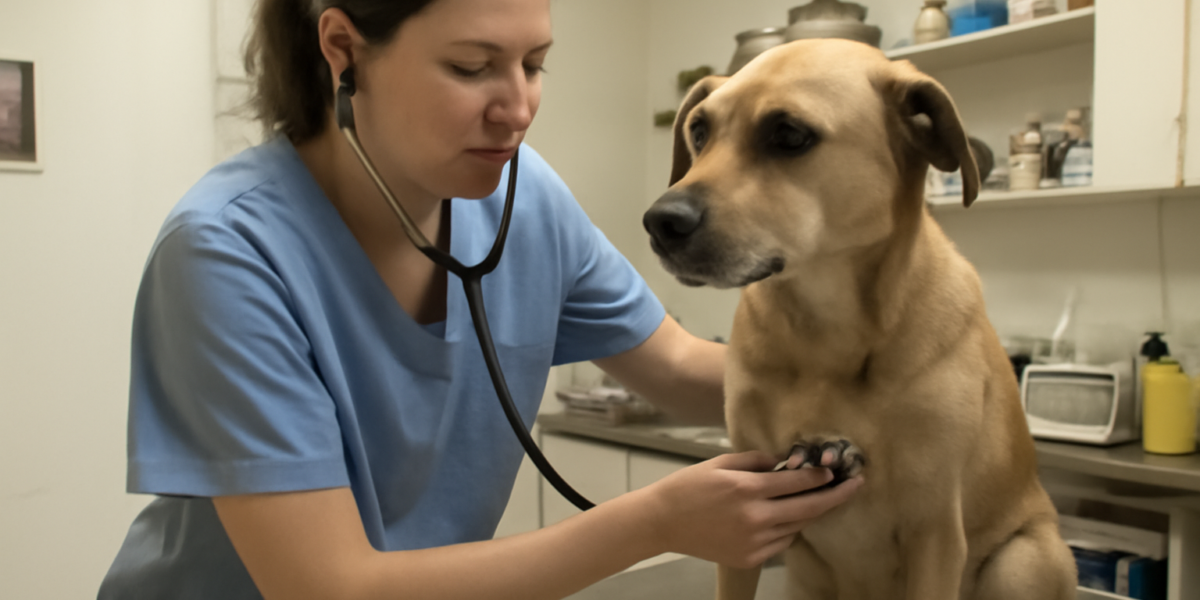
What Dilated Cardiomyopathy Is
Dilated cardiomyopathy in dogs (DCM) is a disease in which the heart muscle becomes weakened and the heart chambers enlarge. The contraction strength of the left ventricle drops, blood backs up into the lungs, and the heart’s electrical system often becomes unstable, producing dangerous arrhythmias. DCM is one of the most common causes of heart failure in large-breed dogs.
In this article
- What Dilated Cardiomyopathy Is
- Predisposed Breeds
- Recognizing the Symptoms
- Screening for Predisposed Breeds
- Diagnostic Workup
- Treatment of Pre-Clinical DCM
- Treatment of Clinical Heart Failure
- The Grain-Free Diet Conversation
- Prognosis and Life Expectancy
- Home Monitoring
- Working With a Veterinary Cardiologist
- When to Call Your Veterinarian
- Frequently Asked Questions
The disease has a long pre-clinical phase. Many affected dogs feel and appear normal for months to years before signs appear, even though the heart is gradually deteriorating. By the time clinical signs (cough, exercise intolerance, fainting) develop, the disease is often advanced. Early detection through breed-appropriate screening makes a meaningful difference.
DCM is primarily a genetic disease in predisposed breeds, although diet and other factors have entered the conversation in recent years. Understanding which breeds are at risk and what screening looks like helps owners catch this disease in time to make a difference.
Predisposed Breeds
Doberman Pinschers and Boxers are the two breeds most strongly associated with DCM. Doberman DCM is particularly aggressive and often involves dangerous arrhythmias; Boxer cardiomyopathy is a related but distinct condition (sometimes called arrhythmogenic right ventricular cardiomyopathy).
Other commonly affected breeds include Great Danes, Irish Wolfhounds, Saint Bernards, Newfoundlands, Cocker Spaniels (often related to taurine deficiency), and Standard Schnauzers. The disease can occur in mixed-breed dogs too, though it is less common.
If you share your home with one of the predisposed breeds, regular cardiac screening starting in young adulthood and continuing through life is wise. Catching the disease in its silent phase opens the door to treatment that can extend life and quality.
Recognizing the Symptoms
Early DCM is silent. Owners typically notice nothing because the heart’s reserve is large and dogs compensate well until late in disease. When signs appear, they may include exercise intolerance, decreased energy, weight loss, persistent cough (especially at night or after lying down), labored breathing, or sudden collapse.
Fainting (syncope) episodes during exercise or excitement suggest serious arrhythmias and are a medical emergency. Dogs may collapse briefly and then seem to recover, but the underlying rhythm disturbance is dangerous and needs prompt evaluation.
Sudden death without warning is unfortunately part of the picture in some dogs, particularly Dobermans. This is one reason early screening matters; identifying disease before it becomes catastrophic gives a chance to intervene.
Screening for Predisposed Breeds
Annual cardiac screening for Dobermans, Boxers, and other high-risk breeds typically includes auscultation by a veterinarian, an echocardiogram (ultrasound of the heart) to assess chamber size and contraction, and a Holter monitor (24-hour ambulatory ECG) to look for ventricular arrhythmias.
The Holter is particularly important in Dobermans because arrhythmias can precede chamber dilation by months to years. Detecting frequent ventricular premature complexes early can prompt treatment that may extend life. Your veterinarian or a board-certified cardiologist will interpret the results.
Genetic testing for specific mutations associated with DCM is available for some breeds. The tests are not perfect; not all affected dogs carry the known mutations, and some carriers do not develop disease. Combining genetic testing with imaging and Holter monitoring gives the most complete picture.
Diagnostic Workup
If your veterinarian suspects DCM based on signs or screening, additional diagnostics confirm and characterize the disease. Echocardiography measures chamber sizes, wall thickness, and contractile function. Chest radiographs assess heart size, lung pattern, and presence of pulmonary edema (fluid in the lungs from heart failure).
An ECG identifies any current arrhythmias, while a Holter monitor catches intermittent ones missed in a brief office recording. Bloodwork (including biomarkers like NT-proBNP) supports the diagnosis and helps stage disease severity.
Your veterinary team may also test for taurine and carnitine levels in breeds where deficiencies have been linked to DCM (especially Cocker Spaniels and some others). Treatable nutritional contributors are worth identifying because they can dramatically change outcomes.
Treatment of Pre-Clinical DCM
Dogs with measurable heart enlargement but no clinical signs (Stage B2 or pre-clinical DCM) often benefit from medication that delays the onset of heart failure. Pimobendan is the most commonly used medication and has been shown to extend the symptom-free period meaningfully. ACE inhibitors are sometimes added.
Antiarrhythmic medications are introduced if Holter monitoring shows frequent or complex ventricular arrhythmias. Common choices include sotalol, mexiletine, or amiodarone. Your veterinarian or cardiologist will calculate doses and monitor for side effects.
Routine rechecks every six months in stable pre-clinical patients track disease progression and allow timely adjustments. The goal is to maximize the dog’s good time before clinical heart failure develops.
Treatment of Clinical Heart Failure
Once dogs progress to congestive heart failure, treatment intensifies. Diuretics (furosemide, then potentially torsemide) remove fluid from the lungs. Pimobendan continues. ACE inhibitors and spironolactone help manage the broader neurohormonal response. Your veterinarian will calculate doses and adjust based on response.
Frequent rechecks during the early phase of heart failure ensure medications are working and side effects are manageable. Bloodwork tracks kidney function, since diuretics and ACE inhibitors can stress the kidneys. Most dogs stabilize and live comfortably for additional months to years with appropriate management.
Dietary modifications, including moderate sodium restriction, may be advised. Maintaining body condition is important; cardiac cachexia (muscle loss in heart failure) is a real concern and benefits from attention to nutrition.
The Grain-Free Diet Conversation
In recent years, an FDA investigation raised concerns about a possible link between certain grain-free, legume-rich, or boutique diets and DCM in atypical breeds. The science remains incomplete, and the relationship is not fully understood, but enough cases improved with diet change to take the issue seriously.
If your dog has DCM and is eating a diet heavy in peas, lentils, or other pulses, talk with your veterinarian about transitioning to a more conventional diet from a manufacturer with strong nutritional credentials. Diet-associated cases sometimes improve substantially with the change. This is a topic to discuss with your vet rather than overclaim either way.
Browse the broader dog care archive for related nutrition topics. Comprehensive prevention also includes heartworm prevention and other routine care that supports cardiovascular health.
Prognosis and Life Expectancy
The outlook for dilated cardiomyopathy in dogs varies widely. Some dogs caught early and treated proactively live for years with good quality of life. Others, particularly Dobermans with aggressive disease, progress more rapidly despite the best care.
Many dogs live comfortably for many months after a diagnosis of clinical heart failure with appropriate medication. Sudden death from arrhythmia remains a risk, especially in Dobermans, even in dogs that appear stable. Honest conversations with your veterinary team about expectations help families plan.
Quality of life metrics matter as much as life expectancy. A dog that is comfortable, eating, and engaged with the family is doing well, even if echocardiogram numbers are concerning. Daily journaling of energy, breathing rate, and appetite supports informed decisions.
Home Monitoring
Resting respiratory rate is one of the most useful things you can track at home. Count your dog’s breaths while sleeping (one breath equals an inhale and exhale together). A persistently elevated rate, generally over 30 to 35 breaths per minute at rest, can be an early sign of fluid backing up in the lungs.
Watch for new or worsening cough, exercise intolerance, restlessness at night, decreased appetite, or fainting. Any of these warrants prompt veterinary attention. Apps and simple paper logs both work for tracking trends.
Maintain regular medication schedules. Missed doses can trigger decompensation. Pill organizers, alarms, and consistent routines all help busy households stay on track. Your vet may recommend periodic at-home blood pressure checks if you have access to equipment.
Note any episodes of cough, fainting, or unusual fatigue with the date and circumstances. Patterns help your veterinarian decide whether medication adjustments are needed. Even brief, seemingly minor episodes are worth recording, because clusters can mark progression.
Modify exercise based on your dog’s current capacity. Many dogs with stable DCM still enjoy walks, gentle play, and time with the family; pushing into strenuous activity is what causes problems. Let your dog set the pace, and stop earlier rather than later when fatigue appears.
Working With a Veterinary Cardiologist
Dilated cardiomyopathy almost always benefits from input from a board-certified veterinary cardiologist. Cardiologists have specialized training, advanced imaging equipment, and deeper experience with the medications and arrhythmias involved. Even one or two consultations can meaningfully shape the treatment plan.
Many cardiologists co-manage cases with primary care, with the bulk of rechecks handled locally and major decision points handled at the specialty hospital. Telemedicine cardiology consultations and Holter monitoring services are widely available and can extend specialist input even to owners far from urban referral centers.
Bring detailed records to your cardiology consultation: previous echocardiogram reports, ECGs, current medications, and a journal of any episodes (cough, fainting, exercise intolerance). The more complete the picture, the more useful the visit.
When to Call Your Veterinarian
Schedule a same-day visit for any dog with new cough, labored breathing, exercise intolerance, fainting, or sudden weakness. These can signal heart failure or arrhythmia and need prompt evaluation.
If your dog is in treatment, contact your vet for any worsening of existing signs, refusal to eat, or unusual lethargy. Heart disease can decompensate quickly, and timing matters.
Always consult your veterinarian before starting, stopping, or changing any cardiac medication. The drugs interact with each other and with kidney function in complex ways.
Frequently Asked Questions
Should I screen my Doberman or Boxer?
Yes, annual cardiac screening with echocardiogram and Holter monitor is recommended for these breeds, often starting in young adulthood. Talk with your vet about timing.
Can DCM be reversed?
Some diet-associated cases improve substantially with diet change, and taurine deficiency cases can reverse with supplementation in certain breeds. Genetic DCM in predisposed breeds is generally progressive but manageable with medication.
Is grain-free food really a problem?
The science is incomplete, but enough atypical-breed DCM cases linked to grain-free or legume-rich diets have improved with diet change to warrant caution. Discuss diet choices with your veterinarian, especially in breeds without typical genetic risk.
How long can my dog live with DCM?
It varies. Many dogs live comfortably for many months to years with appropriate care. Outcomes depend on breed, severity, and how early treatment begins.
What is the most important sign to watch for?
Resting respiratory rate is one of the most reliable home metrics. A persistently elevated rate during sleep often precedes other obvious signs of heart failure and should prompt a vet visit.


