
Last updated: April 10, 2026
In this article
Turkey is a protein staple in many households, taking center stage at holiday meals and appearing regularly in sandwiches, soups, and casseroles throughout the year. It is also a common ingredient in commercial dog foods, which might lead you to assume that sharing some turkey from your plate is perfectly fine. In many cases it is — plain, cooked turkey is a safe, lean, and nutritious protein source for dogs. However, the way turkey is typically prepared for human consumption introduces several risks that every dog owner should understand before offering their pet a taste.
Quick Answer: Yes, dogs can eat plain, cooked turkey. Boneless, skinless, unseasoned turkey meat is safe and nutritious for dogs. Avoid turkey bones, skin, seasoned or brined turkey, and processed turkey products like deli meat. Turkey is an excellent lean protein source rich in B vitamins and selenium.
Is Turkey Safe for Dogs?
Plain, cooked turkey meat is safe for dogs and is actually one of the better protein sources you can offer them. Turkey is a primary ingredient in many premium commercial dog foods, and for good reason — it provides high-quality, easily digestible animal protein with a favorable amino acid profile. The lean white meat is particularly well-suited for dogs on calorie-restricted diets or those who need a low-fat protein source.
The safety of turkey for your dog depends entirely on how it is prepared and which parts you offer. Plain turkey breast that has been baked, boiled, or roasted without any seasonings, butter, oil, or marinade is the ideal form. This preparation preserves the nutritional benefits while eliminating the risks associated with common cooking additives. Ground turkey that has been cooked thoroughly and drained of excess fat is also a safe option.
Turkey becomes problematic when it is prepared in the ways humans typically enjoy it. Holiday turkeys are usually brined, rubbed with butter, seasoned with herbs, stuffed with stuffing, and roasted to create a flavorful dish that is entirely inappropriate for dogs. The seasonings — particularly garlic and onion — are toxic to dogs. The butter and drippings add dangerous levels of fat. The brine contributes excessive sodium. And the bones, once cooked, become brittle and splintering hazards. For more on why garlic is dangerous, see our article on garlic toxicity in dogs.
Turkey allergies do exist in dogs, though they are relatively uncommon. True poultry allergies more frequently involve chicken than turkey. If your dog has a diagnosed chicken allergy, there is a possibility of cross-reactivity with turkey, so introduce it cautiously with your veterinarian’s guidance. Signs of a food allergy include itching, skin redness, ear infections, and gastrointestinal symptoms that correlate with eating the allergen.
Nutritional Benefits of Turkey for Dogs
Turkey is a nutritionally dense protein source that offers several advantages for canine health. Understanding what turkey brings to the table helps explain why it is so widely used in commercial dog food formulations.
Lean protein. Turkey breast is one of the leanest widely available meats, containing approximately 29 grams of protein per 100 grams of cooked meat and only about 1 gram of fat (in skinless white meat). This protein-to-fat ratio is exceptional and makes turkey ideal for dogs who need high protein without excessive fat — including overweight dogs, dogs recovering from pancreatitis, and senior dogs with reduced caloric needs. The protein in turkey contains all the essential amino acids dogs require for muscle maintenance, immune function, and overall cellular health.
B vitamins. Turkey is particularly rich in several B vitamins. Niacin (B3) supports energy metabolism and skin health. Vitamin B6 is essential for brain function, hormone regulation, and red blood cell production. Vitamin B12 supports nervous system function and DNA synthesis. These vitamins work together to maintain the metabolic processes that keep dogs healthy and energetic.
Selenium. Turkey is an excellent source of selenium, a trace mineral that functions as a powerful antioxidant. Selenium supports immune function, thyroid health, and reproductive health, and it plays a role in protecting cells from oxidative damage. A 100-gram serving of turkey provides a substantial portion of the selenium requirement for dogs.
Phosphorus. This mineral is essential for bone and teeth health, energy metabolism, and kidney function. Turkey provides phosphorus in a bioavailable form that dogs can efficiently absorb and utilize. However, dogs with kidney disease may need to limit phosphorus intake, so consult your veterinarian if your dog has compromised kidney function.
Tryptophan. Turkey contains tryptophan, an amino acid that serves as a precursor to serotonin, the neurotransmitter associated with mood regulation and calmness. While the popular notion that turkey makes you sleepy is somewhat exaggerated, tryptophan does play a role in promoting relaxation. Some veterinary behaviorists suggest that tryptophan-rich foods may have a mildly calming effect on anxious dogs, though this benefit should not be overstated.
Parts of Turkey Dogs Should Never Eat
While turkey meat itself is safe, several parts of a turkey and common turkey preparations are dangerous for dogs.
Cooked turkey bones. This is the single most important warning about turkey and dogs. Cooked turkey bones — whether from the legs, thighs, wings, or carcass — become dry and brittle during cooking. When a dog chews on them, they splinter into sharp, jagged fragments that can cause serious and potentially fatal injuries. Bone splinters can puncture the mouth, throat, esophagus, stomach, or intestinal lining. They can also cause intestinal obstruction. Every year, veterinary emergency rooms see a spike in bone-related emergencies during and after the Thanksgiving and Christmas holidays. Never give your dog cooked turkey bones, and dispose of turkey carcasses in a secure trash container that your dog cannot access.
Turkey skin. Turkey skin is extremely high in fat, even more so when the turkey has been roasted with butter or oil. The fat content of turkey skin can trigger pancreatitis in susceptible dogs, a painful and potentially dangerous inflammation of the pancreas. The skin also absorbs the seasonings and rubs applied to the turkey, concentrating potentially harmful compounds like garlic, onion powder, and excessive salt. Always remove the skin before offering turkey to your dog.
Turkey drippings and gravy. The pan drippings from a roasted turkey are essentially concentrated fat and seasonings — a recipe for pancreatitis and gastrointestinal distress. Turkey gravy made from drippings adds flour, butter, and often additional seasonings. Neither should ever be given to dogs. Even a small amount of gravy ladled over a dog’s food can introduce enough fat to trigger problems in sensitive individuals.
Stuffing. Stuffing cooked inside a turkey absorbs the bird’s juices and typically contains onions, garlic, butter, and herbs — all problematic for dogs. The bread base of stuffing adds empty calories, and some recipes include raisins or nuts that pose additional toxic risks.
Seasoned turkey. Any turkey that has been brined, marinated, rubbed with seasoning, or cooked with garlic, onion, butter, or oil should be considered off-limits for dogs. The only turkey appropriate for sharing is completely plain meat that has been cooked without any additives.
How to Prepare Turkey for Your Dog
Preparing turkey specifically for your dog is straightforward and does not require any culinary skill. The goal is plain, fully cooked, boneless, skinless meat.
Turkey breast. The simplest preparation is to bake or boil a boneless, skinless turkey breast without any seasonings, oil, or butter. Bake at 350 degrees Fahrenheit until the internal temperature reaches 165 degrees Fahrenheit, then let it cool completely before cutting into pieces appropriate for your dog’s size. Alternatively, boil turkey breast in plain water for 20 to 30 minutes until fully cooked. Boiling is particularly useful when you want to create a shredded texture that mixes well with your dog’s regular food.
Ground turkey. Cook ground turkey in a skillet without oil, breaking it apart as it cooks. Drain excess fat after cooking. Choose lean ground turkey (at least 93 percent lean) to minimize fat content. Ground turkey can be mixed directly into your dog’s food or used as a training treat.
Turkey as a meal topper. Small amounts of shredded or diced turkey make an excellent meal topper for dogs who are picky eaters or who need encouragement to eat their regular food. A tablespoon or two mixed into kibble can make the meal significantly more appealing without disrupting the nutritional balance of the complete diet.
Turkey for homemade dog food. If you prepare homemade dog food, turkey is an excellent protein base. However, homemade diets must be formulated with guidance from a veterinary nutritionist to ensure they meet all of your dog’s nutritional requirements. Turkey alone does not provide complete nutrition — it must be balanced with appropriate amounts of fat, carbohydrates, vitamins, and minerals.
Portion sizes. For occasional treats, offer one to two tablespoons of turkey for small dogs, two to four tablespoons for medium dogs, and up to a quarter cup for large dogs. These portions can be given several times per week without concern for healthy dogs. As with all treats, turkey should not exceed 10 percent of your dog’s daily caloric intake. If your dog enjoys other proteins too, you might explore whether pineapple is safe for dogs as a complementary treat.
Turkey and Holiday Safety for Dogs
Holiday meals are the most common time for turkey-related emergencies in dogs. The combination of a large, accessible bird, distracted hosts, and well-meaning guests creates numerous opportunities for dogs to get into trouble.
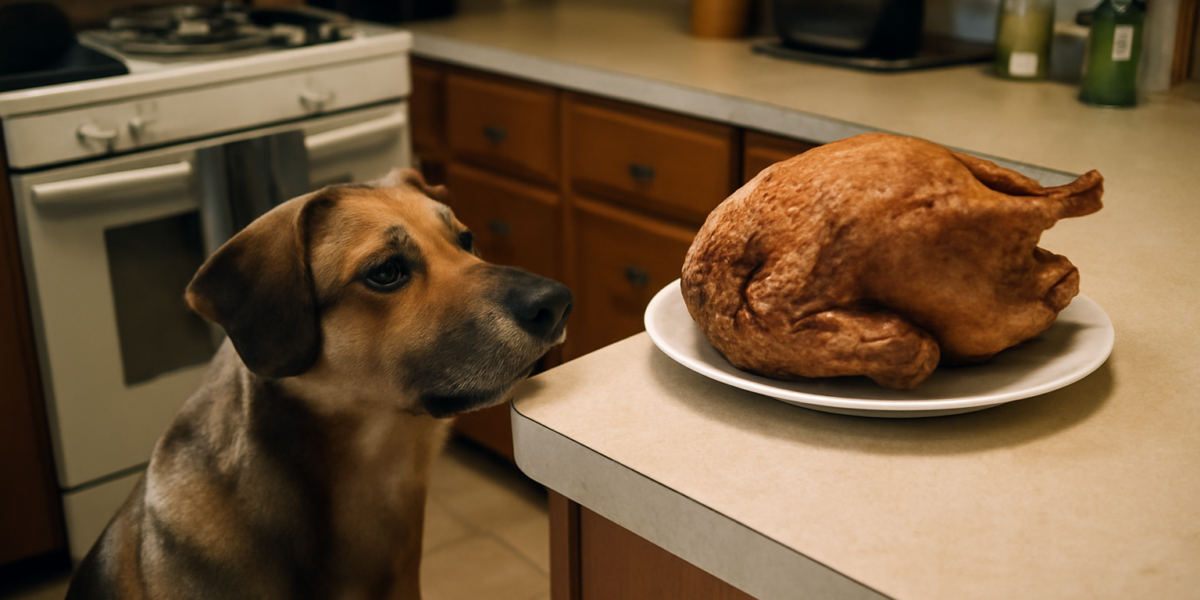
Secure the turkey. Never leave a cooked or cooling turkey unattended where your dog can reach it. Dogs are remarkably resourceful when food is involved, and even well-behaved dogs may be overcome by the temptation of an entire turkey sitting on a countertop. Push the turkey to the back of the counter, close kitchen doors, or use baby gates to keep dogs out of the kitchen during preparation and cooling.
Manage the carcass. After carving, the turkey carcass is one of the most dangerous items in your kitchen from a dog’s perspective. It contains cooked bones, skin, fat, seasoning residue, and all the components that are hazardous to dogs. Dispose of the carcass in a trash container with a secure, dog-proof lid immediately after carving. Better yet, place it in an outdoor garbage bin that your dog cannot access. Many holiday bone emergencies occur when dogs raid the kitchen trash overnight.
Communicate with guests. Make sure all guests know not to feed your dog from the table and that no turkey scraps, bones, or skin should be given to the dog. This is especially important with children, who may not understand the risks and may share food with the dog when adults are not watching. Consider providing a small bowl of plain, pre-portioned turkey pieces and letting guests know those are the only approved dog treats.
Have emergency numbers ready. Keep your regular veterinarian’s number and the number of the nearest 24-hour emergency animal hospital easily accessible during holiday gatherings. If an incident occurs, having these numbers on hand eliminates the stress of searching for them during an emergency.
Processed Turkey Products and Dogs
Not all turkey products are created equal, and the processed varieties found in delis and grocery stores carry different risks than freshly cooked turkey.
Deli turkey. Sliced deli turkey, while not acutely dangerous in small amounts, is not ideal for dogs. It typically contains added sodium, nitrates or nitrites (preservatives linked to health concerns), and often includes garlic powder or onion powder as flavoring agents. A single slice is unlikely to cause harm, but regular feeding of deli turkey exposes your dog to unnecessarily high sodium and potentially harmful additives.
Turkey hot dogs and sausages. These processed products contain high levels of sodium, fat, preservatives, and flavorings that are inappropriate for dogs. They offer none of the lean protein benefits of plain turkey and add multiple problematic ingredients. Turkey bacon falls into this category as well — it is processed, high in sodium, and contains preservatives.
Smoked turkey. Smoked turkey contains elevated sodium levels from the brining process and may contain compounds from the smoking process that are not ideal for canine consumption. While a small taste is unlikely to cause acute problems, smoked turkey should not be a regular treat.
When choosing turkey for your dog, fresh is always better than processed. The closer the turkey is to its natural state — plain, cooked, boneless, skinless — the safer and more nutritious it will be. For information about other safe protein sources, check out our guide on coconut for dogs.
Frequently Asked Questions
Can puppies eat turkey?
Yes, puppies can eat plain, cooked turkey once they are fully weaned and eating solid food, typically around 8 weeks of age. Turkey is actually one of the better proteins to introduce to puppies because it is lean, easy to digest, and rarely causes allergic reactions. Start with very small amounts — a teaspoon of finely shredded turkey — and observe for any digestive issues. Finely shred or mince the turkey to eliminate any choking risk, as puppies are less experienced chewers than adult dogs. Do not use turkey as a replacement for puppy food, as puppies have specific nutritional requirements that turkey alone does not fulfill.
Can dogs eat raw turkey?
Raw turkey carries a significant risk of bacterial contamination, including Salmonella and Campylobacter, which can cause serious illness in both dogs and the humans they live with. While proponents of raw diets argue that dogs can handle these bacteria better than humans, the risk is not zero, and outbreaks of foodborne illness from commercial raw diets have been documented. If you are interested in a raw diet for your dog, consult a veterinary nutritionist who can help you formulate a balanced diet with appropriate safety measures. For casual treat-giving, stick with cooked turkey.
What should I do if my dog ate turkey bones?
If your dog has eaten cooked turkey bones, contact your veterinarian immediately. Do not attempt to induce vomiting, as the bone fragments could cause damage on the way back up. Your veterinarian may recommend monitoring at home with specific signs to watch for, or they may want to examine your dog and take radiographs. Watch for drooling, gagging, vomiting, bloody stool, abdominal pain, loss of appetite, straining to defecate, and lethargy. These symptoms can appear anywhere from immediately to several days after bone ingestion. Small, well-chewed bone fragments may pass without incident, but sharp splinters can cause life-threatening perforations.
Is turkey better than chicken for dogs?
Turkey and chicken are both excellent protein sources for dogs, and neither is definitively better than the other. Turkey breast is slightly leaner than chicken breast, with about 1 gram of fat per 100 grams compared to chicken’s 3 grams. Turkey provides slightly more selenium and B vitamins, while chicken has a slight edge in niacin content. The most meaningful difference is that chicken allergies are more common in dogs than turkey allergies, making turkey a useful alternative protein for dogs with poultry sensitivities. In practice, either protein is a great choice — use whichever your dog prefers and tolerates better.
Can dogs eat turkey neck?
Raw turkey necks are sometimes recommended by raw feeding advocates as a recreational chew and a source of calcium and phosphorus. The cartilage and soft bones in a raw turkey neck are more pliable than cooked bones and may be less likely to splinter. However, there are still risks — choking (especially for smaller dogs), bacterial contamination, and the potential for bone fragments to cause issues. Cooked turkey necks should never be given to dogs, as cooking makes the bones brittle and prone to splintering. If you want to offer raw turkey necks, discuss it with your veterinarian first, supervise your dog closely, and choose an appropriately sized neck for your dog’s breed.
How much turkey can I add to my dog’s regular food?
As a general guideline, turkey added to your dog’s regular food should not exceed 10 percent of their daily caloric intake. For a 20-pound dog eating approximately 500 calories per day, that means about 50 calories worth of turkey, which is roughly 2 ounces (60 grams) of cooked turkey breast. For a 50-pound dog eating 1,000 calories per day, up to 4 ounces (115 grams) is appropriate. If you are adding turkey regularly, consider slightly reducing the amount of regular food to maintain caloric balance and prevent weight gain. For dogs transitioning to a homemade diet with turkey as the primary protein, work with a veterinary nutritionist to ensure the diet is complete and balanced.


