
Last updated: May 4, 2026
In this article
Can Dogs Eat Onions?
By the Walk Me Home Rescue Team • Dog Care • Back to Dog Care
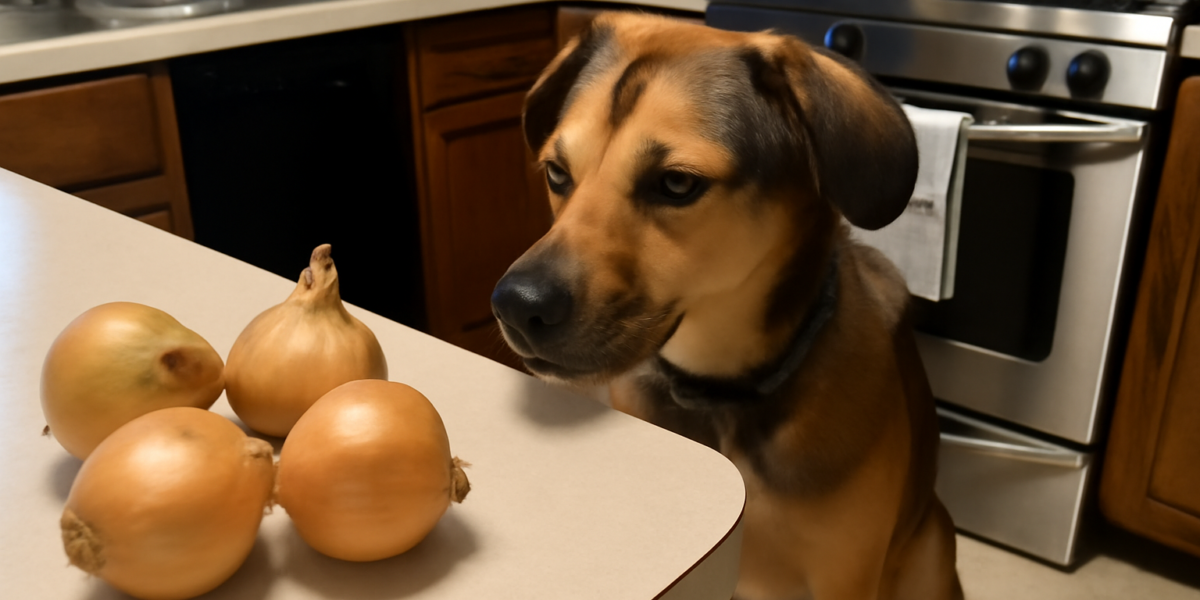
Dogs cannot eat onions. Not raw. Not cooked. Not powdered. Not as a seasoning hidden inside another dish. Onions — along with the entire allium family, which includes garlic, leeks, chives, and shallots — are toxic to dogs and can cause serious, potentially fatal damage to red blood cells. There is no safe amount. If your dog has eaten any onion, contact your veterinarian or an emergency animal poison control line immediately.
ASPCA Animal Poison Control Center: (888) 426-4435
Pet Poison Helpline: (855) 764-7661
Why Are Onions Toxic to Dogs?
Onions contain a compound called thiosulfate. Dogs lack the enzyme needed to metabolize thiosulfate safely, which means that when a dog eats any form of onion, this compound accumulates in the body and begins attacking red blood cells.
The mechanism behind onion toxicity is oxidative damage. Thiosulfate causes oxidative stress inside red blood cells, breaking down the hemoglobin — the protein responsible for carrying oxygen through the bloodstream. As red blood cells are damaged faster than the body can replace them, a dog develops hemolytic anemia, a condition in which the blood can no longer deliver enough oxygen to vital organs. Without prompt treatment, this can become life-threatening. The damage is dose-dependent and cumulative, which means that small exposures over time can be just as dangerous as a single large ingestion.
Symptoms of Onion Poisoning in Dogs
One of the most dangerous aspects of onion toxicity is that symptoms are often delayed. A dog may appear completely normal for one to three days after ingestion while red blood cell damage accumulates silently. By the time signs appear, the situation may already be serious.
Early symptoms, which may appear within the first 24 hours, can include:
- Vomiting and nausea
- Diarrhea
- Drooling
- Abdominal pain or tenderness
- Loss of appetite
As hemolytic anemia develops — typically within one to three days — more serious symptoms emerge:
- Pale, white, or yellowish gums
- Extreme lethargy and weakness
- Rapid or labored breathing
- Elevated heart rate
- Reddish or brownish discoloration of urine
- Collapse in severe cases
Do not wait for these signs before seeking care. If you know or suspect your dog ate onions, call your vet immediately — even if your dog seems perfectly fine.
How Much Onion Is Dangerous?
Any amount of onion is potentially harmful, and the danger compounds with repeated exposure. As a general guideline, veterinary toxicologists consider as little as 0.5% of a dog’s body weight in onion to be a toxic dose — that works out to roughly one small onion for a 45-pound dog. However, smaller amounts eaten repeatedly over days or weeks can cause the same level of damage through cumulative toxicity.
Small and toy breeds are at higher risk from smaller quantities. But no dog is immune. There is no threshold below which onion exposure can be considered safe. The answer to “can dogs eat onions safely in small amounts” is unambiguously no.
Are All Types of Onions Toxic?
Yes. Every variety and preparation of onion is toxic to dogs. This is not limited to the raw onion sitting on your cutting board.
Cooked onions — sauteed, caramelized, roasted, or boiled — retain their thiosulfate content and are just as dangerous as raw onions. Powdered onion and onion flakes are among the most concentrated and dangerous forms because a small amount by volume contains a much higher dose of the toxic compound. Onion soup, onion dip, gravies, broths, and any dish seasoned with onion can pose a serious risk.
Beyond onions themselves, the entire allium plant family shares this toxicity. Garlic is significantly more potent than onion — roughly five times as toxic by weight. Leeks, chives, shallots, and scallions are also included. If a food contains any member of the allium family in any form, it is not safe for dogs. This includes many human foods people share with dogs without realizing the danger, such as baby food, broth, seasoned rice, stews, and dips.
What to Do If Your Dog Ate Onions
Act immediately. Do not take a wait-and-see approach. Because symptoms of onion toxicity can be delayed for days, a dog may look and act completely normal while serious damage is already underway.
- Call your veterinarian or an emergency animal hospital right now. Do not wait for symptoms to appear. Time matters.
- Contact poison control. The ASPCA Animal Poison Control Center is available 24 hours a day at (888) 426-4435. The Pet Poison Helpline can be reached at (855) 764-7661. A consultation fee may apply.
- Do not induce vomiting without guidance. Inducing vomiting may be appropriate if ingestion was very recent, but this should only be done under direct instruction from a veterinarian or poison control specialist.
- Gather information before you call. Know approximately how much onion was consumed, in what form (raw, cooked, powdered), when it was eaten, and your dog’s approximate weight. This helps the vet respond quickly.
- Keep your dog calm and still. Avoid exertion, which can increase oxygen demand and place additional stress on a potentially compromised circulatory system.
Early intervention dramatically improves outcomes. The sooner a vet is involved, the better your dog’s chances of a full recovery.
Treatment for Onion Poisoning
Treatment depends on how quickly the ingestion is caught and how severe the exposure was. If the onion was eaten very recently, a veterinarian may induce vomiting and administer activated charcoal to limit absorption of thiosulfate. Blood work will be run to assess red blood cell levels and the degree of anemia.
For dogs with significant anemia, treatment typically involves IV fluids to support organ function and, in severe cases, a blood transfusion to replace damaged red blood cells. Oxygen therapy may be necessary if breathing is compromised. Dogs that receive care before serious anemia sets in generally recover well. Those treated later face a longer and more difficult recovery.
Frequently Asked Questions
Can dogs eat onions if they are cooked or mixed into food?
No. Cooking does not neutralize the thiosulfate in onions. Whether onions are raw, sauteed, caramelized, roasted, or simmered in a stew, they remain toxic to dogs. Onions mixed into other foods — soups, gravies, casseroles, rice dishes — still carry the same risk. Never share a dish that contains onions in any form with your dog.
My dog ate a small piece of onion — do I still need to call the vet?
Yes. Even a small amount of onion warrants a call to your veterinarian or poison control. The cumulative nature of onion toxicity means that what seems like a minor exposure can contribute to dangerous anemia over time, particularly if it is not the first exposure. Always err on the side of caution and let a professional assess the risk.
Is onion powder more dangerous than a whole onion?
Yes. Onion powder is far more concentrated than fresh onion. A small amount of onion powder contains the toxic equivalent of a much larger quantity of raw onion. This makes it especially hazardous because it appears in many processed and packaged foods in amounts that are easy to overlook. Always check ingredient lists before giving any human food to your dog.
Are garlic and other alliums just as dangerous as onions?
Yes — and garlic is actually more toxic than onion by weight, roughly five times as potent. All members of the allium family, including garlic, leeks, chives, shallots, and scallions, cause the same type of red blood cell damage through the same thiosulfate mechanism. If you are wondering whether can dogs eat onions also applies to these related vegetables, the answer is the same: none of them are safe for dogs in any amount.


