
Last updated: April 8, 2026
In this article
Can Dogs Eat Butter? A Complete Safety Guide for Dog Owners
Butter is a kitchen staple found in virtually every household, used in everything from cooking and baking to spreading on toast. It is rich, flavorful, and something that dogs seem to find irresistible. Whether your dog stole a stick of butter off the counter or you are wondering if a small lick would be okay, understanding the effects of butter on dogs is important for every pet owner.
In this guide, we will cover the safety of butter for dogs in detail, examining its nutritional profile, the reasons it is generally not recommended, what to do if your dog eats a large amount, and what healthier fat sources you can offer instead. By the end, you will have a clear understanding of why butter and your dog are not a great combination.
Quick Answer: Can Dogs Eat Butter?
Butter is not recommended for dogs. While a tiny amount of plain, unsalted butter is not toxic and is unlikely to cause a medical emergency, butter offers no nutritional benefit to dogs and carries significant risks. Butter is almost entirely composed of saturated fat and is extremely calorie-dense, making it a poor choice as a treat or food additive for dogs.
The primary concerns with butter are its potential to trigger pancreatitis, contribute to obesity, and cause digestive upset. Dogs that are lactose intolerant, which many adult dogs are to some degree, may experience additional gastrointestinal problems from the dairy content. The best practice is to keep butter away from your dog and choose healthier alternatives when you want to add fats to their diet.
Nutritional Profile of Butter
Butter is a concentrated source of fat with very few other nutrients. A standard tablespoon (about 14 grams) of unsalted butter contains approximately:
- Calories: About 102 calories, an extremely high amount for such a small quantity of food.
- Total fat: Roughly 11.5 grams, of which about 7.3 grams are saturated fat.
- Cholesterol: About 31 milligrams.
- Protein: Less than 0.1 grams, essentially negligible.
- Carbohydrates: Less than 0.01 grams.
- Sodium: About 2 milligrams in unsalted butter, but up to 90 milligrams or more in salted butter.
- Vitamin A: Approximately 97 micrograms, one of the few vitamins present in meaningful amounts.
- Vitamin D: A small amount, roughly 0.2 micrograms.
- Vitamin E: About 0.3 milligrams.
As you can see, butter is almost pure fat. While dogs do need fat in their diet for energy, hormone production, and nutrient absorption, they get adequate fat from their regular dog food. The saturated fat in butter is not the type of fat that benefits canine health, and the caloric density makes it very easy to overfeed.
Benefits and Risks of Feeding Butter to Dogs
Benefits
The honest assessment is that there are very few genuine benefits to feeding butter to dogs:
- Vitamin A: Butter does contain vitamin A, which supports eye health, immune function, and skin integrity in dogs. However, dogs can obtain vitamin A from far healthier sources such as carrots, sweet potatoes, and liver.
- Palatability for medication delivery: Some dog owners use a small dab of butter to help disguise pills or capsules. While this can be effective, there are healthier options such as a small piece of banana, a bit of canned pumpkin, or purpose-made pill pocket treats.
Risks
The risks of feeding butter to dogs are substantial and clearly outweigh any minimal benefits:
- Pancreatitis: This is the most serious risk. Pancreatitis is an inflammation of the pancreas often triggered by high-fat foods, and butter is one of the highest-fat foods in a typical kitchen. Acute pancreatitis can cause severe abdominal pain, vomiting, diarrhea, fever, and can be life-threatening. Dogs that have had pancreatitis before are especially vulnerable, and even a single high-fat meal can trigger an episode.
- Obesity: With over 100 calories per tablespoon, butter can contribute significantly to weight gain, especially in smaller dogs. Obesity leads to numerous health problems including joint disease, diabetes, heart disease, and reduced life expectancy.
- Lactose intolerance: Many adult dogs produce limited amounts of lactase, the enzyme needed to digest lactose in dairy products. Butter contains small amounts of lactose and milk proteins that can cause digestive upset in sensitive dogs, including gas, bloating, diarrhea, and abdominal discomfort.
- High cholesterol: The cholesterol in butter can contribute to cardiovascular issues in dogs, particularly those that are already overweight or have existing heart conditions.
- Sodium overload from salted butter: Salted butter contains significant amounts of sodium that can be harmful to dogs, especially small breeds. Excessive sodium can cause increased thirst, dehydration, vomiting, diarrhea, and in severe cases, sodium ion poisoning with symptoms including tremors, seizures, and elevated body temperature.
- Gastrointestinal upset: Even in dogs without specific lactose intolerance, the high fat content of butter can overwhelm the digestive system and cause vomiting, diarrhea, and stomach discomfort.
- Dangerous when combined with other foods: Butter is often used alongside other ingredients that are toxic to dogs, such as garlic butter, herb butter with onions or chives, or buttered foods containing chocolate or raisins.
How to Serve Butter Safely to Your Dog
We strongly recommend not feeding butter to your dog at all. There is simply no good reason to include it in your dog’s diet when so many healthier alternatives exist. However, if your dog happens to lick a small amount of butter or you want to use a tiny dab for a specific purpose like hiding medication, here are the guidelines to minimize risk:
- Use only plain, unsalted butter: If any butter must be given, choose unsalted varieties to avoid adding unnecessary sodium to your dog’s diet. Never use garlic butter, herb butter, or flavored butter spreads.
- Keep the amount extremely small: A pea-sized amount is the maximum for small dogs, and no more than half a teaspoon for large dogs. This is not a food to be generous with.
- Never give butter to dogs with a history of pancreatitis: If your dog has ever had pancreatitis or has been identified as a breed prone to the condition (such as Miniature Schnauzers, Cocker Spaniels, or Yorkshire Terriers), butter should be completely off-limits.
- Avoid giving it to overweight dogs: Dogs that are already carrying excess weight should not be given calorie-dense, nutritionally empty foods like butter.
- Do not make it a habit: Even if your dog tolerates a small amount of butter without immediate problems, regular consumption will contribute to long-term health issues.
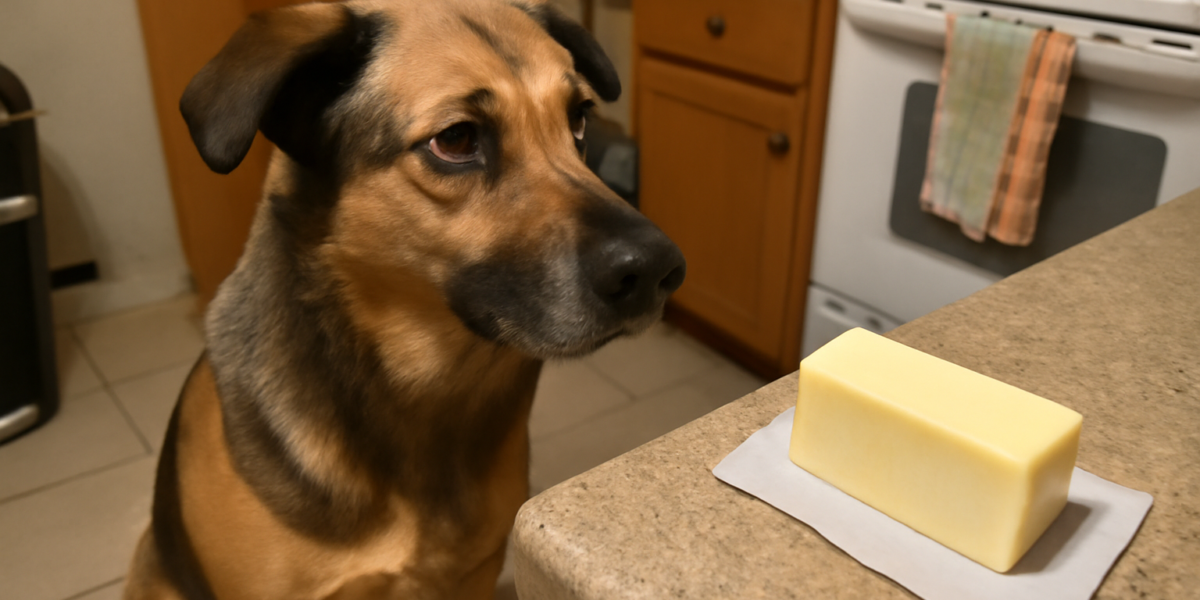
- Secure butter storage: Dogs are known to steal entire sticks or blocks of butter left on counters. Store butter in the refrigerator or in a covered butter dish that your dog cannot access. Ingesting a large quantity of butter at once is a common cause of emergency veterinary visits for pancreatitis.
If you are looking to adopt a dog and want to ensure you are prepared with the right foods and treats, visit our adoption page to find dogs in need of loving homes.
Signs of Problems After Eating Butter
If your dog has eaten butter, particularly a large amount such as a whole stick, monitor them closely for the following symptoms:
Mild symptoms (small amount of butter):
- Soft stools or mild diarrhea
- Gas and mild bloating
- Decreased appetite for the next meal
- Mild nausea or lip licking
Moderate to severe symptoms (large amount of butter or sensitive dogs):
- Repeated vomiting
- Severe or persistent diarrhea, possibly greasy or yellow in color
- Abdominal pain, indicated by whining, restlessness, hunched posture, or reluctance to be touched on the belly
- Loss of appetite lasting more than 24 hours
- Lethargy or depression
- Fever
- Dehydration from fluid loss
Signs of pancreatitis (veterinary emergency):
- Severe abdominal pain with a prayer position (front legs down, rear end elevated)
- Persistent vomiting that does not resolve
- Bloody diarrhea
- Weakness and collapse
- Rapid heartbeat
- Difficulty breathing
Pancreatitis symptoms typically appear within 24 to 72 hours after ingesting a high-fat food. If you observe any severe symptoms, contact your veterinarian immediately. Pancreatitis requires professional medical treatment including intravenous fluids, pain management, anti-nausea medication, and sometimes hospitalization.
If your dog ate an entire stick of butter (about 113 grams), contact your veterinarian even if no symptoms have appeared yet. Your vet may recommend bringing the dog in for monitoring or may provide at-home care instructions based on your dog’s size and health history.
Healthy Alternatives to Butter
If you want to add healthy fats to your dog’s diet or need a tasty food to use for medication delivery, consider these much safer alternatives:
- Fish oil supplements: Specifically formulated for dogs, fish oil provides omega-3 fatty acids that support skin, coat, joint, and brain health. This is one of the best ways to supplement healthy fats in your dog’s diet.
- Coconut oil: In very small amounts (about a quarter teaspoon for small dogs, up to one teaspoon for large dogs), coconut oil can support skin and coat health. It contains medium-chain triglycerides that are more easily metabolized than the long-chain saturated fats in butter. However, it is still calorie-dense and should be given sparingly.
- Plain cooked salmon: A natural source of omega-3 fatty acids that most dogs enjoy. Boneless, fully cooked salmon provides healthy fats along with high-quality protein.
- Peanut butter: A small amount of natural peanut butter (xylitol-free) can serve as a treat or medication hider. While still calorie-dense, it offers protein and healthy fats that butter lacks. Read our guide on whether dogs can eat peanuts for more information.
- Canned pumpkin: Plain pumpkin puree is excellent for hiding medications and provides fiber, vitamin A, and antioxidants with far fewer calories than butter.
- Sardines: Packed with omega-3s and protein, a single sardine in water (no salt added) makes an excellent nutritional supplement for dogs.
When it comes to adding fats to your dog’s diet, quality matters far more than quantity. The omega-3 fatty acids found in fish and fish oil provide anti-inflammatory benefits that saturated animal fats like butter simply cannot match.
Frequently Asked Questions
My dog ate a whole stick of butter. What should I do?
Contact your veterinarian as soon as possible. A whole stick of butter contains approximately 92 grams of fat and over 800 calories, which is a dangerous amount for any dog, especially small and medium breeds. Your vet may recommend inducing vomiting if the ingestion was very recent (within the last hour) or may advise monitoring for signs of pancreatitis. Do not induce vomiting without veterinary guidance, as butter can pose aspiration risks. Watch your dog closely for the next 72 hours for signs of vomiting, diarrhea, abdominal pain, or lethargy.
Can dogs eat margarine instead of butter?
Margarine is also not recommended for dogs. While it may contain different types of fat (often vegetable-based trans fats or processed oils), it is still a high-fat, high-calorie product with no nutritional value for dogs. Some margarines also contain artificial additives, flavorings, and preservatives that may be harmful. The same risks of pancreatitis, obesity, and digestive upset apply to margarine as they do to butter.
Is butter toxic to dogs?
Butter is not technically toxic to dogs in the same way that chocolate, grapes, or xylitol are toxic. A small amount will not poison your dog. However, the high saturated fat content makes it dangerous, particularly in larger quantities, because of the serious risk of pancreatitis. Foods do not need to be classified as toxic to be harmful. The effects of butter are dose-dependent and cumulative, meaning that even regular small amounts can cause health problems over time.
Can butter cause pancreatitis in dogs?
Yes, butter is one of the foods most commonly associated with dietary-induced pancreatitis in dogs. The extremely high fat content can overwhelm the pancreas, triggering an inflammatory response. A single large ingestion (such as eating an entire stick) or repeated exposure to high-fat foods can both lead to pancreatitis. Certain breeds are genetically predisposed to pancreatitis and should never be given butter or other high-fat human foods. If you are considering adopting a breed that is prone to pancreatitis, visit our adoption page and consult with the rescue team about dietary considerations.
Can I cook my dog’s food in butter?
No, you should not cook your dog’s food in butter. Cooking adds unnecessary saturated fat and calories to your dog’s meal. If you prepare homemade food for your dog, use plain water or a small amount of low-sodium broth for moisture. If you want to add healthy fats, a drizzle of fish oil or a small amount of coconut oil after cooking is a much better option. Always consult with your veterinarian or a veterinary nutritionist when preparing homemade dog food to ensure it meets all of your dog’s nutritional needs.
Is ghee (clarified butter) safer for dogs than regular butter?
Ghee is not meaningfully safer for dogs than regular butter. While ghee has had the milk solids removed, which means it contains less lactose and may be slightly easier on the stomachs of lactose-intolerant dogs, it is still almost pure fat. A tablespoon of ghee contains about 120 calories and 14 grams of fat, which is actually slightly more than regular butter. The pancreatitis risk remains the same, and ghee should not be given to dogs. The removal of milk proteins does not address the fundamental problem, which is the dangerously high fat content.


