Last updated: May 4, 2026
In this article
Overview
This Anatolian Shepherd breed profile is written for the people most likely to encounter the breed in rescue: someone who saw a tall, tan, sturdy dog at a shelter and wondered if a “big livestock guardian mix” might work in a regular home. The honest answer is “rarely, and only if your life looks very different from most homes.” The Anatolian Shepherd is a centuries-old Turkish working dog bred to live with sheep and goats on rugged terrain and to defend them from wolves, bears, and big cats. That job shaped a temperament that is independent, watchful, suspicious of strangers, and largely uninterested in pleasing humans the way a Labrador or Golden Retriever is.
Anatolians are not aggressive in the reactive, unpredictable sense — they are deliberate. A working Anatolian spends most of the day quietly observing, then escalates intelligently when something threatens its flock. Move that dog into a suburban backyard with no livestock, no acreage, and a stream of strangers walking past, and the same instincts that protected sheep in Turkey now flag every delivery driver, every neighbor’s child, and every off-leash dog as a potential threat. That is not a training failure. That is the breed.
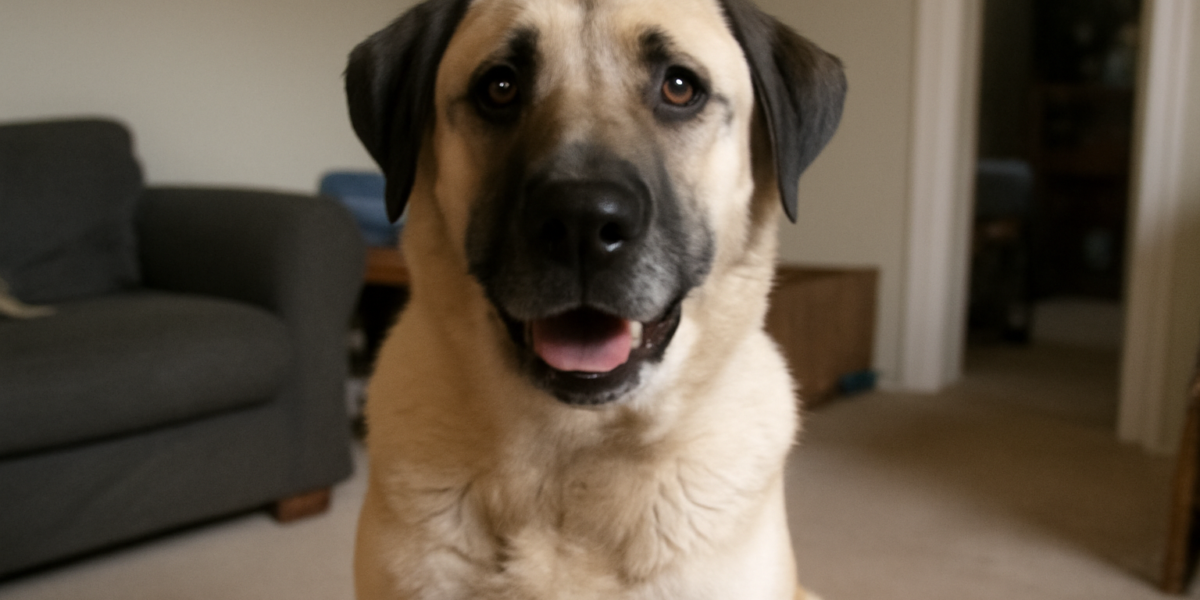
Quick facts: Group: livestock guardian (working). Origin: Anatolia (modern Turkey). Size: giant, typically 27–30 inches and 80–150 pounds. Coat: short to medium double coat, fawn with black mask most common. Energy: moderate but observant — long stretches of stillness punctuated by serious work. Lifespan: giant-breed range, generally shorter than smaller dogs. Grooming: weekly brushing, heavy seasonal shedding. Best for: working farms with livestock, large fenced acreage, experienced LGD owners.
History and Origin
The Anatolian Shepherd traces back thousands of years to the Anatolian plateau, where shepherds bred dogs less for looks than for the job — endurance in heat, courage against predators many times their size, and the judgment to act independently while the human was a mile away. American breeders began importing Anatolians in earnest in the 1970s, and the breed gained AKC recognition in 1996. Modern American Anatolians are a wider gene pool than purists prefer; some lines carry Kangal genetics, and the line between “Anatolian” and “Kangal” in the United States is genuinely blurry.
That history matters because it tells you what you are working with. Unlike herding breeds, which were selected for biddability, LGDs were selected for the opposite — the willingness to override a human handler when the dog believes the flock is in danger. A “stubborn” Anatolian is not broken. The dog is doing what 6,000 years of selection asked it to do.
Temperament and Personality
Expect calm, watchful, deeply loyal, and selectively affectionate. Anatolians bond intensely with their family, including children they have grown up with, and treat outsiders with cool reserve at best. They are not the dog who greets every visitor with a wagging tail. They are the dog who stands between the visitor and the family until the family signals everything is fine.
Independence is the defining trait. Anatolians make decisions. If you tell an Anatolian to come and the dog believes there is something it needs to investigate first, you will get the investigation. This is not disobedience in the breed’s value system — it is judgment. Force-free training works, but it works differently than with biddable breeds. Treats and praise are not the primary motivators. Trust, consistency, and giving the dog a job it understands matter more.
Same-sex dog aggression is common in adult Anatolians. So is wariness of unfamiliar dogs, particularly in their territory. They are usually fine with cats and small animals they were raised with, and prepared to chase or kill ones they were not.
Size and Appearance
Anatolians are large but not the largest LGD. Males typically stand 29–32 inches at the shoulder and weigh 110–150 pounds; females run smaller. The build is athletic rather than Mastiff-heavy — they were bred to cover ground and outlast threats, not to bulldoze through them.
The most recognizable Anatolian is fawn-colored with a dark mask, but the breed standard accepts most colors and patterns. Coats run short to medium with a dense undercoat. Compared to other LGDs from cold mountainous regions, Anatolians have better heat tolerance — they were bred for hot Turkish summers — but they still need shade, water, and protection from extreme heat.
Exercise and Activity Needs
People hear “moderate energy” and picture a couch dog. That is the wrong picture. Anatolians need space — open acreage where they can patrol, observe, and use their bodies on their own schedule. They do not need a six-mile run; they need a job and the room to do it. A long daily walk on leash is appreciated but is not enough on its own for a young, working-line Anatolian.
Off-leash work outside a securely fenced area is generally a bad idea. LGDs roam — they patrol an area they have decided is theirs, which can extend well beyond your property line. Recall is unreliable in adults because the breed was selected to make its own calls. Solid perimeter fencing, six feet minimum, is non-negotiable for most homes.
Grooming and Care
The double coat sheds year-round and blows heavily twice a year. Weekly brushing during normal months and daily brushing during coat blow keeps the house manageable and the dog comfortable. Never shave a double-coated LGD — the coat insulates against both cold and heat, and shaving disrupts that system and can damage regrowth.
Standard care for a giant breed otherwise. Keep nails trimmed, check ears for moisture and debris, brush teeth regularly, and watch weight — extra pounds load a giant frame that already carries a lot. Diet should be a quality large- or giant-breed formula; rapid growth in puppies is a real risk for joint development.
Health and Lifespan
Anatolians are generally healthier than many giant breeds, but the same broad concerns apply: hip and elbow dysplasia, which an experienced vet can screen for; bloat (gastric dilatation-volvulus), an emergency in any deep-chested dog; entropion and other eyelid issues; and osteosarcoma, a bone cancer that disproportionately affects giant breeds. Cardiac screening and thyroid testing are reasonable in adult dogs.
Giant breeds typically live shorter lives than small dogs. Plan for a relationship measured in years, not in decade-plus chunks, and budget for the larger costs that come with the size — surgery, anesthesia, medication doses, and food are all giant-breed scale.
Living With an Anatolian Shepherd
The functional setup is acreage with livestock or, at minimum, several fully fenced acres with a household that understands what they signed up for. Suburban yards do not work well. Apartments do not work at all. Even a typical half-acre suburban lot is a poor match for a working LGD because the dog will treat the entire neighborhood as its territory and bark accordingly through the night — this is not a behavioral problem to fix, it is the job.
Visitors require management. Most Anatolians can be taught to accept invited guests, but they will not be friendly with them, and you should not force greetings. Children inside the family are usually safe; visiting children are a different category and should be supervised closely. Same applies to other dogs — Anatolians often do not enjoy dog parks, and you should not bring them.
Training and Socialization
Start socialization early — much earlier and more deliberately than with most breeds — and keep going through adolescence. Puppy classes are useful for exposure, not for obedience trophies. Force-free, low-pressure handling sets the foundation. Avoid harsh methods; an Anatolian that loses trust in its handler does not “fold” the way a biddable breed does, and recovering that trust is slow.
Realistic obedience expectations: solid sit, down, stay, leave-it, and a recall that works when nothing more interesting is happening. Do not expect competition-trial precision. Learn to read dog body language well so you catch the signals an Anatolian gives before escalation. The breed almost always warns before it acts.
Is the Anatolian Shepherd Right for You?
This is the section where most readers should pick a different breed, and that is the honest answer. Anatolians fit a narrow set of homes: working farms with livestock, large rural properties with experienced owners, or breed-specific rescues that place LGDs into LGD-appropriate homes. They do not fit “we want a big protective dog for our quarter-acre yard.”
If you have the setup — acreage, secure fencing, livestock or a meaningful job, tolerance for nighttime barking, and patience for an independent thinker — an Anatolian can be a remarkable companion. If you do not, please consider a Great Pyrenees only if you also have acreage, or look at breeds genuinely built for family pet life. The Bernese Mountain Dog and Saint Bernard are large-breed alternatives that adapt better to family homes.
If you are seriously committed and the home matches, start with breed-specific rescue. Working-line Anatolians who failed at being pets often end up in rescue, and a good rescue will tell you honestly which dogs can and cannot adapt. Read the 3-3-3 rule before bringing one home — adult LGDs need a longer decompression window than most breeds. Visit the adopt a dog hub to start.
Frequently Asked Questions
Are Anatolian Shepherds good family dogs?
For the right family — rural, experienced, with appropriate space — yes. For most pet families, no. They are loyal to family but suspicious of outsiders and not naturally suited to suburban life or homes with frequent visitors.
Are Anatolian Shepherds and Kangals the same breed?
Closely related but separately recognized. The AKC accepted the Kangal as its own breed in 2018. Many American Anatolian Shepherds carry Kangal genetics, which is part of why the line between them is blurry in the United States.
Do Anatolian Shepherds need livestock to be happy?
Not strictly required, but they need a job and space. Without livestock, you need to substitute meaningful patrol territory, mental work, and acceptance that nighttime barking at perceived threats is part of the package.
How much exercise does an Anatolian Shepherd need?
Less structured exercise than a high-drive working breed, but more space. Daily walks plus access to a large fenced area where they can patrol on their own terms is the core of it.
Can Anatolian Shepherds live in apartments?
No. The breed is unsuited to apartment life — size, vocalization, territorial instincts, and need for space all rule it out.
Looking to adopt a Anatolian Shepherd Breed Profile?
Browse Anatolian Shepherd Breed Profile dogs and mixes available for adoption from shelters and rescues near you.
Find Anatolian Shepherd Breed Profile Dogs for Adoption