
Last updated: April 6, 2026
In this article
Great Pyrenees: Breed Profile, Temperament, and Care Guide
Few breeds command attention quite like the Great Pyrenees. Draped in a flowing white coat and carrying themselves with quiet confidence, these dogs have guarded flocks in the mountains of southern France and northern Spain for thousands of years. Today, they bring that same steady devotion to families across the country. If you are considering welcoming one into your home — or are thinking about adoption — this guide covers everything you need to know about living with a Great Pyrenees.
The Great Pyrenees is a working breed at heart. While they are gentle and loving with their families, they were bred to make independent decisions in the field, which means their training and daily management come with a unique set of considerations. Understanding this breed’s history, instincts, and care requirements will help you decide whether a Great Pyrenees is the right match for your lifestyle.
Quick Facts
| Attribute | Details |
|---|---|
| Breed Group | Working |
| Size | Large to Giant |
| Weight | 85–160 lbs (males typically heavier) |
| Height | 25–32 inches at the shoulder |
| Lifespan | 10–12 years |
| Coat | Thick double coat, predominantly white |
| Shedding | Heavy, especially seasonally |
| Energy Level | Moderate |
| Good With Kids | Yes, with socialization |
| Good With Other Pets | Generally yes; strong prey drive toward small animals |
| Trainability | Moderate — independent thinker |
| Barking Tendency | High, especially at night |
| Best For | Experienced dog owners, homes with yards, rural settings |
Personality and Temperament
The Great Pyrenees is defined by a calm, patient, and deeply protective nature. Unlike high-energy sporting breeds that crave constant stimulation, this breed tends to move through the world at a measured pace — watchful, deliberate, and serene. They are not prone to excitement for its own sake. Instead, they observe their environment carefully and respond when they believe action is required.
This independence is one of the breed’s most defining traits and stems directly from their history as livestock guardians. For centuries, these dogs worked with minimal human direction, relying on their own judgment to protect herds from wolves and bears in remote mountain terrain. That instinct has not disappeared. A Great Pyrenees will assess a situation on their own terms and act accordingly, which can be both reassuring and challenging for owners who expect a dog that eagerly follows commands.
One behavioral trait that catches many new owners off guard is nocturnal barking. The Great Pyrenees is hardwired to patrol at night, alerting the household — and the neighborhood — to anything they perceive as a threat. This is not a quirk that training can fully eliminate; it is an instinctive response built over generations of nighttime guarding. Prospective owners in suburban or urban settings should factor this into their decision. With management, including providing a secure indoor space at night, the barking can be reduced but rarely eliminated entirely.
Despite their independent streak, Great Pyrenees are deeply affectionate with their families. They form strong bonds and are known to be especially gentle with children and vulnerable members of the household. They do not tend toward aggression, but their sheer size demands respect and proper socialization from a young age.
Appearance
The Great Pyrenees is an unmistakably large and striking dog. Males typically weigh between 100 and 160 pounds, while females range from 85 to 115 pounds. Their build is substantial but elegant — broad-chested and muscular, yet covered in a coat that gives them an almost regal bearing.
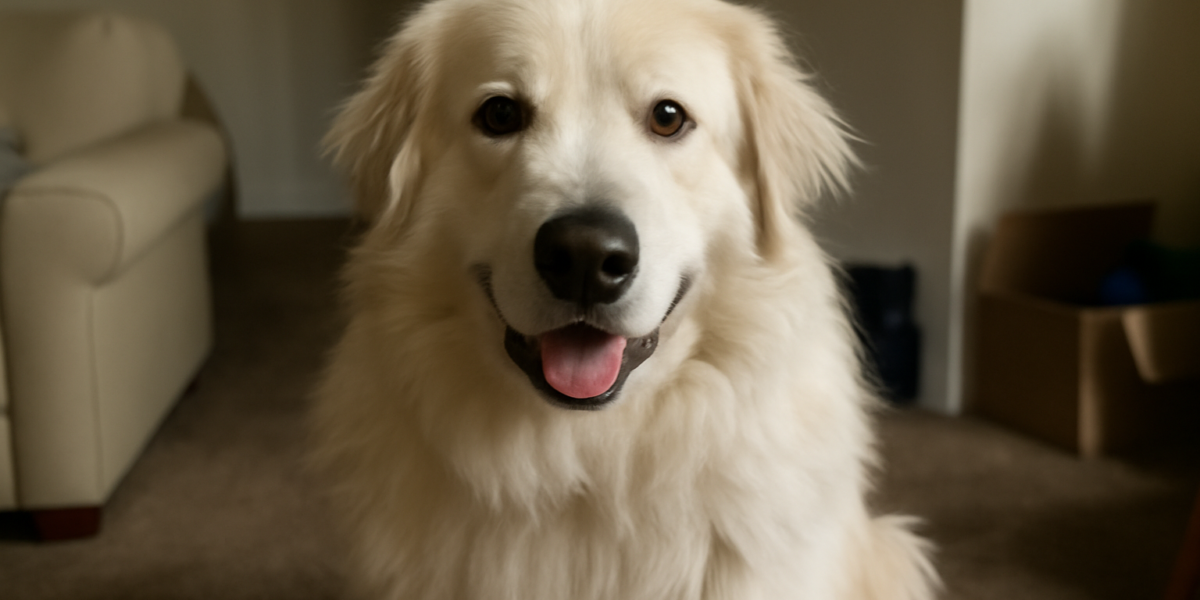
The coat is one of the breed’s most iconic features. It is a thick, dense double coat with a coarser outer layer and a soft, woolly undercoat. The color is predominantly white, though it is common to see patches of tan, gray, or badger markings on the face, ears, and base of the tail. This coloring was not accidental — a white coat allowed shepherds to distinguish their dogs from wolves in low-light mountain conditions.
The outer coat is weather-resistant and designed to repel rain and snow, making the Great Pyrenees remarkably well-adapted to cold climates. Their expression is gentle and intelligent, with dark brown, almond-shaped eyes and a calm, steady gaze. Double dewclaws on the rear feet are a breed hallmark and should not be removed in working dogs, as they aid traction on uneven terrain.
Exercise Needs
Despite their large size, Great Pyrenees have moderate exercise requirements. They are not the type of dog that needs two hours of intense activity each day. A couple of moderate walks and the opportunity to move freely in a securely fenced yard will generally keep them content and healthy. Puppies, however, should not be over-exercised, as their large frames are still developing and excessive strain can cause joint problems later in life.
What matters more than distance or speed is freedom of movement and mental engagement. The Great Pyrenees is a natural wanderer. Their patrolling instinct means they will cover the perimeter of a yard repeatedly, investigating sights and scents. This is why a securely fenced yard is not optional — it is essential. An unfenced Great Pyrenees will simply expand their territory as far as their legs will carry them, following their nose and guardian instincts without a second thought.
They are sensitive to heat due to their heavy coat and should not be exercised vigorously during the hottest parts of the day in warm climates. Early morning or evening walks are preferable in summer months. Cold weather, on the other hand, is where this breed truly thrives. A snowy yard is practically paradise for a Great Pyrenees.
Grooming Needs
The Great Pyrenees coat requires consistent maintenance, though perhaps not quite as much as its volume would suggest. The coat has a natural tendency to shed dirt and resist matting, which comes as a pleasant surprise to many new owners. That said, heavy shedding — particularly during seasonal coat blows in spring and fall — is a reality that every Great Pyrenees owner must be prepared for. White fur on every surface of your home is simply part of the experience.
Weekly brushing with a slicker brush and an undercoat rake will help manage loose fur and prevent the occasional tangle, particularly behind the ears, around the collar area, and at the back of the legs. During heavy shedding periods, more frequent brushing — every two to three days — will make a noticeable difference. Bathing can be done every six to eight weeks or as needed, but thorough drying is important given the coat’s thickness; incomplete drying can lead to skin issues.
Nails should be trimmed monthly, ears checked and cleaned regularly to prevent infection, and teeth brushed several times per week. For guidance on general dog grooming routines, visit our dog care blog.
Health and Common Issues
The Great Pyrenees is generally a hardy breed, but like all large and giant-breed dogs, they are predisposed to certain health conditions that prospective owners should be aware of.
Hip and elbow dysplasia are among the most common orthopedic concerns. These conditions involve malformation of the respective joints and can lead to pain, lameness, and arthritis over time. Responsible breeding and appropriate nutrition during the growth phase can reduce but not eliminate the risk. Keeping dogs at a healthy weight is one of the most effective management tools.
Bloat (gastric dilatation-volvulus) is a serious, potentially life-threatening condition seen more frequently in deep-chested breeds. It occurs when the stomach fills with gas and twists on itself. Symptoms include a distended abdomen, unproductive retching, and restlessness. This is a veterinary emergency. Feeding multiple smaller meals per day and avoiding vigorous exercise immediately after eating can reduce the risk.
Bone cancer (osteosarcoma) occurs at higher rates in large and giant breeds than in smaller dogs, and the Great Pyrenees is no exception. Early detection significantly improves outcomes, so any unexplained limping or swelling should be evaluated promptly. Luxating patella, where the kneecap slips out of position, is also seen in the breed and may require surgical correction in moderate to severe cases.
Are Great Pyrenees Good With Kids and Other Pets?
With proper socialization, the Great Pyrenees can be an excellent family dog. Their patient, gentle temperament makes them well-suited to households with children, and their protective instincts mean they will naturally watch over younger members of the family. However, their size alone can be an issue around very small children — an accidentally knocked-over toddler is a real possibility with a dog of this stature, so supervision is always recommended.
As a livestock guardian breed, the Great Pyrenees historically lived alongside goats, sheep, and other farm animals, making them generally compatible with other pets in the home when introduced properly. They tend to be calm and non-aggressive toward animals they have grown up with or been carefully introduced to. However, their strong territorial instincts may cause them to be wary of unfamiliar dogs, and their prey drive can surface around small animals like rabbits or chickens if not managed.
Households with cats that the dog has known since puppyhood typically do well. Introducing a Great Pyrenees to an established multi-pet household requires patience and structured introductions rather than throwing everyone together and hoping for the best.
Training Tips
Training a Great Pyrenees requires a different mindset than training a retriever or herding breed. These dogs are not hardwired to please their handlers. They were bred to work independently, using their own judgment, which means commands and repetition alone will not always get results. Expecting enthusiastic obedience will lead to frustration on both sides.
The most effective approach combines positive reinforcement with patience and consistency. High-value treats, short training sessions, and a calm demeanor will yield far better results than punishment-based methods, which tend to make this breed more stubborn and less cooperative. Making training feel relevant and rewarding from the dog’s perspective is key.
Early socialization is critical. Exposing puppies to a wide range of people, environments, sounds, and other animals during the first few months of life helps build a confident, well-adjusted adult. Leash manners should be a priority from day one, as a 120-pound dog that pulls on the leash is a genuine physical challenge. Puppy classes and working with a trainer experienced in independent breeds is strongly recommended for first-time owners. For more dog care and training resources, explore our dog care blog.
History and Origin
The Great Pyrenees takes its name from the Pyrenees Mountains, the rugged range that forms a natural border between France and Spain. Evidence of large white livestock guardian dogs in this region dates back thousands of years, with fossil records suggesting the breed’s ancestors arrived in Europe as far back as 1800 BCE. These dogs were purpose-built for one job: protecting flocks of sheep and goats from wolves, bears, and other predators in harsh, remote terrain.
For centuries, the Great Pyrenees was the working dog of Basque shepherds and remained largely unknown outside its mountain home. That changed in the seventeenth century, when the breed was introduced to the French royal court. In 1675, the Dauphin of France declared the Great Pyrenees the Royal Dog of France, and the breed’s popularity among the French nobility surged. They were kept as estate guardians and became symbols of prestige and refinement.
The breed was brought to North America in the early nineteenth century, and the American Kennel Club officially recognized the Great Pyrenees in 1933. Today, they are kept both as working livestock guardians on farms and ranches and as devoted family companions.
Frequently Asked Questions
Do Great Pyrenees bark a lot?
Yes, barking is a core behavioral trait of the breed. Great Pyrenees were bred to alert shepherds to threats, and they do this instinctively, particularly at night. No amount of training will completely eliminate this behavior. Owners in noise-sensitive neighborhoods should be prepared to manage it through indoor nighttime arrangements and consistent boundary-setting.
Are Great Pyrenees good apartment dogs?
Generally, no. While their exercise needs are moderate, their size, barking tendencies, and need to patrol make them far better suited to homes with securely fenced outdoor space. Rural properties and homes with large yards are ideal. Apartment living can work in exceptional circumstances with very committed owners, but it is not the environment this breed thrives in.
How much do Great Pyrenees shed?
A great deal. The Great Pyrenees is a heavy shedder year-round, with dramatic seasonal coat blows in spring and fall. Expect white fur on furniture, clothing, and carpets. Regular brushing significantly reduces the volume of loose fur, but shedding is an unavoidable reality of living with this breed.
Can Great Pyrenees tolerate hot weather?
They can manage in warmer climates with careful management, but they are not built for heat. Access to shade, fresh water, and air conditioning during hot months is essential. Exercise should be limited to cooler parts of the day. Owners in consistently hot climates should weigh this carefully before adopting, as the breed’s thick coat makes them significantly more vulnerable to overheating than short-coated breeds.
Adopt a Great Pyrenees
If the Great Pyrenees sounds like the right dog for your home, adoption is a wonderful place to start. Many Great Pyrenees end up in rescue through no fault of their own — owners underestimate the shedding, the barking, or the independent temperament and find themselves overwhelmed. That means there are loving, often already house-trained adults waiting for the right family.
Adopting through a rescue gives you the chance to learn about a dog’s individual personality before bringing them home, which can make the transition smoother for everyone. Whether you are looking for a working partner for a farm or a calm, steady companion for a family home, a rescued Great Pyrenees may be exactly what you have been looking for.
Browse available dogs for adoption at Walk Me Home Rescue and take the first step toward finding your match.


