Last updated: May 4, 2026
In this article
Bichon vs Maltese Overview
The bichon vs maltese question pits two small white companion breeds against each other, and the differences are larger than first impressions suggest. The Bichon Frise is a stocky, cottony-coated, bouncy “cloud” of a dog with French and Mediterranean origins. The Maltese is a finer-boned, silky-coated lap dog with two-thousand-year roots in Mediterranean trading cultures. Both are excellent small companions. They differ in coat texture, build, temperament, energy, and grooming approach.
This comparison helps you choose between two breeds that look similar from across the room and feel quite different up close.
For deeper detail, see the Bichon Frise profile and the Maltese profile.
History and Origin
The Bichon Frise descends from the Barbet and small white water dogs traded around the Mediterranean. By the 1300s the type was popular with Spanish and Italian sailors who traded the dogs along trade routes. They became favorites in French and Italian courts in the 1500s and 1600s, fell from favor, became circus and street dogs, and were rescued from obscurity by French and Belgian breeders in the 1930s. AKC-recognized 1972.
The Maltese is older, with documented presence in Mediterranean cultures going back over 2,000 years. The breed has been a favorite of nobility and merchants from the Roman Empire through the Renaissance to the present. AKC-recognized 1888.
Size and Appearance
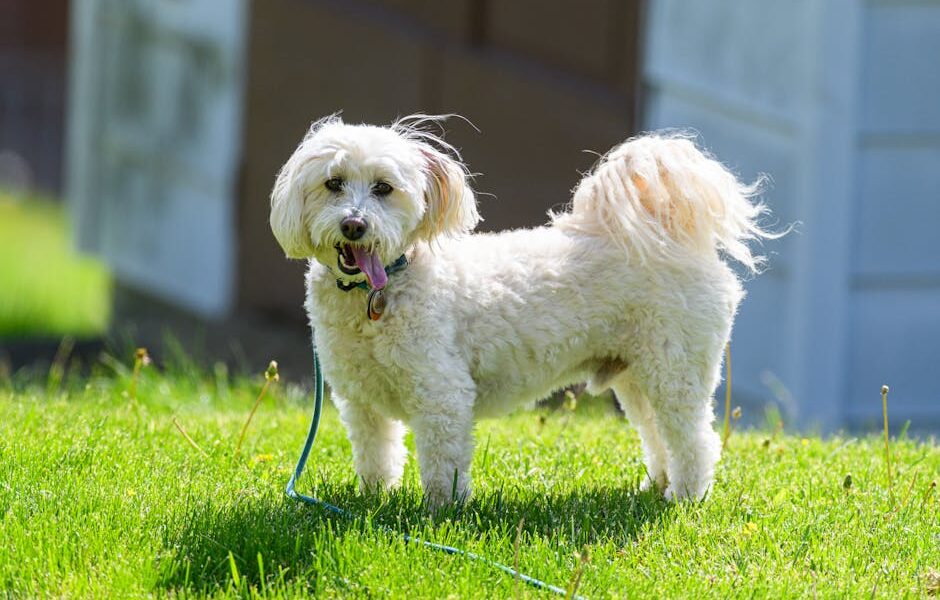
Bichons stand 9.5 to 11.5 inches and weigh 12 to 18 pounds. The build is square, sturdy, and surprisingly muscular under the cloud-like coat. The hallmark is the “powder puff” appearance — a dense double coat of soft undercoat with crisp curling outer coat, brushed and trimmed into a rounded outline. Always white, sometimes with cream or apricot on the ears.
Maltese stand 7 to 9 inches and weigh under 7 pounds (sometimes up to 9). The build is fine-boned and elegant. The coat is single-layered, long, silky, and straight, falling like a curtain to the ground when shown. Always pure white. The face is more refined than the Bichon’s.
Temperament
Bichons are cheerful, playful, sociable, and outgoing. They are notably bouncy (“Bichon buzz” is a real thing — sudden bursts of zooming around the house) and tend to greet everyone as a friend. Good with kids, other dogs, and strangers. They thrive on attention and dislike being alone.
Maltese are affectionate and devoted but generally calmer and more reserved than Bichons. They bond intensely with their primary person and can be more wary of strangers. They are bold for their size and can be territorial. Both breeds are companion-class dogs that need significant human contact.
Trainability
Bichons are intelligent and food-motivated, training well for basic obedience and tricks. Bichons especially enjoy trick training and historically performed in circuses — many enjoy learning silly behaviors as adults. Housebreaking can be slow because of small bladders and willingness to use indoor surfaces.
Maltese train similarly, with comparable housebreaking challenges. Both breeds respond best to positive reinforcement, gentle correction, and short engaged sessions. Both are sensitive to harsh handling.
Crate training is especially useful for both, both for housebreaking and for providing a quiet retreat. Pad-training is a viable alternative for apartment living, though the cleanest results come from outdoor potty habits established early.
Exercise Needs
Bichons need 30 to 60 minutes of activity daily, including walks, play, and indoor games. They have surprising energy for their size.
Maltese need 30 to 45 minutes daily, slightly less than Bichons on average. Both are well-suited to apartment living. Neither is built for serious athletics, but both enjoy outings and social play.
Heat caution applies for both — small body mass means rapid overheating in warm weather. Walks should shift to cooler hours in summer. Water should be carried on outings, and pavement should be temperature-tested before walks.
Grooming: The Real Difference
This is where the breeds diverge sharply. Bichons need daily brushing because the double coat mats easily, especially close to the skin. Professional grooming is essential every four to six weeks at $60 to $100 to maintain the rounded “puff” trim. Skipping grooming leads to severe matting and skin problems. Annual grooming cost: $700 to $1,200. The grooming a Bichon Frise guide covers the routine.
Maltese coats are silky and single-layered, easier to brush but prone to tangling if neglected. Many owners keep coats in a short “puppy cut” to reduce maintenance. Professional grooming every six to eight weeks at $40 to $80. Annual cost: $300 to $700. The grooming a Maltese guide covers tear-stain management common to both breeds.
Both have white coats that show tear staining around the eyes — daily face cleaning is part of the routine.
Health and Lifespan
Bichons live 14 to 15 years and have a generally robust health profile, though concerns include allergies (skin and food, surprisingly common), patellar luxation, dental disease, bladder stones, and hip dysplasia.
Maltese live 12 to 15 years (often longer) and share concerns including patellar luxation, dental disease (very common — daily brushing matters), liver shunts, hypoglycemia, and tracheal collapse. Both breeds are prone to dental disease and need consistent home care plus annual vet cleanings.
Both breeds also have small-breed risks of injury from falls. Use steps for couches and beds.
Cost and Rescue Availability
Bichon puppies run $1,500 to $3,000 from reputable breeders. Maltese puppies run $1,500 to $3,500. Both are common puppy-mill targets — adopt when possible. Beyond purchase, plan for $1,500 to $2,800 in first-year costs and $1,200 to $2,500 in annual ongoing costs. Bichons run somewhat higher because professional grooming is mandatory rather than optional.
Bichon Frise rescues exist nationally (Bichon Rescue Brigade and others). Maltese rescues are similarly available (American Maltese Association Rescue). Both appear in toy-breed rescues and all-breed shelters. Adoption fees run $250 to $500. Senior dogs are commonly available and often the easiest match for first-time small-dog owners.
Pet insurance pays off for both breeds, especially Bichons given their allergy and bladder-stone risks and Maltese given dental and tracheal concerns. Insure before age three for the lowest premiums. The rescue adoption walkthrough covers what to expect when applying — most reputable rescues require references, a home visit, and a thorough application.
Living With Each Breed
A Bichon’s day is cheerful and bouncy: morning greeting of everyone in the house, walk, breakfast, periodic burst of zooming around the living room, sociable nap on someone’s lap, evening play, evening cuddle. They are typically equally happy with multiple family members.
A Maltese’s day is more focused: morning greeting of their primary person, walk, breakfast, nap on or near that person, midday outing, evening close-contact time. They typically pick a favorite human and stay close.
Both breeds suffer in long alone time. Doggy daycare, a second small dog, or a work-from-home schedule are common solutions. Separation distress shows up as barking, accidents, or destructive chewing. The 3-3-3 rule applies to rescues — three days to decompress, three weeks to settle, three months to fully bond.
Toy-breed handling protocols matter: harnesses (not collars), ramps for furniture, supervision around larger pets, and gentle play. Daily teeth brushing is essential — both breeds are highly prone to dental disease, with small mouths crowding teeth and accelerating plaque buildup. Annual professional cleanings under anesthesia are standard from middle age. See our dog care blog for small-breed care basics.
Which Is Right for You
Choose a Bichon Frise if you want a bouncy, social, family-oriented small dog who greets the world cheerfully. They handle kids and other pets well, suit busier households, and offer playful energy in a small package.
Choose a Maltese if you want a more refined, devoted lap companion with a centuries-tested temperament. They suit quieter homes and bond intensely with their primary person.
Both demand serious grooming and significant human time. Neither is a “set and forget” dog.
Buying or Adopting Responsibly
Both breeds attract puppy mills because of long-running popularity and market price. Pet store puppies, online sellers shipping nationwide, “teacup” listings, and Instagram-only breeders are red flags. Reputable Bichon breeders test for hips, patellas, eyes, and bladder stone risk. Reputable Maltese breeders test for liver shunts (bile acid testing), patellas, and cardiac function.
Most “breeders” advertising online have done none of this testing. Walk away from any breeder who cannot produce health-test results for both parents. The price difference between a tested-parents puppy and a puppy-mill puppy is dwarfed by the eventual vet bills from breeding shortcuts.
Adopting an adult of either breed offers visible health and temperament information that puppies cannot. Foster-based rescues describe each dog’s known behavior with kids, cats, other dogs, and routine handling. The 3-3-3 rule applies — three days to decompress, three weeks to settle, three months to fully bond. The first week with a rescue dog guide covers transition basics.
Senior dogs of both breeds are commonly available in rescue and frequently overlooked. Adopting a senior small dog is one of the most rewarding choices in the rescue world — these dogs settle quickly, often have visible health profiles, and bond deeply with their new humans. Adoption fees are typically lower for seniors. See adopting an adult dog for context.
Frequently Asked Questions
Which sheds less?
Both shed minimally. Bichons have a double coat that traps loose hair (it ends up in the brush, not on the couch). Maltese have a single coat with similar low-shed behavior.
Which is more energetic?
Bichons are typically more energetic and playful. The “Bichon buzz” is well known.
Which is better with kids?
Bichons are generally more tolerant of children. Both need supervised respectful handling because of small size.
Which is easier to groom?
Maltese in puppy cut are easier. Bichons require professional grooming every four to six weeks regardless of style.
Are they hypoallergenic?
Both are marketed as hypoallergenic but no dog is truly so. Both are lower-shedding and may be tolerated by some allergy sufferers. Spend time with the specific dog before committing. See our adoption hub for available rescues.
Do they need a yard?
No — both adapt well to apartment living. Indoor play and daily walks meet exercise needs. Bichons benefit from secure outdoor space for occasional zooming, but it is not required.
How long does housebreaking take?
Both are typically slow — 4 to 8 months for reliable house manners. Crate training, frequent outings, and positive reinforcement work. Both can also pad-train successfully for apartment living.
Looking to adopt a Bichon Frise vs Maltese Comparison?
Browse Bichon Frise vs Maltese Comparison dogs and mixes available for adoption from shelters and rescues near you.
Find Bichon Frise vs Maltese Comparison Dogs for Adoption