
Last updated: May 23, 2026
In this article
- Why Diet Is the Quiet Welfare Crisis in Companion Birds
- Why Seed-Only Diets Fail
- What Formulated Pellets Are
- The Fresh Food Component
- Foods to Avoid Completely
- Seeds and Nuts as Treats
- Transitioning a Seed-Only Bird to a Pellet-Based Diet
- Reading Pellet Labels and Avoiding Marketing Traps
- Frequently Asked Questions
Why Diet Is the Quiet Welfare Crisis in Companion Birds
Diet is the single largest preventable cause of disease in companion parrots. The Association of Avian Veterinarians (AAV) repeatedly identifies seed-only diets as a leading driver of fatty liver disease, hypovitaminosis A, calcium deficiency, obesity, and reduced lifespan. Most rescue birds arrive with a seed-only history because that is what pet stores and well-meaning previous owners fed them — kind misinformation, not malice.
This guide describes the welfare-positive proportions endorsed across AAV and the American Federation of Aviculture (AFA): roughly 60 to 70 percent formulated pellets, 20 to 30 percent fresh produce and sprouts, and 5 to 10 percent seeds and nuts used primarily as treats. Numbers vary by species, age, and individual; your AAV-certified avian vet sets the specifics for your bird.
No brand is “best” — different birds accept different products, and the welfare value of a pellet depends as much on bird acceptance as on the label. Brand names below are category examples, not endorsements.
Why Seed-Only Diets Fail
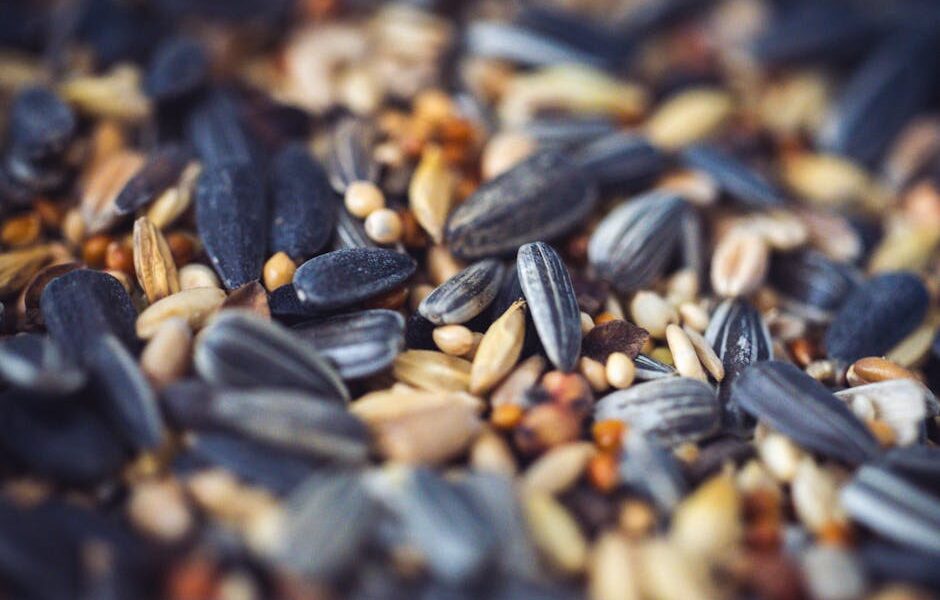
Seed-only diets are calorically dense, fat-heavy, and severely deficient in vitamins A and D, calcium, and several trace minerals. The Avian Welfare Coalition lists seed-only feeding among the most common welfare failures in companion bird homes. Clinical outcomes include hepatic lipidosis (fatty liver), poor feather quality, atherosclerosis in older parrots, calcium-related egg binding in laying females, and contributing factors in feather plucking.
Birds on seed-only diets often appear “fine” for years before clinical disease emerges. That delay is the problem — by the time symptoms appear, organ damage may be advanced. An AAV vet baseline blood panel catches subclinical deficiency early.
Seed-only diets also let birds selectively eat only their favorite seeds (typically high-fat sunflower or safflower), worsening the imbalance. Even “vegetable-fortified” seed mixes are not equivalent to a formulated pellet diet.
What Formulated Pellets Are
Formulated pellets are extruded or baked nutritionally complete diets developed for psittacines. Common categories you will see at AAV clinics and reputable rescues include Harrison’s Bird Foods, Roudybush, and Zupreem Natural — these are category examples representing different formulation philosophies (organic, color-free, varied texture). Your AAV vet will recommend a category based on your bird’s species, age, and health.
Pellets provide the vitamins, minerals, and amino acids the bird needs in proportions backed by avian nutrition research. They do not need to be supplemented with multivitamins if pellet intake meets the formulated proportion. Over-supplementing fat-soluble vitamins (A and D) on top of pellets causes its own toxicity — talk to your AAV vet before adding any supplement.
Some birds prefer pellets in their natural color and shape; others prefer color-formed versions that resemble fruit. Acceptance is individual, and trying a second or third brand is often part of the transition.
The Fresh Food Component
The 20 to 30 percent fresh component is where most variety, enrichment, and species-appropriate nutrition live. Welfare-positive options include:
- Dark leafy greens — collard, kale, chard, dandelion, romaine
- Bright vegetables — bell pepper (all colors), carrot, sweet potato (cooked), broccoli, squash
- Sprouted grains and legumes — sprouted mung beans, lentils, wheat berries
- Small fruit portions — berries, apple (no seeds), pear, melon
- Whole grains in moderation — cooked quinoa, brown rice, barley
“Chop” is the popular term for a daily mixed fresh-food bowl. Many rescue and bird-keeper communities share chop recipes — variety across the week supports both nutrition and foraging behavior. See our foraging and enrichment essentials guide for how to present chop as enrichment rather than a plain bowl.
Foods to Avoid Completely
Several common human foods are toxic to birds. Critical avoid list:
- Avocado (all parts) — cardiac toxicity
- Chocolate and cocoa — theobromine toxicity
- Alcohol — even small amounts
- Caffeine — coffee, tea, soda
- Onion and garlic family — anemia risk in birds
- Apple seeds, cherry pits, stone-fruit pits — cyanogenic compounds
- Excess salt — sodium toxicity
- Xylitol — increasingly common in human foods, toxic to many species
For a broader review covering shared household foods, see our forbidden foods list. Bird-specific toxicities overlap with but differ from dog and cat lists; verify each food before introducing it to your bird’s diet.
Seeds and Nuts as Treats
Seeds and nuts have a place — as 5 to 10 percent of the diet, used as training rewards and foraging enrichment. A single sunflower seed inside a folded paper-cup foraging puzzle is welfare-positive; a full bowl of sunflower seeds offered free-choice is not. Use higher-fat options sparingly and choose smaller seeds (millet, safflower in small amounts) for routine training.
Sprouted seeds are nutritionally different from dry seeds — sprouting reduces some antinutrients and increases vitamin availability. Many bird keepers incorporate sprouted seeds into the chop component rather than the treat component.
Nut size and shell-on presentation also matter. A whole almond in the shell takes a macaw substantial time to crack — that is enrichment-positive foraging. Pre-shelled nuts disappear in seconds and add calories with no behavioral benefit.
Transitioning a Seed-Only Bird to a Pellet-Based Diet
Many rescue birds arrive eating only seeds. Transition is slow, deliberate, and best supervised by an AAV vet. The general approach: introduce pellets alongside seeds at the same times daily, gradually reduce seed proportion over weeks, monitor weight daily, and watch for weight loss greater than five percent (which signals stop-and-reassess).
Stress, illness, or recent rehoming are not the right times to transition. Wait until the bird is settled in your home, eating consistently, and showing comfort with you. Use the principles from our 7-day food transition framework as a base, but expect avian transitions to take weeks or months, not a single week.
Tricks that help: eating in front of the bird (flock-feeding behavior), pellet-as-treat from your hand, warming pellets to release aroma, soaking pellets briefly to soften texture, and offering chop alongside as a comfort food while pellets become familiar.
Reading Pellet Labels and Avoiding Marketing Traps
Avian feed labels share some structural similarities with dog and cat food labels — see our label decoding guide for the general framework. Key elements to look for: guaranteed analysis, ingredient list (ordered by weight), expiration date, lot number, and the name of the formulator or veterinary nutrition consultant.
The avian feed industry is less regulated than dog and cat feed under formal feeding-trial frameworks. That puts more responsibility on your AAV vet to verify a product’s reputation, formulation history, and clinical fit for your bird.
Avoid products that advertise “natural” without nutritional substance, “seed mix with vitamins” that are still seed-dominant by weight, and any pellet marketing claims that contradict mainstream avian nutrition guidance.
Storage matters too. Buy pellet quantities you can use within the manufacturer’s freshness window (typically 60 to 90 days after opening). Keep pellets in a sealed container, away from light and heat, ideally refrigerated in hot climates. Stale pellets lose fat-soluble vitamin potency and develop rancid lipid profiles that birds detect and refuse — sometimes leading owners to abandon the pellet transition when the actual problem was storage.
For multi-bird households, consider whether each bird needs the same formulation. Larger species, breeding birds, and birds with diagnosed conditions sometimes need different products. Your AAV vet can recommend household-specific pellet plans rather than a single product for all birds.
Frequently Asked Questions
How long does a pellet transition usually take?
Weeks to months, depending on the bird’s history. Many seed-only rescue birds take three to six months to fully transition. Patience and AAV-vet weight monitoring are the welfare-positive defaults.
Can I feed my bird only fresh foods and skip pellets?
Not safely. Fresh-food-only diets are extremely difficult to balance for avian nutritional needs and typically end up with the same deficiencies as seed-only diets. The pellet base provides the consistent micronutrient floor; fresh foods build on top.
Are organic pellets worth the cost?
Organic certification is one philosophical choice; nutritional adequacy is another. An organic pellet that your bird refuses to eat provides zero nutrition. Acceptance plus nutritional completeness is the welfare-positive goal — work with your AAV vet on the specific brand.
How much should I feed my bird daily?
Volumes depend on species and individual — your AAV vet sets specifics. Many owners offer fresh chop and pellets in the morning, remove fresh food by mid-day to prevent spoilage, and weigh the bird weekly to track trends.
What about pellet diets for breeding or laying females?
Breeding birds and laying females have different nutritional requirements — calcium and protein especially. This is a conversation for your AAV-certified avian vet, not a do-it-yourself decision.


