
Last updated: May 16, 2026
In this article
- Are Cherry Pits Toxic to Dogs? The Quick Answer
- What Cherry Plants Look Like and Where Dogs Encounter Them
- The Cyanide Mechanism: How Cherry Pits Become Dangerous
- Symptoms of Cyanide Toxicity in Dogs
- Bowel Obstruction: The Other Cherry-Pit Risk
- How Many Pits Is Too Many?
- What to Do If Your Dog Eats Cherry Pits
- The Cherry Fruit Itself: Generally Safe in Moderation
- Other Stone Fruits: The Same Concern
- Acute Kidney Concerns and Other Systemic Effects
- Yard, Walk, and Treat-Time Prevention
- Adoption and the New-Dog Plant Audit
- Frequently Asked Questions
Are Cherry Pits Toxic to Dogs? The Quick Answer
Yes, cherry pits are toxic to dogs, and they pose two distinct risks that pet parents need to understand separately. The first is chemical: the pits, leaves, and stems of cherry plants in the genus Prunus contain cyanogenic glycosides — primarily amygdalin — which release hydrogen cyanide when chewed and digested. The second is mechanical: the hard pit itself is a real bowel-obstruction and choking hazard, particularly in small dogs and dogs who swallow without chewing. The cherry flesh (the red part you eat) is generally safe for dogs in small amounts; the pit, stem, and leaf are the parts of concern.
If your dog has eaten cherry pits, especially multiple chewed pits, treat it as an urgent veterinary call. Cyanide toxicity can develop within minutes to hours, and bowel obstruction can develop within hours to a day. Call your veterinarian, the ASPCA Animal Poison Control Center at 888-426-4435 (fee applies), or the Pet Poison Helpline at 855-764-7661 (fee applies) right away. The severity tier ranges from moderate (one or two whole swallowed pits in a large dog) to severe and life-threatening (multiple chewed pits, especially in a small dog).
What Cherry Plants Look Like and Where Dogs Encounter Them
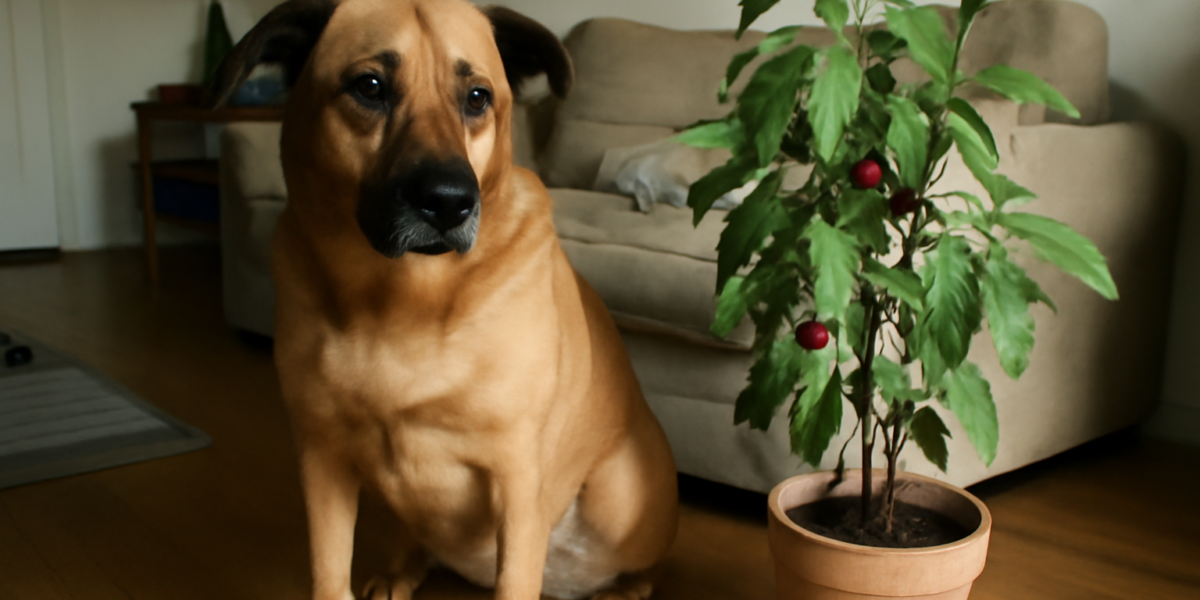
Cherry plants (Prunus avium for sweet cherry and Prunus cerasus for sour cherry, plus many ornamental flowering cherry cultivars) are deciduous trees and shrubs with smooth bark, pointed oval leaves, and clusters of white or pink five-petaled flowers in spring. The fruit ripens through summer to red, dark red, or yellow depending on cultivar, each containing a single hard stone (pit) at the center. Wild black cherry (Prunus serotina) is closely related and shares the same toxicity profile.
Dogs encounter cherry pits in several ways. Backyard cherry trees drop fruit and pits onto lawns where dogs scavenge. Pits dropped in parks, sidewalks, and trails are common during cherry season. Dogs may dig in compost piles where pits get tossed. Indoor exposures include cherry-flavored prepared foods (which often have whole pits in pies and preserves) and stone fruit left on counters within reach of taller dogs.
The same cyanogenic concern applies across the whole stone-fruit family. Peach pits, plum pits, apricot pits, and even almond shells (almonds being a member of Prunus) all share the chemistry. So a guide to cherry pits is essentially a guide to all stone-fruit pits.
The Cyanide Mechanism: How Cherry Pits Become Dangerous
The toxic compound in cherry pits is amygdalin, a cyanogenic glycoside. By itself, amygdalin is fairly stable. The danger arises when the pit is crushed, chewed, or partially digested, because that releases enzymes (and brings the amygdalin into contact with stomach acid and intestinal microbes) that break it down into hydrogen cyanide gas. Cyanide is a fast-acting toxin that interferes with cellular respiration — it prevents cells from using oxygen, even when oxygen is plentiful in the blood.
The practical implication is that an intact, swallowed-whole pit releases very little cyanide, because the amygdalin is locked inside the hard shell and most pits pass through the digestive tract more or less unchanged. A chewed pit is a different story: the cracked shell exposes the amygdalin-rich kernel inside, and the dog absorbs cyanide much more efficiently. Multiple chewed pits, or one chewed pit in a small dog, can produce systemic cyanide toxicity.
Dogs who eat cherry leaves and stems also get an amygdalin exposure, though the dose is generally lower than from chewed pits. Wilted leaves of wild black cherry are particularly notorious in livestock cases — wilting concentrates the cyanogenic compounds — but pet dogs are at lower risk because they typically do not eat large amounts of leaves.
Symptoms of Cyanide Toxicity in Dogs
Acute cyanide poisoning develops fast — sometimes within 15 to 30 minutes of a meaningful exposure. Early signs include rapid breathing or hyperventilation, bright red gums (due to oxygen-saturated blood that the cells cannot use), drooling, dilated pupils, and agitation. The cherry-red mucous membrane color is a hallmark of cyanide poisoning that is different from the pale or blue gums of most other emergencies.
As toxicity progresses, signs include weakness, collapse, ataxia, seizures, vomiting, difficulty breathing, and coma. Cyanide poisoning can be fatal in minutes to a few hours without treatment in severe cases. The good news is that treatment is available and effective if started early — there are specific cyanide antidotes (sodium thiosulfate, sometimes hydroxocobalamin) that emergency veterinary teams can administer.
Lower-level exposures may produce milder, slower-onset signs: lethargy, mild GI upset, a temporary fast respiratory rate that resolves on its own. These cases are still worth a vet call because cyanide toxicity is unpredictable enough that a “mild” case can deteriorate suddenly.
Bowel Obstruction: The Other Cherry-Pit Risk
Even setting cyanide aside, the physical pit itself is a real problem. Cherry pits are hard, irregularly shaped, and roughly the size of an obstruction-prone object for small and medium dogs. A dog that swallows multiple whole pits, or even a single pit if the dog is small enough, can develop a partial or complete intestinal obstruction.
Signs of bowel obstruction develop over hours to days rather than minutes. Watch for repeated vomiting (especially vomiting that does not resolve and may include undigested food or bile), refusal to eat, abdominal pain (a hunched posture, reluctance to be touched on the belly, panting), reduced or absent stool, and progressive lethargy. A dog with these signs after a known stone-fruit ingestion needs imaging — usually X-rays or ultrasound — to look for the obstruction.
Pits that get stuck most commonly lodge in the small intestine, but they can also obstruct the esophagus or stomach outlet. Surgical or endoscopic removal is sometimes necessary. This is exactly the kind of scenario where calling early is dramatically cheaper than waiting — outpatient evaluation costs far less than a several-thousand-dollar abdominal surgery.
How Many Pits Is Too Many?
There is no clean dose-response number for cyanide toxicity from cherry pits, because the variable that matters most is how thoroughly the pits were chewed, not just the count. A single intact pit swallowed by a fifty-pound Labrador is unlikely to cause cyanide poisoning, though it carries a small obstruction risk. Several chewed pits in the same dog is a real exposure. The same chewed-pit count in a ten-pound dog is much more dangerous on a per-kilogram basis.
Body size, age, and underlying health all change the picture. Small dogs, puppies, and dogs with pre-existing heart, lung, or liver disease have less margin for cyanide stress. The shape and size of the dog also affects obstruction risk — narrower intestinal anatomy in small breeds means even a single pit can lodge.
The honest practical rule is the same one across the toxic-plant database: if you cannot estimate accurately, treat the ingestion as potentially significant. Call your vet or poison control. A short consult is far cheaper than an emergency workup that you needed because you waited and watched.
What to Do If Your Dog Eats Cherry Pits
Move quickly. Remove your dog from the source — pick up remaining pits, take the dog out of the cherry-tree area, and check their mouth for any pits or kernel material. Note the time of ingestion, your best estimate of how many pits, and whether the dog appeared to chew or swallow whole. Cyanide is a time-sensitive toxin and obstructions are time-sensitive obstructions; the clock matters.
Call. Provide your veterinary team or poison control hotline with your dog’s species, weight, age, health background, the number and condition of pits eaten (chewed vs whole), and any symptoms already present. Do not induce vomiting at home unless directly instructed by a veterinary professional. With cyanide ingestions, the speed of cyanide absorption and the dog’s airway protection both matter, and at-home decontamination can do more harm than good.
Veterinary treatment depends on the picture. For early-presenting cyanide concerns, the team may use induced emesis if appropriate, activated charcoal, IV fluids, oxygen support, and specific cyanide antidotes for serious exposures. For obstruction concerns, they will likely image the abdomen and decide on monitoring versus removal. Bloodwork is reasonable for both pictures. Most dogs who get prompt care recover fully.
The Cherry Fruit Itself: Generally Safe in Moderation
Stripped of the pit and stem, the red fleshy part of the cherry is generally safe for dogs in small amounts. Some dogs enjoy the taste, and a few pieces of pitted, stemmed cherry as an occasional treat is unlikely to cause problems. Cherries are high in sugar, so they are not a good staple, and dogs with diabetes or weight concerns should skip them.
The catch is that you have to be the one preparing them. Whole cherries with pits intact are dangerous; pitted cherries are fine. Cherry pie, cherry preserves, and cherry-flavored prepared foods often have either whole pits or other concerning ingredients (xylitol, chocolate, alcohol in cherry liqueur products) that make them inappropriate for dogs.
For dogs who love stone fruit, plain pitted ripe cherries in tiny amounts are the safer treat. Better still, peeled and pitted apple slices, blueberries, and watermelon (no rind, no seeds) are all dog-friendly fruits without the cyanide concern. Always introduce new foods slowly to watch for individual GI sensitivity.
Other Stone Fruits: The Same Concern
The cyanogenic glycoside concern in cherry pits applies to the whole stone-fruit family in Prunus: peach pits, plum pits, apricot pits, and almond shells share the same chemistry. A dog who eats peach pits is in the same risk picture as a dog who eats cherry pits — chewed pits release cyanide, and the hard pits pose obstruction risk.
Peach pits are particularly notable because they are larger, harder, and more likely to cause obstruction in dogs, even when ingested whole. Dogs in stone-fruit-growing regions can get into fallen peaches, plums, or apricots in late summer when the ground is littered with overripe fruit. Yard cleanup during fruit-drop season is a real prevention measure.
Sibling toxic-plant articles cover other yard exposures dogs commonly encounter. Our guides on acorns and dogs and oak leaves and dogs cover the tannin-related ground litter risk, which is a different chemistry but a similar “fall yard cleanup” message. Our piece on mistletoe berries and dogs covers another seasonal tree-and-berry risk.
Acute Kidney Concerns and Other Systemic Effects
Cyanide poisoning primarily affects cellular respiration in tissues with high oxygen demand — the brain, heart, and respiratory muscles. Acute kidney injury is not the central concern with cherry-pit poisoning the way it is with grape ingestion or true-lily exposure in cats. That said, severe cyanide-induced shock and prolonged hospitalization can stress the kidneys, and post-recovery monitoring is reasonable.
Dogs with pre-existing chronic kidney disease have less reserve to handle any acute physiological stressor, including cyanide-related shock or surgery to remove an obstruction. If your dog is already in the kidney-care category — see our pillar guide on acute kidney injury in dogs for context — talk to your vet about extra precautions if cherry trees are in your environment.
The most common long-term issue after a cherry-pit emergency is not actually cyanide-related but obstruction-related: dogs recovering from intestinal surgery need careful diet management, monitoring of the surgical site, and sometimes follow-up imaging. Most dogs recover fully with appropriate care.
Yard, Walk, and Treat-Time Prevention
Yard prevention starts with knowing what is on your property. If you have a cherry tree, plum tree, peach tree, or wild black cherry, plan for daily fallen-fruit cleanup during ripening and post-ripening season. Fence off the drip line if you cannot reliably keep up with cleanup. Wild black cherry in particular is notable because it is a common volunteer species in yards across the eastern US and many homeowners do not realize it is on their property.
Walks add another layer. Cherry trees in parks, along sidewalks, and in commercial landscaping drop fruit during summer, and a dog with a strong scavenging drive can pick up pits faster than you notice. Train a reliable “leave it” cue and pay attention to the trees you are walking under during cherry season. A short leash and good attention work better than relying on visual scanning.
Treat-time prevention means being intentional about the human food you share. Bone broths, baked goods, and processed snacks may include stone-fruit ingredients without obvious labeling. Our roundup of pet-safe garden plants can help if you are designing a yard that minimizes exposure to all the stone fruits and other dog-unsafe species.
Adoption and the New-Dog Plant Audit
When a dog joins your household — especially through fostering or adoption — the first few weeks are the highest-risk window for plant exposures. New dogs are exploring everything, the household routine is in flux, and you do not yet know your dog’s individual scavenging style. Some dogs ignore fallen fruit completely. Others are stone-fruit vacuums.
Default to the cautious assumption. Walk the yard, identify the trees, and clean up under any stone-fruit, oak, or berry-bearing species. Note where neighbor trees overhang your space. If you live in a region with wild black cherry or other native Prunus species, factor that into walks too.
If you are still in the meeting-pets phase, our team at Walk Me Home Rescue’s dog adoption page can talk you through household prep that includes a yard plant audit. The five minutes it takes is much cheaper than an emergency surgery for a swallowed peach pit. And if you are settling in a recently adopted dog, the same checklist applies.
Frequently Asked Questions
Is one cherry pit dangerous to a large dog?
One whole, swallowed-but-not-chewed cherry pit in a large dog is a low-risk situation for cyanide toxicity, because intact pits pass through the digestive tract releasing very little amygdalin. There is still a small obstruction risk. Watch for vomiting, lack of appetite, or abdominal pain over the next 24 to 48 hours and call your vet if signs develop.
What if my dog ate cherry pits but seems fine?
“Seems fine” is not a guarantee, especially with cyanide toxicity, which can develop suddenly. Call your veterinarian or poison control even if your dog looks normal — the team can tell you whether the exposure level you describe is one that warrants observation at home or a clinic visit. Symptoms can appear within minutes for cyanide and within hours to a day for obstruction.
Are maraschino cherries safer because they are pitted?
Maraschino cherries are pitted, so the cyanide and obstruction risks are gone, but they are heavily processed with sugar and sometimes additional preservatives or coloring that are not appropriate for dogs. A single dropped maraschino cherry is unlikely to cause harm, but they should not be a treat you offer intentionally.
What about cherry leaves and stems?
Cherry leaves and stems also contain cyanogenic glycosides, particularly when wilted. The dose from typical pet-dog leaf-chewing is much lower than from chewed pits, but large or repeated leaf ingestions warrant a vet call. Wild black cherry leaves are notably hazardous to livestock; pet dogs are at lower risk but not zero.
Should I induce vomiting at home if my dog ate cherry pits?
No. Decontamination decisions belong to your veterinary team. At-home emesis without guidance can cause aspiration or worsen some plant ingestions, and with cyanide concerns the timing matters too much to handle without professional input. Call your vet, ASPCA Animal Poison Control at 888-426-4435, or the Pet Poison Helpline at 855-764-7661 first and follow their instructions.


