
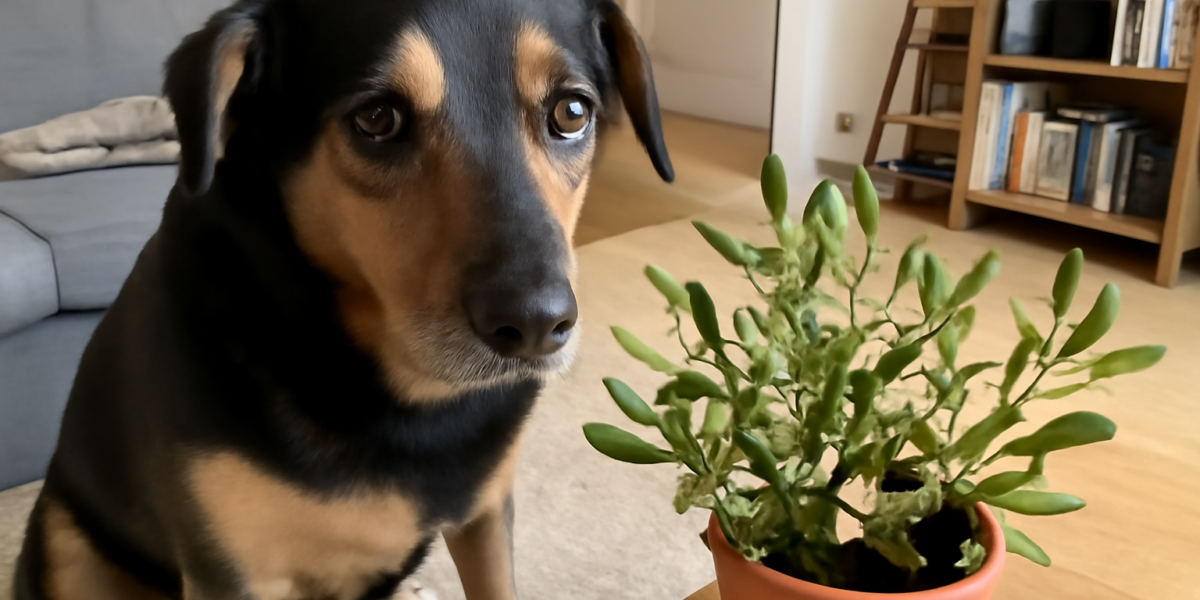
Are Mistletoe Berries Toxic to Dogs? The Quick Answer
Yes, mistletoe is toxic to dogs, but the risk picture has changed since older alarmist holiday-plant articles painted mistletoe as routinely fatal. Modern veterinary consensus is that most household mistletoe ingestions in dogs cause gastrointestinal symptoms — vomiting, diarrhea, drooling, abdominal pain — rather than the sudden cardiac collapse the older guides warned about. Severe cases involving multiple berries or large amounts of plant material can still produce concerning systemic signs, including ataxia, weakness, slow heart rate, and rarely seizures or hypotension. The severity tier is moderate, with the potential to escalate to severe with substantial ingestions.
In this article
- Are Mistletoe Berries Toxic to Dogs? The Quick Answer
- What Mistletoe Looks Like and Where Dogs Encounter It
- The Toxic Compounds: Phoratoxins, Viscotoxins, and Lectins
- Symptoms of Mistletoe Ingestion in Dogs
- How Many Berries Is Too Many?
- What to Do If Your Dog Eats Mistletoe
- Mistletoe in Holiday Decor: Practical Risk Management
- Mistletoe for Dogs vs Cats: Different Picture
- American vs European Mistletoe: Slightly Different Toxin Mix
- Cardiac and Neurological Signs: The Higher-Tier Risk
- Mistletoe and Pet-Safe Holiday Alternatives
- Frequently Asked Questions
If your dog has eaten mistletoe berries or chewed a sprig of mistletoe foliage, treat it as an urgent vet call. Even if your dog appears fine, call your veterinarian, the ASPCA Animal Poison Control Center at 888-426-4435 (fee applies), or the Pet Poison Helpline at 855-764-7661 (fee applies). The seasonality of mistletoe — it appears in homes during a narrow holiday window — means that emergency vet hospitals see a predictable wave of mistletoe ingestions every December.
What Mistletoe Looks Like and Where Dogs Encounter It
Mistletoe is a parasitic plant that grows attached to host trees rather than rooted in soil. The two genera most commonly encountered in homes are Phoradendron (American mistletoe, native to the eastern and southern United States) and Viscum (European mistletoe, used in much commercially-sold holiday decor). Both share the characteristic forked branches, paired leathery oval leaves, and small clusters of waxy white or pale yellow berries.
Dogs encounter mistletoe almost exclusively in the holiday-season indoor context. Sprigs hung in doorways for kissing-under-the-mistletoe tradition, dried bunches in wreaths, and fresh-cut sprigs in holiday floral arrangements all bring the plant into the home for a few weeks each year. Berries can fall and roll onto the floor, where a dog will absolutely investigate them.
Outdoor encounters are less common but possible in regions where mistletoe grows wild on trees. Dogs may chew fallen branches that come down with mistletoe attached during storms or pruning. Some dogs will eat the berries off the ground in places where mistletoe is endemic. The Christmas exposure window remains the dominant risk period.
The Toxic Compounds: Phoratoxins, Viscotoxins, and Lectins
Mistletoe contains several different toxic compounds, and the mix differs slightly between American (Phoradendron) and European (Viscum) species. The principal toxins of concern are phoratoxins (in American mistletoe), viscotoxins (in European mistletoe), and a class of plant lectins. Both phoratoxins and viscotoxins are membrane-active proteins that disrupt cell function. The lectins interfere with cellular protein synthesis.
The toxic compounds are present throughout the plant — leaves, stems, and berries. The berries are notable because they are the most attractive part to a dog and they are easily detached from the plant, but the foliage is no less toxic. Dried mistletoe in older wreaths retains toxicity, though some compounds may degrade with age and drying.
The older alarmist content that emphasized rapid cardiac death may have been influenced by isolated severe cases and by extrapolation from historical human-medicine reports about mistletoe extracts. In typical pet-household ingestions, the dose of toxin from a few berries or a chewed sprig is much smaller than the dose you would need to produce severe systemic poisoning. That does not mean the risk is zero — it means the alarming worst-case described in older guides is not the most likely outcome.
Symptoms of Mistletoe Ingestion in Dogs
The most common signs after mistletoe ingestion are gastrointestinal: vomiting, diarrhea, drooling, lip-smacking, pawing at the mouth, abdominal discomfort, and a temporary loss of appetite. These typically appear within a few hours of ingestion and resolve within a day or two with supportive care. Many dogs will look uncomfortable but not severely ill in the first few hours.
With more substantial ingestions or in smaller dogs, more concerning signs become possible. Watch for ataxia (wobbly walking), weakness, lethargy that progresses rather than improving, changes in heart rate (either fast or slow), low blood pressure manifesting as pale gums and weakness, breathing difficulty, and rarely seizures or collapse. These higher-tier signs are uncommon but warrant immediate emergency care if they appear.
Skin contact with mistletoe sap can also cause local irritation. Dogs who chewed mistletoe and have residual sap on their muzzle may rub their face or paw at the mouth even when the GI signs are mild. A gentle wipe of the mouth and a phone call to your vet is the right first step.
How Many Berries Is Too Many?
There is no clean dose-response number for mistletoe toxicity in dogs, and reputable poison-control resources do not give specific safe amounts. The honest answer is that mouthing exposures and a single berry are usually low-risk situations that produce mild GI signs at most. Multiple berries, sustained chewing of foliage, or ingestion by a small or compromised dog moves the picture toward a vet visit.
Body size matters. A ten-pound dog who eats five berries has a much larger relative exposure than a sixty-pound dog who eats the same amount. Puppies, senior dogs, and dogs with pre-existing heart, liver, or kidney disease have less margin for any toxicity and warrant earlier veterinary intervention.
The older “even one berry can be fatal” guidance does not match what veterinary toxicologists actually see in practice — but the corrected message is not “one berry is fine.” It is “we do not know exactly how much you ate, so call us and let us help you decide whether observation at home or a clinic visit is the right step.”
What to Do If Your Dog Eats Mistletoe
The first move is to remove your dog from the source. Pick up fallen berries, take down or relocate the mistletoe sprig, and check the floor for stray plant material. Examine your dog’s mouth gently for any berries or leaves still stuck between teeth or on the tongue. Note approximately how many berries are missing or how much foliage was chewed, and the time of ingestion.
Call. Provide your veterinary team or poison control hotline with your dog’s species, weight, age, health background, the part and amount of the plant ingested, and the time elapsed. Have the plant or a clear photograph available so the staff can confirm the species — American versus European mistletoe is a relevant detail. Do not induce vomiting at home unless directly instructed by a veterinary professional.
If you are advised to bring your dog in, expect an exam, possibly induced emesis if recent enough and appropriate, activated charcoal in some cases, IV fluid support, anti-nausea medication, and observation. For dogs showing cardiac or neurological signs, expect more intensive monitoring including electrocardiogram and bloodwork. Most dogs who get prompt care recover fully within a day or two.
Mistletoe in Holiday Decor: Practical Risk Management
The biggest single thing you can do to reduce risk is to choose how and where you display mistletoe. Hanging it high enough that no jumping or counter-surfing dog can reach it eliminates almost all the risk. Faux mistletoe (silk, plastic, or paper) carries the holiday tradition without the toxin and is a reasonable swap for households with curious or determined chewers.
If you display real mistletoe, sweep up daily — fallen berries are often more accessible to dogs than hanging sprigs. Train family members and guests to leave the sprig alone rather than batting at it during parties. Pets often investigate decorations only when humans interact with them first. Holiday floral deliveries should be inspected for mistletoe; centerpieces sometimes include a sprig that the recipient does not notice.
While you are mistletoe-proofing, audit the rest of your holiday decor. Poinsettias are mildly irritating but rarely seriously toxic. Holly is more concerning than poinsettia — see our piece on holly berries and dogs. Christmas-tree water and tinsel are non-plant household holiday hazards worth thinking through. Cherry pits and other stone fruits show up in holiday baking and pose a separate risk.
Mistletoe for Dogs vs Cats: Different Picture
Mistletoe is toxic to both dogs and cats, with similar GI-prominent symptom profiles and the same potential for higher-tier cardiac and neurological signs at large doses. The behavioral differences mean dogs and cats encounter mistletoe in different ways. Dogs are more likely to scavenge fallen berries and chew sprigs at low height. Cats are more likely to bat at hanging mistletoe and play with detached berries on the floor.
Body mass and species-specific drug-handling differences matter for dosing. The smaller average size of cats means a given amount of plant material is a relatively larger exposure than the same amount in a medium dog, but cats also tend to ingest less because they are less voracious eaters. Our companion piece on mistletoe berries and cats covers the cat-side picture in detail.
For households with both species, the practical decor management is the same: hang mistletoe out of reach of both, sweep up berries daily, and consider a faux substitute if you have a dog or cat who has shown a chewing pattern. One mistletoe-free December does not diminish the holiday spirit.
American vs European Mistletoe: Slightly Different Toxin Mix
American mistletoe (Phoradendron species) is what most North American homes will be using if the mistletoe was sourced domestically. European mistletoe (Viscum album) is more often associated with the traditional kissing-under-mistletoe imagery from European sources and is sometimes imported. The two genera have similar but not identical toxin profiles — phoratoxins vs viscotoxins — and the practical risk picture is roughly comparable.
For a dog ingestion, the species detail matters less than the amount and the dog’s response. Veterinary toxicology resources generally treat the two interchangeably for clinical management. Regardless of which species, the same call-the-vet, monitor-for-GI-and-cardiac-signs, supportive-care framework applies.
If you receive mistletoe as part of an imported holiday arrangement and you are not sure which species it is, take a clear photograph and bring or describe it when you call the vet or poison control. The staff can usually tell from the leaf shape and berry color which species you have. American mistletoe tends to have whiter berries and slightly thicker leaves; European mistletoe has paler greenish-yellow berries and longer, narrower leaves.
Cardiac and Neurological Signs: The Higher-Tier Risk
The cardiac-toxicity reputation of mistletoe deserves clarification. The viscotoxins and phoratoxins can cause changes in heart rate and blood pressure at sufficient doses, and isolated case reports describe bradycardia (slow heart rate) and hypotension after substantial mistletoe exposure. Severe cardiovascular collapse leading to death is rare but is the worst-case outcome that older guides emphasized.
Neurological signs at high doses can include ataxia, hallucinatory behavior, seizures, and coma. Again, these are rare in pet ingestions but possible. A dog showing any of these signs needs emergency veterinary care immediately, including possible ECG monitoring, blood pressure support, anti-seizure medication, and intensive supportive care.
The severe-tier mistletoe ingestions are uncommon enough that most pet parents who call about a chewed-sprig incident will be reassured by the poison-control consult and asked to monitor at home. The point of calling is to confirm which tier your specific incident lies in, because that determines whether at-home observation or clinic transport is appropriate.
Mistletoe and Pet-Safe Holiday Alternatives
If you love the mistletoe tradition but want to reduce risk for a household with curious dogs, faux mistletoe is the simplest swap. High-quality silk or fabric versions are visually convincing and, unlike fresh, do not drop berries onto the floor. Glass or ceramic mistletoe ornaments hung at height carry the symbolism without any chewable plant material at all.
For broader holiday plant decisions, lean on species the ASPCA lists as non-toxic. Christmas cactus is non-toxic, though chewing can cause GI upset like any plant material. Norfolk Island pine, while not officially listed as non-toxic, is generally safer than many traditional Christmas evergreens. Our roundup of pet-safe garden plants includes evergreen options for indoor and outdoor December decor.
If you are settling a newly adopted dog into your home during the holidays, this is a particularly high-risk window for plant ingestions because the routine is in flux and the dog is exploring everything. Our team at Walk Me Home Rescue’s dog adoption page can help you think through holiday-season plant safety as part of welcome-home prep. A five-minute decor audit prevents the kind of holiday-week emergency vet visit that no one wants.
Frequently Asked Questions
How dangerous is mistletoe to dogs really?
Mistletoe is genuinely toxic, but most household ingestions cause moderate GI signs rather than the rapid cardiac death older guides warned about. Severe ingestions can produce ataxia, abnormal heart rate, and rarely seizures. Treat any mistletoe ingestion as a vet call to determine which risk tier your specific situation falls into.
What if my dog only ate one or two berries?
One or two berries in an average adult dog is unlikely to cause severe systemic illness but can still produce vomiting, diarrhea, and drooling. Call your veterinarian or poison control for tailored advice, especially if your dog is small, young, senior, or has pre-existing health issues.
How long does it take for mistletoe poisoning symptoms to appear?
Gastrointestinal signs typically appear within a few hours of ingestion. Higher-tier cardiovascular or neurological signs, when they occur, can develop within hours to a day. Watch your dog closely for the first 24 hours after a known ingestion and call your vet if anything changes.
Should I make my dog vomit if they ate mistletoe?
No, not without veterinary guidance. Decontamination decisions belong to your veterinary team, who will consider time since ingestion, your dog’s airway protection, and the dose. Call your vet, ASPCA Animal Poison Control at 888-426-4435, or the Pet Poison Helpline at 855-764-7661 for instructions before doing anything at home.
Is dried mistletoe in old wreaths still toxic?
Yes. The toxic compounds in mistletoe persist even when the plant is dried, though some degradation may occur with age. Treat dried mistletoe in stored decor or older wreaths with the same caution as fresh mistletoe, and dispose of any decor with deteriorating plant material that could shed berries onto the floor.


