
Last updated: March 26, 2026
In this article
- The History of Black Cat Superstitions
- Black Cats in Different Cultures
- The Adoption Disadvantage: Black Cat Syndrome
- Why Black Cats Wait Longer in Shelters
- Debunking Bad Luck Myths
- Black Cats’ Personalities
- Famous Black Cats
- Photographing Black Cats for Adoption
- Why You Should Adopt a Black Cat
- Black Cat Appreciation Day
- Frequently Asked Questions
Black Cat Myths: The Truth About Black Cats & Why They Deserve Love
Black cats have been the subject of myths, superstitions, and folklore for thousands of years. Depending on where you live and which stories you grew up hearing, a black cat crossing your path might mean terrible luck — or the best fortune imaginable. The reality, of course, is far simpler and far more wonderful: black cats are loving, loyal, beautiful companions who happen to wear a stunning coat of midnight fur. Unfortunately, centuries of superstition have left a lasting mark on how these cats are perceived, and that perception has real consequences in shelters across the country. If you have ever wondered where black cat myths come from, whether any of them hold an ounce of truth, or why black cats consistently wait longer for adoption, this guide will give you the full picture — and, hopefully, inspire you to consider bringing one home.
The History of Black Cat Superstitions
The association between black cats and bad luck has surprisingly deep roots in Western history. In ancient Egypt, cats of all colours were revered, and the goddess Bastet — often depicted as a sleek black cat — was associated with protection, fertility, and the home. Cats were so sacred in Egyptian culture that harming one could result in severe punishment. Black cats, with their glossy dark coats, were considered especially powerful guardians.
The shift in perception began during the Middle Ages in Europe. As the Catholic Church sought to consolidate its power and stamp out pagan practices, cats — particularly black ones — became associated with witchcraft and heresy. Pope Gregory IX’s papal bull “Vox in Rama” in 1233 described black cats as instruments of Satan, and from that point forward, the connection between black cats and dark forces took hold across much of Europe. During the witch trials of the 15th through 18th centuries, black cats were frequently accused of being witches’ “familiars” — supernatural companions that aided in casting spells. Thousands of black cats were killed alongside the women accused of witchcraft, and this dark chapter of history cemented the superstition that has persisted in various forms ever since.
When European settlers arrived in North America, they brought these superstitions with them. The Salem witch trials of 1692 further entrenched the idea that black cats were associated with evil. Over time, the superstition evolved into the more general belief that a black cat crossing your path brings bad luck — a piece of folklore that many people still reference today, even if they do not genuinely believe it.
Black Cats in Different Cultures
While Western superstition has given black cats an unfair reputation, many cultures around the world view them in an entirely different light. In Japan, black cats are considered symbols of good luck. Single women in Japan who own black cats are believed to attract more romantic suitors. The famous “maneki-neko” (beckoning cat) figurines sometimes appear in black, representing protection against evil spirits and the attraction of good fortune.
In the United Kingdom and much of Scotland, a black cat arriving at your doorstep is considered a sign of prosperity. Scottish lore holds that a strange black cat appearing at your home means money is on the way. British sailors historically considered black cats lucky ship companions, and their wives often kept black cats at home believing it would ensure their husbands’ safe return from sea.
In Celtic mythology, a fairy creature known as the “Cat Sith” took the form of a large black cat. While it could be mischievous, it was also believed to bless homes that left out a saucer of milk on Samhain. In parts of Germany and other Central European countries, a black cat crossing your path from left to right is a positive omen. In the south of France, black cats are called “matagots” or “magician cats” and are believed to bring wealth and good fortune to owners who treat them with respect.
Even in ancient Norse mythology, the goddess Freya — associated with love, beauty, and fertility — rode a chariot pulled by two large black cats. Farmers would leave offerings for Freya’s cats in their fields to ensure a good harvest. The global picture is clear: the notion that black cats are unlucky is a regional superstition, not a universal truth. Far more cultures celebrate them than fear them.
The Adoption Disadvantage: Black Cat Syndrome
Regardless of what we know about the origins of black cat myths, the consequences are painfully real in animal shelters. “Black Cat Syndrome” is a well-documented phenomenon in the rescue and shelter community. It refers to the tendency of black cats — and, to a lesser extent, black dogs — to be overlooked by potential adopters in favour of cats with lighter, more colourful, or more distinctive coat patterns.
Shelter workers and rescue volunteers across the country will tell you the same thing: black cats are consistently among the last to be adopted and among the first to be euthanised when shelters reach capacity. The reasons are complex and interconnected. Lingering superstition plays a role, even among people who would not describe themselves as superstitious. There is also the practical issue of visibility — in a dimly lit shelter environment, black cats can blend into the shadows of their kennels, making it harder for visitors to notice their facial expressions and unique features. And in the age of social media-driven adoptions, black cats are notoriously difficult to photograph well, which puts them at a further disadvantage when rescue organisations rely on online listings to attract adopters.
The numbers are sobering. According to data from the ASPCA and various regional shelter reports, black cats make up roughly one-third of all cats entering shelters, yet they consistently have the lowest adoption rates and the highest euthanasia rates. This is not because there is anything wrong with black cats — it is because outdated myths and superficial biases continue to shape adoption decisions in ways many people are not even conscious of.
Why Black Cats Wait Longer in Shelters
Understanding why black cats wait longer requires looking beyond superstition alone. Several factors compound the problem. First, there is the sheer volume. Because black is the most common coat colour in the domestic cat population — a result of the dominant melanistic gene — shelters are never short of black cats. When supply consistently outpaces demand, the wait times inevitably grow longer.
Second, there is the perception of individuality. Many potential adopters browse shelter websites looking for cats that “stand out” — unusual markings, striking eye colours against contrasting fur, or rare coat patterns. Black cats, at first glance, can appear similar to one another in photographs, which makes it harder for any single black cat to catch someone’s eye in a crowded online listing. This is, of course, an illusion. Anyone who has spent time with black cats knows that each one has a completely unique face, body shape, and personality. But that first impression — the thumbnail photo on a shelter website — often determines whether someone clicks to learn more.
Third, there is the lingering cultural association with Halloween, horror films, and bad omens. Even in people who do not consciously believe in superstitions, decades of media imagery connecting black cats with witches, haunted houses, and bad luck can create a subtle, unconscious bias. Many shelters actually suspend adoptions of black cats in the weeks surrounding Halloween out of concern that they may be adopted as “props” or, in rare cases, subjected to cruelty by individuals acting on superstitious beliefs.
Finally, there is the simple fact that black cats often do not photograph well under standard lighting conditions, which means their online profiles tend to be less visually appealing than those of cats with lighter or multi-coloured coats. In a world where adoption decisions increasingly begin with a scroll through a website or social media feed, this photographic disadvantage has real consequences. Shelters that invest time in learning how to photograph black cats effectively — using proper lighting, contrasting backgrounds, and close-up shots that capture facial expressions — see measurably better adoption outcomes for their dark-coated residents.
Debunking Bad Luck Myths
Let us be direct: there is zero scientific, statistical, or logical evidence that black cats bring bad luck. None. The superstition is a cultural artefact with identifiable historical origins, and it has no basis in reality. No study has ever found that people who own black cats experience more misfortune than anyone else. No research has ever linked black coat colour in cats to any behavioural trait that could be interpreted as “unlucky.” The colour of a cat’s fur is determined by genetics — specifically, the expression of the melanocortin 1 receptor gene — and it has absolutely no influence on the cat’s temperament, health, or the fortune of its owner.
In fact, the melanistic gene that produces black fur may actually confer certain health advantages. Researchers studying big cats have found that the gene mutation responsible for black coats in jaguars and leopards appears to be linked to increased resistance to certain viral infections. While more research is needed to determine whether this applies to domestic cats, the early findings suggest that the very gene that makes black cats black could be giving them a subtle health edge — the opposite of bad luck.
It is also worth noting that the “bad luck” myth is geographically inconsistent. If black cats truly brought misfortune, the effect would be universal — it would not switch from bad luck to good luck depending on which country you happen to be standing in. The fact that black cats are considered lucky in Japan, the UK, Scotland, and much of continental Europe while being considered unlucky in parts of the United States and Western Europe tells you everything you need to know: this is a cultural story, not a natural law.
Black Cats’ Personalities
One of the most delightful things about black cats is the personality that so many owners describe. While every cat is an individual and temperament varies widely within any colour group, black cat owners frequently report that their cats are unusually affectionate, social, and easygoing. The National Institutes of Health has funded studies examining whether coat colour correlates with temperament in domestic cats, and while results are preliminary, there are intriguing patterns. Black cats tend to score well on sociability and tolerance measures, and shelter workers often describe them as among the friendliest cats in their care.
Anecdotally, the “black cat personality” is a real phenomenon that countless owners swear by. Black cats are often described as the “dogs of the cat world” — greeting their owners at the door, following them from room to room, seeking out laps and cuddles with an eagerness that can surprise people who expect cats to be aloof. Many black cat owners report that their cats are unusually tolerant of handling, good with children, and adaptable to changes in their environment.
Of course, personality is shaped by genetics, early socialisation, and individual experience — not coat colour alone. But if you are looking for a cat that is likely to be friendly, outgoing, and deeply bonded to its family, you could do far worse than visiting your local shelter and spending some time with the black cats who are almost certainly waiting there. You might find yourself pleasantly surprised by just how charming, playful, and loving they are. Explore our cat breeds directory to learn more about how different breeds and coat types influence personality and temperament.
Famous Black Cats
Black cats have left their mark on history, literature, and popular culture in ways that go well beyond superstition. Trim, a black cat, sailed with navigator Matthew Flinders on his voyages around Australia in the early 1800s and is celebrated with statues in multiple Australian cities. Gladstone, a black cat, serves as the official Chief Mouser at HM Treasury in London, where he has become a beloved public figure with his own social media following.
In literature, Edgar Allan Poe’s famous short story “The Black Cat” (1843) remains one of the most widely read works of American gothic fiction — though it is worth noting that the story explores human guilt and madness rather than any actual malevolence on the part of the cat. T.S. Eliot included several black cats among the characters in “Old Possum’s Book of Practical Cats,” which went on to inspire the musical “Cats.”
In popular culture, Salem Saberhagen from “Sabrina the Teenage Witch” introduced an entire generation to the idea of a witty, charismatic black cat. Jiji from Hayao Miyazaki’s animated film “Kiki’s Delivery Service” is one of the most beloved black cats in cinema. Felix the Cat, one of the earliest animated characters in film history, was a cheerful black cat who became a global icon in the 1920s. And of course, Sylvester from Looney Tunes — though technically a tuxedo cat — helped make black-furred felines a fixture of American pop culture. These famous black cats have brought joy, laughter, and companionship to millions — a far cry from the “bad luck” narrative.
Photographing Black Cats for Adoption
If you work with a rescue organisation or shelter, learning to photograph black cats well is one of the most impactful things you can do to improve their adoption chances. The challenge is real — black fur absorbs light, which can cause a cat’s features to disappear into a dark, featureless blob in photographs. But with a few simple techniques, you can capture stunning photos that showcase each black cat’s unique beauty and personality.
Natural light is your best friend. Photograph black cats near windows or in outdoor enclosures where soft, diffused daylight can illuminate their features without creating harsh shadows. Avoid using flash, which tends to wash out the image and create an unflattering green or yellow eye-glow effect. Position the cat against a light or brightly coloured background — a white blanket, a pastel-coloured wall, or a colourful piece of fabric will create contrast that helps the cat’s silhouette and features stand out.
Get close. Wide shots of black cats in dimly lit kennels are almost guaranteed to produce poor results. Instead, focus on close-up portraits that capture the cat’s eyes, facial expression, and any subtle variations in their coat — many black cats have a faint tabby pattern visible in certain lighting, or a warm chocolate undertone to their fur that only shows up in natural light. Capture the cat in action: playing, stretching, yawning, or gazing directly at the camera. Photos that convey personality and emotion are far more effective at driving adoption interest than static, poorly lit kennel shots. A great photograph can be the difference between a black cat waiting months for a home and being adopted within days.
Why You Should Adopt a Black Cat
If you are considering adding a feline companion to your family, there are compelling reasons to give black cats a closer look. First and most importantly, they need you. Black cats are consistently the most overlooked and most at-risk population in shelters across the country. By choosing to adopt a black cat, you are directly saving a life that might otherwise be lost to shelter overcrowding and euthanasia.
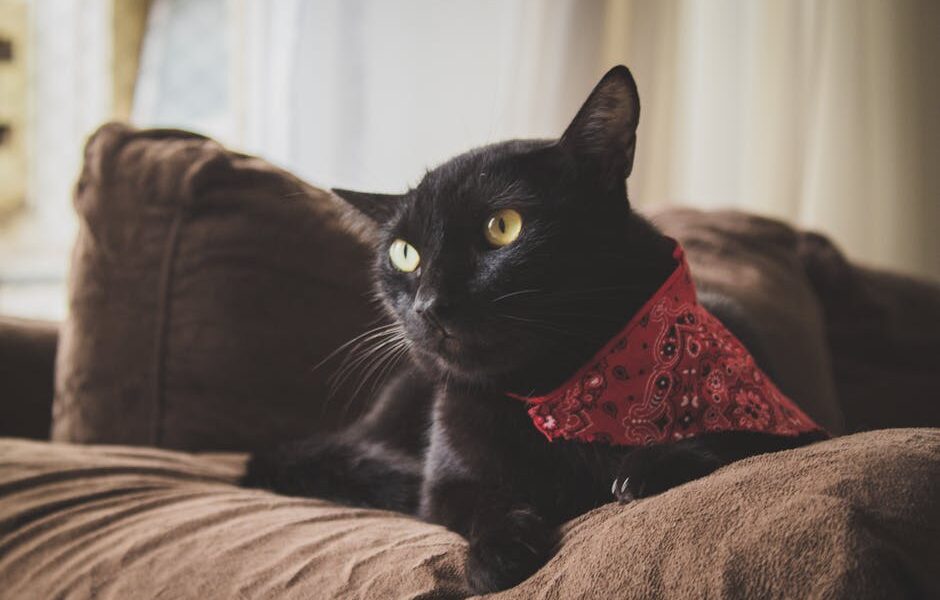
Beyond the altruistic reasons, black cats are simply wonderful companions. Their frequently reported sociability, affection, and easygoing temperaments make them excellent family cats. They tend to integrate well into multi-pet households and are often described as being particularly gentle and patient. Their sleek black coats are genuinely striking in person — there is a reason black is considered the most elegant colour in fashion, and it translates beautifully to a glossy, well-groomed cat lounging on your sofa.
From a practical standpoint, black cat fur is less visible on dark-coloured furniture and clothing than lighter-coloured cat hair — a small but real quality-of-life perk for anyone who has ever battled white cat hair on a black sweater. And because shelters have such an abundance of black cats, you are likely to have a wonderful selection to choose from, increasing the odds that you will find a cat whose age, temperament, and energy level are the perfect fit for your household.
Ready to meet your new best friend? Visit our adoption page to browse cats currently available for adoption, including beautiful black cats who are waiting for their forever homes. You can also explore our cat breeds directory to learn about different breeds and find the perfect match for your lifestyle.
Black Cat Appreciation Day
Black Cat Appreciation Day is observed every year on August 17th. The day was created to raise awareness about the challenges black cats face in shelters and to celebrate the beauty, charm, and companionship that these cats bring to their families. It originated in the United States and has since gained recognition internationally, with shelters, rescue groups, and cat lovers around the world participating through adoption events, social media campaigns, and educational outreach.
Many shelters offer reduced adoption fees or special promotions for black cats during Black Cat Appreciation Day and throughout August. Some organisations extend the celebration to the entire month, running “Back in Black” or “Adopt a Panther” campaigns designed to spotlight their black cat residents. Social media plays a major role in the modern observance — owners of black cats share photos, stories, and tributes to their dark-furred companions using hashtags like #BlackCatAppreciationDay and #BlackCatsRule, helping to counteract the negative stereotypes that have followed these cats for centuries.
But you do not need to wait for August 17th to show black cats some love. Every day is a good day to visit your local shelter, spend time with the black cats waiting there, and consider whether one of them might be the companion you have been looking for. The myths are just myths. The love is real.
Frequently Asked Questions
Are black cats actually bad luck?
No. There is absolutely no evidence — scientific, statistical, or otherwise — that black cats bring bad luck. This belief is a cultural superstition with roots in medieval European witch hysteria and has no basis in reality. In many cultures around the world, including Japan, the United Kingdom, and Scotland, black cats are considered symbols of good fortune.
Why are black cats harder to adopt?
Black cats face what shelter workers call “Black Cat Syndrome.” They are overlooked due to a combination of lingering superstition, difficulty photographing well in shelter environments, and the sheer volume of black cats in shelters. Because black is the most common coat colour in domestic cats, there are always more black cats available than there is demand from adopters.
Do black cats have different personalities than other cats?
While every cat is an individual, many owners and shelter workers report that black cats tend to be especially affectionate, social, and easygoing. Some preliminary research supports the idea that coat colour may correlate loosely with temperament, but personality is ultimately shaped by genetics, breed, socialisation, and individual experience rather than fur colour alone.
What breeds come in black?
Many breeds can produce solid black cats, including the Bombay (which is exclusively black), British Shorthair, Persian, Maine Coon, American Shorthair, Scottish Fold, and many others. Mixed-breed domestic cats are also very commonly black. Visit our cat breeds directory to explore different breeds and their coat colour options.
Is it true that shelters do not adopt out black cats around Halloween?
Some shelters do temporarily suspend or add extra screening for black cat adoptions in the weeks surrounding Halloween. This policy exists as a precaution against people adopting black cats as seasonal “props” or, in rare cases, for harmful purposes motivated by superstition. However, not all shelters follow this practice, and many have moved toward enhanced screening rather than outright adoption freezes.
When is Black Cat Appreciation Day?
Black Cat Appreciation Day is celebrated annually on August 17th. Many shelters offer special adoption promotions and reduced fees for black cats during this time. Some organisations extend the celebration throughout the entire month of August to maximise adoption opportunities for their black cat residents.
How can I help black cats in shelters?
You can help by adopting a black cat, fostering one temporarily to free up shelter space, volunteering to photograph black cats in better lighting conditions for online listings, donating to rescues that advocate for black cats, and sharing positive stories about black cats on social media to help counteract outdated stereotypes. Even simply spending time socialising black cats at your local shelter can make a difference in their adoptability. Check our adoption page to see cats currently looking for homes.


