
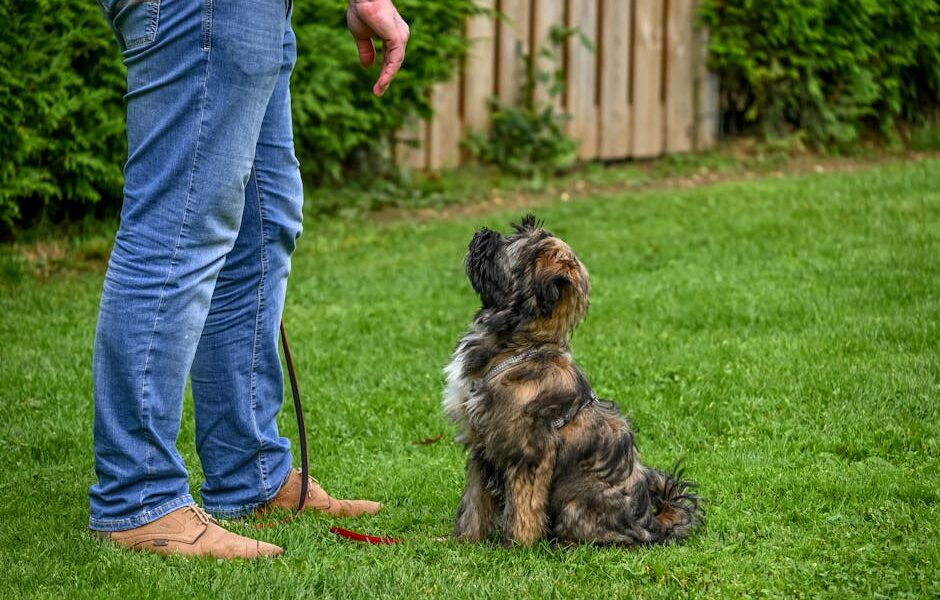
What Bombproof Recall Emergency Training Actually Means
Bombproof recall emergency training is not the same project as everyday recall. Everyday recall — your dog coming when called during a walk, in the yard, between rooms — is normal training that can sit at 70 to 90 percent reliability and still serve daily life well. Emergency recall is the cue that has to work the one time it matters most: open gate, traffic in front of your dog, a coyote on the trail. That cue must function at near 100 percent reliability across every context, and you build it differently from everyday recall.
In this article
- What Bombproof Recall Emergency Training Actually Means
- Prerequisites: Foundation Recall First
- Choosing the Cue: Word or Whistle
- Step One: Charging the Cue
- Step Two: Adding Light Distance
- Step Three: Adding Distraction on a Long Line
- The Rules of Bombproof Recall Maintenance
- Why Two Cues: Everyday vs Emergency
- Common Stuck Points and Troubleshooting
- Generalization and Real-World Application
- Special Cases: Deaf Dogs, Sighthounds, High Prey Drive
- When to Call a Professional
- Frequently Asked Questions
The core concept: pick a cue word or sound your dog has never heard before, condition it as the single best thing that ever happens, and protect that potency for life. You do not use it casually. You do not use it to end fun. You do not test it. You train it on a long line for months, you reinforce it every single time, and you save it for the emergencies that justify breaking the bank of reinforcement you have stored.
This works because dogs learn through classical conditioning: predictable cue plus predictable jackpot equals reflexive response. Done correctly, the emergency cue triggers an almost involuntary turn-and-run-back, the way a coffee smell pulls you out of bed. That is the bombproof recall emergency training goal.
Prerequisites: Foundation Recall First
Before building an emergency cue, your dog needs a working everyday recall. If “come” is unreliable in your kitchen, layering an emergency cue on top of nothing builds nothing. Start with foundation recall first — name response, charged marker, restrained recalls, ping-pong recalls between two people. Our puppy recall foundation training guide walks through the puppy version; our dog recall training with distractions guide covers the adolescent and adult progression.
Your dog should also have a charged marker word (yes!) or clicker. Marker training is the methodological backbone — the marker is what tells the dog the precise moment of the right behavior. See marker training for dogs if you have not laid this groundwork yet.
Stock the absolute highest-value rewards your dog responds to: real food. Plain boiled chicken, hot dog rounds, cheese cubes, freeze-dried single-ingredient liver. These rewards are not pulled out for sit, down, or everyday recall. They exist only for the emergency cue. Reserve a small dedicated container in the fridge or freezer.
Choosing the Cue: Word or Whistle
Pick a sound or word your dog has never heard. Avoid “come” (already burned through casual use), the dog’s name (different function — name is for attention, not for full-bore recall), and any word that gets used in conversation. Common picks: a non-English word (“Aqui,” “Hier,” “Vite”), a made-up word (“Pyro,” “Bingo”), or — best of all — a whistle.
Whistles are the gold standard for bombproof recall emergency training for three reasons. First, a whistle carries further than a voice — a dog 200 yards away might not hear you shout but will hear a whistle. Second, a whistle sounds the same regardless of how panicked you are; voices change pitch under stress, which can confuse a dog. Third, the whistle is a dedicated signal — it never gets accidentally used for casual cues.
Use a sport whistle with a consistent tone. Acme makes pealess plastic whistles in distinctive pitches (210.5 and 211.5 are popular). Pick a tone, stick with it, and use the same pattern every time — three short tweets, for example. A consistent pattern is its own discriminative cue.
Step One: Charging the Cue
Charging means building the strongest possible classical association: cue equals jackpot. For two weeks, every single time your dog is hungry and you are home, deliver the cue in a calm environment, follow it instantly with the jackpot reward, and release. No behavior is required from the dog at this stage — you are not asking for recall yet. You are saying “this sound means hot dog appears.”
Specifically: walk into the room where your dog is resting. Blow the whistle (or say the word) once. Within half a second, drop a piece of high-value food in front of the dog. Walk away. Repeat eight to ten times a day for fourteen days. Vary the rooms. Vary the times of day. Keep the food consistent and exceptional.
By day fourteen, the dog should reflexively orient toward the food the instant the whistle sounds, even before the food appears. That is conditioned response. You have not asked the dog to do anything yet, but you have built a chemical association in the dog’s brain that you will leverage for the rest of training.
Step Two: Adding Light Distance
After two weeks of charging, add minimal distance — five to ten feet of low-distraction environment. Stand across the room. Blow the whistle. The instant your dog moves toward you, mark with “yes!” and deliver the jackpot when the dog arrives. Make a big deal of the reward — multiple treats in succession, happy voice, brief play.
Build distance gradually inside the home: ten feet, twenty feet, around corners, between floors. Always in low-distraction environments. Always with the full jackpot. Never test the cue under distraction yet — every premature failure erodes the conditioned association you spent two weeks building.
If at any point the dog hesitates or fails to come, do not repeat the cue. Walk to the dog, calmly tap your leg or scoop them up, and return to a closer distance. Then start the next session easier. The cue’s reliability is built on never having heard it without the reward arriving.
Step Three: Adding Distraction on a Long Line
Move to outdoor work on a fifteen- to thirty-foot long line attached to a well-fitting harness — never a collar, which can cause neck injury on a sudden stop. Choose a low-distraction outdoor environment: a quiet field, an empty park, your backyard. Let the dog explore on the long line. When the dog is sniffing or otherwise mildly distracted, blow the whistle.
If the dog turns and runs toward you — jackpot, party, multiple treats, play. If the dog does not respond within two seconds, gently reel in the long line, guide the dog to you, then deliver the jackpot. The dog still gets the reward — you are protecting the association — but you are also making sure the recall always succeeds.
Over weeks, gradually increase distraction: park with dogs at a distance, light squirrel presence, friend walking past. Always on the long line. Always with full jackpot. Always with the reward arriving 100 percent of the time, whether the dog ran in on the first cue or needed help from the line.
The Rules of Bombproof Recall Maintenance
Three rules preserve the cue’s potency for life. First, never use the emergency cue in any context except actual emergencies and training sessions. No casual “come get a treat.” No ending fun. No bath time. The cue exists only to predict the jackpot.
Second, reward 100 percent of the time the emergency cue is used in real life. If your dog comes running off a busy road in response to your whistle, deliver the jackpot the second they reach you — even if you are shaking with adrenaline. The cue degrades the moment you stop reinforcing.
Third, do not test the cue. Many owners want to “make sure it works” by using it during a normal walk. Each use without an emergency context is a tax on the reinforcement bank. Practice on long-line training sessions instead, where you can guarantee a successful outcome.
Why Two Cues: Everyday vs Emergency
Most well-trained dogs have everyday recall (“come” or “here”) that works most of the time. That cue can be used casually — to end a backyard play session, to come inside, to redirect to a different toy. It will succeed often but fail occasionally, and that variable reinforcement is normal.
The emergency cue exists because everyday recall fails sometimes. When the failure is mid-street, mid-trail, mid-chase, you need a backup. The emergency cue has been conditioned so hard, used so rarely, and reinforced so reliably that it cuts through the dog’s distraction in a way everyday recall cannot.
If you only have one recall cue, the day you need it the most is statistically the day it is most likely to be on cooldown — used casually that morning to come inside. Two cues distribute the load. Everyday recall absorbs the daily wear; emergency recall stays bombproof.
Common Stuck Points and Troubleshooting
The dog comes most of the way and then veers off. This is reinforcement leakage — something in the environment is more rewarding than the jackpot. Increase the jackpot value (real meat, not biscuits), increase the rate of reinforcement during the recall (treat scatter immediately on arrival), and back off the distraction level until reliability returns.
The dog seems excited when the whistle blows but does not come fast. Build the duration of the jackpot. Multiple treats over thirty seconds at the handler is more reinforcing than one treat. Try a brief play session after the food. Make the moment of arrival the most exciting moment of the dog’s day.
Reliability dropped after a few weeks of off-line work. Go back on the long line. Many handlers transition to off-leash too early and never quite recover the reliability. The long line is not a punishment; it is the structural insurance the cue depends on. Many serious recall handlers keep their dogs on long lines for the entire first year of emergency recall training.
Generalization and Real-World Application
A cue that works in your yard does not necessarily work at a busy trailhead. Dogs generalize poorly. To build full real-world reliability, you must practice the emergency cue in every type of environment you will eventually need it in: hiking trails, beach, urban sidewalk, country road, friend’s house, the parking lot at the vet.
Each new environment is its own mini-charging exercise. Start with the dog on the long line, low distraction, short distance. Blow the whistle. Jackpot. Repeat ten or fifteen times in the new environment before treating it as known. The dog is not memorizing the cue once and applying everywhere — it is rebuilding the association in each context.
Off-leash reliability without a long line is a long-term goal — twelve to eighteen months of consistent training for most dogs, longer for high-prey-drive breeds. Some dogs and some environments never warrant off-leash freedom (deaf dogs, sighthounds in open country, dogs near roads). That is fine. The emergency cue still serves as a critical backup even on a long line.
Special Cases: Deaf Dogs, Sighthounds, High Prey Drive
Deaf dogs cannot hear a whistle. The functional emergency cue for a deaf dog is a vibration collar (a vibrating collar, never a shock collar) paired with the same charging and jackpot protocol. The vibration becomes the conditioned signal. Our training deaf dog hand signals guide covers full deaf-dog cue building.
Sighthounds (greyhounds, salukis, whippets) and high-prey-drive breeds (huskies, certain hounds) have a powerful chase response that can override even very well-trained recall in the moment a rabbit breaks. The emergency cue is still worth building, but management — long lines, fenced areas, never off-leash near wildlife corridors — is the primary safety system. Treat the emergency cue as a safety net, not the primary structure.
For rescue dogs adjusting to a new home, do not start emergency recall during the decompression period. Build basic relationship and trust first; see our three three three rule for rescue dogs for the typical timeline. Emergency recall can begin once the dog is settled and responding reliably to name and basic cues — usually a few weeks to a few months in.
When to Call a Professional
Bombproof recall is a project most owners can build at home. Bring in a positive-reinforcement trainer (CPDT-KA or KPA-CTP) if you are struggling with the charging step, if the long-line work is not converting to off-line reliability after months of correct practice, or if your dog has a specific challenge (severe prey drive, reactivity that interferes with recall, deafness). A trainer can spot timing issues and reinforcement-rate problems that are hard to self-diagnose.
For dogs with reactivity, fear, or anxiety that interferes with recall — dogs who freeze, hide, or bolt rather than coming to the handler — work with an IAABC CDBC. The recall issue is downstream of an emotional response that needs its own protocol. The dog leash reactivity protocol is a common parallel project for dogs whose reactivity prevents the controlled work emergency recall requires.
Avoid any trainer who suggests an e-collar (shock) for recall. Modern science-based recall training does not require aversives, and shock-trained recall introduces a layer of avoidance that complicates trust and the rest of training. The bombproof recall emergency training framework above is fully force-free and is the standard taught by Karen Pryor Academy and Certification Council for Professional Dog Trainers programs.
Frequently Asked Questions
How long does it take to build a bombproof emergency recall?
Plan for three to six months from charging to reliable on-line response, twelve to eighteen months to consistent off-line reliability in varied environments. Many handlers stay on a long line for the full first year — long-line work is not a downgrade, it is the structural integrity of the protocol.
Can I use my dog’s name as the emergency cue?
No. Names already serve a different function (attention orientation) and have been used in too many casual contexts. The emergency cue must be a fresh sound or word the dog has never heard. A whistle is the gold standard.
What treats are good enough for the emergency cue jackpot?
The highest-value food your dog responds to that you can deliver quickly. Real food — boiled chicken, hot dog rounds, cheese, freeze-dried liver — works better than commercial training treats for most dogs. Keep the emergency jackpot exclusive to this cue; never use it for sit, down, or daily training.
Should I use a shock collar to enforce recall?
No. Shock collars introduce avoidance that complicates the dog’s relationship with cues, the handler, and the environment. The bombproof recall emergency training protocol described here is fully positive and is the method taught by every modern certifying body (CCPDT, KPA, IAABC). If recall is failing, the answer is more reinforcement, not aversive equipment.
My dog comes when I call inside but not outside. Why?
Dogs generalize poorly. Each new environment is a new training context. Go back on the long line, charge the emergency cue afresh in the new environment, and build distraction gradually. Indoor reliability does not transfer automatically to outdoor reliability.


