Last updated: April 26, 2026
In this article
Border Collie: Dog Breed Profile
The Border Collie is widely regarded as the most intelligent dog breed in the world — a reputation that is both its greatest asset and its most demanding characteristic. Originally developed along the rugged borderlands of Scotland and England to herd sheep over vast, unpredictable terrain, this athletic, intense dog carries centuries of working instinct in its genes. Today, the Border Collie captivates owners with its brilliance, loyalty, and seemingly limitless energy, but it is a breed that will challenge even experienced dog owners. Before welcoming one into your home, it is essential to understand what this extraordinary dog truly needs. If you are considering adoption, browse our available dogs at WalkMeHome Rescue.
Quick Facts
| Breed Group | Herding |
|---|---|
| Size | Medium |
| Weight | 30 – 55 lbs (14 – 25 kg) |
| Height | 18 – 22 inches at the shoulder |
| Lifespan | 12 – 15 years |
| Coat Type | Double coat; rough or smooth variety |
| Common Colors | Black and white, blue merle, red, sable, tricolor |
| Energy Level | Extreme |
| Good With Kids | With supervision; may herd small children |
| Good With Other Pets | Variable; early socialization recommended |
| Shedding Level | Moderate to high |
| Trainability | Exceptional — requires consistent, advanced training |
| AKC Recognition | Yes (1995) |
Personality and Temperament
The Border Collie is not simply a smart dog — it is a workaholic with an almost compulsive need to have a job to do. Developed through centuries of selective breeding for function rather than form, this breed possesses a level of focus, drive, and problem-solving ability that is unmatched in the canine world. Psychologist Stanley Coren famously ranked the Border Collie first in his dog intelligence research, and owners quickly discover what that means in practice: a dog that learns commands in just a few repetitions and grows restless — often destructive — without constant mental engagement.
The breed’s herding instinct runs deep and can manifest in everyday life as an obsessive desire to gather, control, and move anything that moves — from sheep and cattle to children, cyclists, and other household pets. This intensity is paired with an acute sensitivity to human cues; Border Collies are highly attuned to their owners and can pick up on subtle changes in emotion, tone of voice, and body language. They tend to be reserved with strangers and can be wary or reactive if under-socialized. While deeply devoted to their families, they are not a casual companion dog — they are a partner that demands an equally committed owner.
Appearance
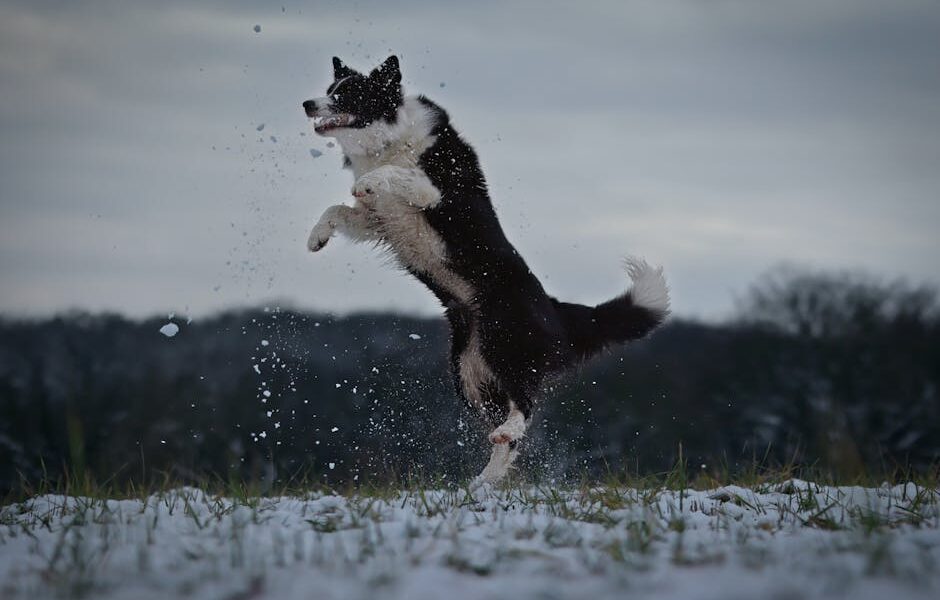
The Border Collie is a medium-sized dog with a lean, athletic build that reflects its working heritage. Everything about its physical structure speaks to speed, agility, and endurance. The body is slightly longer than it is tall, with a deep chest, strong hindquarters, and a low-set tail that curves upward at the tip during movement.
The breed comes in two coat varieties: rough (longer, with a slight wave or feathering) and smooth (shorter and denser). Both feature a thick, weather-resistant double coat that sheds moderately throughout the year and more heavily during seasonal changes. Coat colors are remarkably diverse — black and white is the classic pattern, but Border Collies also appear in blue merle, red and white, sable, tricolor, and lilac, among others.
Perhaps the breed’s most distinctive physical feature is its gaze — known in herding circles as “the eye.” This intense, almost hypnotic stare is used to control livestock and is a defining characteristic of the breed. When a Border Collie locks eyes on something it wants to move or control, the focus is total and unwavering. It is both impressive and, in a household setting, something owners need to understand and manage.
Exercise Needs
Few breeds come close to the exercise requirements of the Border Collie. This is a dog that was bred to run 50 or more miles a day in demanding hill country, and no amount of casual daily walking will satisfy that ingrained drive. Most Border Collies need a minimum of two hours of vigorous physical exercise every single day — and that is a floor, not a ceiling.
Equally important is mental stimulation. Physical exercise alone will not be enough; the Border Collie’s brain needs to be engaged just as thoroughly as its body. Dog sports such as agility, flyball, disc dog, and obedience trials were practically designed for this breed. Puzzle feeders, scent work, herding classes, and advanced trick training all help channel the breed’s intelligence productively. A bored Border Collie will find its own outlets — chewing, obsessive pacing, excessive barking, or compulsive behaviors like shadow-chasing and tail-spinning.
This breed is best suited to active households with access to open space, and thrives in rural or semi-rural environments where it can run freely and have a sense of purpose. City or apartment living is generally not recommended without exceptional commitment to structured daily activity. For more guidance, visit our dog care blog.
Grooming Needs
Grooming requirements for the Border Collie depend largely on coat variety, but both rough and smooth-coated dogs need regular attention to stay clean, healthy, and comfortable.
Rough-coated dogs should be brushed two to three times per week to prevent tangles and matting, particularly behind the ears, around the collar area, and on the legs and underbelly where feathering is most pronounced. Smooth-coated dogs require less frequent brushing — once or twice a week is generally sufficient — but they still shed regularly and benefit from consistent grooming to reduce loose hair around the home.
Both coat types experience heavier shedding during spring and autumn coat blows, and daily brushing during these periods helps manage the volume. Bathing every four to six weeks, or as needed after outdoor activity, keeps the coat clean without stripping natural oils. Additional routine care includes trimming nails every three to four weeks, cleaning ears weekly to prevent wax buildup and infection, and brushing teeth several times per week. The Border Collie’s active outdoor lifestyle means paws should also be checked regularly for cuts, burrs, or foreign material.
Health and Common Issues
The Border Collie is generally a robust, long-lived breed, but like all purebred dogs it carries a predisposition to certain inherited conditions that prospective owners and adopters should understand.
Hip Dysplasia: A malformation of the hip joint that can lead to arthritis and chronic pain. Responsible breeders screen for this condition, and maintaining a healthy weight is an important management tool.
Collie Eye Anomaly (CEA): A hereditary condition affecting eye development, ranging in severity from minor choroidal hypoplasia to serious retinal detachment and blindness. DNA testing can identify carriers.
Epilepsy: The breed has a higher-than-average incidence of idiopathic epilepsy. Seizures can often be managed with medication, and affected dogs can live full, comfortable lives with proper veterinary care.
Trapped Neutrophil Syndrome (TNS): A serious immune deficiency that prevents the body from releasing white blood cells effectively. Puppies with TNS are unable to fight infection and rarely survive beyond a few months. DNA testing can identify carriers and affected individuals.
Regular veterinary check-ups, a balanced diet, appropriate exercise, and genetic screening where relevant are the foundations of keeping a Border Collie healthy throughout its life.
Are Border Collies Good With Kids and Other Pets?
The Border Collie can be a wonderful family dog in the right household, but the breed’s herding instincts present challenges that families with young children and other pets must take seriously.
Small children who run, squeal, and move unpredictably tend to trigger a Border Collie’s herding drive. The dog may chase, circle, nip at heels, or attempt to “control” children in the same way it would livestock. This behavior is instinctive rather than aggressive, but it can be alarming and potentially dangerous for very young children. With proper training, supervision, and early socialization, many Border Collies learn to coexist peacefully with children — but this requires ongoing management and clear boundaries.
With other dogs, the Border Collie is typically social when well-socialized from an early age, though its intensity can be overwhelming for more laid-back breeds. It may attempt to herd other dogs as well. With cats and smaller animals, supervision is essential, as the prey drive and herding instinct can be a poor combination. Households with existing small pets should introduce a Border Collie carefully and gradually.
Training Tips
Training a Border Collie is one of the most rewarding experiences in dog ownership — and one of the most demanding. This breed learns with extraordinary speed, but that same intelligence means it will also learn bad habits just as quickly, and it will become bored and frustrated if training is repetitive, inconsistent, or too easy.
Positive reinforcement is the most effective approach. Border Collies are highly motivated by both food rewards and play, and they respond exceptionally well to clicker training, shaping, and reward-based methods. Harsh corrections are counterproductive and can damage the strong handler-dog relationship this breed needs to thrive.
Basic obedience should be started early and followed quickly by more advanced challenges. Dog sports — particularly agility, rally obedience, and herding trials — give the Border Collie the complexity and physical outlet it needs. Trick training, scent detection, and advanced impulse control work are all valuable tools. The key is to keep sessions short (10 to 15 minutes), varied, and mentally taxing. A Border Collie that has truly worked its brain is a calm, contented companion. One that has not is an ongoing household challenge. For more training guidance, visit our dog care blog.
History and Origin
The Border Collie takes its name from the borderlands between Scotland and England — the rugged, hilly terrain where shepherds needed a dog capable of working independently over long distances and difficult ground with minimal direction. The breed’s ancestry likely includes dogs brought to the British Isles by Viking settlers crossing with local Roman herding dogs, but its modern form was shaped almost entirely by working selection over several centuries.
The breed’s founding sire is widely recognized as Old Hemp, a dog born in Northumberland in 1893. Old Hemp was noted for his quiet, intense herding style — crouching low, using his famous “eye” to control sheep without excessive barking or chasing — and he sired hundreds of offspring who carried those traits forward. His influence on the breed cannot be overstated.
Formal sheepdog trials, which began in Wales in 1873, played a critical role in refining and standardizing the working Border Collie. The International Sheep Dog Society (ISDS), founded in 1906, began maintaining a studbook based entirely on working ability rather than physical appearance. This tradition continues to influence breeding philosophy today. The American Kennel Club formally recognized the Border Collie in 1995, though many working enthusiasts still prioritize the breed’s herding credentials over conformation standards.
Frequently Asked Questions About the Border Collie
Is the Border Collie the right breed for a first-time dog owner?
In most cases, no. The Border Collie’s intelligence, intensity, and extreme exercise and mental stimulation requirements make it a challenging breed even for experienced dog owners. First-time owners who are not prepared to invest significant daily time in training, activity, and engagement may find the breed overwhelming. That said, a highly committed first-time owner who does thorough research and works with a trainer from the start can succeed — it simply requires a serious, long-term dedication.
How much exercise does a Border Collie need each day?
A minimum of two hours of vigorous physical exercise per day is a realistic baseline, and many active Border Collies need more. This should include off-leash running, structured play, and ideally participation in a dog sport or working activity. Mental exercise is equally important — puzzle work, training sessions, and scent games should complement physical activity every day.
Do Border Collies do well in apartments or small homes?
Generally, no. The Border Collie is a high-energy, high-drive working breed that thrives with access to open space. While it is technically possible to keep a Border Collie in an apartment with exceptional commitment to daily outdoor exercise, it is far from ideal and significantly increases the risk of behavioral problems rooted in insufficient physical and mental stimulation. A home with a large, securely fenced yard is strongly preferred.
Are Border Collies prone to anxiety?
Yes. Border Collies are sensitive, highly reactive dogs that can develop anxiety — including separation anxiety, noise phobia, and general over-arousal — particularly when their exercise and mental stimulation needs are not met. Their sensitivity to environmental stimuli and strong attachment to their owners can compound these tendencies. Early socialization, consistent routine, and proactive training are the best tools for raising a well-balanced, confident Border Collie.
Adopt a Border Collie
If you have the lifestyle, experience, and dedication that this remarkable breed demands, adopting a Border Collie can be one of the most fulfilling experiences imaginable. Many Border Collies end up in rescue through no fault of their own — often because well-meaning owners underestimated the breed’s needs. These dogs are intelligent, trainable, and deeply loyal, and with the right home they flourish.
WalkMeHome Rescue works to match Border Collies and other dogs with the families best suited to give them a lasting, loving home. Browse our available dogs and begin your adoption journey today. The right dog is waiting for you.
Looking to adopt a Border Collie?
Browse Border Collie dogs and mixes available for adoption from shelters and rescues near you.
Find Border Collie Dogs for Adoption