
Last updated: May 17, 2026
In this article
- The Hunting Instinct Explained
- Why Cats Bring Prey Home
- Teaching You to Hunt
- Indoor Cats and Toy Hunting
- How to Respond When Your Cat Brings You Dead Animals
- Reducing Hunting Behavior
- The Bell Collar Debate
- Keeping Cats Indoors
- Health Risks From Prey
- When Hunting Behavior Is Excessive
- Frequently Asked Questions
Why Does My Cat Bring Me Dead Animals? The Gift-Giving Instinct
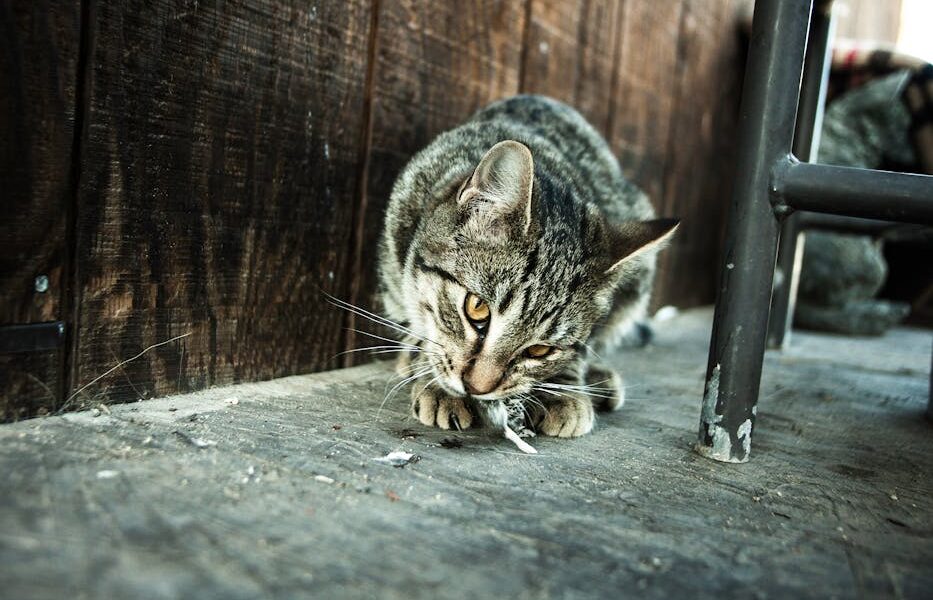
You wake up in the morning, head to the kitchen for coffee, and find a dead mouse on your doorstep. Or maybe your cat drops a lifeless bird right at your feet while purring proudly. It is startling, sometimes disgusting, and always confusing. Why does your cat bring you dead animals? Is it a gift? A warning? A sign that something is wrong?
The truth is that your cat bringing dead animals home is one of the most natural feline behaviors in the world. It is rooted in millions of years of evolution, deeply connected to your cat’s hunting instinct, and believe it or not, it is actually a sign of affection. In this comprehensive guide, we explore the reasons behind this behavior, how you should respond, and what you can do if you would like to reduce it.
The Hunting Instinct Explained
To understand why your cat brings you dead animals, you first need to understand the hunting instinct that drives feline behavior. Domestic cats are obligate carnivores who evolved as highly efficient predators. Despite thousands of years of domestication, the predatory drive in your house cat is nearly identical to that of their wild ancestors.
A cat’s hunting sequence follows a predictable pattern: detect, stalk, chase, pounce, kill, and consume. This sequence is hardwired into their brain and is not dependent on hunger. Even a well-fed cat with a full bowl of premium kibble will hunt if given the opportunity. Research has shown that the hunting drive and the feeding drive operate independently in cats, which is why your cat may catch a mouse and then walk past it to eat their regular food.
Cats are crepuscular hunters, meaning they are most active during dawn and dusk. Their eyes are designed to detect motion in low light, their ears can pinpoint the rustling of a small animal from several feet away, and their whiskers detect air currents that help them navigate in near-total darkness. Every aspect of their anatomy is built for hunting, from their retractable claws to their flexible spine that allows explosive bursts of speed.
This instinct does not disappear because your cat lives indoors or has regular meals. It is a fundamental part of who they are. Understanding this is the first step toward understanding why they bring their catches home to you.
Why Cats Bring Prey Home
In the wild, cats do not typically eat their prey at the site of the kill. They carry it to a safe, familiar location where they can eat without being disturbed by other predators. Your home is your cat’s safe territory, so it makes perfect sense that they would bring prey back to the house.
But there is more to it than simple food transport. Female cats in the wild bring prey home to teach their kittens how to hunt and eat. This behavior is not limited to mothers with kittens. Spayed female cats, male cats, and cats with no offspring at all will still exhibit this behavior. Behaviorists believe that when your cat brings you a dead animal, they may be treating you as part of their family group and engaging in this same provisioning instinct.
Some cats bring prey home because they want to cache it for later consumption. Wild cats often store surplus kills in hidden spots to return to when food is scarce. Your cat may be following this same impulse when they tuck a dead mouse behind the couch or leave a bird in an unexpected corner of the house.
Another factor is simple pride and excitement. Hunting is a stimulating activity that triggers a rush of neurochemicals in your cat’s brain. After a successful hunt, your cat is in a heightened state of arousal and may bring the prize home because that is where they feel most comfortable and where their favorite people are.
Teaching You to Hunt
One of the most fascinating theories about why cats bring dead animals to their owners is that they are trying to teach you to hunt. This idea comes from observing how mother cats gradually introduce their kittens to prey. A mother cat first brings dead prey for her kittens to examine and eat. As the kittens grow, she brings injured but living prey so they can practice catching it. Eventually, she takes them on live hunting expeditions.
Some animal behaviorists believe your cat sees you as a clumsy, incompetent hunter who needs help. You never bring home mice or birds, you seem to rely entirely on those strange cans and bags of food, and from your cat’s perspective, you clearly need some hunting lessons. By bringing you dead prey, your cat may be starting at step one of the hunting curriculum.
This theory is supported by the fact that cats who bring home prey often vocalize loudly to get your attention, place the prey in prominent locations where you are sure to find it, and watch your reaction closely. They are not just dropping off food. They are presenting it to you and waiting for a response, much like a mother cat would with her kittens.
Whether or not your cat truly thinks you need hunting lessons, this behavior reflects the bond they feel with you. They consider you part of their social group, and sharing food is one of the most significant social behaviors in the feline world. If your cat brings you a dead animal, they are including you in one of their most important activities.
Indoor Cats and Toy Hunting
If you keep your cat strictly indoors, you might think you are safe from dead animal deliveries. And while indoor cats obviously have fewer opportunities to catch real prey, their hunting instinct does not disappear. Instead, it redirects toward toys, insects, and anything else that triggers their predatory drive.
Many indoor cat owners report finding toy mice, crinkle balls, hair ties, and other small objects deposited at their feet, on their pillow, or in their shoes. This is the exact same gift-giving behavior, just expressed with available substitutes. Your indoor cat is still trying to share their catch with you, even if the catch is a felt mouse stuffed with catnip.
Indoor cats may also hunt any insects that make it into the house. Spiders, flies, moths, and even the occasional gecko can become targets. If your indoor cat proudly presents you with a dead bug, they are following the same instincts as an outdoor cat who brings home a bird.
Providing indoor cats with plenty of interactive toys, puzzle feeders, and scheduled play sessions helps satisfy their hunting drive. Toys that mimic the movement of prey, such as wand toys with feather attachments or motorized mice that dart across the floor, are especially effective. Many cat breeds have stronger hunting instincts than others, so understanding your cat’s breed tendencies can help you provide the right level of enrichment.
Without adequate outlets for their hunting instinct, indoor cats can develop behavioral problems including aggression, excessive vocalization, and destructive behavior. The hunting drive needs to be expressed in some form, so make sure your indoor cat has plenty of opportunities for simulated hunting through play.
How to Respond When Your Cat Brings You Dead Animals
Your first instinct when your cat drops a dead mouse at your feet might be to scream, gag, or scold them. But how you respond matters more than you might think. Here is the most important rule: do not punish your cat for bringing you dead animals.
Punishing your cat for this behavior is counterproductive for several reasons. First, your cat is acting on a deeply ingrained natural instinct. They cannot understand why you would be angry about something that feels entirely natural and even generous to them. Second, punishment creates stress and anxiety, which can lead to other behavioral problems. Third, your cat may interpret punishment as a rejection of their bond with you, which can damage your relationship.
Instead, stay calm. If your cat brings you a dead animal, acknowledge them with a neutral tone. You do not need to shower them with praise, but you should not react with anger or disgust either. A simple quiet acknowledgment is sufficient. Then, when your cat is not looking, dispose of the prey in a sealed bag and clean the area thoroughly.
If your cat brings you live prey, the situation requires more careful handling. Try to contain the animal under a box or towel without letting your cat see you release it. If you repeatedly rescue live prey in front of your cat, they may learn to kill the prey before bringing it to you, which is the opposite of what you want.
Some owners find it helpful to redirect their cat’s attention with a treat or a toy immediately after a prey delivery. This satisfies your cat’s need for a positive interaction after their hunting success without reinforcing the specific behavior of bringing prey to you.
Reducing Hunting Behavior
If your cat is a prolific hunter and you would like to reduce the number of dead animals appearing on your doorstep, there are several strategies that can help. The most effective approach combines multiple methods rather than relying on any single solution.
Increase play sessions. Cats who get regular, vigorous play sessions are less likely to feel the need to hunt. Aim for at least two 15-minute interactive play sessions per day, using toys that mimic prey movement. The goal is to take your cat through the full hunting sequence of stalk, chase, pounce, and catch during play, which helps satisfy the instinct without involving real animals.
Feed a high-protein diet. While hunger does not directly drive hunting, some research suggests that cats on high-protein diets hunt less frequently. A diet that closely mimics the nutritional profile of natural prey may reduce the urge to hunt by more fully satisfying the cat’s nutritional needs.
Time outdoor access carefully. If your cat has outdoor access, try to keep them inside during the peak hunting hours of dawn and dusk. Birds and small mammals are most active and vulnerable during these times, and keeping your cat indoors during these windows can significantly reduce their catch rate.
Create a catio or enclosed outdoor space. A catio allows your cat to enjoy fresh air, sunshine, and outdoor stimulation without access to wildlife. This is an excellent compromise for cats who enjoy being outdoors but whose hunting habits are causing concern.
Puzzle feeders and food-dispensing toys. Making your cat work for their food engages the same problem-solving skills used in hunting. Scatter feeding, hiding kibble around the house, and using puzzle feeders can all redirect hunting energy toward food acquisition in a controlled setting.
The Bell Collar Debate
One of the most commonly recommended solutions for reducing cat hunting is to attach a bell to your cat’s collar. The theory is simple: the bell jingles when your cat moves, alerting prey to the cat’s presence and giving them time to escape. But the reality is more complicated than it sounds.
Studies on the effectiveness of bell collars have produced mixed results. Some research suggests that bells can reduce the number of birds and mammals caught by 30 to 50 percent. Other studies have found minimal effect, particularly with experienced hunters who learn to move in ways that minimize bell noise.
There are legitimate concerns about bell collars. Some cats find the constant noise stressful, which can lead to behavioral changes, reduced activity, or increased anxiety. The noise can also interfere with a cat’s ability to hear environmental sounds, which is important for their safety if they spend time outdoors. Additionally, any collar poses a strangulation risk if it catches on branches, fences, or other objects, though breakaway collars significantly reduce this danger.
If you choose to use a bell collar, opt for a breakaway collar designed specifically for cats. Introduce the collar gradually, starting with short wearing periods and increasing the duration over several days. Monitor your cat for signs of stress such as excessive grooming, hiding, loss of appetite, or changes in litter box habits.
Brightly colored collar covers, sometimes called BirdsBeSafe collars, are an alternative that has shown promise in some studies. The bright colors make the cat more visible to birds, which rely heavily on visual cues for predator detection. These may be more effective for bird protection specifically, while bells may work better for mammals that rely more on auditory cues.
Keeping Cats Indoors
The most effective way to prevent your cat from bringing home dead animals is to keep them indoors. Indoor cats live significantly longer on average than outdoor cats, face fewer health risks, and obviously have far fewer opportunities to hunt wildlife. If reducing hunting behavior is a priority for you, transitioning to an indoor lifestyle is the single most impactful change you can make.
Transitioning an outdoor cat to an indoor lifestyle requires patience and planning. Cats who are accustomed to outdoor access may initially protest with increased vocalization, attempts to escape, or restless behavior. Gradual transition works better than an abrupt change. Start by reducing outdoor time incrementally while simultaneously increasing indoor enrichment.
To make indoor life satisfying for a former outdoor cat, you need to replicate the stimulation they got outside. Cat trees and vertical spaces allow climbing and perching. Window perches and bird feeders placed outside windows provide visual entertainment. Interactive toys, puzzle feeders, and regular play sessions engage the hunting instinct. Catios or enclosed balcony spaces offer outdoor sensory experiences without wildlife access.
If you are considering adopting a cat, starting with an indoor-only arrangement from the beginning is much easier than transitioning an existing outdoor cat. Kittens and cats raised indoors from a young age adapt well to indoor life and rarely show the restlessness that converted outdoor cats experience.
For owners who are not ready to commit to a fully indoor lifestyle, supervised outdoor time on a leash and harness is a good middle ground. Leash training takes patience, but many cats learn to enjoy walks that provide outdoor stimulation without the opportunity to hunt freely.
Health Risks From Prey
Beyond the unpleasantness of finding dead animals in your home, there are genuine health risks associated with your cat’s hunting habit. Both you and your cat can be affected, so it is important to understand what those risks are and how to mitigate them.
Parasites. Prey animals are common carriers of internal parasites including roundworms, tapeworms, and toxoplasma. When your cat eats or handles prey, they can become infected with these parasites. Tapeworm is particularly common in cats who eat mice and other rodents. If your cat hunts regularly, they should be on a consistent deworming schedule as recommended by your veterinarian.
Toxoplasmosis. Toxoplasma gondii is a parasite that cats can contract from eating infected prey. While most healthy cats show no symptoms, they shed the parasite in their feces, which can pose risks to pregnant women and immunocompromised individuals. If your cat hunts, maintain strict hygiene when handling their litter box and wash your hands thoroughly after cleaning up prey remains.
Secondary poisoning. If your neighbors use rodent poison, your cat can be poisoned by eating a rodent that has consumed the bait. This secondary poisoning can be fatal and is one of the most serious risks facing hunting cats. Symptoms include lethargy, bleeding from the gums or nose, difficulty breathing, and seizures. If you suspect secondary poisoning, seek emergency veterinary care immediately.
Bacterial infections. Prey animals can carry bacteria such as salmonella, campylobacter, and leptospirosis. These can infect your cat and potentially be transmitted to humans through contact with the prey or with contaminated surfaces in your home. Always clean up prey remains with gloves and disinfect the area thoroughly.
Physical injuries. Hunting is not without risk to the hunter. Cats can sustain bite wounds from rats and other rodents that fight back, scratches from birds, and injuries from larger prey. These wounds can become infected and may require veterinary treatment. Check your cat regularly for wounds if they are an active hunter.
Keeping your cat up to date on vaccinations, maintaining a regular deworming schedule, and scheduling routine veterinary checkups are essential if your cat hunts. Discuss your cat’s hunting habits with your vet so they can recommend appropriate preventive care.
When Hunting Behavior Is Excessive
While some level of hunting behavior is normal for cats with outdoor access, there are situations where it may become excessive or indicate an underlying problem. Knowing when to be concerned can help you address issues before they escalate.
A sudden increase in hunting behavior can sometimes signal stress, anxiety, or a change in your cat’s environment. Cats may hunt more intensely when they are experiencing social conflict with other pets, adjusting to a new home, or dealing with changes in their routine. If your previously moderate hunter suddenly becomes a prolific one, consider what might have changed in their world.
Excessive hunting can also indicate that your cat’s enrichment needs are not being met at home. A cat who is bored, understimulated, or not getting enough interactive play may pour all of their energy into hunting. In these cases, increasing play sessions and environmental enrichment can help bring hunting behavior back to normal levels.
In rare cases, compulsive hunting that interferes with other normal behaviors such as eating, sleeping, or social interaction may warrant a veterinary consultation. Compulsive behaviors in cats can sometimes be linked to neurological issues or extreme anxiety, and your vet can help rule out medical causes.
If your cat is catching an unusually high number of animals, it is also worth considering the ecological impact. Domestic cats are responsible for significant wildlife predation in many areas. If your cat is a highly effective hunter, the strategies discussed above, including increased play, bell collars, timed outdoor access, or transitioning to indoor life, become especially important.
Regardless of how much your cat hunts, remember that the behavior itself is natural and healthy from a feline perspective. Your cat is not being aggressive, cruel, or misbehaving. They are simply being a cat. Your job is to manage the behavior in a way that balances your cat’s instinctual needs with the safety of local wildlife and the cleanliness of your home.
Frequently Asked Questions
Why does my cat bring me dead animals and meow loudly?
Your cat meows loudly when bringing prey to get your attention. This vocalization mimics the way mother cats call their kittens to come see the prey they have brought home. Your cat wants you to notice and acknowledge their catch. It is a social behavior that reflects the bond your cat feels with you and their desire to include you in the hunting experience.
Is my cat trying to feed me when it brings dead animals?
It is possible. In feline social groups, sharing food is an important bonding behavior. Your cat may be provisioning you the way they would provide for family members in the wild. Some behaviorists believe cats recognize that their owners do not hunt and are attempting to supplement your diet. While we cannot know exactly what your cat is thinking, the behavior is rooted in care and social connection.
Should I accept the dead animal my cat brings me?
You do not need to keep the dead animal, but you should avoid reacting with anger or disgust. Stay calm, give your cat a neutral or gentle acknowledgment, and dispose of the prey when your cat is not watching. Punishing or scolding your cat for this behavior will cause confusion and stress without reducing the instinct to hunt.
Do only outdoor cats bring home dead animals?
Outdoor cats are far more likely to bring home real prey, but indoor cats exhibit the same instinct with toy mice, insects, and other small objects. If your indoor cat deposits toys at your feet or on your bed, they are performing the same gift-giving behavior with the resources available to them.
Can I train my cat to stop bringing dead animals home?
You cannot completely eliminate the hunting instinct, but you can reduce the behavior through increased play sessions, timed outdoor access, bell collars, and environmental enrichment. The most effective solution is keeping your cat indoors or providing a secure outdoor enclosure. Working with a breed-specific understanding of your cat’s hunting drive can help you tailor your approach.
What should I do if my cat brings home a live animal?
If your cat brings home live prey, try to contain the animal under a box or towel. Wear gloves when handling it to protect yourself from bites and bacteria. Release the animal outside, away from your cat. If the animal appears injured, contact a local wildlife rehabilitation center for guidance on whether it can be treated or should be humanely euthanized.
Is it safe to let my cat eat the prey it catches?
Allowing your cat to eat prey carries risks including internal parasites, bacterial infections, and secondary poisoning from rodenticides. While eating prey is natural for cats, the risks in a modern suburban or urban environment are significant. If your cat hunts regularly, keep them on a veterinarian-recommended deworming schedule and monitor them for any signs of illness after consuming prey.


