
Last updated: April 6, 2026
In this article
- Play Aggression vs. Real Aggression in Cats
- Why Cats Play-Attack Their Owners
- Understanding Ambush Behavior
- Why Your Cat Bites Your Hands and Feet
- Redirecting Your Cat’s Play Drive
- Choosing Appropriate Toys for Play-Aggressive Cats
- Creating a Play Schedule That Works
- Kittens vs. Adult Cats: How Play Aggression Differs
- Multi-Cat Play Fighting: Normal or Cause for Concern?
- When to Worry About Cat Play Aggression
- Frequently Asked Questions
- Final Thoughts
Cat Play Aggression: Why Your Cat Attacks & How to Stop It
You are relaxing on the couch when, out of nowhere, your cat lunges at your ankles. Or maybe you wake up to tiny teeth clamped around your toes. If this sounds familiar, you are dealing with cat play aggression — one of the most common behavioral issues cat owners face. The good news is that play aggression is normal, manageable, and rarely a sign of anything sinister. Understanding why your cat does it is the first step toward redirecting that energy into healthier outlets.
In this guide, we break down the difference between play aggression and real aggression, explain why cats play-attack their owners, and give you a practical plan for stopping unwanted biting and pouncing — without dampening your cat’s natural spirit.
Play Aggression vs. Real Aggression in Cats
Before you can address the behavior, you need to know what you are actually dealing with. Play aggression and true aggression look different once you know what to watch for.
Signs of play aggression:
- Dilated pupils with a focused, alert expression
- A low, wiggly body posture before pouncing
- Biting that is inhibited — your cat mouths you but does not break skin
- The tail swishes or twitches rather than puffing up
- Your cat runs away after the “attack” and looks ready for another round
- Ears remain forward or slightly rotated, not flattened
Signs of real aggression:
- Hissing, growling, or spitting
- Ears pinned flat against the head
- A puffed-up tail and arched back
- Hard, uninhibited bites that break skin
- Scratching with full claws extended, aiming to cause damage
- Your cat does not appear playful before or after the incident
Play aggression is essentially your cat treating you like a fellow kitten or a prey item. It is driven by instinct and surplus energy, not fear or anger. Real aggression, on the other hand, is usually triggered by pain, territorial stress, fear, or overstimulation. If your cat’s attacks consistently draw blood or are accompanied by distress signals, consult your veterinarian to rule out medical causes.
Why Cats Play-Attack Their Owners
Cats are obligate predators. Even the most pampered indoor cat carries the hardwired instincts of a hunter. Play aggression exists because your cat’s brain is constantly rehearsing the stalk-chase-pounce-kill sequence that would keep it alive in the wild. When there is no real prey available, your moving hands, wiggling toes, and shuffling feet become the next best thing.
Several factors make play aggression more likely:
- Insufficient stimulation. Indoor cats that lack environmental enrichment channel their predatory drive toward the only moving targets available — you.
- Early socialization gaps. Kittens separated from their litter too early may never have learned bite inhibition from siblings.
- Encouraging the behavior accidentally. Using your hands as toys during kittenhood teaches cats that skin is an acceptable target.
- Breed predisposition. High-energy breeds such as Bengals, Abyssinians, and Siamese tend to be more prone to intense play behavior. You can learn about breed-specific traits in our cat breeds directory.
- Boredom and routine. Cats that spend long hours alone without interactive play are more likely to ambush their owners the moment they return home.
Understanding Ambush Behavior
The classic ambush — your cat hiding behind a door or under a table and launching at you as you walk by — is one of the most startling forms of play aggression. It can feel personal, but it is actually a compliment of sorts. Your cat sees you as the most interesting thing in its environment.
Ambush behavior mimics how cats hunt in the wild. Felines are ambush predators, meaning they prefer to wait, watch, and strike rather than chase prey over long distances. When your cat crouches behind the sofa with dilated pupils and a twitching tail, it is running a mental simulation of a hunt. Your ankles simply happen to be the target.
Common ambush triggers include:
- Walking past a hiding spot at the same time every day (cats are creatures of routine)
- Wearing loose clothing or dangling accessories that mimic prey movement
- Moving quickly through a room, which triggers the chase instinct
- Coming home after a long absence when energy has built up all day
The key to reducing ambushes is not to punish them — it is to give your cat a more satisfying outlet before the ambush happens.
Why Your Cat Bites Your Hands and Feet
Hands and feet are the most common targets of cat play aggression, and the reason is simple: they move. Your fingers wiggle under a blanket like a mouse burrowing through leaves. Your bare feet padding across the floor mimic the scurrying of small prey. To a cat in predatory mode, these movements are irresistible.
There is also a learned component. Many owners inadvertently reinforce hand-biting by playing with kittens using their fingers. When the kitten is small, those tiny teeth barely register. But as the cat grows, those same play bites become painful — and the cat has no way of understanding that the rules have changed.
To break the hand-and-foot-biting cycle:
- Never use bare hands or feet as toys, no matter how young the cat is
- If your cat bites, freeze and go completely still — movement rewards the predatory instinct
- Withdraw attention immediately after a bite (stand up, walk away, close a door if needed)
- Redirect with a toy the moment you see predatory body language building
- Keep a small toy in your pocket or nearby so you always have something to toss as a decoy
Redirecting Your Cat’s Play Drive
Punishing play aggression does not work. Yelling, spraying water, or swatting your cat will only create fear and anxiety, which can lead to real aggression. Instead, the goal is to redirect your cat’s natural hunting energy toward appropriate targets.
Effective redirection strategies:
- Interrupt and substitute. When you see the telltale signs — crouching, butt wiggle, dilated pupils — toss a toy in the opposite direction before the pounce happens.
- Use distance toys. Wand toys, feather teasers, and laser pointers (always end with a physical toy to “catch”) put distance between your body and the play target.
- Reward calm behavior. When your cat is near you without attacking, offer a treat or gentle praise. This builds a positive association with peaceful proximity.
- Environmental enrichment. Cat trees, window perches, puzzle feeders, and rotating toy selections keep your cat’s brain engaged throughout the day.
- Structured play before predictable ambush times. If your cat always attacks at 6 PM, schedule a vigorous play session at 5:30 PM.
Choosing Appropriate Toys for Play-Aggressive Cats
Not all cat toys are created equal, especially when you are trying to channel strong predatory instincts. The best toys for play-aggressive cats mimic the movement, texture, and unpredictability of real prey.
Top toy choices:
- Wand toys with feathers or fur attachments. These let you simulate bird or rodent movement while keeping your hands safely out of range.
- Kick toys (large stuffed toys). Cats can grab, bite, and bunny-kick these to their heart’s content. Look for toys roughly the size of a rabbit.
- Puzzle feeders. These engage the hunting brain by making your cat work for food, burning mental energy that might otherwise fuel aggression.
- Crinkle balls and springs. Lightweight toys that move unpredictably across hard floors satisfy the chase instinct.
- Automated toys. Battery-operated mice or rotating feather toys can provide stimulation when you are not home.
Toys to avoid or limit:
- Laser pointers used without a physical “catch” at the end (this can cause frustration)
- Tiny toys that could be swallowed
- Anything that encourages your cat to grab your hand during play
Rotate toys every few days to maintain novelty. A toy that has been sitting in the same spot for a week becomes invisible to most cats.
Creating a Play Schedule That Works
Consistency is one of the most powerful tools for managing cat play aggression. Cats are crepuscular, meaning they are naturally most active at dawn and dusk. Scheduling play sessions around these peak energy windows can dramatically reduce unwanted attacks.
A recommended daily play schedule:
- Morning session (5-10 minutes). A quick burst of wand-toy play before you leave for work helps burn off dawn energy.
- Evening session (15-20 minutes). This is the main event. Engage your cat in vigorous interactive play, mimicking a full hunt cycle: stalk, chase, pounce, catch, rest.
- Pre-bedtime session (5-10 minutes). A short wind-down session followed by a meal can help prevent middle-of-the-night ankle attacks.
The “hunt, catch, kill, eat, groom, sleep” sequence is hardwired into your cat’s behavior. By ending play sessions with a small meal or treat, you tap into this natural cycle and encourage your cat to settle down afterward.
Track your cat’s attack patterns for a week. Most cats are remarkably predictable. Once you identify peak aggression times, you can preemptively schedule play sessions 15 to 30 minutes before those windows.
Kittens vs. Adult Cats: How Play Aggression Differs
Play aggression looks different depending on your cat’s age, and the approach to managing it should differ too.
Kittens (under 1 year):
- Play aggression is at its peak. Kittens are learning how to hunt, and everything is a target.
- Bite inhibition is still developing. Kittens learn how hard is too hard by playing with siblings — if they were separated early, they may not have this skill.
- Energy levels are extreme. Multiple short play sessions per day are essential.
- This is the best time to establish good habits. Never use hands as toys, consistently redirect, and reward gentle behavior.
- Consider adopting kittens in pairs. A feline playmate provides an appropriate outlet for all that kitten energy. Visit our adoption page to find kittens looking for homes.
Adult cats (1 year and older):
- Play aggression tends to decrease with age but may persist in high-energy breeds or understimulated cats.
- Sudden onset of play aggression in a previously calm adult cat warrants a veterinary checkup — it could signal pain, hyperthyroidism, or neurological changes.
- Adult cats with established hand-biting habits take longer to retrain. Patience and consistency over weeks, not days, are required.
- Senior cats rarely exhibit true play aggression. If an older cat suddenly starts attacking, it is more likely fear-based or pain-related aggression.
Multi-Cat Play Fighting: Normal or Cause for Concern?
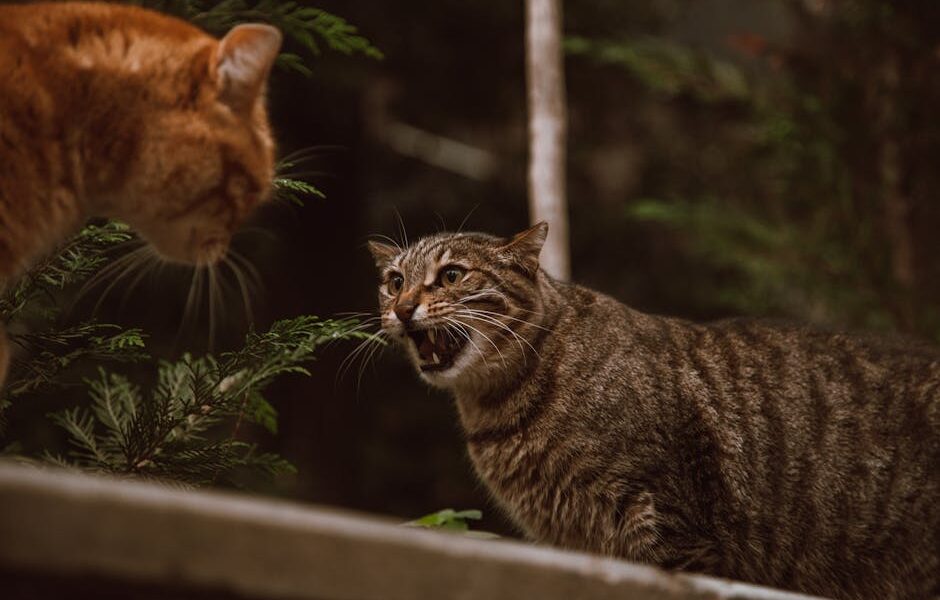
In multi-cat households, play fighting between cats is both normal and beneficial. It gives cats an appropriate outlet for their predatory energy and helps maintain social bonds. But it can be hard to tell when play fighting crosses the line into real conflict.
Signs of healthy play fighting:
- Both cats take turns being the “aggressor” and the “victim”
- There is no hissing, growling, or screaming
- Ears remain forward or neutral
- Claws are mostly retracted
- Both cats return to normal behavior quickly after the bout
- Neither cat avoids the other afterward
Signs that play has escalated to real fighting:
- One cat is always the aggressor; the other always tries to escape
- Vocalizations include hissing, growling, or yowling
- Fur is flying or injuries are visible
- One cat starts avoiding shared spaces, litter boxes, or food bowls
- Body language is stiff and tense rather than loose and bouncy
If play fighting is escalating, increase individual play sessions for each cat, ensure there are enough resources (litter boxes, food stations, perching spots) for everyone, and consider consulting a feline behaviorist. Understanding the temperament of each cat’s breed can also help — check our cat breeds directory for personality profiles.
When to Worry About Cat Play Aggression
Most play aggression is harmless and manageable. However, there are situations where professional help is warranted.
See your veterinarian if:
- Aggression appeared suddenly in a previously gentle cat
- Your cat’s bites are consistently hard enough to break skin
- The aggression is accompanied by other behavioral changes such as litter box avoidance, appetite changes, or excessive vocalization
- Your cat seems unable to “turn off” predatory mode even after extended play sessions
- There are signs of pain when you touch certain areas of your cat’s body
Consult a certified animal behaviorist if:
- You have implemented a consistent play schedule and redirection for four or more weeks with no improvement
- The aggression is directed at children or vulnerable household members
- Your cat’s attacks are causing fear or anxiety in your home
- You have multiple cats and cannot determine whether the fighting is play or conflict
Medical issues such as hyperthyroidism, dental pain, arthritis, and neurological conditions can all manifest as increased aggression. A thorough veterinary exam should always be the first step when behavior changes are sudden or severe.
Frequently Asked Questions
Is cat play aggression a sign my cat does not like me?
No. Play aggression is actually a sign that your cat sees you as an engaging part of its environment. Cats play-attack the people and things they find most interesting. It is a sign of energy and engagement, not dislike. By redirecting the behavior, you can maintain that bond without the bruises.
Will my cat grow out of play aggression?
Most cats show a significant decrease in play aggression after the age of two. However, some high-energy breeds and understimulated cats may continue the behavior throughout their lives. Rather than waiting for your cat to outgrow it, establishing a consistent play routine now will yield faster and more reliable results.
Should I get a second cat to reduce play aggression?
A feline companion can be an excellent outlet for play energy, especially for kittens and young cats. However, introducing a second cat requires careful planning to ensure compatibility. If you are considering this route, browse our adoptable cats and speak with shelter staff about finding a good personality match for your current cat.
Can play aggression be completely eliminated?
The goal is not to eliminate your cat’s predatory instinct — that is impossible and undesirable. Instead, the goal is to channel it appropriately. A cat that gets adequate interactive play, environmental enrichment, and consistent boundaries will still pounce and stalk, but it will direct those behaviors toward toys rather than your body.
Why does my cat attack me and not other family members?
Cats often target the person whose movements are most stimulating or the person who has historically responded in the most “rewarding” way. If you tend to yelp, jerk your hand away quickly, or chase your cat after an attack, you may be unintentionally making yourself the most entertaining target. Practice the freeze-and-withdraw technique, and your cat will likely shift its focus to a less “reactive” target — or better yet, to a toy.
Is it okay to play rough with my cat?
Rough play with hands is never recommended, as it blurs the line between toys and skin. However, vigorous play with appropriate toys is excellent. Let your cat wrestle kick toys, chase wand toys at full speed, and leap for feather teasers. The play itself can be as intense as your cat wants — just keep your body out of the equation.
Final Thoughts
Cat play aggression is one of the most misunderstood feline behaviors. It is not a sign of a bad cat or a broken relationship. It is a sign of a healthy predatory brain that needs an appropriate outlet. By understanding the difference between play and real aggression, establishing a consistent play schedule, choosing the right toys, and redirecting your cat’s energy before it becomes an ankle ambush, you can live peacefully with even the feistiest feline.
Remember that patience and consistency matter more than any single technique. Most cats respond to a structured play routine within two to four weeks. If your current cat could use a playmate, or if you are ready to welcome a new feline friend into your home, visit our adoption page to meet cats and kittens waiting for their forever families.


