
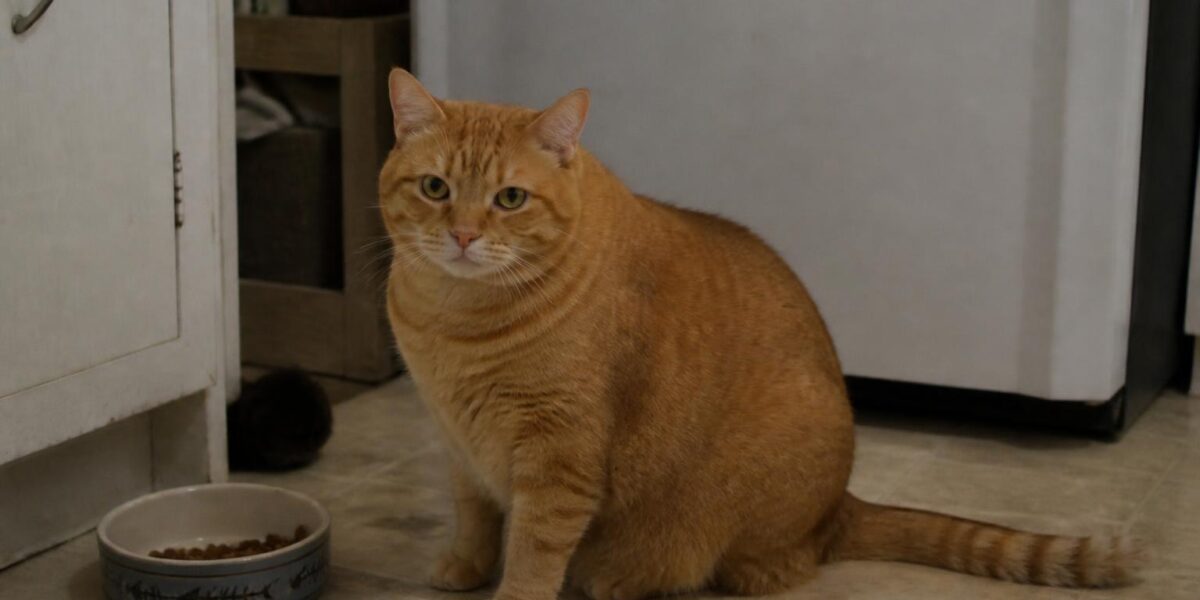
Why Cats Need a Slower, More Cautious Weight-Loss Plan
Cat obesity is one of the most common health problems veterinarians see, but the weight-loss strategy for an obese cat is fundamentally more cautious than for a dog. Cats who lose weight too fast — or who stop eating during a calorie restriction plan — can develop hepatic lipidosis, a life-threatening liver condition in which the liver becomes overwhelmed by mobilized fat stores. This is not a rare complication of well-meaning crash diets. A safe cat weight-loss protocol is paced at roughly 1 to 2 percent of body weight per week and never asks the cat to skip meals.
In this article
- Why Cats Need a Slower, More Cautious Weight-Loss Plan
- Start With Body Condition Scoring
- Rule Out Medical Contributors First
- The Critical Caveat: Hepatic Lipidosis Risk
- The Math: 1 to 2 Percent of Body Weight Per Week, Max
- Switch to Wet Food (Often) and Pre-Portion
- Therapeutic Diets vs Portion-Restricted Maintenance
- Slow Feeders, Puzzle Toys, and Foraging
- Add Movement, Cat-Style
- Monthly Recheck and Tracking
- Multi-Pet Households Need Separation
- Diabetes Risk and Reversal
- Frequently Asked Questions
Roughly 60 percent of pet cats in the United States are overweight or obese in recent surveys. The condition is associated with diabetes mellitus, osteoarthritis, urinary disease, and shorter lifespan. Helping an obese cat lose weight safely is one of the most consequential changes you can make for longevity — but the pace matters as much as the destination.
Start With Body Condition Scoring
The 9-point body condition score (BCS) is the framework most veterinarians use. 4 to 5 is ideal, 6 is overweight, 7 to 8 is obese, and 9 is grossly obese. Visual landmarks for cats differ a little from dogs — the primordial pouch (a loose, swinging belly skin flap) is normal anatomy and not fat. Long-haired cats are easier to under-score visually; palpation matters more in them. Our body condition score for cats walkthrough covers the cues your fingers should be looking for.
Before starting any calorie restriction, ask your vet to confirm the score. Households often under-recognize how overweight their cat has become because the change happened gradually. A baseline body weight, BCS, and muscle condition score together give you the numbers to track.
Rule Out Medical Contributors First
Sudden weight gain in cats — or stalled weight loss despite reasonable effort — warrants medical evaluation. Hyperthyroidism in older cats causes weight loss despite increased appetite, so a cat losing weight on a maintenance ration may have a thyroid problem rather than success. Diabetes mellitus, chronic disease, and certain medications also change body composition. A workup with bloodwork, urinalysis, and possibly thyroid testing is standard before a structured weight-loss plan. See our overviews of obesity in cats treatment and cat losing weight but eating for related differentials.
The Critical Caveat: Hepatic Lipidosis Risk
Cats who stop eating for more than 24 to 48 hours can develop hepatic lipidosis, particularly if they are already overweight. The liver starts mobilizing fat stores faster than it can process them, fatty infiltration of the liver occurs, and the cat becomes anorectic, jaundiced, and seriously ill. The condition is treatable but requires intensive care including assisted feeding through an esophageal tube, often for weeks.
This is why crash diets are dangerous and why never-skip-meals is a hard rule of any feline weight-loss plan. If a cat refuses the new weight-loss food, do not force a fast — pause the transition, contact your veterinarian, and either transition more slowly or switch products. Our overview of cat hepatic lipidosis explains the mechanism in detail. Owners of cats with BCS 7 or higher should commit this complication to memory before changing anything about feeding.
The Math: 1 to 2 Percent of Body Weight Per Week, Max
Safe feline weight loss runs at 0.5 to 2 percent of current body weight per week, with most clinicians targeting roughly 1 percent. A 6 kg overweight cat losing 1 percent weekly trims about 60 grams a week — a slow, deliberate pace. Faster than 2 percent per week raises hepatic lipidosis risk and accelerates muscle loss. The plan is patient: reaching BCS 5 from BCS 8 typically takes 6 to 12 months, sometimes longer.
Your veterinarian calculates a calorie target from the cat’s ideal body weight using the resting energy requirement (RER) formula, then feeds at roughly 70 to 80 percent of RER for ideal weight as a starting point. The number is adjusted after the first 2 to 4 weeks based on actual progress.
Switch to Wet Food (Often) and Pre-Portion
Canned wet food has two advantages for weight loss: lower calorie density per gram (because much of it is water) and better satiety per calorie. Many cats also drink less when fed dry-only, and improved hydration matters for urinary health and kidney function. Transitioning a kibble-only cat to wet food is its own project — see our switch cat dry to wet food walkthrough for the gradual approach.
Multiple small meals work better than one or two large meals for satiety. Splitting the daily ration into 4 to 6 small servings throughout the day reduces the post-meal “where’s my food?” anxiety many obese cats display. If a cat in a working household cannot get fed midday, a timed automatic feeder solves the logistics.
Therapeutic Diets vs Portion-Restricted Maintenance
Mild overweight cases (BCS 6) often respond to portion-measured maintenance food. Significantly overweight cats (BCS 7 and above) generally do better on a therapeutic weight-loss diet that is higher in protein (to preserve lean muscle), higher in fiber or moisture (for satiety), and lower in calorie density. Veterinary diets include Hill’s Metabolic (often labeled m/d), Royal Canin Satiety, and Purina OM Overweight Management. The prescription weight-loss metabolic diet overview describes when therapeutic foods are warranted.
Owners who prefer over-the-counter solutions can review the best cat food weight loss shortlist. The principle remains that portion measurement matters more than brand — calorie density per cup varies widely between products.
Slow Feeders, Puzzle Toys, and Foraging
Many obese cats eat too fast and seek food not because they are hungry but because they are bored. Adding slow feeders, puzzle toys, and food-foraging strategies stretches mealtime, burns calories, and provides enrichment. Hide small portions of the daily ration in puzzle toys placed around the home — see our overviews of puzzle feeders for cats and food foraging for cats. The slow feeder portion management guide covers product choices and household setup.
Important: slow feeders work for portion-controlled feeding, not free-feeding. A bottomless slow feeder defeats the purpose. Pre-portion the day’s ration and divide it among the feeders.
Add Movement, Cat-Style
Cats do not “exercise” on command. Activity comes from play, environmental enrichment, and food foraging. Short play sessions with wand toys, laser pointers (always ended with a reachable target so the cat catches something), and treat-dispensing balls add small but cumulative calorie burn. Climbing structures and vertical space encourage movement throughout the day. Aim for 10 to 15 minutes of active play 2 to 3 times daily, broken into shorter bursts if the cat tires.
Older cats with arthritis benefit from low-impact play. Cats with cardiovascular issues should be eased into activity. Our overview of cat arthritis covers joint-friendly enrichment if mobility is limited.
Monthly Recheck and Tracking
Weigh the cat every 2 to 4 weeks on the same scale, ideally at the vet clinic where the scale is calibrated and the tech is consistent. Most veterinary teams offer free or low-cost weight rechecks. BCS is reassessed monthly. If weight loss exceeds 2 percent per week, the calorie ration is increased to slow the pace. If weight loss is below 0.5 percent per week, the ration is tightened by 5 to 10 percent and meal timing is reviewed for accuracy.
Plateaus happen and are normal. A 6-week plateau despite tight compliance warrants a thyroid recheck and a candid food-diary review. Hidden calorie sources — another household member feeding, treats from a neighbor, the dog’s food bowl — are common culprits in multi-pet households.
Multi-Pet Households Need Separation
An obese cat losing weight cannot succeed if a thinner housemate’s bowl is accessible. Strategies include feeding in separate rooms with closed doors, timed feeders, microchip-activated feeders (SureFeed and equivalents) that open only for the registered chip, and elevated platforms accessible to one cat but not another. The feeding multiple pets different diets guide covers options. Cat-and-dog households face additional risk because the dog will usually empty any cat bowl left unattended.
Diabetes Risk and Reversal
Obesity is the single biggest risk factor for feline diabetes mellitus. Diabetic remission — the cat coming off insulin — happens more often in newly diagnosed cats with good weight control and a low-carbohydrate diet. The cat weight loss plan overview and overweight indoor cat weight loss guide both touch on the diabetes connection. If your cat is already diabetic, the weight-loss plan is co-managed with insulin adjustments — never reduce insulin or food without your vet’s direction.
Frequently Asked Questions
How fast can my cat safely lose weight?
0.5 to 2 percent of body weight per week, with 1 percent being the most common target. Faster than 2 percent risks hepatic lipidosis and is dangerous.
What if my cat refuses the new weight-loss food?
Do not force a fast. Transition more gradually, warm canned options, try multiple textures, or switch products. A cat that has not eaten in 24 to 48 hours needs veterinary contact. Hepatic lipidosis is a real risk.
Will my obese cat just lose weight if I switch to wet food?
Often partially yes, because wet food is lower in calorie density and improves satiety. But measured portioning is still essential. Free-feeding any food sabotages weight loss.
How long will it take to reach an ideal weight?
Most overweight cats reach BCS 5 from BCS 7 to 8 in 6 to 12 months at the safe rate. Grossly obese cats (BCS 9) may need 12 to 18 months. The slow pace is the safe pace.
Can I crash-diet my cat for a week before a vet visit?
No. Rapid weight loss in cats is dangerous and can trigger hepatic lipidosis. Honest assessment of body weight at the vet is more useful than a fast.


