Last updated: May 4, 2026
In this article
Cavalier vs Cavapoo Overview
The cavalier vs cavapoo decision sits in difficult territory because the Cavalier King Charles Spaniel — one of the sweetest small breeds in existence — has serious inherited health problems, and the Cavapoo cross does not fully escape them. A Cavalier is a small, affectionate, gentle companion breed bred to sit on laps and follow you everywhere. A Cavapoo crosses the Cavalier with a Miniature or Toy Poodle to reduce shedding and (the marketing claim) reduce health issues. The first goal is partly delivered. The second is more complicated.
This comparison covers temperament and care honestly, plus the health realities every prospective owner should understand.
For more, see the Cavalier breed profile and the Cavapoo profile.
History and Origin
The Cavalier King Charles Spaniel descends from English toy spaniels favored by King Charles II in the 1600s. The modern Cavalier was reconstructed in the 1920s after the breed had drifted toward a flatter face. The standard now favors a longer muzzle, full eyes, and a silky coat. AKC recognized 1995.
The Cavapoo (also Cavoodle) emerged in the 1990s as a designer cross. It is one of the most popular doodle crosses, especially in the UK and Australia. There is no breed standard or closed studbook.
Size and Appearance
Cavaliers weigh 13 to 18 pounds and stand 12 to 13 inches. The look is unmistakable: large round eyes, long silky drop ears, feathered legs and tail, in four colors (Blenheim, tricolor, ruby, black-and-tan).
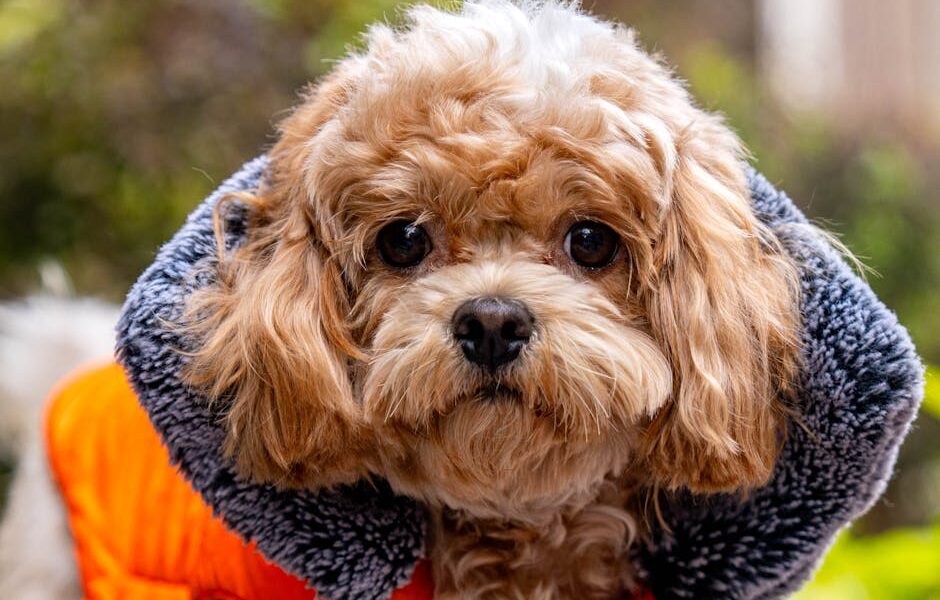
Cavapoos weigh 9 to 25 pounds depending on whether the Poodle parent was Toy or Miniature. The coat varies from straight (Cavalier-dominant) to wavy to curly (Poodle-dominant), in similar Cavalier colors plus apricot or solid red. Smaller, fluffier-faced Cavapoos look distinctly different from the regal Cavalier silhouette.
Temperament
Cavaliers are arguably the gentlest small breed. They are affectionate without being yappy, friendly with strangers, generally good with kids and other pets, and devoted to their humans. They are velcro dogs — they want to be touching you. Separation distress is common.
Cavapoos generally inherit the same sweetness with somewhat more energy and curiosity from the Poodle side. Some are more independent, some more clingy. Both are poor watchdogs and both struggle being left alone for long periods.
Both breeds also tend to be sociable with other dogs, especially small ones, and many do well in multi-dog households. Cavaliers in particular often pair well with another Cavalier or similar-sized companion, reducing separation distress when you must leave the house.
Trainability
Cavaliers are eager to please but moderately distractible. They train well for basic obedience and house manners but are not typically standout obedience dogs.
Cavapoos benefit from Poodle intelligence and often train faster. Both respond to positive reinforcement and gentle handling. Neither tolerates harsh methods. Housebreaking is sometimes slower in both because of small bladders.
Exercise Needs
Cavaliers need 30 to 60 minutes of daily exercise. They enjoy walks, games, and gentle play, and they are happy curling up afterward.
Cavapoos need similar amounts, sometimes more depending on the Poodle influence. Both are well-suited to apartment living provided they get a daily outing and plenty of human company. Neither is built for serious athletic pursuits.
Both breeds enjoy short outings to dog-friendly parks, brunches, and shops. They make excellent travel companions for low-key adventures. Hot weather demands caution because of small size and Cavalier-side stamina limits.
Grooming
Cavaliers have a silky double coat that sheds moderately year-round and heavily seasonally. Brush two to three times a week. Bathe monthly. Drop ears need regular cleaning to prevent infections. No professional grooming needed unless desired. Annual grooming cost: low.
Cavapoos shed less but require professional grooming every six to eight weeks at $50 to $100, plus brushing two to three times a week to prevent matting. Total annual grooming cost: $500 to $900. The trade is reduced shedding for higher grooming bills.
Health: The Cavalier Question Cavapoos Inherit
This section matters. Cavaliers carry a remarkably heavy genetic load:
- Mitral valve disease (MVD) — heart valve degeneration. Affects more than half of Cavaliers by age five and nearly all by age ten. Often the cause of death.
- Syringomyelia (SM) — a neurological condition where the skull is too small for the brain, causing fluid-filled cavities in the spinal cord. Causes pain, scratching at the air, and progressive disability. Highly prevalent.
- Episodic falling syndrome, eye conditions, and patellar luxation also occur.
Cavaliers live 9 to 14 years, often shortened by MVD.
Cavapoos inherit Cavalier-side risks plus Poodle-side risks. Crossing with a Poodle reduces SM and MVD prevalence somewhat but does not eliminate them — the Cavalier genetic contribution still carries the underlying mutations. Reputable Cavapoo breeders test the Cavalier parent’s heart annually and screen for SM via MRI, but most do not. Cavapoos live 12 to 15 years on average. Designer dog health risks explains why the cross is not a clean fix.
Both breeds also have small-breed risks: cherry eye, dental disease (be diligent with home care), and patellar luxation.
Cost and Rescue Availability
Cavalier puppies from reputable breeders run $1,800 to $3,500. Cavapoo puppies run $1,500 to $4,000. Both are produced in significant volume by puppy mills because of their popularity and small size — be especially careful with breeder vetting. Beyond purchase, plan for $1,500 to $3,000 in first-year costs and $1,200 to $2,500 in annual ongoing costs. Cavalier owners should budget extra for cardiology screening from age three onward — about $200 to $400 per year.
Rescue is the better path for many. Cavalier rescues exist (CKCSC and regional groups), and adult Cavaliers surrendered for health costs or owner changes appear regularly. Cavapoos appear in doodle rescues and increasingly in all-breed shelters. Adoption fees run $300 to $700. Be aware that adopting an adult Cavalier or Cavapoo may mean adopting a dog with a known heart condition — get a vet exam before finalizing.
Pet insurance is essentially required for Cavaliers given the predictable health load. Lifetime treatment for MVD plus possible SM surgery can run into five figures. Insure before age three and before any pre-existing conditions are diagnosed — premiums climb sharply otherwise. Cavapoos benefit from insurance too, given the inherited risks. The rescue adoption walkthrough explains what to ask before adopting.
Living With Each Breed
A Cavalier’s day looks like a velcro dog’s day: morning lap time, short walk, nap on someone’s feet, lunchtime check-in, evening lap time, bed. They follow you from room to room. They rarely settle alone.
A Cavapoo’s day is similar but typically with somewhat more curiosity and play between rest periods. They may enjoy more puzzle toys or training games than a typical Cavalier.
Both breeds suffer notably with separation. Long workdays alone are not appropriate. Doggy daycare, a second pet, or a work-from-home schedule are common solutions. The 3-3-3 rule applies to rescue Cavaliers and Cavapoos — both can take three months to fully settle into a new home.
Toy-breed handling protocols matter for both: harnesses (not collars), ramps for couches and beds, supervision around larger dogs, and gentle play. Daily teeth brushing is essential because dental disease is the most preventable common health issue in both breeds. Read more in our dog care blog.
Which Is Right for You
Choose a Cavalier if you want the classic gentle lap-dog experience, you accept the heart-disease reality, and you commit to regular cardiology checks. Insurance is wise.
Choose a Cavapoo if you want a similar temperament with reduced shedding and you accept higher grooming costs. The health profile is somewhat better than a purebred Cavalier but not dramatically so.
Either way, plan for vet costs above the small-breed average. Both are ideal companion dogs for people who are home a lot.
Buying or Adopting Responsibly
Both breeds attract puppy mills because of their popularity, small size, and high market price. Pet store puppies, “designer toy” Instagram breeders, and online sellers offering shipping are red flags. Reputable Cavalier breeders perform annual cardiology exams on breeding stock from age three, MRI screening for syringomyelia (expensive but critical), and follow the MVD breeding protocol (delaying breeding until parents are five and clear of murmurs). Reputable Cavapoo breeders test the Cavalier parent the same way and screen the Poodle parent for hips, eyes, and DNA panels.
Most breeders do not do this. Most “Cavalier breeders” listed online are casual breeders or worse. Walk away from any breeder who cannot produce cardiac and SM screening results for both parents.
Adopting an adult of either breed is the most responsible path for many families. Foster-based rescues can describe a particular dog’s known health status, temperament, and household manners. The 3-3-3 rule applies — three days to decompress, three weeks to settle, three months to fully bond.
For Cavapoo coat care, generation matters. F1 (50/50) puppies vary most. F1B (75% Poodle) tends curlier and lower-shedding. The doodle generations guide explains why this matters. Adult adoption removes the coat lottery.
Frequently Asked Questions
Are Cavapoos healthier than Cavaliers?
Somewhat, in F1 crosses, because of reduced concentration of Cavalier-specific mutations. But Cavapoos still inherit Cavalier-side heart and neurological risks. The cross is not a cure.
Do Cavaliers really almost all get heart disease?
Yes. Mitral valve disease affects the majority of Cavaliers by middle age. Annual cardiac exams from age three are standard practice.
Which is better for first-time owners?
Both are gentle and forgiving. Cavapoos are slightly more energetic and curious, Cavaliers are more naturally calm.
Can I find these in rescue?
Yes. Adult Cavaliers and Cavapoos appear in foster-based rescues regularly. Vet exams matter — see adopting from a foster for what to ask.
Are they good with kids?
Yes for both, with respectful kids. Their small size means careful supervision around toddlers. Both breeds are typically gentle and forgiving but can be hurt easily by rough handling.
Do they need a yard?
No — both adapt well to apartment living provided they get daily walks and human contact. Yards are nice but not necessary. Indoor play meets much of their exercise need.
What is the most important question to ask a Cavalier or Cavapoo breeder?
“Can I see annual cardiac exam results and SM-MRI screening for both parents?” If the answer is no or evasive, walk away. This is the single most important breeder vetting question for these breeds.
Looking to adopt a Cavalier King Charles vs Cavapoo Comparison?
Browse Cavalier King Charles vs Cavapoo Comparison dogs and mixes available for adoption from shelters and rescues near you.
Find Cavalier King Charles vs Cavapoo Comparison Dogs for Adoption