Last updated: April 27, 2026
In this article
Chesapeake Bay Retriever: Complete Breed Profile
The Chesapeake Bay Retriever is one of America’s most rugged and distinctive sporting dogs. Known for its unwavering loyalty, powerful build, and legendary work ethic, the Chesapeake Bay Retriever was purpose-built for the punishing conditions of waterfowl hunting along the mid-Atlantic coast. Unlike the famously easygoing Labrador Retriever, the Chessie is a dog of serious intensity — deeply devoted to its family but reserved with strangers, and always ready for a job. If you are looking for an athletic, intelligent, and fiercely loyal companion who thrives on challenge and cold-water adventure, the Chesapeake Bay Retriever may be exactly the dog you have been searching for. This complete breed profile covers everything you need to know about personality, exercise requirements, grooming, health, and history — and explains what makes this remarkable breed unlike any other retriever.
| Breed Group | Sporting |
|---|---|
| Size | Large |
| Weight | Males 65–80 lbs; Females 55–70 lbs |
| Height | Males 23–26 inches; Females 21–24 inches |
| Life Expectancy | 10–13 years |
| Coat | Short, wavy, oily, water-repellent double coat |
| Accepted Colors | Deadgrass, sedge, brown, and variations thereof |
| Eye Color | Yellowish or amber |
| Energy Level | High |
| Good for First-Time Owners | No — best suited to experienced dog owners |
| AKC Recognition | Yes, 1878 |
| State Dog | Maryland |
Personality and Temperament
The Chesapeake Bay Retriever has a personality that sets it apart from every other retriever breed. While Golden and Labrador Retrievers are famous for their outgoing friendliness with strangers, the Chessie is a more complex animal. This is a dog that bonds intensely with its own family and can be deeply affectionate at home, yet cautious and reserved when meeting new people. That protective instinct makes the Chesapeake Bay Retriever an excellent watchdog — a role the breed takes seriously.
Chessies are confident, even stubborn, with a self-assured intelligence that demands respect. They are not dogs that live to please in the simple, eager way a Labrador might. They think for themselves. This independence, combined with their physical power and emotional intensity, means the Chesapeake Bay Retriever is best suited to experienced dog owners who can provide clear, consistent leadership without resorting to harshness.
At their best, Chessies are extraordinarily loyal, courageous, and hardworking. They form powerful bonds with their people and are highly motivated to work alongside them. They can be playful and even goofy within their family unit, but they carry an undeniable seriousness of purpose that defines the breed. This is not a dog for everyone — but for the right owner, no breed is more rewarding.
Appearance
The Chesapeake Bay Retriever is a large, athletic dog built for strength and endurance in harsh conditions. Its most distinctive physical feature is its coat: a short, wavy outer layer sitting over a dense, woolly undercoat, both saturated with natural oils that make the coat nearly waterproof. When a Chessie shakes off after a swim, the water beads and falls away almost instantly — an adaptation perfectly suited to icy Chesapeake Bay waters.
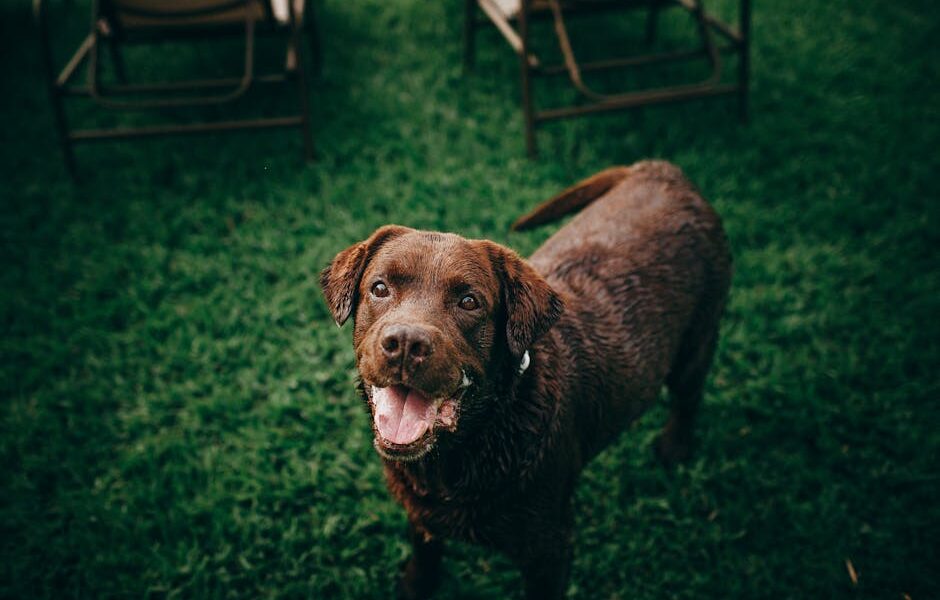
The accepted coat colors include deadgrass (a pale straw tone), sedge (a reddish-gold), and various shades of brown from dark chocolate to light tan. The AKC standard prizes colors that blend naturally with the surrounding marsh and field environment. Small white spots on the chest, belly, or toes are permissible but not preferred.
The breed’s eyes are one of its most striking features: a clear yellowish or amber color that gives the Chessie a sharp, intelligent expression. The head is broad and round, the muzzle is medium in length, and the body is muscular and well-proportioned. The hindquarters are notably powerful — essential for the strong swimming strokes this breed was developed to sustain over long retrieves in cold, rough water.
Exercise Needs
The Chesapeake Bay Retriever is a high-energy working dog that requires substantial daily exercise to remain healthy, happy, and well-behaved. A short walk around the block will not come close to meeting this breed’s physical and mental needs. Plan for a minimum of 90 minutes of vigorous activity every day, and more whenever possible.
Swimming is the Chessie’s absolute favorite form of exercise, and the breed excels in cold water that would discourage most other dogs. If you have access to a lake, river, or bay, regular swimming sessions will satisfy both body and mind in a way that land-based exercise alone cannot replicate. Dock diving, hunting, field trials, and competitive retrieving events are all excellent outlets for the breed’s natural drive.
Beyond swimming, Chessies enjoy long runs, hiking on rugged terrain, fetch games with a bumper or ball, and any activity that combines physical exertion with mental stimulation. Dog sports such as obedience, tracking, and agility can also provide valuable structure and challenge. A bored or under-exercised Chesapeake Bay Retriever will find its own entertainment — and owners rarely enjoy the results. Consistent, vigorous daily activity is non-negotiable for this breed.
Grooming Needs
The Chesapeake Bay Retriever’s unique coat is one of its most functional features — and it requires a grooming approach that respects that function. The oily, water-repellent double coat should never be stripped of its natural oils through excessive bathing. Most Chessie owners bathe their dogs only three to four times per year, or when the dog is genuinely dirty rather than simply smelling like a dog. Overbathing will compromise the coat’s water-repellent properties, which are essential for a dog bred to work in cold water.
Weekly brushing with a slicker brush or shedding rake will help manage the dense undercoat, particularly during the spring and fall shedding seasons when hair loss increases significantly. Despite the oily texture, the coat does not tangle or mat the way longer coats do, making maintenance relatively straightforward.
Beyond coat care, routine grooming tasks apply: trim nails every three to four weeks to prevent cracking and discomfort, clean ears weekly to prevent moisture buildup (especially important for a dog that swims frequently), and brush teeth several times per week to support long-term dental health. For additional guidance on keeping your dog’s coat and skin in top condition, visit our dog care blog.
Health and Common Issues
The Chesapeake Bay Retriever is generally a hardy breed with a life expectancy of 10 to 13 years, but like all purebred dogs, it is predisposed to certain hereditary health conditions. Responsible breeders test breeding stock for known genetic issues before producing litters, and prospective owners should ask to see relevant health clearances.
Hip dysplasia is the most common orthopedic concern in the breed, a condition where the hip joint develops abnormally and can lead to arthritis and chronic pain. Maintaining a healthy weight and providing appropriate exercise throughout the dog’s life are key preventive measures.
Progressive Retinal Atrophy (PRA) is an inherited eye condition that causes gradual loss of vision and can progress to blindness. DNA testing can identify carriers before breeding.
Bloat (gastric dilatation-volvulus) is a life-threatening emergency that affects large, deep-chested breeds. Feeding smaller meals, avoiding vigorous exercise immediately after eating, and knowing the warning signs can be lifesaving.
Exercise-Induced Collapse (EIC) is a genetic condition in which intense exercise triggers sudden muscle weakness and collapse. DNA testing identifies affected dogs so the condition can be managed appropriately.
Are Chesapeake Bay Retrievers Good With Kids and Other Pets?
The Chesapeake Bay Retriever can be a wonderful family dog, but its suitability with children and other animals depends heavily on early socialization and the experience level of the household. Chessies are deeply loyal to their family and can be affectionate and gentle with children they have grown up with. However, their intensity and physical power mean that interactions with very young children should always be supervised.
Unlike the universally soft-natured Labrador Retriever, the Chessie is more assertive and less tolerant of rough handling or the unpredictable movements of toddlers. Children should be taught from the outset to interact respectfully with the dog, and the dog should be given its own space to retreat when it needs quiet time.
With other dogs, Chessies can coexist peacefully when properly socialized, though same-sex aggression can be an issue, particularly between two dominant males. Their strong prey drive may make them unreliable around cats or small animals unless raised alongside them from puppyhood. Early, positive exposure to a wide variety of people, animals, and environments is essential for raising a well-adjusted Chesapeake Bay Retriever.
Training Tips
Training a Chesapeake Bay Retriever is a rewarding but genuinely challenging undertaking. This is not a breed that rushes to comply simply because you have asked it to. Chessies are highly intelligent, but that intelligence comes packaged with an independent streak and a willingness to question whether your request is really worth their effort. Patience, consistency, and a clear sense of authority are essential.
Positive reinforcement methods work best — reward-based training using food, praise, or play motivates Chessies far more effectively than punishment-based approaches, which can trigger stubbornness or emotional shutdown. Sessions should be kept relatively short and varied to maintain the dog’s engagement. Repetitive drills bore them quickly.
Begin obedience training and socialization as early as possible. Puppy classes are strongly recommended, not only for the training foundation but for the critical socialization opportunities they provide. Crate training helps establish boundaries and gives the dog a secure space of its own.
Advanced training in retrieving, hunting, or dog sports is where the Chesapeake Bay Retriever truly shines. Channeling the breed’s natural drive into structured work produces a remarkably capable and focused partner. First-time dog owners are strongly encouraged to work with an experienced trainer who has specific knowledge of the breed.
History and Origin
The Chesapeake Bay Retriever has one of the most storied origin legends in American dog breeding history. In 1807, an English brig ran aground off the Maryland coast, and among those rescued were two Newfoundland puppies — a red male named Sailor and a black female named Canton. These dogs were bred with local retrievers, hounds, and other working dogs over the following decades, and through generations of selective breeding for cold-water retrieving ability, the Chesapeake Bay Retriever gradually emerged as a distinct type.
The breed was purpose-built for the brutal demands of market hunting along the Chesapeake Bay, where dogs were expected to retrieve dozens — sometimes hundreds — of ducks per day in frigid, choppy waters. No other retriever breed was developed under such punishing conditions, and the Chessie’s toughness, tenacity, and cold-weather coat reflect that heritage directly.
The American Kennel Club recognized the Chesapeake Bay Retriever in 1878, making it one of the earliest breeds on the AKC register. In 1964, Maryland designated the Chesapeake Bay Retriever as its official state dog — a well-deserved honor for a breed so deeply woven into the history and culture of the region. Today the breed remains a prized hunting companion and a respected competitor in field trials, though it has also found a devoted following as a family dog among owners who appreciate its unique character.
Frequently Asked Questions
How is the Chesapeake Bay Retriever different from a Labrador Retriever?
While both are retrievers developed for waterfowl hunting, the Chesapeake Bay Retriever is significantly more independent, protective, and intense in temperament than the famously friendly Labrador. Chessies tend to be reserved with strangers, more assertive with other dogs, and more physically and mentally demanding to own. Their oily, wavy coat is also quite different from the Lab’s denser, shorter coat. Labs are widely recommended for first-time owners; Chessies are generally better suited to experienced handlers.
Do Chesapeake Bay Retrievers shed a lot?
Yes. The Chesapeake Bay Retriever has a dense double coat that sheds moderately year-round and more heavily during seasonal coat changes in spring and fall. Weekly brushing with a shedding rake or slicker brush helps manage loose hair. The coat’s oily texture means it tends not to cling to furniture the way some breeds’ hair does, but regular grooming is still important for coat health and household cleanliness.
Are Chesapeake Bay Retrievers good apartment dogs?
Generally, no. The Chesapeake Bay Retriever is a high-energy, large-breed working dog that needs significant daily exercise and ideally access to open space or water. While an exceptionally committed owner in an apartment could potentially meet the breed’s physical needs through rigorous daily outings, the Chessie is best suited to a home with a securely fenced yard and convenient access to swimming. Limited space combined with insufficient exercise produces a restless, destructive dog.
Is the Chesapeake Bay Retriever a rare breed?
The Chesapeake Bay Retriever is not among the rarest breeds, but it is considerably less common than the Labrador or Golden Retriever. It consistently ranks in the middle tier of AKC breed popularity. Finding a reputable breeder may require some patience and research, and dogs occasionally appear in breed-specific rescues as well. If you are open to adoption, searching for a Chesapeake Bay Retriever through a rescue organization can be a rewarding path to welcoming this remarkable dog into your home.
Adopt a Chesapeake Bay Retriever
If everything you have read about the Chesapeake Bay Retriever speaks to you — the loyalty, the drive, the love of cold water and hard work — then this breed may be your perfect match. Before purchasing from a breeder, consider adopting. Chesapeake Bay Retrievers and Chessie mixes do enter rescue and shelter systems, and giving a dog in need a second chance is one of the most meaningful things a dog lover can do.
At Walk Me Home Rescue, we are committed to connecting dogs with the right families. Browse our available dogs and learn more about the adoption process at walkmehomerescue.org/adopt-dogs/. Our team can help you find a dog whose energy, temperament, and history are the right fit for your household. The next chapter for a rescued Chesapeake Bay Retriever — and for you — could start today.
Looking to adopt a Chesapeake Bay Retriever?
Browse Chesapeake Bay Retriever dogs and mixes available for adoption from shelters and rescues near you.
Find Chesapeake Bay Retriever Dogs for Adoption