
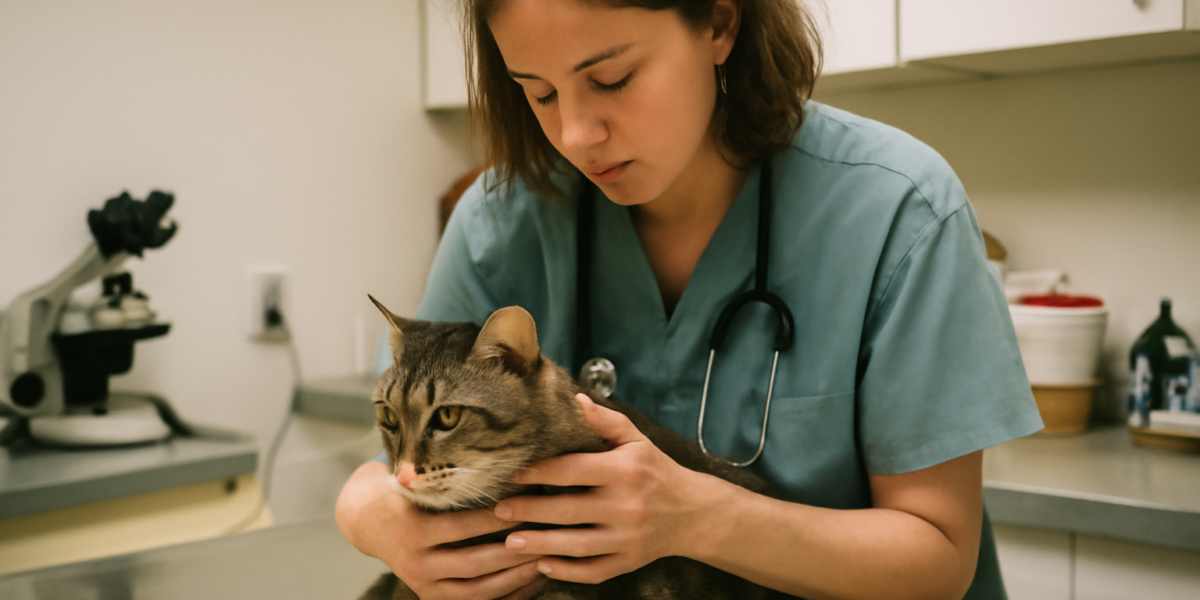
Understanding Cholangitis
Cholangitis in cats is inflammation of the bile ducts, usually with secondary involvement of the surrounding liver tissue (cholangiohepatitis). It is the most common inflammatory liver disease of cats and a key piece of the triaditis puzzle, where pancreatitis, inflammatory bowel disease, and cholangitis occur together.
In this article
- Understanding Cholangitis
- Neutrophilic Cholangitis
- Lymphocytic Cholangitis
- Fluke-Associated Cholangitis
- Recognizing the Symptoms
- Diagnostic Approach
- Treatment Approach
- Nutrition and Feeding
- The Triaditis Connection
- Prognosis and Long-Term Management
- Home Care During Treatment
- When to Call Your Veterinarian
- Frequently Asked Questions
The disease takes several forms with different causes, signs, and treatments. The two main categories are neutrophilic cholangitis (often bacterial) and lymphocytic cholangitis (often immune-mediated). A third, fluke-associated form occurs in regions where liver flukes are endemic. Distinguishing these forms shapes the treatment plan.
Cats with cholangitis can become very sick quickly, but many recover well with appropriate care. Early recognition and an organized diagnostic approach matter, because liver disease in cats can progress to cat hepatic lipidosis if appetite drops for more than a couple of days.
Neutrophilic Cholangitis
Neutrophilic (acute or suppurative) cholangitis is typically caused by bacteria ascending from the small intestine into the bile duct system. The bacteria found are often gut organisms like E. coli or Enterococcus. Cats present acutely ill with fever, jaundice, vomiting, decreased appetite, and lethargy.
Because cats have a shared opening between the bile duct and the pancreatic duct in many individuals, infection or inflammation in one easily spills into the other. That anatomy is a major reason triaditis exists. Inflammatory bowel disease likely contributes by allowing bacteria to translocate.
This form usually responds to a course of antibiotics combined with supportive care. Bile culture, when feasible, helps direct therapy precisely. Your veterinarian will calculate the dose and determine the duration based on culture results and clinical response.
Lymphocytic Cholangitis
Lymphocytic (chronic) cholangitis is more insidious. Cats develop slowly progressive weight loss, intermittent vomiting, decreased appetite, and sometimes ascites (fluid accumulation in the abdomen). The disease is thought to be immune-mediated rather than directly infectious.
Persians and some other purebred cats may be over-represented, though the disease occurs in any breed. Diagnosis often requires liver biopsy, since signs can overlap with lymphoma, hepatic lipidosis, and infectious causes. Liver enzymes, bilirubin, and bile acid levels usually rise but the pattern varies.
Treatment commonly includes immunosuppressive doses of corticosteroids, ursodiol (which improves bile flow), and supportive nutrition. Many cats respond well, but the disease can become chronic and require lifelong management.
Fluke-Associated Cholangitis
In regions of the southeastern United States, Hawaii, and parts of Asia, the liver fluke Platynosomum fastosum infects cats that hunt and eat lizards or amphibians. Heavy infections cause biliary inflammation and obstruction. Although less common in cats kept indoors or away from intermediate hosts, the disease should be considered in outdoor cats from endemic regions.
Diagnosis involves finding fluke eggs on stool tests (which can be falsely negative) or fluke organisms during ultrasound or surgery. Treatment uses praziquantel or related antiparasitics, sometimes with antibiotic and bile-flow support. Severely affected cats may need surgery to relieve obstruction.
Indoor housing is the simplest prevention. If your cat hunts in an endemic region, talk with your veterinarian about appropriate parasite screening.
Recognizing the Symptoms
Common signs of cholangitis in cats include decreased appetite, weight loss, intermittent vomiting, and lethargy. Jaundice (yellowing of the gums, skin, or whites of the eyes) is a key clue when present. Some cats run fevers, especially in the acute neutrophilic form.
Chronic cases may show only subtle, slowly progressive changes that owners notice in retrospect: a cat that has become picky, sleeps a little more, and weighs less than last year. Long-haired cats can hide weight loss surprisingly well, so periodic weighing matters.
Severe cases progress to dehydration, electrolyte abnormalities, ascites, and signs of liver failure. Acute deterioration deserves immediate veterinary care, because cats can move from “off her food” to dangerously ill in a remarkably short time.
Diagnostic Approach
Bloodwork typically shows elevated liver enzymes (ALT, ALP, GGT), elevated bilirubin, and sometimes increased white blood cells. Bile acid levels confirm liver dysfunction when bilirubin is borderline. Pancreatic markers (fPL or specfPL) check for concurrent pancreatitis.
Abdominal ultrasound is essential. It evaluates the liver architecture, gallbladder, bile ducts (looking for thickening, dilation, or sludge), pancreas, and small intestine. Findings often suggest the diagnosis even before biopsy. Fine-needle aspirates of the liver give cytologic clues.
Definitive diagnosis usually requires liver biopsy with histopathology and bile culture. Surgical or laparoscopic biopsy gives the most reliable tissue and lets the surgeon collect bile at the same time. Less invasive ultrasound-guided biopsies are sometimes used when surgery is not appropriate.
Treatment Approach
Neutrophilic cholangitis responds to antibiotics, ideally chosen based on bile culture and sensitivity. Common choices include amoxicillin-clavulanate, fluoroquinolones, or others. Treatment lasts weeks to months, and your veterinarian will calculate the appropriate dose and duration.
Lymphocytic cholangitis is treated with corticosteroids (often prednisolone, which cats absorb better than prednisone) and supportive medications. Some cats need additional immunosuppressive drugs like chlorambucil. Your vet will tailor the regimen and monitor closely for side effects.
Across all forms, supportive care includes ursodiol to improve bile flow, S-adenosylmethionine (SAMe) and silybin (often combined as Denamarin for cat liver disease), anti-nausea medication, appetite support, and high-quality nutrition. Vitamin K may be added if clotting times are prolonged.
Nutrition and Feeding
Cats with cholangitis must keep eating. Cats that go off food for several days are at risk of hepatic lipidosis, a separate liver disease that complicates the original problem. Tempting your cat with strong-smelling foods, warming the food slightly, and offering frequent small meals all help.
If your cat refuses to eat for more than a day or two, contact your veterinarian. A feeding tube (esophagostomy tube is a common choice) can be placed under brief anesthesia and is far less stressful than syringe feeding. Tubes save lives in this disease and are often only needed for a few weeks.
Diet selection depends on concurrent conditions. Highly digestible diets, hydrolyzed protein diets if IBD is part of the picture, and balanced calorie density all play roles. Your veterinarian will guide you to the right product.
The Triaditis Connection
In many cats, cholangitis travels with pancreatitis and inflammatory bowel disease, a triad collectively called triaditis. The shared anatomy (bile and pancreatic ducts often opening together) and overlapping immune mechanisms link them. Treating only one piece often falls short.
If your cat has cholangitis, ask your veterinarian about screening for pancreatitis (fPL) and signs of intestinal disease. Concurrent issues need concurrent treatment, sometimes with overlapping medications like corticosteroids and dietary modifications. Cat hepatic lipidosis may also enter the picture if the cat has been off food.
Regular rechecks with bloodwork and ultrasound let your vet track progress across all the affected systems. Coordination between primary care and an internist often helps.
Prognosis and Long-Term Management
The outlook for cholangitis in cats varies. Acute neutrophilic cases often respond well to antibiotic therapy and may not relapse. Lymphocytic cases tend to be more chronic and require ongoing management, but many cats live comfortably for years with appropriate care.
Watch for return of vomiting, weight loss, jaundice, or appetite changes throughout your cat’s life. Periodic bloodwork (every three to six months in stable cats) catches subtle changes early. Some cats need long-term ursodiol and supplements even after the active disease resolves.
Quality of life matters as much as biochemistry. A cat that is comfortable, eating, and engaged may be doing well even with persistent enzyme elevations. Browse our cat care archive for related topics on appetite support and chronic disease management.
Some cats benefit from continued ursodiol and antioxidant support long after the active disease has resolved, particularly when concurrent issues like inflammatory bowel disease persist. Your veterinarian will help decide which long-term medications are worth keeping versus tapering off.
Track your cat’s weight monthly with the same scale at home. A small kitchen scale works for kittens, while a baby scale or human scale (subtracting your weight while holding the cat) works for adults. Trends matter more than any single number.
Home Care During Treatment
Daily medication delivery is a real-world challenge with cats. Many cholangitis medications are bitter, and cats are notoriously good at refusing pills. Compounded liquid formulations, transdermal options for some drugs, and pill pockets are all worth discussing with your veterinarian.
Track appetite, weight, and litter box output in a simple journal. Subtle declines in food intake or weight can signal trouble before lab values change. Photos of your cat’s body condition over time help you and your vet see trends that day-to-day observation might miss.
Provide a quiet, low-stress environment during recovery. Cats are sensitive to household changes, and stress can worsen gastrointestinal and liver disease. Extra hiding spots, predictable feeding times, and minimized commotion all support healing.
When to Call Your Veterinarian
Contact your vet promptly for any cat with reduced appetite for more than a day, vomiting that lasts more than 24 hours, weight loss, jaundice, or unexplained lethargy. Cats hide illness well, so by the time signs are obvious the disease may be advanced.
If your cat is in treatment, return for any new or worsening signs, particularly vomiting, refusal to eat, or behavioral change. Drug side effects and treatment relapses both deserve quick evaluation.
Always consult your veterinarian before starting, stopping, or changing any medication. Liver-active drugs interact and depend on careful dosing.
Frequently Asked Questions
Can cholangitis be cured?
Acute neutrophilic cases often resolve with appropriate antibiotics. Lymphocytic cases tend to be chronic and require ongoing management, though many cats live comfortably with treatment.
Will my cat need a feeding tube?
Possibly, especially during the early treatment phase if appetite is poor. Tubes are temporary, well-tolerated, and prevent the dangerous downward spiral into hepatic lipidosis.
Is the disease painful?
It can be uncomfortable, with abdominal pain or nausea contributing to the appetite loss. Pain control is part of comprehensive care, and your vet will choose drugs safe for the liver.
What is triaditis?
Triaditis describes the simultaneous occurrence of pancreatitis, inflammatory bowel disease, and cholangitis in cats. The conditions share anatomic and immune connections, and treating all three together gives the best results when present.
How long is treatment?
Acute cases often need weeks to a few months. Chronic lymphocytic cases may need lifelong management with periodic adjustments. Your vet will guide you through the timeline.


