
Last updated: April 27, 2026
In this article
Chow Chow Dog Breed Profile
The chow chow is one of the oldest and most distinctive dog breeds in the world. With its lion-like mane, bear-shaped body, and famously blue-black tongue, this ancient Chinese breed commands attention wherever it goes. But beyond its striking appearance lies a deeply loyal, dignified, and independent dog that forms an intense bond with a select few. If you are considering welcoming a Chow Chow into your home, understanding the breed’s unique personality and care requirements is essential. This guide covers everything you need to know — from temperament and grooming to health considerations and adoption resources — so you can make an informed, compassionate decision.
Quick Facts
| Breed Group | Non-Sporting |
|---|---|
| Size | Medium to Large |
| Weight | 45 – 70 lbs (20 – 32 kg) |
| Height | 17 – 20 inches at the shoulder |
| Lifespan | 8 – 12 years |
| Coat Types | Rough (long) or Smooth (short) |
| Common Colors | Red, black, blue, cinnamon, cream |
| Energy Level | Low to Moderate |
| Good for First-Time Owners | No — best suited to experienced owners |
| Shedding | Heavy, especially seasonally |
| AKC Recognition | Yes (1903) |
Personality and Temperament
The chow chow is often described as cat-like in its behavior — aloof with strangers, fastidiously clean, and intensely selective about who it chooses to love. This is not a breed that greets every visitor at the door with a wagging tail. Instead, the chow chow reserves its loyalty and affection for a very tight circle, often bonding most strongly with one person. This one-person loyalty is one of the breed’s most defining characteristics, and it is both its greatest charm and one of its greatest challenges.
Chow chows are serious, dignified dogs. They do not beg for attention, nor do they tolerate rough handling or being pushed around. They carry themselves with a quiet self-assurance that can sometimes be mistaken for stubbornness. In reality, the breed is highly intelligent but chooses when and how to engage — on its own terms. This independence means that a chow chow will not simply comply because you ask nicely. Earning a chow chow’s trust and respect is a process that takes consistency, patience, and calm confidence from the owner.
Protective by nature, chow chows can be territorial around the home and wary of unfamiliar people and animals. This is why early socialization — beginning in puppyhood and maintained throughout life — is absolutely non-negotiable for this breed. Without it, natural wariness can escalate into aggression.
Appearance
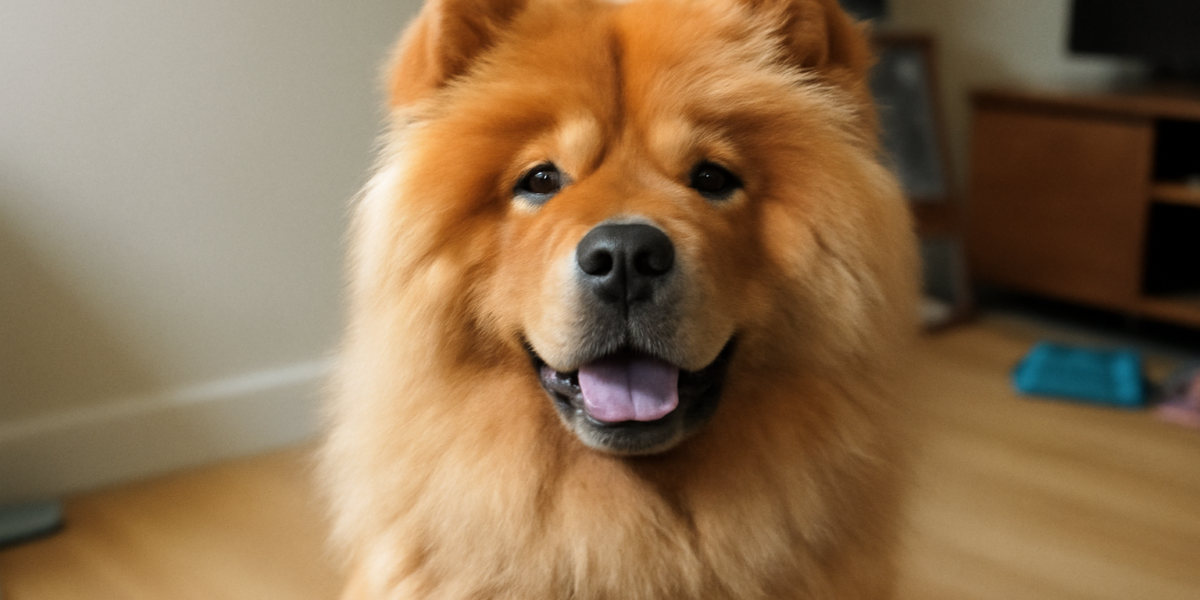
Few dog breeds are as visually striking as the chow chow. The breed’s most iconic feature is its dense, lion-like mane of fur that frames the face and neck, giving it the appearance of a small, walking bear. The face is broad and flat, with deep-set, dark, almond-shaped eyes that lend the dog a scowling, almost imperious expression. The ears are small, thick, and slightly rounded, set wide apart atop the large, square head.
Perhaps the most famous anatomical quirk of the chow chow is its blue-black tongue and gums — a trait shared with very few other dog breeds, notably the Shar-Pei. No one knows definitively why chow chows carry this pigmentation, but it has become one of the breed’s defining signatures. The body is compact and muscular, built square rather than long, and the hind legs are notably straight, which gives the breed its characteristic stilted gait. The tail curls tightly over the back, completing the bear-like silhouette. Coats come in two varieties — rough and smooth — and in five main colors: red, black, blue, cinnamon, and cream.
Exercise Needs
The chow chow has moderate exercise requirements compared to many other breeds of similar size. Two daily walks of 20 to 30 minutes each are typically sufficient to keep a healthy adult chow chow physically satisfied. Unlike high-energy working breeds, chow chows are not built for marathon runs or hours of intense activity. They are calm indoors and generally content to relax between outings, making them a reasonable fit for apartment living provided they receive their daily walks.
One critical factor to keep in mind is heat sensitivity. The chow chow’s thick double coat makes it extremely vulnerable to overheating. Exercise should always be scheduled during the cooler parts of the day — early morning or evening — and vigorous activity should be avoided entirely during hot or humid weather. Always ensure access to fresh water and shade. Puppies and senior chow chows require even more care in managing exertion levels. Mental stimulation through training exercises and puzzle feeders can supplement physical activity and help prevent boredom-related behaviors without taxing the dog in the heat.
For further general dog care advice, visit our dog care blog.
Grooming Needs
Grooming a chow chow is a significant commitment, particularly for owners of the rough-coated variety. The rough coat is long, dense, and straight with a wooly undercoat that mats easily if not brushed regularly. At minimum, rough-coated chow chows require thorough brushing three times per week, and daily brushing during seasonal shedding periods in spring and fall. Without consistent grooming, the undercoat becomes severely matted, which can cause skin irritation and discomfort.
The smooth-coated chow chow is far easier to maintain. Its shorter, denser coat still sheds considerably but does not mat as readily and requires only weekly brushing under normal circumstances. Both coat types should be bathed once every six to eight weeks, or more frequently if the dog has been rolling in the mud. Pay special attention to the skin folds around the face, which should be kept clean and dry to prevent bacterial or fungal infections. Regular nail trims, ear cleaning, and dental care round out the grooming routine. Many chow chow owners choose to schedule professional grooming appointments every six to eight weeks to stay on top of coat maintenance.
Health and Common Issues
The chow chow is a generally sturdy breed, but like all purebred dogs, it is predisposed to certain hereditary health conditions that prospective owners should be aware of. Hip and elbow dysplasia are among the most common structural issues in the breed, resulting from abnormal joint development that can cause pain and reduced mobility. Responsible breeders screen for these conditions, and any rescue chow chow should receive a thorough veterinary orthopedic evaluation.
Entropion — a condition in which the eyelid rolls inward, causing the lashes to rub against the eye surface — is prevalent in chow chows due to the breed’s heavy facial skin folds. Left untreated, entropion causes chronic irritation and can lead to corneal damage or ulceration. Surgical correction is often required. Hypothyroidism, or underactive thyroid function, is another condition seen with regularity in the breed, presenting as weight gain, lethargy, and skin or coat changes. Bloat (gastric dilatation-volvulus) is a life-threatening emergency that chow chows, like many deep-chested breeds, can be prone to. Owners should learn to recognize the signs of bloat and seek emergency veterinary care immediately if suspected. Regular veterinary checkups and a proactive approach to preventive health care are essential.
Are Chow Chows Good With Kids and Other Pets?
Chow chows are generally not recommended for households with very young children or for first-time dog owners. This is not because the breed is inherently vicious, but because its tolerances are limited and its reactions can be swift. Chow chows do not enjoy rough play, unexpected grabbing, or the unpredictable movements that are characteristic of young children. A chow chow that feels cornered or harassed — even unintentionally — may react without much warning. Families with older children who understand how to interact respectfully with dogs may find the chow chow a devoted, if reserved, companion.
With other pets, chow chows can be territorial and dominant, particularly with dogs of the same sex. Early introductions and gradual socialization improve the odds of harmonious multi-pet households, but there are no guarantees. Chow chows have a moderate prey drive and may not be reliable around small animals such as cats, rabbits, or birds. If you are considering adopting a chow chow into a home with existing pets, a careful, supervised introduction process is strongly advised.
Training Tips
Training a chow chow requires a specific mindset. This breed does not respond to harsh corrections, forceful handling, or repetitive drilling. Attempts to dominate a chow chow through punishment will erode trust and potentially trigger a defensive response. Instead, effective training relies on building genuine mutual respect. Positive reinforcement — praise, treats, and calm, consistent rewards — works far better with this breed than any punitive method.
Early socialization is the single most important investment you can make in a chow chow puppy’s development. Exposing the dog to a wide variety of people, environments, sounds, and other animals during the critical socialization window (roughly 3 to 14 weeks of age) significantly reduces the risk of excessive fearfulness or aggression later in life. Puppy classes serve double duty: they build social skills while also establishing the routine of structured learning. Keep training sessions short — 10 to 15 minutes — and end on a positive note. A chow chow that is bored or pressured will simply disengage. Consistency, patience, and a sense of humor will serve you far better than urgency.
History and Origin
The chow chow is one of the most ancient dog breeds still in existence, with origins tracing back at least 2,000 years to northern China. Some DNA studies suggest the breed may be even older — potentially among the first domesticated dog breeds to diverge from the wolf. Historical Chinese artifacts from the Han Dynasty (206 BCE – 220 CE) depict dogs strikingly similar to the modern chow chow, confirming the breed’s deep roots in Chinese culture.
In ancient China, chow chows served multiple roles: hunting, herding, guarding, and pulling sleds. Uniquely among dog breeds, they were also historically kept for their meat and their fur. The breed is believed to share ancestry with the ancient Spitz family of Arctic breeds, which explains its compact build, thick double coat, and curled tail. The origin of the name “chow chow” is debated — one theory links it to a British slang term used in the 18th century to describe miscellaneous cargo brought from China, which may have included the dogs themselves. The breed was introduced to England in the late 1700s and became fashionable among European nobility. Queen Victoria was notably fond of the breed, which helped spark wider Western interest. The American Kennel Club officially recognized the chow chow in 1903.
Frequently Asked Questions About the Chow Chow
Why does a chow chow have a blue-black tongue?
The blue-black tongue is caused by a high concentration of pigment-producing cells called melanocytes in the tongue tissue. It is a breed-specific genetic trait, not a sign of illness. All chow chow puppies are born with pink tongues that darken to the characteristic blue-black color by the time they are 8 to 10 weeks old. If an adult chow chow develops pink patches on a previously fully pigmented tongue, a veterinary evaluation is recommended.
Are chow chows aggressive dogs?
Chow chows are not inherently aggressive, but they are naturally protective and reserved with strangers. Without adequate socialization, this wariness can escalate. The breed consistently appears on insurance company breed restriction lists, which reflects the consequences of poor socialization or irresponsible ownership rather than an innate viciousness. A well-socialized, responsibly handled chow chow is typically calm and dignified — not aggressive.
How much exercise does a chow chow need each day?
Most adult chow chows do well with 45 to 60 minutes of moderate exercise per day, split across two walks. Due to their thick coats and heat sensitivity, they should not be exercised during the hottest part of the day. Puppies should have exercise carefully managed to protect developing joints, and senior dogs may need shorter, gentler outings. Always prioritize hydration and access to shade.
Can I adopt a chow chow through Walkmehome Rescue?
Yes. Walkmehome Rescue occasionally has chow chows and chow chow mixes available for adoption. All dogs in our program are vetted, vaccinated, and assessed for temperament before placement. We work hard to match each dog with the right home environment and owner experience level. Visit our adoption page to browse currently available dogs and start your application.
Adopt a Chow Chow
If everything you have read about the chow chow resonates with you — the quiet dignity, the fierce loyalty, the bear-like beauty — adoption may be the right next step. Rescue chow chows and chow chow mixes deserve loving, patient, experienced homes, and there is no greater reward than earning the trust of a breed that gives it so selectively.
Walkmehome Rescue is committed to finding the right match for every dog and every family. Before adopting, we encourage you to honestly assess your lifestyle, your experience with dogs, and your capacity for the grooming and training commitment this breed requires. When you are ready, browse our available dogs and submit an adoption application through our adopt a dog page. We are here to guide you every step of the way.


