
Last updated: May 17, 2026
In this article
- What Is Chronic Bronchitis?
- How Chronic Bronchitis Develops
- Recognizing the Symptoms
- Diagnosis at the Veterinary Clinic
- Treatment with Anti-Inflammatory Medications
- Bronchodilators and Other Medications
- Environmental and Lifestyle Modifications
- Managing Acute Flare-Ups
- Monitoring at Home
- Long-Term Outlook
- Related Conditions
- Frequently Asked Questions
What Is Chronic Bronchitis?
Chronic bronchitis in dogs is a long-term inflammatory disease of the airways characterized by a persistent cough lasting at least two months without an identifiable underlying cause. The bronchi (the larger airways branching off the trachea) become chronically inflamed, produce excess mucus, and develop changes in the airway wall that make them more reactive and obstructive over time.
The disease shares features with chronic bronchitis in humans, though its cause and natural history are somewhat different. In dogs, chronic bronchitis is most often a primary disease with no specific identifiable trigger, though contributing factors such as recurrent infections, environmental irritants, and underlying allergies may play roles. The disease is generally not curable but is highly manageable, allowing most dogs to live comfortable lives with appropriate care.
Chronic bronchitis dogs are typically middle-aged to senior small breed dogs, though any age and size can be affected. The condition is sometimes called canine chronic bronchitis to distinguish it from infectious or other types of bronchitis. Recognizing the disease and starting appropriate management early can significantly improve quality of life and slow progression.
How Chronic Bronchitis Develops
The starting point is usually unclear. Some dogs may have had a previous respiratory infection that initiated airway inflammation; others may have ongoing exposure to environmental irritants such as cigarette smoke, dust, or aerosol products. In many cases, no specific triggering event can be identified.
Once airway inflammation establishes, several changes follow. The mucus-producing glands in the airway walls hypertrophy and produce excess mucus. The airway walls thicken with chronic inflammation and fibrosis. The airways become hyperreactive, narrowing more easily in response to triggers. Cilia (the tiny hair-like structures that move mucus out of the airways) become damaged, impairing the airways’ normal cleaning function.
The result is a self-perpetuating cycle: excess mucus accumulates, cilia cannot clear it, retained mucus triggers more inflammation, and inflammation further damages the airway wall. Breaking this cycle is the goal of medical management.
Recognizing the Symptoms
The hallmark sign is a chronic cough. Owners often describe it as a harsh, dry, hacking cough that may end with a gagging or retching motion. The cough is often worse first thing in the morning, after exercise, or when the dog gets excited. Many dogs cough during play, then settle down, only to start coughing again with the next round of activity.
Other symptoms may include:
- Exercise intolerance
- Increased respiratory rate or effort, particularly during exercise
- Wheezing or rattling sounds while breathing
- Occasional fainting episodes triggered by intense coughing
- Some dogs gag or even vomit small amounts of mucus during coughing fits
The disease usually progresses slowly. Many owners notice the cough getting gradually worse over months to years before seeking veterinary care. Sudden worsening or new symptoms such as fever, lethargy, or thick discolored discharge suggest a secondary infection or another complication.
Diagnosis at the Veterinary Clinic
Chronic bronchitis is a diagnosis of exclusion, meaning your veterinarian must rule out other causes of chronic cough before confirming the diagnosis. The differential list is long and includes heart disease, tracheal collapse, infectious diseases (such as kennel cough or fungal infection), heartworm disease, lungworm, lung cancer, and foreign body inhalation.
Initial workup typically includes:
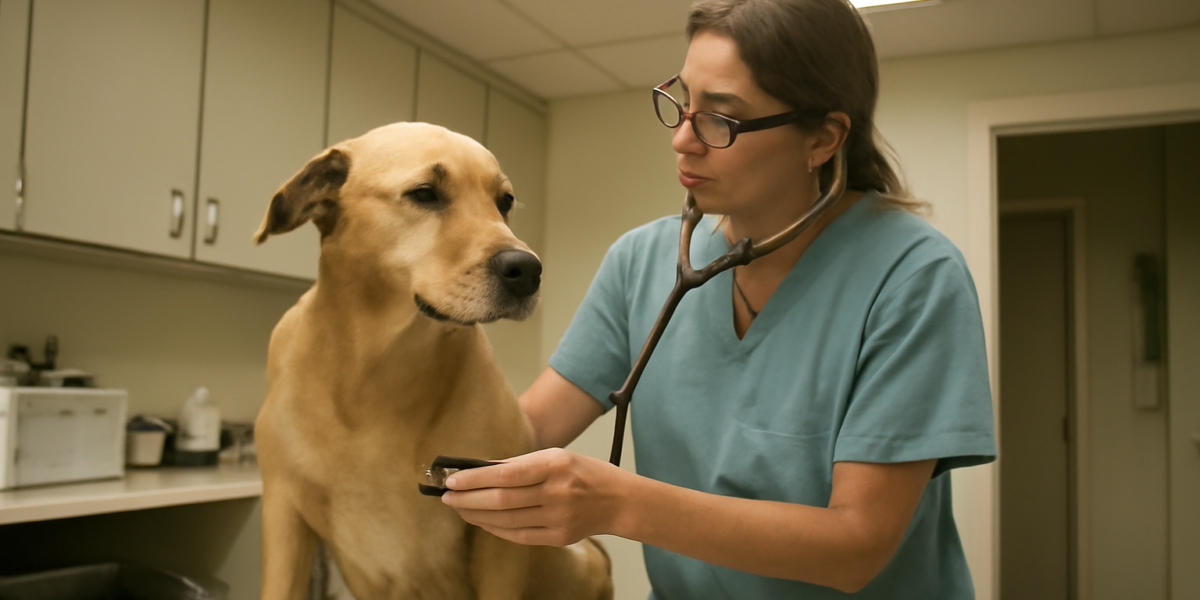
- Thorough physical examination including careful auscultation of heart and lungs
- Chest radiographs, often showing characteristic bronchial wall thickening
- Blood work to assess overall health
- Heartworm testing in regions where heartworm disease occurs
- Fecal examination for lungworm in some cases
Bronchoscopy with bronchoalveolar lavage is sometimes performed to obtain samples for cytology and culture, particularly in cases that are not responding to standard treatment or where the diagnosis is uncertain. This procedure is performed under anesthesia by veterinarians with appropriate equipment and expertise.
Treatment with Anti-Inflammatory Medications
The cornerstone of treatment is reducing airway inflammation. Glucocorticoids (corticosteroids) are the most commonly used medications, given orally to control inflammation. Prednisone or prednisolone is typical, started at higher doses to control symptoms and then tapered to the lowest dose that maintains comfort.
Inhaled corticosteroids are an alternative or adjunct for some dogs. Delivered through a special veterinary inhaler with a spacer chamber and face mask, inhaled medications act directly on the airways with fewer systemic side effects. Many owners find inhaled therapy more practical for long-term use.
Long-term corticosteroid therapy has potential side effects including increased thirst and urination, increased appetite, weight gain, panting, and over time, immune suppression and other systemic effects. Your veterinarian will discuss these and tailor the lowest effective dose. Periodic monitoring with bloodwork helps catch any complications early.
Bronchodilators and Other Medications
Bronchodilators, which relax the smooth muscle in airway walls, are used in some dogs to improve airflow. Theophylline and terbutaline are common oral options. Inhaled bronchodilators such as albuterol provide rapid relief during episodes of significant respiratory difficulty and can be given through a face mask and spacer.
Antitussive medications (cough suppressants) may help dogs with severe coughing fits, though they are used cautiously because suppressing the cough completely can allow mucus to accumulate in the airways. Hydrocodone or butorphanol may be prescribed by your veterinarian for select cases.
Antibiotics are reserved for documented secondary bacterial infections rather than used routinely. Bronchoalveolar lavage culture helps identify when infection is contributing and which antibiotic is appropriate. Routine antibiotic use does not help most chronic bronchitis dogs and can promote resistance.
Environmental and Lifestyle Modifications
Avoiding airway irritants is one of the most underappreciated parts of management. Common irritants to eliminate or reduce include:
- Tobacco smoke (any household smoking should ideally cease)
- Aerosolized cleaning products and air fresheners
- Scented candles and incense
- Dusty environments
- Strong perfumes
- Wood smoke
Maintaining a healthy weight is critical. Obese dogs have significantly more respiratory difficulty than lean dogs with the same disease. Weight loss often produces noticeable improvement in coughing and exercise tolerance.
Use a harness rather than a neck collar for walks. Pressure on the neck from a collar can trigger or worsen coughing in dogs with airway disease. A properly fitted harness distributes pressure across the chest without compressing the trachea.
Managing Acute Flare-Ups
Despite good baseline management, dogs with chronic bronchitis sometimes experience flare-ups with worsened coughing, increased breathing effort, and reduced exercise tolerance. Triggers may include respiratory infections, exposure to irritants, weather changes, or stress.
Flare-ups typically need temporarily increased doses of medications, sometimes combined with antibiotics if secondary infection is suspected. Your veterinarian can guide you on when home adjustments are appropriate and when an in-person visit is needed. Develop an action plan in advance so you know what to do when symptoms worsen.
Severe respiratory distress is an emergency. Signs include open-mouth breathing, blue or pale gum color, severe difficulty breathing, or collapse. Seek immediate veterinary care for any of these signs.
Monitoring at Home
Track your dog’s resting respiratory rate at home. Count breaths per minute when your dog is sleeping or quietly resting. The normal resting rate for most dogs is below thirty breaths per minute. Sustained increases above this baseline can signal worsening disease and warrant veterinary contact.
Note the frequency and character of coughing in a journal. Dogs whose cough is improving on therapy can have medications adjusted to lower doses, while dogs whose cough is worsening may need more aggressive treatment. Information from home is invaluable to your veterinarian.
Watch for signs of secondary infection: fever (if you have a thermometer), lethargy, decreased appetite, thick yellow or green nasal discharge, or sudden worsening of symptoms. These warrant prompt veterinary evaluation.
Long-Term Outlook
Chronic bronchitis in dogs is generally not curable, but most dogs do well with consistent management. Many maintain good quality of life for years with appropriate medication, environmental control, and weight management. The disease tends to be slowly progressive, and treatment plans typically need adjustment over time.
Dogs with concurrent diseases (such as heart disease or tracheal collapse) often have more challenging courses. Comprehensive management of all underlying conditions produces the best outcomes. Coordinating care between multiple specialists is sometimes valuable for complex cases.
For broader pet health reading, the dog care blog covers related conditions. If you are considering adopting a senior dog or one with respiratory disease, the adopt a dog hub offers guidance on understanding chronic disease management.
Related Conditions
Chronic bronchitis often coexists with other respiratory and cardiovascular diseases. Tracheal collapse is common in small breed dogs and can produce a similar cough. Heart disease, particularly mitral valve disease, may produce cough and respiratory difficulty that overlaps with bronchitis symptoms. Pulmonary hypertension can develop secondary to chronic respiratory disease.
Distinguishing between these conditions, and identifying when more than one is contributing, is part of comprehensive evaluation. Many dogs benefit from coordinated care addressing multiple coexisting conditions rather than focusing on bronchitis alone.
Frequently Asked Questions
Is chronic bronchitis curable?
Most cases are not curable but are highly manageable. With consistent treatment, environmental control, and weight management, most dogs maintain good quality of life. The disease tends to be slowly progressive over years.
Will my dog need lifelong steroids?
Many dogs do require long-term anti-inflammatory medication, though the dose is typically tapered to the lowest effective level. Inhaled steroids are an option for some dogs and have fewer systemic side effects than oral medication. Your veterinarian will tailor the plan to your dog.
Can I give my dog human cough medicine?
No. Many human cough medications contain ingredients that are unsafe for dogs. Use only medications specifically prescribed by your veterinarian for your dog.
Why does my dog cough more after exercise?
Increased airflow and depth of breathing during exercise can trigger coughing in dogs with airway disease. This does not necessarily mean exercise is harmful, though intense exercise should be avoided. Moderate, regular activity is usually beneficial.
Should I switch from a collar to a harness?
Yes. Pressure from a collar on the neck can trigger or worsen coughing. A properly fitted harness distributes pressure across the chest and reduces airway irritation. This simple change often produces noticeable improvement.
When should I call my veterinarian?
Call for any sudden worsening of cough, increased respiratory rate at rest, breathing difficulty, lethargy, or signs of infection. For dogs with stable chronic bronchitis, routine rechecks every six to twelve months allow medication adjustments and monitoring of progression.


