
Last updated: May 6, 2026
In this article
Why Floppy-Eared Dogs Need Extra Ear Care
Breeds like Basset Hounds, Cocker Spaniels, Beagles, Labrador Retrievers, and Golden Retrievers all share one trait that makes ear care essential: floppy ears. Learning to properly clean floppy eared dog ears can prevent painful infections and expensive veterinary bills.
Upright ears allow air to circulate freely through the ear canal, keeping the environment dry. Floppy ears create a closed, warm, moist environment — the perfect breeding ground for bacteria and yeast. Add in the fact that many floppy-eared breeds also produce more ear wax, and you have a recipe for chronic ear issues.
Regular ear cleaning is not just about hygiene. It is a health practice that can save your dog from recurrent infections, hearing damage, and the misery of constantly itchy, painful ears.
How Often Should You Clean Your Dog’s Ears
For most floppy-eared dogs, a thorough ear cleaning every one to two weeks is ideal. Dogs who swim frequently, live in humid climates, or have a history of ear infections may benefit from weekly cleaning or even a quick dry-out after every water exposure.
Over-cleaning can also be a problem. Cleaning too aggressively or too frequently can strip the ear canal of protective natural oils and cause irritation. Aim for a consistent routine rather than sporadic deep cleans.
Between cleanings, do a quick visual and sniff check every few days. Lift the ear flap and look inside. A healthy ear should be pale pink with minimal wax and no strong odor. This quick check takes seconds and helps you catch problems early.
What You Will Need
Gather your supplies before you start so the process is smooth and stress-free for your dog:
- Veterinary-approved ear cleaning solution. Choose a product specifically formulated for dogs. Look for solutions that contain a drying agent (like boric acid or isopropyl alcohol in safe concentrations) to help evaporate residual moisture. Avoid hydrogen peroxide, vinegar, or alcohol-based home remedies, which can irritate sensitive ear tissue.
- Cotton balls or gauze pads. These are gentle on the ear canal. Never use cotton swabs (Q-tips) inside the ear canal — they can push debris deeper and risk puncturing the eardrum.
- Treats. Lots of them. Pair ear cleaning with rewards to keep your dog cooperative and build positive associations.
- A towel. Your dog will shake their head during cleaning, and ear solution will fly. A towel protects your clothes and makes cleanup easier.
If your dog has never had their ears cleaned before or is resistant to ear handling, spend a few days simply touching and lifting the ear flaps during petting sessions, rewarding calm behavior each time.
Step-by-Step Ear Cleaning Process
Follow these steps for a safe and effective clean. The entire process takes about five minutes per ear once you and your dog are accustomed to the routine.
- Position your dog comfortably. Have your dog sit or lie down. If your dog is fidgety, have a helper gently hold them or use a lick mat with peanut butter as a distraction.
- Lift the ear flap. Gently fold the ear flap back to expose the ear canal. Take a quick look inside — if you see heavy discharge, strong odor, redness, or swelling, skip the cleaning and schedule a vet visit instead. Cleaning an infected ear can be painful and may worsen the infection.
- Apply the cleaning solution. Hold the ear flap up and squeeze enough solution into the ear canal to fill it. You should be able to see the liquid in the canal opening. Do not let the bottle tip touch the inside of the ear to avoid contamination.
- Massage the base of the ear. Fold the ear flap down and gently massage the base of the ear (the cartilage below the ear opening) for 20 to 30 seconds. You should hear a squishing sound as the solution breaks up debris inside the canal. This is the most important step.
- Let your dog shake. Step back (or hold a towel up) and let your dog shake their head. The shaking helps expel loosened debris and excess solution from deep in the canal.
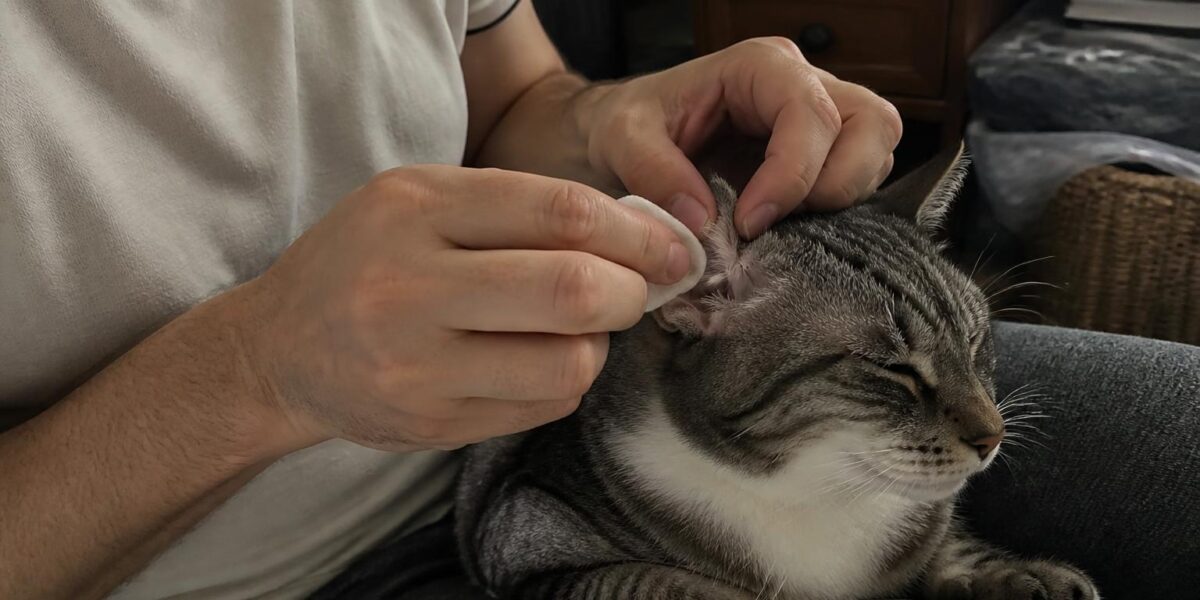
- Wipe the visible ear. Use a cotton ball or gauze pad to gently wipe out the ear flap and the visible portion of the ear canal opening. Remove any debris and excess solution you can see. Do not insert anything deep into the canal.
- Repeat on the other ear. Use a fresh cotton ball for the second ear to avoid transferring bacteria.
- Reward your dog. Offer treats and praise. Making ear cleaning a positive experience ensures future sessions go smoothly.
Signs of an Ear Infection
Even with regular cleaning, floppy-eared dogs can develop ear infections. Knowing the signs means faster treatment and less suffering for your dog.
Watch for:
- Persistent head shaking or tilting
- Scratching at one or both ears frequently
- Red, swollen, or hot ear tissue
- Dark brown, yellow, or bloody discharge
- A strong, yeasty or foul odor from the ear
- Whimpering or pulling away when the ear is touched
- Loss of balance or coordination (in severe cases)
If you notice any of these signs, do not attempt to treat the infection at home. Ear infections can be bacterial, yeast-based, or caused by ear mites, and each type requires different medication. Your veterinarian will examine the ear, possibly take a sample for microscopy, and prescribe the appropriate treatment.
Untreated ear infections can spread to the middle and inner ear, causing chronic pain, hearing loss, and neurological symptoms. Early veterinary care is always the safest approach.
Preventing Ear Problems
Prevention is far easier (and cheaper) than treatment. Beyond regular cleaning, these habits help keep your floppy-eared dog’s ears healthy:
Dry ears after swimming or bathing. After any water exposure, gently dry the inside of the ear flap with a cotton ball and use a drying ear solution. Trapped moisture is the number one cause of yeast infections in floppy-eared breeds.
Keep ear hair trimmed. Some breeds grow thick hair inside the ear canal that traps moisture and debris. Ask your groomer to carefully trim or pluck excess ear hair during grooming appointments. Not all breeds benefit from ear hair removal, so check with your vet about what is appropriate for your dog’s breed.
Watch for allergies. Food and environmental allergies are a leading cause of chronic ear infections in dogs. If your dog has recurring ear problems despite good cleaning habits, talk to your veterinarian about allergy testing. Addressing the underlying allergy can break the cycle of repeat infections.
Skip the home remedies. Apple cider vinegar, coconut oil, and other popular home remedies can irritate the delicate ear tissue and delay proper treatment. Stick with veterinary-approved products. If you recently adopted a floppy-eared dog, ask your vet to recommend specific ear care products suited to your dog’s breed and ear type.
Making Ear Cleaning Less Stressful
Many dogs dislike ear cleaning, but with patience and positive reinforcement, most learn to tolerate it — and some even enjoy the attention.
Start by handling your dog’s ears frequently outside of cleaning sessions. Touch, lift, and gently rub the ears during calm moments, rewarding each interaction with treats. This normalizes ear handling so it does not only happen when something uncomfortable is about to occur.
Keep sessions quick and upbeat. A fast, confident clean is less stressful than a slow, tentative one. Talk to your dog in a calm, encouraging voice throughout the process.
If your dog has had a previous ear infection, they may associate ear touching with pain. Go extra slowly with desensitization and consider having your vet clean the ears during the next appointment so your dog’s first few experiences with clean ears are handled by a professional.
For dogs with severe handling anxiety, working with a positive-reinforcement trainer on cooperative care techniques can transform grooming and medical procedures from a battle into a partnership.
Frequently Asked Questions
Can I use baby wipes to clean my dog’s ears?
Baby wipes can be used to gently wipe the outer ear flap but should not replace a proper ear cleaning solution for the canal. They do not have drying agents and may contain fragrances or chemicals that irritate the ear. For anything beyond a surface wipe, use a product designed for canine ears.
My dog shakes their head a lot after ear cleaning. Is that normal?
Yes, head shaking immediately after cleaning is completely normal — it is how your dog expels excess solution and loosened debris from the ear canal. If the head shaking continues for more than an hour or persists between cleanings, it may indicate irritation or an underlying issue that needs veterinary attention.
Should I clean my dog’s ears if they have an active infection?
Not without veterinary guidance. Cleaning an infected ear can be painful and may push infected debris deeper into the canal or rupture blisters. See your vet first for a diagnosis and treatment plan. They will advise you on whether and how to clean during treatment.
Are some floppy-eared breeds more prone to ear infections than others?
Yes. Cocker Spaniels, Basset Hounds, Shar-Peis, and breeds with narrow or hairy ear canals tend to be most affected. Labrador Retrievers and Golden Retrievers are also prone, especially those that swim frequently. Dogs with allergies of any breed are at higher risk regardless of ear shape.


