
Last updated: April 27, 2026
In this article
- Understanding Congestive Heart Failure
- How a Failing Heart Affects the Body
- Early Warning Signs
- How Veterinarians Diagnose Heart Failure
- Cornerstone Medications
- Diet and Daily Care
- Home Monitoring and Recognizing Cardiac Emergencies
- Stage-Based Treatment Approach
- Quality of Life and Long-Term Outlook
- Connecting Heart Failure to Other Cardiac Conditions
- When to Call Your Veterinarian
- Frequently Asked Questions
Understanding Congestive Heart Failure
Heart failure in dogs is not a single disease but the end result of various chronic heart conditions that gradually weaken the pump. The heart works harder to keep blood moving, and at some point fluid begins to back up into the lungs, the chest cavity, or the belly. That fluid buildup is what produces the cough, breathing trouble, and bloated belly that owners notice.
The two most common underlying causes are degenerative valve disease, often the mitral valve in small to medium breeds, and dilated cardiomyopathy, more common in large and giant breeds. Both progress slowly, often over years, and many dogs live well for a long time before the heart struggles to keep up.
Catching the early signs and starting treatment at the right time gives your dog the best chance at a comfortable, active life. Modern cardiac medications, careful monitoring, and supportive home care can extend quality time meaningfully, often by months to years.
How a Failing Heart Affects the Body
The heart has two sides, and each can fail in its own way. Left-sided heart failure, the most common pattern in dogs, causes fluid to back up into the lungs. That manifests as coughing, especially at night, and labored breathing. Right-sided failure pushes fluid into the abdomen and sometimes the chest, producing a swollen belly and exercise intolerance. Many dogs eventually have elements of both.
The body tries to compensate, raising heart rate, narrowing blood vessels, and retaining fluid to maintain blood pressure. These responses help in the short term but worsen the situation over time, which is why the disease tends to progress without treatment. Cardiac medications work largely by easing those compensations.
Underlying valve problems, weakened heart muscle, abnormal rhythms, or a combination of all three can lead to congestive failure. Your veterinarian’s first job is figuring out which is driving your individual dog’s disease, because treatment differs depending on the cause.
Early Warning Signs
The earliest sign in many dogs is a soft cough, especially at night or after lying down. Some owners describe it as a throat-clearing or honking sound. As the disease progresses, the cough becomes more frequent, and breathing at rest may speed up.
Tiredness during normal walks, reluctance to climb stairs, or stopping mid-play to rest are often dismissed as aging but can be early signals. Some dogs faint briefly during excitement or exercise, which deserves prompt veterinary attention. A swelling belly, weight loss despite a normal appetite, or a slightly bluish tinge to the gums are later signs.
Counting your dog’s resting respiratory rate at home is one of the most useful tools you have. While your dog sleeps comfortably, count breaths for one minute. Most healthy dogs sleep at fewer than thirty breaths per minute. A consistent rate above thirty, especially if it is climbing, is a red flag that warrants a same-day vet call.
How Veterinarians Diagnose Heart Failure
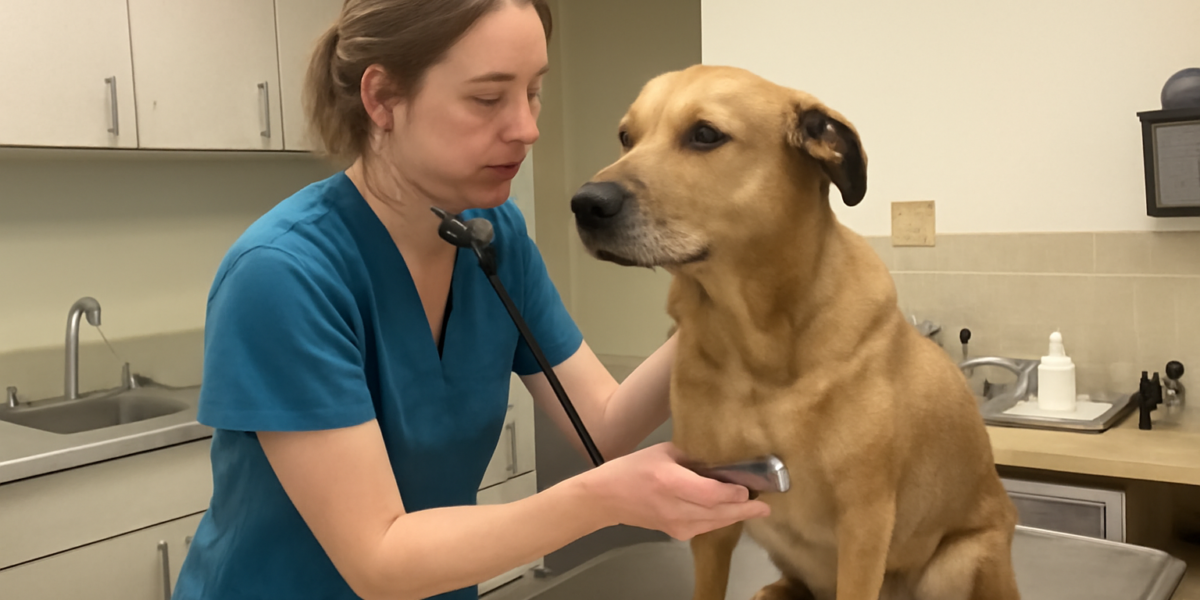
Diagnosis usually starts with auscultation, a careful listen to the heart with a stethoscope. A heart murmur, gallop sound, or arrhythmia points your veterinarian toward cardiac disease. Chest X-rays are typically the next step, looking for an enlarged heart silhouette and the bright pattern of fluid in the lungs.
Echocardiography, an ultrasound of the heart performed by a veterinary cardiologist or trained internist, provides far more detail. The cardiologist can see valve motion, measure chamber sizes, assess pumping strength, and identify the underlying cause. A blood test for NT-proBNP, a cardiac biomarker, can help confirm whether the heart is under strain.
An ECG is added when arrhythmias are suspected, and blood pressure and bloodwork round out the workup. With this complete picture, your veterinary team can determine the stage of disease and design a tailored treatment plan. Stage classification, often using the ACVIM scheme A through D, guides which medications are appropriate.
Cornerstone Medications
Several medications form the backbone of heart failure treatment. Pimobendan strengthens heart contraction and dilates blood vessels, easing the heart’s workload. Furosemide and other diuretics pull excess fluid out of the lungs and abdomen, relieving cough and breathing trouble. ACE inhibitors such as enalapril or benazepril reduce harmful hormonal compensations.
Spironolactone, another diuretic with helpful effects on cardiac remodeling, is often added in moderate to advanced disease. Anti-arrhythmic drugs are used when rhythm problems develop. Specific dosing is highly individual and your veterinarian will calculate amounts based on your dog’s weight, kidney function, and disease stage; do not adjust doses on your own.
Heart failure dogs typically take several medications at once, and the regimen can shift over time as the disease progresses. Pill organizers, medication apps, or a simple chart on the fridge help busy households stay on schedule. Skipping doses can cause sudden decompensation.
Diet and Daily Care
Diet plays a meaningful supportive role. Most dogs with heart disease benefit from moderate sodium restriction; ask your veterinarian for specific food recommendations rather than assuming a “low salt” label is enough. Many therapeutic cardiac diets are formulated with appropriate sodium levels and added cardiac-supportive nutrients.
Maintaining a healthy weight is important, since obesity makes the heart work harder. So is preventing weight loss in late-stage disease, where appetite often falters. Highly palatable, easy-to-chew foods help, and your veterinarian may suggest appetite stimulants if needed.
Supplements like omega-3 fatty acids and taurine are sometimes recommended depending on the underlying cause. Skip human supplements unless your vet has approved them; doses and formulations matter. Hydration, gentle exercise tailored to comfort, and a calm home environment all support a struggling heart.
Home Monitoring and Recognizing Cardiac Emergencies
The single most powerful home monitoring tool is the sleeping respiratory rate. Watch your dog’s chest rise and fall while they sleep peacefully, count for sixty seconds (or thirty seconds and double it), and log the number daily. A few apps make this easy, and a simple notebook works just as well. Trends matter more than any single number. A few breaths above baseline on a hot day is not alarming; a steady climb over several days is. If the rate exceeds thirty consistently, or jumps significantly above your dog’s personal baseline, call your veterinarian. Catching fluid buildup early often means a small medication adjustment rather than an emergency visit.
Other useful at-home checks include monitoring appetite, energy, weight, and any cough patterns. Photos or short videos of unusual symptoms help your vet during phone consultations. Keeping a simple log brings clarity to long visits and busy phone calls.
Some symptoms warrant urgent veterinary care, often at an emergency hospital if your regular clinic is closed. Severe difficulty breathing, gums that turn pale, gray, or blue, collapse, persistent fast or labored breathing at rest, and inability to lie down comfortably all suggest acute decompensation. A swollen belly that develops quickly, sudden inability to walk, or a rapid heart rate that you can feel pounding against the chest are also urgent signs. Bring your dog’s medication list with you so the emergency team knows exactly what they are already taking. While transporting, keep your dog calm, cool, and upright if possible. Stress worsens cardiac symptoms, so soft voices and gentle handling help. Most acute episodes can be stabilized with prompt care, and many dogs return home within a day or two on adjusted medications.
Stage-Based Treatment Approach
Veterinary cardiologists use staging to match treatment to disease severity. Stage A includes dogs at risk based on breed (such as Cavalier King Charles Spaniels) but with no current heart disease; the focus is monitoring. Stage B1 is structural disease without enlargement, also monitoring. Stage B2 is enlargement without symptoms, where pimobendan often becomes appropriate.
Stage C is active heart failure, where multiple medications come together: pimobendan, diuretics, ACE inhibitors, and often spironolactone. Stage D is advanced refractory failure, where higher diuretic doses, additional medications, and creative combinations are used to maintain comfort.
Recheck visits at the right intervals, often every three to six months once stable, allow your veterinarian to fine-tune the regimen. Bloodwork to monitor kidney function and electrolytes, repeat chest X-rays, and updated ultrasound exams keep treatment on track.
Quality of Life and Long-Term Outlook
Many dogs with heart failure live a year or more after diagnosis, and some considerably longer, particularly when treatment starts early and medications are adjusted thoughtfully. Quality of life often remains good for most of that time, with occasional adjustments and the occasional flare-up.
Eventually, every patient reaches a point where the disease outpaces treatment. When breathing trouble cannot be eased even with maximum therapy, when appetite stays low, when the joy seems to drain from daily life, conversations about humane euthanasia become part of compassionate care. Your veterinarian can help you assess where your dog is on that spectrum.
Until that point, focus on the good days. Short walks at the dog’s pace, favorite foods (within sodium limits), gentle play, and lots of loving companionship are what your dog will remember. So will you.
Connecting Heart Failure to Other Cardiac Conditions
Heart failure is closely related to other cardiac conditions worth understanding. Heart murmurs in dogs are often the first sign of underlying valve or muscle disease, sometimes years before failure develops. Understanding murmurs helps owners catch problems early and start the right monitoring.
Some breeds, particularly small ones, also develop tracheal collapse, which can mimic or coexist with heart disease and cause coughing. Sorting out which condition is driving symptoms takes a careful workup. Your veterinarian can guide that process.
For broader senior dog care, the dog care blog covers companion topics like joint health, dental care, and cognitive support, all of which become more relevant as dogs age. Caring for a heart patient often means juggling several aspects of senior wellness at once.
When to Call Your Veterinarian
Call promptly if you notice a new cough, exercise intolerance, fainting, increased breathing rate at rest, or a swollen belly. If your dog already has a diagnosis, call when the resting respiratory rate climbs significantly above baseline, when cough worsens, or when energy drops noticeably.
Skip the wait-and-see for severe breathing trouble, collapse, or pale gums; head to the nearest emergency clinic. Bring your medication list and any home monitoring logs so the team can act quickly with full information.
For ongoing care, keep regular recheck appointments even when your dog seems stable. Heart disease is a moving target, and small adjustments at the right time often prevent bigger crises later. You and your veterinarian are partners in this work.
Frequently Asked Questions
Is congestive heart failure curable in dogs?
Heart failure itself is not curable, but it is manageable. With appropriate medications, monitoring, and supportive care, many dogs live comfortably for months to years after diagnosis.
How can I count my dog’s breathing rate at home?
Wait until your dog is sleeping peacefully. Count the rise and fall of the chest for one full minute. Healthy dogs typically sleep at fewer than thirty breaths per minute; consistent rates above that warrant a vet call.
Should I cut all salt out of my dog’s diet?
Moderate sodium restriction helps, but extreme restriction is rarely necessary and can backfire. Your veterinarian will recommend a specific cardiac diet or appropriate guidelines for your dog’s stage of disease.
Can my dog still exercise?
Light, regular exercise tailored to your dog’s comfort is usually beneficial. Avoid hot, humid weather and intense bursts of activity. Let your dog set the pace, and stop if they seem tired.
Are some breeds more prone to heart failure?
Yes. Small breeds like Cavalier King Charles Spaniels and Dachshunds often develop valve disease, while large breeds such as Doberman Pinschers and Great Danes are predisposed to dilated cardiomyopathy. Breed-aware screening helps with early detection.
How quickly do dogs progress through the stages?
Progression varies widely. Some dogs stay in early stages for years; others advance over months. Regular cardiac rechecks help your veterinarian time medication changes accurately for your individual dog.


