
Last updated: May 6, 2026
In this article
- What Is Cytopoint (Lokivetmab)?
- How Cytopoint Works: Targeting IL-31
- How Fast Does Cytopoint Work?
- How Long Does Cytopoint Last?
- Side Effects of Cytopoint in Dogs
- How Much Does Cytopoint Cost Per Injection?
- Cytopoint vs Apoquel: How Do They Compare?
- Which Dogs Is Cytopoint Best For?
- Can Cytopoint Be Combined with Other Treatments?
- Long-Term Use Safety of Cytopoint
- Dog Breeds That Benefit Most from Cytopoint
- Frequently Asked Questions
- Final Thoughts
Cytopoint for Dogs: The Allergy Injection That Stops Itching Fast
Watching a dog scratch, chew, and lick itself raw is one of the more frustrating experiences in pet ownership — frustrating because you can see the discomfort, and nothing you have tried seems to give lasting relief. If your dog suffers from allergic dermatitis, your veterinarian may have mentioned Cytopoint for dogs as a treatment option. It is one of the more significant advances in veterinary dermatology in recent years, and for many dogs, it has been genuinely life-changing.
This guide covers everything you need to know about Cytopoint: what it is, the science behind it, how quickly it works, how long it lasts, potential side effects, cost expectations, how it compares to Apoquel, and which dogs stand to benefit the most.
What Is Cytopoint (Lokivetmab)?
Cytopoint is the brand name for lokivetmab, a monoclonal antibody therapy developed by Zoetis specifically for dogs with atopic dermatitis — the chronic, itchy skin condition triggered by environmental allergens such as pollen, dust mites, mold spores, and grass. Unlike traditional allergy medications that work by broadly suppressing the immune system, Cytopoint takes a highly targeted approach. It is a biologic therapy, meaning it is derived from living cells and designed to mimic natural immune processes.
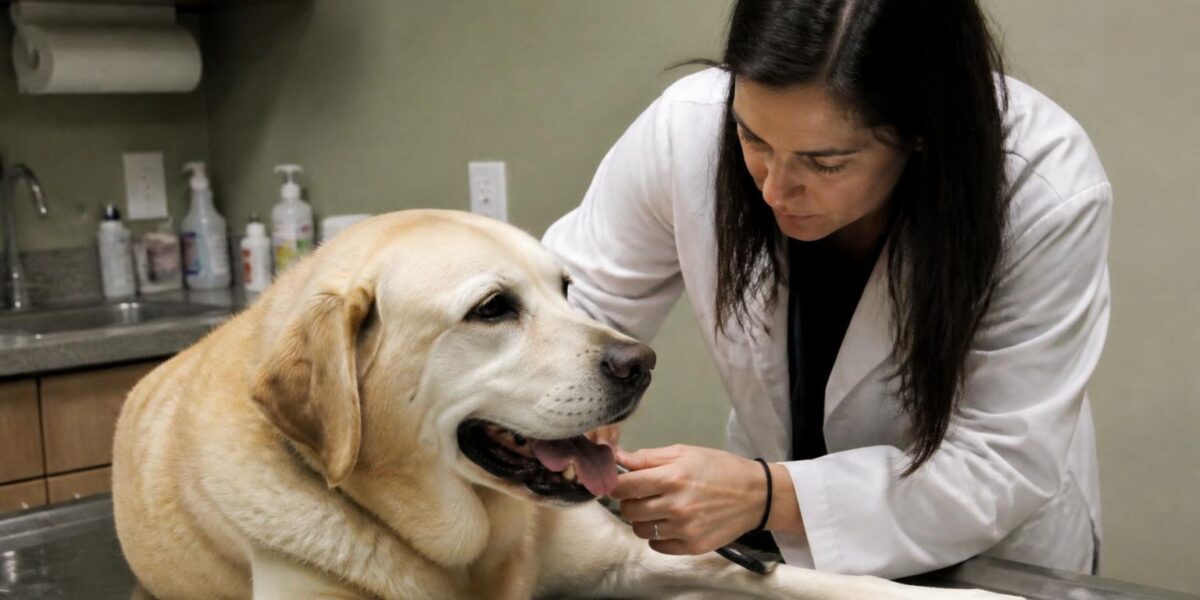
Cytopoint is administered as a subcutaneous injection at your veterinarian’s office. It is not a pill, a topical cream, or a shampoo. The injection itself is quick — most dogs barely notice it — and there is no need for daily dosing at home afterward. Once the injection is given, the medication goes to work on its own. For dog owners who struggle with giving daily pills or applying topical treatments to a squirming, uncomfortable dog, this simplicity is one of Cytopoint’s most appealing qualities.
The drug was approved by the USDA in 2016 and has since become one of the most widely prescribed treatments for canine allergic itch. It is available only through veterinary clinics and cannot be purchased over the counter or online. If you are exploring treatment options for an itchy dog, a conversation with your vet is the essential first step. You can also browse our dog breeds directory to learn which breeds are most prone to allergic skin conditions.
How Cytopoint Works: Targeting IL-31
To understand why Cytopoint for dogs is so effective, it helps to understand what causes allergic itch in the first place. When a dog with atopic dermatitis encounters an allergen, the immune system overreacts and produces a signaling protein called interleukin-31 (IL-31). IL-31 is a cytokine — a chemical messenger — that binds to itch receptors on nerve cells in the skin. Once those receptors are activated, they send an itch signal to the brain, and the dog begins scratching, biting, and licking.
Cytopoint is a caninized monoclonal antibody engineered to seek out and neutralize IL-31 before it can reach those nerve receptors. Think of it as an interceptor. The antibody binds to free-floating IL-31 in the bloodstream and effectively removes it from circulation. With IL-31 neutralized, the itch signal never reaches the brain, and the dog stops scratching — not because the sensation is being masked, but because the itch pathway has been interrupted at its source.
This mechanism is important for another reason: because Cytopoint targets only IL-31 and does not suppress the broader immune system, it avoids many of the side effects associated with steroids and other immunosuppressive drugs. The dog’s ability to fight infections, heal wounds, and respond to vaccines remains intact. It is a precision tool rather than a blunt instrument.
How Fast Does Cytopoint Work?
One of the most remarkable things about Cytopoint is its speed. Most dogs experience noticeable relief from itching within 24 hours of the injection. Many veterinarians and dog owners report seeing improvement even sooner — sometimes within eight to twelve hours. For a dog that has been miserable for weeks or months, this rapid onset of relief can feel almost miraculous.
Clinical studies have demonstrated that Cytopoint significantly reduces pruritus (itching) scores within one day of administration, with the effect continuing to improve over the first week. By the end of the first week, the full therapeutic benefit is typically established. Dogs that were scratching constantly, losing fur in patches, and developing hot spots often settle into a calm, comfortable state within just a few days.
This speed makes Cytopoint particularly valuable during acute flare-ups — for example, when a seasonal allergen hits hard and a dog goes from mildly itchy to deeply uncomfortable in a short period. Rather than waiting days or weeks for an oral medication to build up in the system, a single injection can bring the situation under control almost immediately.
How Long Does Cytopoint Last?
A single Cytopoint injection typically provides itch relief for four to eight weeks, with most dogs falling somewhere in the middle of that range. The duration varies depending on the individual dog’s metabolism, the severity of their allergies, and the level of allergen exposure during that period.
Some dogs get a solid eight weeks of relief from every injection. Others may notice the itch starting to return around the four-week mark. Your veterinarian will work with you to determine the ideal injection schedule for your dog. It is generally safe to administer Cytopoint as frequently as once per month if needed, though most dogs do well on a schedule of every six to eight weeks.
Seasonality also plays a role. Dogs with spring and fall pollen allergies may only need Cytopoint during those peak seasons, while dogs with year-round dust mite or mold allergies may benefit from consistent, ongoing treatment. The flexibility of the dosing schedule is one of Cytopoint’s practical advantages — it can be tailored to your dog’s specific pattern of symptoms.
Side Effects of Cytopoint in Dogs
One of the strongest selling points of Cytopoint is its remarkably clean side effect profile. Because it is a biologic therapy that targets a single cytokine rather than broadly suppressing immune function, side effects are very few and very rare.
In clinical trials, the most commonly reported side effects were mild and transient. These included occasional lethargy in the first day or two after injection, mild gastrointestinal symptoms such as vomiting or diarrhea, and minor swelling or soreness at the injection site. These effects, when they occur at all, typically resolve on their own within 24 to 48 hours.
Cytopoint does not cause the increased thirst, increased urination, increased appetite, or behavioral changes commonly associated with corticosteroids like prednisone. It does not carry the liver enzyme elevation concerns that can accompany long-term use of some oral medications. And because it does not broadly suppress the immune system, it does not increase susceptibility to infections the way steroids can.
In rare cases, dogs may develop an immune response to the antibody itself, which can reduce its effectiveness over time. If you notice that Cytopoint seems to be working for a shorter duration or providing less relief than it previously did, let your veterinarian know. They can evaluate whether this is occurring and discuss alternative strategies if needed.
How Much Does Cytopoint Cost Per Injection?
The cost of a Cytopoint injection varies depending on your geographic location, the veterinary clinic, and — most significantly — the size of your dog. Cytopoint is dosed by weight, so larger dogs require more of the medication and the cost scales accordingly.
As a general guideline, you can expect to pay roughly:
- Small dogs (under 20 lbs): $50–$100 per injection
- Medium dogs (20–40 lbs): $100–$150 per injection
- Large dogs (40–80 lbs): $150–$250 per injection
- Giant breeds (over 80 lbs): $250–$350 or more per injection
These figures typically include the cost of the medication itself and the veterinary office visit for administration. Some clinics may charge the exam fee separately if other services are being provided at the same time. Over the course of a year, a dog receiving injections every six to eight weeks might accumulate annual costs ranging from roughly $400 for a small dog to over $2,000 for a giant breed.
While this is not inexpensive, many owners find it cost-competitive with daily oral medications when you factor in the convenience of not having to administer pills at home and the reduced need for follow-up visits related to secondary skin infections, hot spots, and other complications of uncontrolled itching.
Cytopoint vs Apoquel: How Do They Compare?
The comparison between Cytopoint and Apoquel (oclacitinib) is one of the most common questions in veterinary dermatology. Both are effective treatments for allergic itch in dogs, but they work in fundamentally different ways and have distinct profiles.
Key Differences at a Glance
- Type: Cytopoint is an injectable monoclonal antibody; Apoquel is a daily oral tablet (a Janus kinase inhibitor).
- Target: Cytopoint targets only IL-31; Apoquel inhibits JAK1 and JAK3 enzymes, which affect multiple inflammatory pathways.
- Administration: Cytopoint requires a vet visit every 4–8 weeks; Apoquel is given at home twice daily for the first 14 days, then once daily.
- Speed: Both begin working within 24 hours, though Apoquel may provide slightly faster initial relief for some dogs.
- Side effects: Cytopoint has fewer reported side effects; Apoquel can cause vomiting, diarrhea, decreased white blood cell counts, and elevated liver enzymes with long-term use.
- Age restriction: Apoquel is approved only for dogs 12 months and older; Cytopoint has no minimum age restriction.
- Immune impact: Cytopoint does not suppress the immune system; Apoquel has some immunosuppressive effects.
Neither medication is universally better than the other. For dogs whose primary symptom is itch, Cytopoint is often preferred because of its targeted mechanism and minimal side effects. For dogs with significant skin inflammation in addition to itch, Apoquel’s broader anti-inflammatory action may provide more complete relief. Some veterinarians use both in combination for dogs with severe, difficult-to-control symptoms. The best choice depends on the individual dog’s condition, health history, and response to treatment.
Which Dogs Is Cytopoint Best For?
Cytopoint for dogs is most effective in cases where the primary complaint is itch driven by environmental allergies — atopic dermatitis. It is an excellent option for:
- Dogs with moderate to severe allergic itch who have not responded well to antihistamines, medicated shampoos, or other first-line treatments.
- Dogs who cannot tolerate oral medications due to gastrointestinal sensitivity or difficulty swallowing pills.
- Puppies and young dogs — Cytopoint has no minimum age restriction, making it one of the few options available for very young dogs with early-onset allergies.
- Dogs with concurrent health conditions — because Cytopoint does not suppress the immune system or burden the liver, it is often a safer choice for dogs with pre-existing liver disease, infections, or immune-mediated conditions.
- Senior dogs who are already taking multiple medications and would benefit from a treatment that is unlikely to cause drug interactions.
- Owners who prefer a hands-off approach — if daily pill administration is stressful for the dog or impractical for the owner, the convenience of a monthly or bimonthly injection is significant.
Cytopoint is less likely to be the right fit for dogs whose skin problems are driven by food allergies, bacterial or yeast infections, or parasites such as fleas or mites. While it will still reduce itch in those cases, the underlying cause needs to be addressed separately. A proper diagnosis from your veterinarian is essential before starting any treatment. If you are thinking about adding a dog to your family and want to be prepared for potential allergy concerns, take a look at the dogs available through our adoption page.
Can Cytopoint Be Combined with Other Treatments?
Yes — and in many cases, combining Cytopoint with other therapies produces the best results. Because Cytopoint works through a very specific mechanism and does not interact with most other medications, it can be safely used alongside a wide range of treatments.
Common combinations include:
- Cytopoint + medicated shampoos or topical sprays: Topical treatments can address surface-level skin issues such as bacterial overgrowth, yeast, and flaking while Cytopoint handles the itch from within.
- Cytopoint + antihistamines: For dogs with milder allergies, adding an antihistamine like diphenhydramine or cetirizine can extend the duration of itch relief between injections.
- Cytopoint + omega-3 fatty acid supplements: Fish oil and other omega-3 sources support skin barrier function and have mild anti-inflammatory properties that complement Cytopoint’s action.
- Cytopoint + allergen-specific immunotherapy (allergy shots): Immunotherapy addresses the root cause of allergies by gradually desensitizing the immune system, while Cytopoint manages symptoms during the months or years it takes for immunotherapy to reach full effect.
- Cytopoint + Apoquel: In severe cases, some dermatologists use both together for a period to bring symptoms under control before stepping down to one or the other.
Always consult your veterinarian before combining treatments. While Cytopoint is compatible with most medications, your vet needs the full picture of what your dog is taking to make safe, informed decisions.
Long-Term Use Safety of Cytopoint
One of the most common concerns pet owners have about any ongoing medication is whether it is safe to use indefinitely. For Cytopoint, the available evidence is reassuring. Long-term use of Cytopoint is considered safe based on extensive clinical trials and several years of real-world use since its approval.
Because Cytopoint is a monoclonal antibody that targets a single cytokine and does not suppress the broader immune system, it avoids the cumulative organ damage that can occur with long-term steroid use or the potential immune suppression associated with some oral medications. There is no evidence of liver damage, kidney damage, or increased cancer risk associated with prolonged Cytopoint use.
Dogs have been maintained on Cytopoint continuously for years without any increase in adverse events compared to short-term use. The antibody is naturally broken down and recycled by the body through normal protein metabolism, so it does not accumulate in tissues over time.
That said, ongoing monitoring is still good practice. Regular veterinary check-ups allow your vet to assess your dog’s skin condition, adjust the injection schedule as needed, and ensure that no new health issues have developed that might warrant a change in treatment approach. Allergies can evolve over a dog’s lifetime, and what works perfectly at age three may need adjustment at age eight.
Dog Breeds That Benefit Most from Cytopoint
While any dog can develop atopic dermatitis, certain breeds are genetically predisposed to environmental allergies and tend to be the ones that benefit most from Cytopoint. If you own one of these breeds and are seeing signs of chronic itch, it is worth discussing Cytopoint with your veterinarian early rather than exhausting less effective options first.
Breeds with higher rates of atopic dermatitis include:
- French Bulldogs — their skin folds and brachycephalic anatomy make them especially prone to skin irritation and allergic reactions.
- Labrador Retrievers — one of the breeds most commonly seen in veterinary dermatology clinics for allergic skin disease.
- Golden Retrievers — their dense double coats can trap allergens against the skin, intensifying reactions.
- Bulldogs (English) — similar to French Bulldogs, their skin structure makes them vulnerable to chronic dermatitis.
- German Shepherds — frequently affected by both environmental and food allergies.
- Boxers — known for sensitive skin and a high incidence of allergic conditions.
- West Highland White Terriers — one of the most allergy-prone breeds, with atopic dermatitis being almost expected in the breed.
- Pit Bull Terriers — commonly affected by environmental allergies that cause intense seasonal itching.
- Cocker Spaniels — prone to both ear infections and skin allergies, often occurring together.
- Shar-Peis — their unique skin structure creates an environment where allergic reactions can be particularly severe.
If you own any of these breeds and are noticing persistent scratching, paw licking, ear infections, or red and irritated skin, allergic dermatitis should be high on the list of possibilities. Explore our dog breeds directory for detailed profiles on these and other breeds, including health predispositions and care recommendations.
Frequently Asked Questions
Is Cytopoint a steroid?
No. Cytopoint is a monoclonal antibody, not a steroid. It does not suppress the immune system the way corticosteroids do, and it does not carry the same risk of side effects such as increased thirst, hunger, weight gain, or long-term organ damage. It works by targeting a single itch-causing protein (IL-31) rather than broadly dampening the immune response.
How soon after the first injection will I see results?
Most dogs show noticeable improvement within 24 hours of their first Cytopoint injection. Some dogs respond even faster, with reduced scratching visible within 8 to 12 hours. The full benefit typically develops over the first week.
Can Cytopoint be given to puppies?
Yes. Unlike Apoquel, which is only approved for dogs 12 months and older, Cytopoint has no minimum age restriction. It can be used in puppies that are showing signs of allergic itch, making it one of the few available treatment options for very young dogs.
Does Cytopoint work for food allergies?
Cytopoint can reduce itch caused by food allergies, but it does not treat the underlying food sensitivity. If your dog’s itching is driven by a food allergy, the most effective long-term approach is identifying and eliminating the offending ingredient through a veterinary-supervised elimination diet. Cytopoint can provide symptomatic relief while that process is underway.
What happens if Cytopoint stops working for my dog?
In some cases, dogs may develop antibodies against lokivetmab that reduce its effectiveness over time. If you notice the injection providing shorter or less complete relief, talk to your veterinarian. They may adjust the dosing schedule, switch to Apoquel, or recommend a combination approach. Having multiple effective options available means losing one does not leave you without alternatives.
Can I give Cytopoint and Apoquel at the same time?
In some situations, veterinary dermatologists do use Cytopoint and Apoquel together, particularly during severe flare-ups. This should only be done under veterinary supervision. Once symptoms are controlled, the goal is usually to step down to a single therapy for maintenance.
Does pet insurance cover Cytopoint?
Many pet insurance plans cover Cytopoint injections as part of treatment for diagnosed atopic dermatitis, provided the condition was not pre-existing at the time of enrollment. Coverage varies widely between insurers and plans, so check your specific policy or contact your insurance provider for details.
Are there any dogs that should not receive Cytopoint?
Cytopoint is considered safe for the vast majority of dogs. There are no known contraindications based on breed, age, or size. Dogs with known hypersensitivity to lokivetmab should not receive it, but this is extremely rare. Your veterinarian will evaluate your dog’s overall health before recommending treatment.
Final Thoughts
Cytopoint for dogs represents a meaningful step forward in how we manage allergic itch. Its targeted mechanism, rapid onset, minimal side effects, and convenient dosing schedule make it an outstanding option for dogs with atopic dermatitis — and for the owners who have been searching for something that actually works.
If your dog is struggling with chronic itching and you have not yet explored Cytopoint, bring it up at your next veterinary visit. Relief may be just one injection away. And if you are considering bringing an allergy-prone breed into your home, our adoption page is full of wonderful dogs looking for patient, informed families who are ready to give them the care they deserve.


