
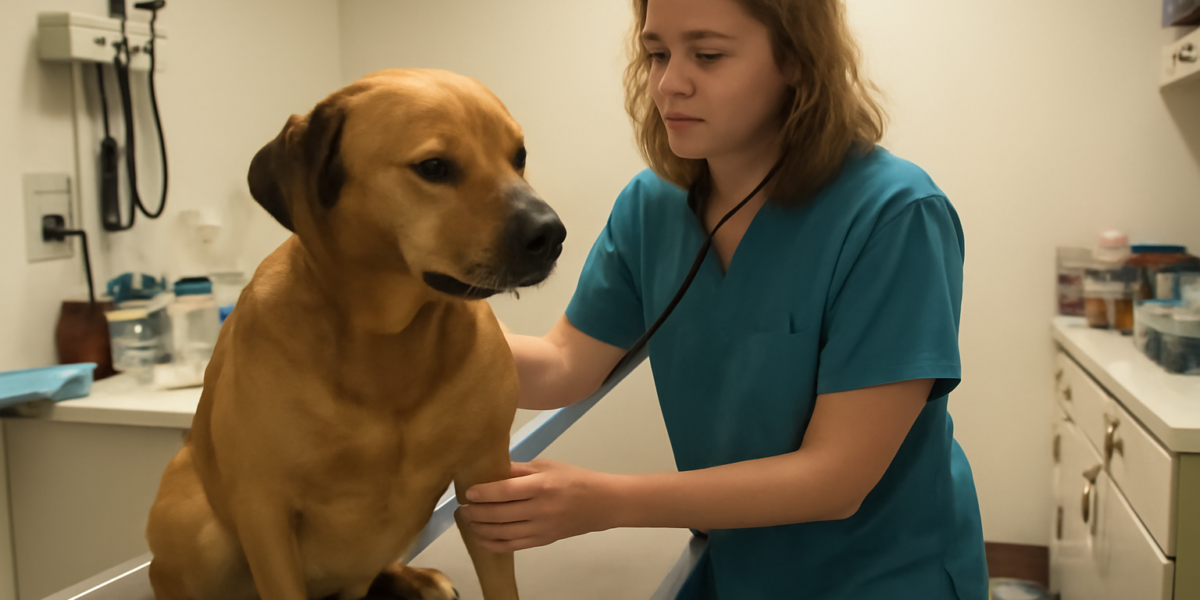
What Degenerative Myelopathy Is
Degenerative myelopathy in dogs is a slowly progressive disease of the spinal cord that gradually robs affected dogs of the ability to use their hind legs. It often gets compared to amyotrophic lateral sclerosis, or ALS, in people because both involve degeneration of the long pathways carrying signals between the brain and the limbs. The disease is not painful, which is one of the few mercies of an otherwise difficult diagnosis, but it does steadily change daily life.
In this article
- What Degenerative Myelopathy Is
- How the Disease Progresses
- Common Early Symptoms
- How Veterinarians Diagnose It
- Treatment and What Helps
- Mobility Aids That Make a Difference
- Bladder, Bowel, and Skin Care
- Daily Life and Quality of Life
- Related Conditions and Differential Diagnoses
- When to Call Your Veterinarian
- Frequently Asked Questions
The condition is most often seen in middle-aged to senior large-breed dogs, with German Shepherds and Boxers being among the most familiar examples. Pembroke Welsh Corgis are also strongly represented despite their small size. A genetic mutation in the SOD1 gene is associated with risk in many breeds, and DNA testing is available, though carrying the mutation does not guarantee disease will develop.
Owners typically describe a gradual, painless decline that started with a slight scuffing of one rear paw or a wobble after a long walk. Degenerative myelopathy dogs often face months to a couple of years of slow progression, and good supportive care can preserve quality of life for a meaningful stretch. Understanding what to expect helps families plan ahead.
How the Disease Progresses
The disease progresses in recognizable stages, although the pace varies between dogs. Early on, owners notice subtle hind-end weakness, occasional stumbling, and a slightly altered gait. The dog may drag a back paw briefly, leaving scuffed nails as evidence. At this stage many dogs are still active and seem largely themselves.
The middle stage brings clearer weakness. The dog may struggle to rise from lying down, sway when standing, and have difficulty climbing stairs or jumping into the car. Knuckling, where the paw flips onto its top surface, becomes more common, and worn nails tell the story even when the family does not see it happen. Many dogs adapt with remarkable grace, leaning on stronger areas to compensate.
Eventually the hind legs become unable to support weight without help, and the dog needs assistance to walk or stand. Late-stage disease can affect the front legs as well, and bladder and bowel control may become inconsistent. The whole journey often takes six months to two years from first signs, though both faster and slower courses occur.
Common Early Symptoms
The earliest signs are often dismissed as age. A previously bouncy dog seems to slow down on walks. A toenail or two becomes scuffed for no obvious reason. The dog occasionally crosses one back foot over the other when turning. Many owners look back later and realize they had been seeing subtle changes for months before the diagnosis.
As weakness becomes clearer, dogs may have trouble with smooth floors, slip when standing up, or take longer to settle into a comfortable lying position. They may sway slightly when standing still or walk with hind feet placed unusually wide apart. Some develop a characteristic shuffle, with the back legs no longer lifted cleanly with each step.
Importantly, degenerative myelopathy is not painful in most dogs. A dog who is yelping, limping favoring one leg, or showing signs of acute discomfort probably has a different problem, such as a disc disease or arthritis. Pain in a dog with hind-end weakness is a reason to revisit the diagnosis rather than assume the myelopathy is to blame.
How Veterinarians Diagnose It
Diagnosis is largely a process of elimination because there is no single test that confirms degenerative myelopathy in a living dog with certainty. Your veterinarian will perform a careful neurologic exam, looking for the characteristic pattern of upper motor neuron weakness in the hind end with intact pain sensation and a non-painful spine.
Imaging plays a key role in ruling out treatable causes that can look similar early on. MRI of the spine is often recommended to look for disc disease, tumors, or other compressive lesions. Spinal fluid analysis is sometimes added to rule out inflammatory disease. When imaging is normal and the neurologic pattern fits, degenerative myelopathy becomes the strong working diagnosis.
The SOD1 genetic test, available through several laboratories, is supportive but not definitive. A dog homozygous for the at-risk mutation is at higher risk of developing the disease, but some dogs with the genotype never develop clinical signs. The test is most useful in breeding decisions and as a piece of the puzzle in symptomatic dogs. Definitive confirmation of the disease is only possible on examination of the spinal cord after death.
Treatment and What Helps
There is no cure that reliably halts or reverses degenerative myelopathy. The realistic goal of treatment is to slow progression as much as possible and maintain quality of life. The single most important intervention, supported by clinical experience and several studies, is regular physical therapy.
Maintaining muscle mass and joint mobility through targeted exercises helps dogs stay functional longer. Underwater treadmill therapy, range-of-motion work, balance exercises, and structured walks are all valuable. Many veterinary rehabilitation centers offer dedicated programs for these dogs, and home exercise plans can be taught for ongoing daily work between visits.
Various supplements and medications, including B vitamins, antioxidants, and others, are sometimes recommended without strong evidence of benefit. They are generally safe to try, but families should be cautious about expensive regimens with little track record. Discussing options openly with your veterinarian helps separate hopeful guesses from interventions with real grounding.
Mobility Aids That Make a Difference
Mobility aids can transform daily life. Toe grips and rubber-bottomed booties improve traction on smooth floors. Non-slip rugs in main living areas reduce slipping. A simple sling under the belly helps families assist a dog up steps or out for a bathroom break. These changes can make the difference between a dog who hesitates to move and a dog who happily explores the home.
As the disease advances, a wheeled cart, often called a doggy wheelchair, can give a dog months or longer of active life when the back legs no longer support weight reliably. Properly fitted carts are surprisingly easy to use, and most dogs adapt within hours. They can run, play, and engage with the family in ways the disease would otherwise prevent.
Custom orthotics or boots help protect knuckled feet from repeated trauma. Raised food and water bowls reduce strain on the front end as the back end weakens. Ramps for the car or favorite couch preserve cherished routines. Resources at our dog care blog cover many of the practical adaptations families try.
Bladder, Bowel, and Skin Care
As the disease progresses, urinary and bowel control often becomes inconsistent. Some dogs simply cannot get up in time, while others lose the underlying nerve signals. Frequent bathroom breaks, often every few hours, help reduce accidents. Belly bands for males and washable diapers for either sex are tools many families use during the harder stretches.
Skin care matters because dogs who lie down for long stretches can develop pressure sores, especially over bony areas like the hips and elbows. Soft, well-padded bedding, regular position changes for dogs who cannot reposition themselves, and daily checks of the skin help prevent these problems. Wet fur from urine should be cleaned and dried promptly to avoid scalding.
Catheterization is sometimes needed for dogs who cannot empty their bladder, and your veterinarian can teach this if it becomes necessary. Constipation can also develop and may need stool softeners or dietary adjustments. The goal is comfort and dignity at every stage.
Daily Life and Quality of Life
Quality of life remains good for many dogs through the early and middle stages. Mental engagement, food enjoyment, family interaction, and comfort during rest all stay strong even as physical function declines. Owners often say their dog seems essentially the same person, just in a body that needs more help.
Adjusting expectations and routines is part of caregiving. Walks become shorter and slower. Bathroom trips happen on schedule rather than when the dog asks. Carrying a small dog or supporting a larger one with a sling becomes ordinary. The bond often deepens through this kind of close care.
Honest, ongoing conversations about quality of life with your veterinary team help mark when the balance starts to shift. Reading about cognitive dysfunction in senior dogs and other conditions of older pets helps keep the bigger picture in view, since many dogs with degenerative myelopathy also navigate other age-related changes.
Related Conditions and Differential Diagnoses
Several other conditions can cause progressive hind-end weakness in dogs and need to be distinguished from degenerative myelopathy. Intervertebral disc disease often causes pain along with weakness, and it can be treated with surgery or careful medical management in many cases. Spinal tumors, both primary and metastatic, can mimic degenerative myelopathy and may be amenable to treatment.
Severe arthritis, particularly hip arthritis, can also produce hind-end weakness, although it is usually painful rather than painless. Lumbosacral disease, where the lower spine and nerves to the back legs are affected, is another consideration. Imaging and a careful exam usually distinguish these from degenerative myelopathy.
Senior dogs often live with multiple issues at once, and treatable problems should not be missed simply because the dog also has degenerative myelopathy. If your dog seems to decline faster than expected or develops new pain, ask your veterinarian to revisit the picture. Adopting a senior pet through resources at our adopt-a-dog hub sometimes means welcoming a dog with this kind of complex story, and many families find the experience deeply rewarding.
When to Call Your Veterinarian
Call your veterinarian when you first notice subtle hind-end changes, even if they seem minor. Earlier diagnosis means earlier mobility planning and a longer window of preserved function. Mention any scuffed paws, difficulty rising, or changes in walking pattern.
Seek prompt evaluation if your dog develops sudden weakness, severe pain, loss of bladder or bowel control without warning, or any rapid neurologic change. These suggest a different process than slow degenerative myelopathy and may need urgent treatment. Acute spinal disc disease, in particular, is sometimes treatable when caught early.
As the disease advances, ongoing conversations with your veterinary team about adjustments, rehabilitation, mobility aids, and quality of life become part of routine care. Honest discussions about end-of-life decisions are part of this journey too, and your veterinarian can be a valued partner in walking the path with you.
Frequently Asked Questions
Is degenerative myelopathy painful?
The disease itself is generally not painful in most dogs. Secondary issues like arthritis, pressure sores, or strained muscles from compensation can cause discomfort and should be addressed. New pain is a reason to recheck with your veterinarian.
How long can a dog live with degenerative myelopathy?
The course usually unfolds over six months to two years from first signs to severe disability. Quality of life decisions vary, and many families choose end-of-life support when assistance with bathroom needs and mobility becomes overwhelming.
Will rehabilitation really make a difference?
Yes, in many cases. Regular physical therapy and structured exercise are the most consistently helpful interventions and may slow progression noticeably. Working with a certified canine rehabilitation specialist gives the best results.
Should I get my dog DNA tested?
The SOD1 test can be informative, especially if you are considering breeding the dog or its relatives. In a symptomatic dog, the test supports the diagnosis but does not confirm it definitively.
Are wheelchairs hard to get used to?
Most dogs adapt within hours to a properly fitted cart. Custom-fit options work better than off-the-shelf models for many dogs. The increase in mobility and independence is often dramatic.
Should I see a veterinary neurologist?
Yes, when possible. A neurologist can perform advanced imaging, rule out treatable mimics, and guide rehabilitation planning. Your primary veterinarian can coordinate the referral and stay involved in ongoing care.


