
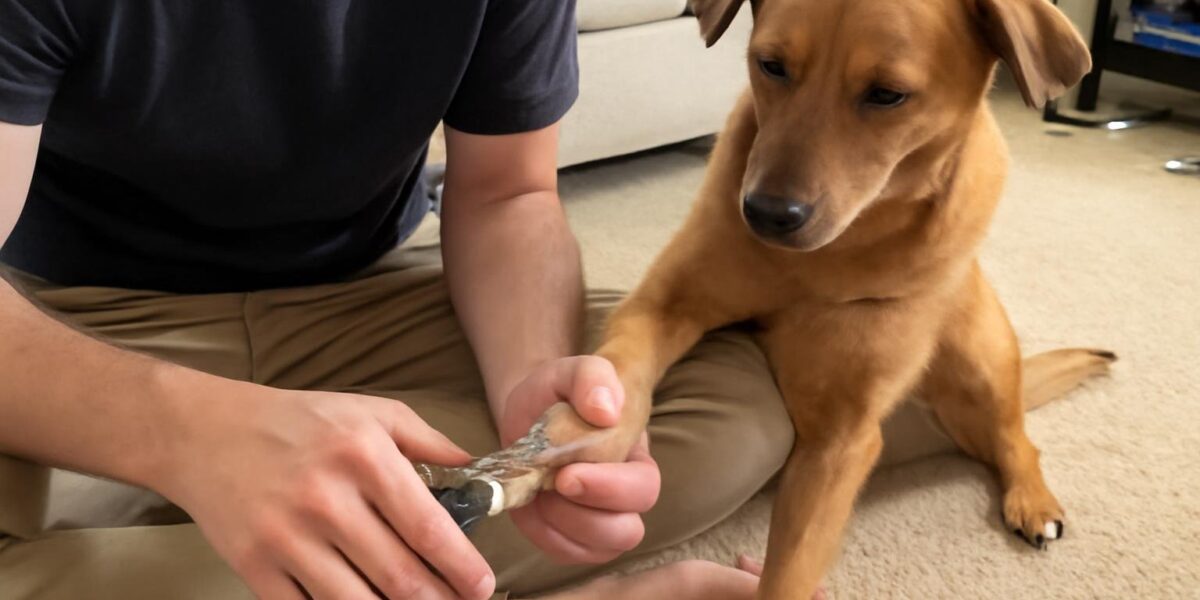
If you’re asking do I need to trim my dog’s nails, the short answer is almost always yes — unless your dog naturally wears them down enough on hard surfaces. Most dogs don’t get enough natural wear to keep nails at a healthy length, so regular trimming is a normal part of care. Overgrown nails aren’t just a cosmetic issue; they can cause real pain and long-term joint problems that build up so gradually most owners never connect them to the nails.
In this article
Here’s how to tell whether your dog needs trims, why long nails matter more than people think, and how to do it safely even if your dog dreads the whole process.
Why Nail Length Actually Matters
A dog’s nails should not touch the ground when they’re standing on a flat, hard surface. If you hear clicking on tile or laminate as your dog walks, the nails are too long. That clicking is your first easy signal, and it’s one almost anyone can recognize.
When nails grow too long, they hit the ground with every step and push back into the nail bed. Over time this puts pressure on the toe joints, forces the toes into an unnatural splayed position, and can change how your dog distributes weight across the paw. Chronically long nails can contribute to sore feet, an altered gait, and even posture problems that ripple up into the legs and spine.
Long nails are also more likely to snag and tear, which is painful and can bleed a surprising amount. In severe neglect cases — common in rescue dogs who arrive without any history of grooming — nails can curl all the way around and grow into the paw pad, which is extremely painful and requires veterinary attention to correct.
There’s a comfort element too. A dog with long nails may avoid slippery floors, become reluctant to walk or play, or seem less steady on their feet, particularly as they age. Keeping nails short is one of the simplest ways to keep an older dog mobile and confident.
The Case for Regular Trimming
Most pet dogs walk primarily on soft surfaces — carpet, grass, dirt — that don’t file nails down. Even dogs walked daily on pavement often wear only the front nails, leaving the rear nails and dewclaws long. That’s why scheduled trimming, rather than relying on natural wear, is the safer default for nearly every dog.
Regular trims also keep the quick — the living vein and nerve inside the nail — short. When you trim consistently, the quick recedes over time, letting you keep nails shorter without hitting it. Skip trims for months and the quick grows out along with the nail, making it much harder to ever get the nails short again without a slow, gradual process.
A typical schedule is every three to four weeks, but it varies widely from dog to dog. The smartest approach is to watch the nails themselves, not just the calendar. Some dogs need attention every couple of weeks; others stretch to six weeks comfortably.
Building the habit early matters, too. A puppy who learns that paw handling and nail trims are normal — and rewarded — grows into an adult who tolerates the whole thing calmly. It’s far easier to start young than to convince a frightened adult dog that the clippers aren’t a threat.
When You Might Not Need to Trim
Some dogs genuinely keep their own nails short. Highly active dogs who run regularly on concrete or rough trails can wear nails down faster than they grow. If your dog’s nails don’t touch the floor and you never hear clicking, you may need to trim only occasionally — or just the dewclaws, which never touch the ground and always need attention regardless.
Dewclaws are the key exception even for self-filing dogs. Because they don’t contact the ground at all, they grow unchecked and can curl into the leg if ignored. Some dogs have dewclaws only on the front legs; others have them on the back too, and a few have double dewclaws. Always check them whatever else you do.
If your dog has a medical condition affecting circulation or clotting, or if trimming causes extreme distress, that’s a reason to involve your vet or a groomer rather than skip nail care altogether. The nails still need managing — you just want a professional handling it safely.
How to Decide for Your Dog
Do a simple weekly check. Have your dog stand on a hard floor and look at the nails from the side. If they touch the ground or curve toward it, it’s time. Listen for clicking when they walk across the kitchen. Inspect the dewclaws separately, since they’re easy to forget.
Factor in your dog’s lifestyle. A couch-loving senior who potties in the backyard will need far more frequent trims than a trail-running adult. Both still need their dewclaws managed, and both benefit from a regular look.
Also weigh your own comfort level honestly. If the idea of trimming makes you nervous, there’s no shame in having a groomer or vet tech do it — the priority is that the nails stay short, not who holds the clippers. Many owners do a hybrid approach: a professional does the occasional full trim, while they keep up with light touch-ups at home.
How to Trim Your Dog’s Nails Safely
The biggest fear is cutting the quick, which bleeds and hurts. You can avoid it with patience and good technique, and the more often you trim, the easier it gets.
- Choose your tool. Scissor-style clippers or a rotary grinder both work. Grinders make it easier to take off small amounts and round the edges, while clippers are faster once you’re confident.
- Find the quick. On light nails the quick is a pink area — stop before it. On dark nails, trim tiny slices and watch the cut surface; a small dark dot appearing in the center means you’re getting close to the quick and should stop.
- Take a little at a time. Small, frequent cuts are far safer than one big cut. Trim at a slight angle following the natural shape of the nail rather than straight across.
- Keep styptic powder ready. If you nick the quick, press styptic powder or cornstarch onto it to stop the bleeding. Stay calm and reassure your dog so the moment doesn’t become traumatic.
- Reward heavily. Treats during and after build a positive association. For anxious dogs, do one or two nails per day rather than tackling all of them in one sitting.
If your dog is already fearful of paw handling, spend a week just touching paws and rewarding before any clipping happens. Our step-by-step guide on how to trim your dog’s nails covers desensitization and dark-nail technique in detail, so it’s worth reading before your first session.
Common Nail-Trimming Mistakes to Avoid
Even well-meaning owners trip over the same handful of mistakes, and knowing them in advance saves a lot of stress for both you and your dog. The most common is waiting too long between trims. The longer you wait, the longer the quick grows, and the harder it becomes to get the nails back to a healthy length without a slow, multi-session process. Short, frequent trims beat occasional drastic ones every time.
Another frequent error is cutting too much at once out of a desire to “get it over with.” Taking a big slice raises the odds of hitting the quick, which causes pain and bleeding and teaches your dog that nail trims hurt. A single bad experience can make a dog fight the clippers for months afterward, so err on the side of taking too little.
People also tend to skip the rear nails and dewclaws because they’re harder to reach or easy to forget. Make a habit of working through every paw in the same order each time so nothing gets missed. And finally, many owners do the whole thing in tense silence — your dog reads that tension. Stay relaxed, talk in a calm voice, and keep treats flowing so the session feels like a normal, low-pressure routine.
If your dog has dark nails and you genuinely can’t see the quick, don’t guess at a big cut. Take very thin slices and stop the moment you see a pale or dark dot appear in the center of the cut surface. Slow and cautious always wins with dark nails.
When to Call Your Vet or Groomer
Some situations are best handed to a professional. Reach out if any of these apply.
- Nails are severely overgrown or curling into the pad
- Your dog panics, snaps, or becomes dangerous during handling
- A nail is torn, cracked, or bleeding heavily
- You see swelling, discharge, or signs of infection around a nail
- You simply don’t feel confident finding the quick on dark nails
A groomer or vet tech can trim quickly and safely, and for badly overgrown nails your vet may sedate the dog to cut them back and let the quick recede gradually over a series of visits. There’s no downside to getting help — the goal is healthy, pain-free paws, however you get there.
Nail care fits alongside the rest of your dog’s grooming routine. If you’re getting set up for at-home care, our guides on brushing your dog’s teeth and whether you need to bathe your dog regularly round out the basics, and the same patient, reward-based handling makes all three easier.
Frequently Asked Questions
How often should I trim my dog’s nails?
Most dogs need a trim every three to four weeks, but it depends on activity and surfaces. Check weekly: if nails touch the floor or you hear clicking on hard surfaces, it’s time. Always check dewclaws separately, since they never wear down on their own.
What happens if I never trim my dog’s nails?
Overly long nails press into the nail bed with each step, causing pain and joint strain, and can splay the toes or alter posture. In extreme cases they curl into the paw pad. Most dogs don’t wear nails down enough on their own to avoid this.
What if I cut the quick and it bleeds?
Stay calm and apply styptic powder or cornstarch with gentle pressure until bleeding stops. It’s painful but rarely serious. Take smaller cuts next time, and reward your dog generously so the experience stays as positive as possible.
Are dewclaws really that important?
Yes. Dewclaws don’t touch the ground, so they never wear down and can curl into the leg if neglected. Even dogs who file their other nails naturally need their dewclaws checked and trimmed regularly.
Can I use human nail clippers on my dog?
It’s best to use clippers or a grinder designed for dogs, which are shaped to cut the rounded canine nail cleanly. Human clippers can crush or split the nail, which is uncomfortable. Dog-specific tools are inexpensive and make the job safer.


