
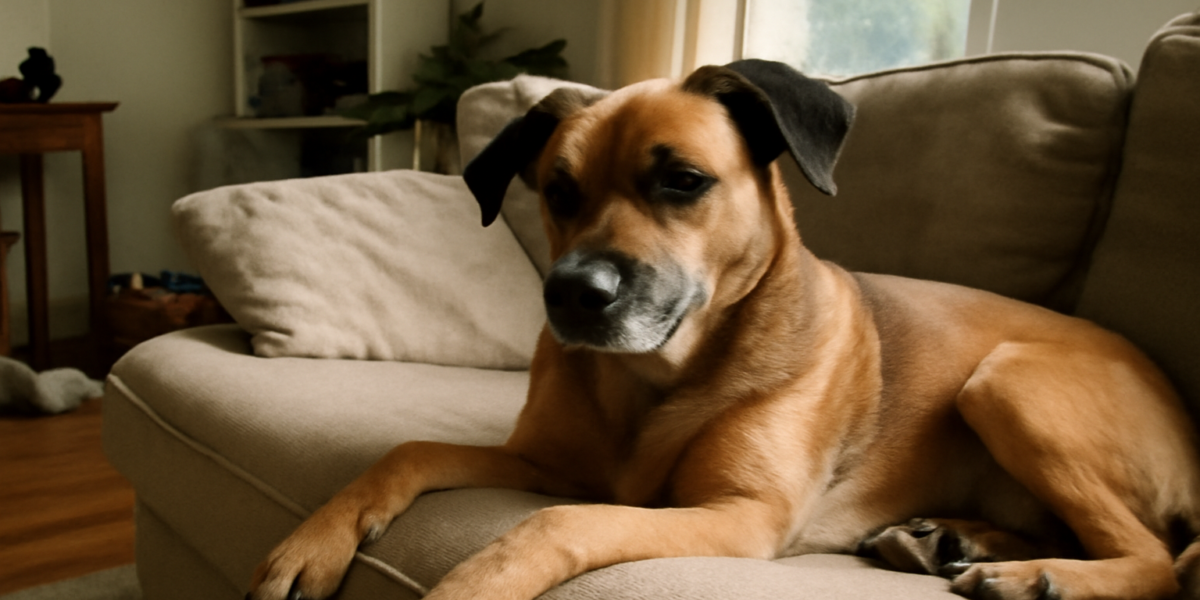
What Is a Cruciate Ligament Injury in Dogs?
A dog cruciate ligament injury is one of the most common orthopedic problems veterinarians treat, affecting dogs of all sizes, ages, and breeds. The cranial cruciate ligament (CCL) in dogs is the equivalent of the anterior cruciate ligament (ACL) in humans. It connects the femur (thigh bone) to the tibia (shin bone) inside the knee joint, preventing the tibia from sliding forward and stabilizing the joint during movement.
In this article
- What Is a Cruciate Ligament Injury in Dogs?
- Signs and Symptoms of a Cruciate Ligament Injury
- Risk Factors for Cruciate Ligament Tears
- How Veterinarians Diagnose Cruciate Injuries
- Treatment Options for Cruciate Ligament Injuries
- Recovery and Rehabilitation
- Preventing Future Cruciate Problems
- Frequently Asked Questions
Unlike human ACL tears, which typically happen from a single traumatic event, most dog cruciate ligament injuries develop gradually. The ligament degenerates over time due to chronic wear, inflammation, or underlying joint disease, eventually weakening to the point of partial or complete rupture. Some dogs do experience acute tears during intense activity, but progressive degeneration is the more common scenario.
Understanding the signs early gives your dog the best chance at a full recovery. Left untreated, a torn cruciate leads to painful arthritis, muscle loss, and a significantly reduced quality of life.
Signs and Symptoms of a Cruciate Ligament Injury
The most obvious sign of a dog cruciate ligament injury is sudden or progressive lameness in a hind leg. The severity depends on whether the tear is partial or complete and how quickly it occurred.
Acute (Sudden) Tears
A complete rupture often presents as sudden, severe lameness. Your dog may yelp during activity and immediately refuse to bear weight on the affected leg. You may notice your dog holding the leg up while standing or walking on three legs. Swelling around the knee joint can appear within hours.
Chronic (Progressive) Tears
Partial tears develop more subtly. Early signs include intermittent lameness that worsens after exercise and improves with rest. Your dog might seem stiff getting up in the morning or after napping. Over weeks to months, the lameness becomes more consistent as the remaining ligament fibers continue to fail.
Other Telltale Signs
- Sitting with the affected leg kicked out to the side instead of tucked underneath (the “lazy sit”)
- Difficulty jumping onto furniture, into cars, or climbing stairs
- Clicking or popping sounds from the knee during movement
- Decreased muscle mass in the affected hind leg compared to the other
- Reluctance to play, run, or engage in normal activities
- Swelling on the inside of the knee joint (medial buttress)
If you notice any combination of these symptoms, schedule a veterinary appointment promptly. Early diagnosis improves treatment outcomes significantly.
Risk Factors for Cruciate Ligament Tears
Certain factors increase your dog’s risk of experiencing a cruciate ligament injury. Breed predisposition plays a significant role. Labrador Retrievers, Golden Retrievers, Rottweilers, Newfoundlands, and Staffordshire Bull Terriers are among the breeds most commonly affected. Large and giant breeds carry a higher overall risk, though small dogs are certainly not immune.
Obesity is one of the most significant modifiable risk factors. Excess body weight places enormous strain on the knee joints with every step. Studies have shown that overweight dogs are substantially more likely to tear their cruciate ligaments and have worse outcomes after treatment.
Age-related degeneration affects dogs just as it does humans. Most cruciate tears occur in dogs between four and eight years old, when degenerative changes have had time to weaken the ligament. Spayed and neutered dogs, particularly those altered before skeletal maturity, may also carry increased risk, possibly due to hormonal effects on ligament strength and bone development.
Weekend warrior syndrome, where a relatively sedentary dog suddenly engages in intense exercise, contributes to acute tears. Consistent, moderate exercise helps maintain ligament health far better than sporadic bursts of activity.
How Veterinarians Diagnose Cruciate Injuries
Your veterinarian will begin with a thorough orthopedic examination. Two specific physical tests are used to evaluate cruciate ligament integrity.
The Cranial Drawer Test
With your dog lying on their side, the vet stabilizes the femur with one hand and attempts to slide the tibia forward with the other. In a healthy knee, the cruciate ligament prevents this forward movement. If the tibia slides forward (positive drawer sign), the ligament is torn. Sedation is often necessary because pain and muscle tension can mask the instability.
The Tibial Thrust Test
The vet flexes the ankle while holding the knee in a fixed position. In a cruciate-deficient knee, the tibia thrusts forward due to the mechanics of weight bearing. This test can sometimes detect tears that a drawer test misses.
Imaging
X-rays are standard for evaluating cruciate injuries. While the ligament itself is not visible on radiographs, signs such as joint effusion (fluid), changes in bone positioning, and early arthritic changes support the diagnosis. X-rays also help rule out fractures and assess the degree of existing arthritis.
Advanced imaging such as MRI can visualize the ligament directly and detect partial tears, meniscal damage, and early cartilage changes. MRI is not always necessary for diagnosis but can be valuable for surgical planning. Your veterinarian may refer you to a veterinary orthopedic specialist for complex cases.
Treatment Options for Cruciate Ligament Injuries
Treatment for a dog cruciate ligament injury falls into two categories: surgical and conservative (non-surgical). The best approach depends on your dog’s size, activity level, age, and the severity of the tear.
Surgical Treatment
Surgery is generally recommended for dogs over 20 to 25 pounds, active dogs of any size, and any dog with a complete tear. Several surgical techniques are available.
TPLO (Tibial Plateau Leveling Osteotomy) is currently the most popular and well-studied procedure. The surgeon cuts and rotates the top of the tibia to change the joint mechanics, eliminating the need for the cruciate ligament to prevent tibial thrust. Recovery takes eight to twelve weeks, and outcomes are excellent in the vast majority of dogs.
TTA (Tibial Tuberosity Advancement) advances the front of the tibia to achieve a similar biomechanical result as TPLO through a different approach. Both TPLO and TTA have strong success rates.
Lateral suture stabilization (extracapsular repair) places a heavy suture outside the joint to mimic the ligament’s function. This technique is less invasive and less expensive, making it a common choice for small dogs under 30 pounds.
Conservative Management
Non-surgical management may be appropriate for very small dogs, elderly dogs with significant health concerns, or dogs with partial tears. Conservative treatment includes strict rest for six to eight weeks, anti-inflammatory medications, physical rehabilitation, weight management, and joint supplements.
It is important to understand that conservative management does not repair the ligament. The joint stabilizes through scar tissue formation and muscle strengthening, which may be adequate for small, light dogs but often proves insufficient for larger breeds. Discuss realistic expectations with your veterinarian.
Recovery and Rehabilitation
Whether your dog undergoes surgery or conservative treatment, rehabilitation is critical for the best outcome. The first six to eight weeks focus on controlled, restricted activity. This means leash walks only, no running, jumping, or playing with other dogs, and confinement to a small area when unsupervised.
Physical rehabilitation therapy, sometimes called canine physical therapy, can dramatically improve recovery. Techniques include underwater treadmill walking, range-of-motion exercises, therapeutic ultrasound, cold laser therapy, and targeted muscle-strengthening exercises. Ask your vet for a referral to a certified canine rehabilitation therapist.
Weight management during recovery is essential. A dog carrying extra weight puts more stress on the healing joint and the opposite leg, which is already compensating. Work with your vet to determine an ideal weight and appropriate caloric intake during the recovery period.
Most dogs return to normal or near-normal activity within three to four months after surgery. Full athletic function may take six months. Be patient and follow your surgical team’s rehabilitation protocol closely.
Preventing Future Cruciate Problems
Up to 60 percent of dogs that tear one cruciate ligament will eventually tear the other. This sobering statistic highlights the importance of preventive measures after treating the first injury.
Maintaining a healthy body weight is the single most impactful thing you can do. Regular moderate exercise builds and maintains the muscle mass that supports joint stability. Swimming and controlled leash walks are excellent low-impact options.
Joint supplements containing glucosamine, chondroitin, and omega-3 fatty acids may help support joint health, though evidence varies. Your vet can recommend appropriate supplements for your dog’s situation. Avoid activities that involve sudden stops, sharp turns, and jumping on slippery surfaces, as these movements place maximum stress on the cruciate ligaments.
If you are considering adopting a dog of a predisposed breed, discuss preventive strategies with your vet from day one. Early conditioning and weight management go a long way toward protecting those vulnerable knee joints.
Frequently Asked Questions
Can a dog’s cruciate ligament heal on its own?
A completely torn cruciate ligament will not heal on its own. The joint may stabilize to some degree through scar tissue formation, particularly in very small dogs, but the ligament fibers do not regenerate. Partial tears may temporarily improve with rest but tend to progress to complete tears over time.
How much does cruciate ligament surgery cost for dogs?
Costs vary widely by location, surgeon, and procedure type. TPLO and TTA typically range from $3,000 to $6,000 per knee, including pre-surgical diagnostics, surgery, and initial follow-up. Lateral suture repair is generally less expensive, ranging from $1,500 to $3,000. Pet insurance often covers a significant portion if the policy was in place before the injury.
How long will my dog limp after cruciate ligament surgery?
Most dogs begin putting some weight on the leg within one to two weeks after surgery. Mild lameness typically resolves by eight to twelve weeks. Full, consistent weight bearing usually returns by three to four months. Some dogs have occasional stiffness after heavy exercise for up to six months.
Can a dog with a torn cruciate still go for walks?
Short, slow leash walks on flat surfaces are usually acceptable and even beneficial. The key is controlled movement that does not allow sudden turns, running, or jumping. Avoid off-leash activity, stairs, and slippery floors. Your vet can guide you on appropriate activity levels before surgery or during conservative management.
Is cruciate ligament injury more common in certain breeds?
Yes. Labrador Retrievers, Golden Retrievers, Rottweilers, Newfoundlands, Boxers, and West Highland White Terriers are among the breeds with higher incidence. However, any breed or mixed breed can be affected, particularly if they are overweight or engage in inconsistent high-impact activity.


