
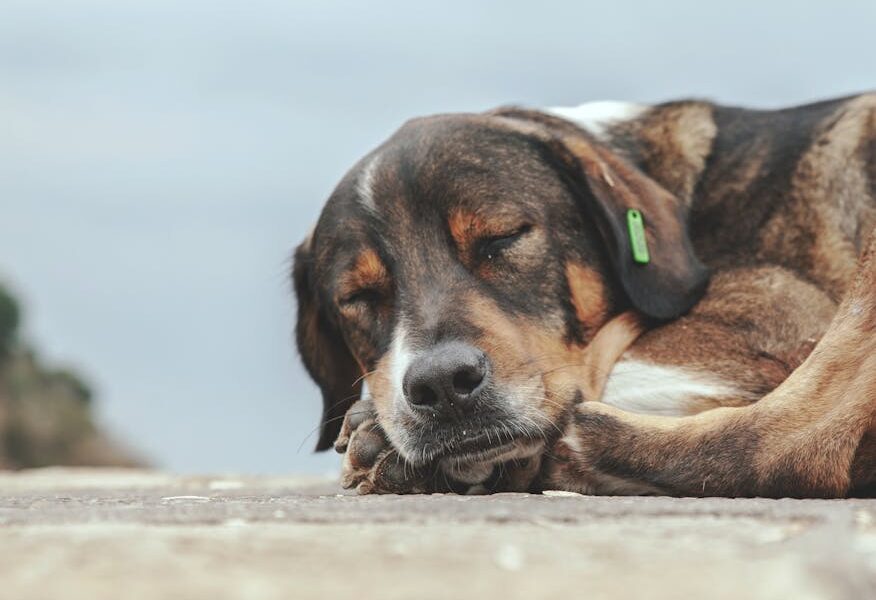
What Dog Sleeping Positions Actually Reveal
Dog sleeping positions are one of the most-asked behavior questions on the internet, and the answers usually fall into two camps: the over-mystical interpretations that read deep meaning into every paw position, and the over-dismissive view that “dogs just sleep how they sleep.” The truth is in between.
In this article
- What Dog Sleeping Positions Actually Reveal
- The Curled-Up “Donut”
- Side-Sleeping
- The Belly-Up “Crazy Legs”
- The “Superman” Sploot
- Back-to-Back With Another Dog or Person
- Hidden, Burrowed, or Cave Sleeping
- Position Changes During the Night
- Sleeping Position and Temperature
- Sleeping Positions in Rescue and Newly Adopted Dogs
- What to Read Alongside Position
- Frequently Asked Questions
Most dog sleeping positions reflect a combination of comfort, temperature regulation, sense of safety in the environment, and individual habit. A few positions are particularly meaningful — the belly-up position, for instance, is genuinely a signal of high felt safety. Most others are just the dog’s way of being physically comfortable in a given moment.
This guide walks through the most common positions, what each one likely tells you, and the patterns that are interesting versus the ones that are largely just personal preference. It is a fun curiosity-driven explainer, not a diagnostic checklist.
The Curled-Up “Donut”
The classic curled position — body coiled with nose toward tail, paws tucked in, sometimes with the tail wrapped over the face — is one of the most common dog sleeping positions. Almost every dog will use it at some point.
What it likely means:
- Conserving body heat. Curled bodies have less surface area exposed to the air. Cold dogs and small dogs (who lose heat faster) curl up tightly.
- Protecting vital organs. The position covers the soft belly, an evolutionary holdover from sleeping in the wild.
- A sense of security. The compactness of the curl is self-soothing for many dogs.
- Habit and breed traits. Some breeds, especially northern breeds and small dogs, default to this position regardless of conditions.
A dog who curls up most of the time isn’t necessarily anxious — it just may be their baseline preferred position. Watch the rest of the body. A relaxed curl with soft eyes and slow breathing is a calm, content dog.
Side-Sleeping
The side-sleeper position — body extended, all four legs out to one side, head resting on the floor — usually indicates a high level of comfort with the surroundings.
What it likely means:
- Deep relaxation. Dogs who side-sleep tend to be in deep REM sleep, often with paw twitches and quiet vocalizations.
- Felt safety. The position exposes the belly somewhat and limits the dog’s ability to spring to action quickly. Dogs only adopt it where they feel safe.
- Temperature comfort. Side-sleeping exposes more body surface area, which helps in moderate or warm conditions.
- Joint comfort. Older dogs with arthritis often prefer side-sleeping because it reduces pressure on stiff joints.
A dog who side-sleeps for long stretches in your home is signaling that the home feels like a safe place. That is a meaningful trust signal, especially in a recently adopted dog. See our decompression period for rescue dogs guide for the broader markers of settling.
The Belly-Up “Crazy Legs”
The belly-up position — dog on their back, legs in the air, often with a slightly twisted spine — is one of the most charming sleep positions and one of the more meaningful.
What it likely means:
- Maximum trust in the environment. The belly is the most vulnerable part of the body. Sleeping with it fully exposed signals that the dog feels completely safe.
- Cooling. The belly has less fur and exposing it to air is an effective way to dump heat. Dogs in warm rooms often choose this position.
- Stretching. Some dogs use the belly-up position as part of a longer stretch.
- Personality. Confident, social dogs are more likely to belly-up sleep regularly.
A new rescue dog rarely belly-up sleeps in the first week. Seeing it for the first time is often a quiet milestone — your dog has decided this is home. Some dogs only do it occasionally and prefer other positions; that is also normal.
The “Superman” Sploot
The superman or sploot — dog flat on the belly with hind legs stretched straight out behind, front legs sometimes extended forward — is especially common in puppies and certain breeds (Corgis are famous for it).
What it likely means:
- Cooling. Pressing the belly into a cool floor (tile, hardwood) is an effective heat dump. Splootting on warm days is very common.
- Quick readiness. The position lets the dog spring up easily, which is part of why puppies adopt it during play breaks.
- Hip flexibility. Younger dogs and breeds with naturally flexible hips sploot more easily. Older dogs may not be physically able to.
- Habit and personality. Some dogs just love this position and use it lifelong.
For older dogs who used to sploot but no longer can, joint changes are usually the cause. Not necessarily a problem, but worth a vet check if accompanied by other signs of stiffness.
Back-to-Back With Another Dog or Person
Dogs who sleep with their back pressed against a housemate — another dog, a cat, a human — are showing affiliative behavior. The position is comforting and often involves both warmth-sharing and bonding.
This is one of the most reliable signals of a strong social bond between household pets. Bonded pets often sleep this way habitually. New rescue pets may take weeks or months before they trust a housemate enough to sleep back-to-back.
For dogs who sleep against humans, this position usually indicates the dog includes the human in their bonded social group. It is also why many dogs migrate from their bed to the human bed during the night — proximity to the bonded human is comforting.
Hidden, Burrowed, or Cave Sleeping
Some dogs prefer to sleep in enclosed spaces — under blankets, inside cave-style beds, behind furniture, in covered crates. This is especially common in small dogs and certain breeds (Dachshunds and other terriers, who were bred to enter burrows after prey).
What it likely means:
- Den-like comfort. Many dogs find enclosed spaces inherently calming, an echo of denning behavior in wild canids.
- Warmth. Burrowing under blankets traps body heat efficiently.
- Safety from household activity. Hidden spots reduce sensory input.
- Anxiety management. Dogs with mild anxiety often choose enclosed spots to self-soothe.
This is generally healthy, especially when the dog has chosen the spot themselves and can come and go freely. Concerning patterns include hiding paired with refusing food, refusing to come out for routine activities, or hiding that has changed suddenly. See our adopted dog hiding guide for the line between healthy retreat and warning signs.
Position Changes During the Night
Most dogs cycle through several positions during a night. They may start curled, shift to side-sleeping during deep REM, then briefly stretch into a sploot before returning to a curl. This is healthy and normal — like how humans rotate during the night.
Patterns that may suggest discomfort:
- Frequent position changes throughout the night with no settled deep sleep
- Audible groaning or grunting with each shift
- Difficulty getting up after lying in any one position
- Avoidance of previously favorite positions
If your dog is changing positions repeatedly without settling, talk to your vet. Pain, especially from arthritis, is a common cause. A high-quality orthopedic bed and appropriate pain management often dramatically improve sleep quality.
Sleeping Position and Temperature
One of the most reliable predictors of sleeping position is ambient temperature. Cold dogs curl tightly. Hot dogs sploot, side-sleep, or belly-up. Comfortable dogs cycle through positions.
If your dog seems to consistently choose positions that suggest they are too cold or too hot, consider:
- Adjusting room temperature
- Providing options — warm bed in one spot, cooling mat in another
- Layering blankets the dog can burrow under or push off
- For seniors, providing a warmer sleeping area away from drafts
Watching where and how your dog sleeps over a few weeks usually reveals their preferences clearly. Most dogs will tell you what they need if you pay attention.
Sleeping Positions in Rescue and Newly Adopted Dogs
For newly adopted dogs, sleeping positions over the first weeks track meaningfully with decompression. Most rescue dogs in week one sleep in tight, defensive positions — curled tightly, tucked into corners, often with the body oriented toward the door so they can monitor for threats.
As the dog settles, you typically see a progression:
- Week one: Tight curls, hiding spots, light sleep with frequent waking
- Week two to three: Curled but in more open spots, occasional side-sleeping in safe rooms
- Week three to six: Side-sleeping becomes routine, occasional sploots, longer deep sleep
- After week six: Belly-up sleeping appears in dogs who are going to do it; back-to-back with humans or other pets
This is one of the more reliable visual markers of decompression. The dog’s sleeping body language tracks their nervous-system state. See our decompression period for rescue dogs guide for the broader picture.
Some rescue dogs never adopt belly-up sleeping even after they are fully settled — that is just personal style. The trajectory matters more than any single position.
What to Read Alongside Position
The position alone tells you only part of the story. Body language during sleep adds the rest.
- Soft, slow breathing. A sign of deep, restful sleep.
- Twitching paws and quiet vocalizations. REM sleep activity, generally normal.
- Tense body even while asleep. May indicate the dog isn’t fully relaxed even at rest.
- Eyes partially open. Some dogs (especially short-faced breeds) sleep with eyes slightly open, which is usually normal but worth mentioning at a vet visit if new.
- Snoring. Common in brachycephalic breeds; new or worsening snoring deserves a vet check.
For more on broader body-language reading, see our reading dog body language guide.
Frequently Asked Questions
What is the most relaxed dog sleeping position?
The belly-up position is the most clear-cut signal of high felt safety. Side-sleeping is also a deep-relaxation position. Both indicate the dog feels comfortable enough to expose vulnerable areas.
Why does my dog sleep curled up all the time?
Could be temperature, habit, or breed tendency. Small dogs and northern breeds often default to curling. As long as the dog cycles through positions sometimes and shows other signs of relaxed body language, it is fine.
Should I worry if my dog never sleeps belly-up?
No. Plenty of perfectly content dogs never adopt this position. It is one possible indicator of trust, not a required one. Watch for overall body language and routine behavior.
Why does my dog sleep with their head hanging off the bed?
Often comfort or a way to keep the airway clear. Some dogs prefer the elevation, especially short-faced breeds. As long as the dog is breathing easily and resting well, it is fine.
Is it bad if my dog moves a lot in their sleep?
Some movement, especially during REM (paw twitches, soft barks) is normal. Frequent waking and repositioning without settled deep sleep can indicate discomfort and warrants a vet check.
What does it mean if my dog sleeps pressed against me?
It indicates a strong social bond — the dog includes you in their bonded group and finds proximity comforting. Some dogs do this throughout life; others grow out of it as they mature.


