
Last updated: April 11, 2026
In this article
- How to Teach a Dog to Swim: Step-by-Step Water Safety Guide
- Not All Dogs Swim Naturally
- Dog Breeds That Struggle With Swimming
- When to Start Teaching Your Dog to Swim
- Choosing the Right Location
- Introduction to Water: The Gradual Approach
- Start With a Life Jacket
- Supporting Your Dog in the Water
- Building Confidence Over Time
- Pool vs Lake vs Ocean: Understanding the Differences
- Essential Water Safety Rules
- After-Swim Care: Ears and Coat
- Recognizing and Responding to Signs of Water Fear
- Frequently Asked Questions
How to Teach a Dog to Swim: Step-by-Step Water Safety Guide
Swimming is one of the best forms of exercise for dogs. It builds muscle, supports joint health, and provides mental stimulation that few other activities can match. But contrary to what many people believe, not every dog is born knowing how to swim. Some breeds take to water instantly while others need patient, step-by-step guidance before they feel comfortable getting their paws wet.
Whether you have a water-loving Labrador Retriever or a cautious French Bulldog, this guide will walk you through everything you need to know to teach your dog to swim safely. From choosing the right location to recognizing signs of fear, we cover every detail so you and your dog can enjoy the water with confidence.
Not All Dogs Swim Naturally
One of the most common misconceptions among dog owners is that all dogs instinctively know how to swim. While many dogs will paddle their legs when placed in water, that reflex alone does not mean they can keep themselves afloat or navigate safely. Some dogs panic the moment they lose contact with solid ground, and others simply sink due to their body structure.
Dogs with long legs and lean bodies, like Poodles and Irish Setters, tend to have an easier time in the water. But dogs with short legs, barrel chests, or flat faces often struggle significantly. Even breeds that can swim may not enjoy it, and forcing a reluctant dog into the water can create a lasting fear that becomes very difficult to reverse.
The key takeaway is simple: never assume your dog can swim. Treat every dog as a beginner and introduce water gradually, regardless of breed or age.
Dog Breeds That Struggle With Swimming
Certain breeds face real physical challenges in the water, and it is important to understand these limitations before you begin swim training. Brachycephalic breeds, those with flat faces and shortened airways, are among the most at risk. Bulldogs, Pugs, Boxers, and Shih Tzus must tilt their heads at a steep angle to keep their noses above the waterline, which causes their rear ends to sink. This makes sustained swimming exhausting and potentially dangerous.
Breeds with disproportionately short legs also struggle. Dachshunds, Corgis, and Basset Hounds lack the leg length to generate enough propulsion, meaning they tire quickly. Heavy-boned breeds like Mastiffs and Saint Bernards can swim but fatigue rapidly due to their sheer mass.
This does not mean these breeds can never enjoy water. Many of them love wading in shallow areas or splashing in kiddie pools. But they require extra supervision, proper flotation devices, and realistic expectations about how long and how deep they can safely go. If you are considering adopting a dog and water activities are important to your lifestyle, researching breed-specific swimming ability is a smart step. Our dog breeds directory can help you understand the physical traits and exercise needs of hundreds of breeds.
When to Start Teaching Your Dog to Swim
The ideal time to introduce a dog to water is during puppyhood, typically between 8 and 16 weeks of age, when they are in their critical socialization window. Puppies exposed to water during this period tend to develop a positive association that lasts throughout their lives. However, very young puppies should only be introduced to calm, shallow water and never forced to swim.
If you have an adult dog that has never been in the water, do not worry. Adult dogs can absolutely learn to swim. It may take more patience and a slower introduction, especially if the dog has had a negative experience with water in the past. The most important factor is not age but approach. A calm, positive, pressure-free introduction works for dogs of any age.
Avoid starting swim lessons when the weather is cold, when your dog is unwell, or immediately after eating. Choose a warm day when your dog is relaxed and has already had a short walk to burn off excess energy. A slightly tired dog is often more willing to follow your lead than an overly excited one.
Choosing the Right Location
The location you choose for your dog’s first swim lesson makes a significant difference in how the experience goes. You want a body of water that is calm, clean, shallow at the entry point, and free from hazards like strong currents, sharp rocks, or heavy boat traffic.
A quiet lake with a gradual shoreline is often the best choice for a first introduction. The gentle slope allows your dog to walk in at their own pace and retreat to shallow water whenever they feel uncomfortable. Avoid locations with steep drop-offs, as a sudden loss of footing can panic even a confident dog.
If you have access to a private pool, that can also work well, provided the pool has steps or a ramp your dog can use to exit independently. A dog that cannot find the exit will panic, and panic in the water is dangerous. Before any swim session in a pool, spend time showing your dog exactly where the steps are and practice walking them to the exit point multiple times.
Public dog beaches can be excellent once your dog has some basic water confidence, but they are not ideal for a first lesson. The presence of other dogs, waves, and unfamiliar sounds can be overwhelming for a beginner.
Introduction to Water: The Gradual Approach
Rushing a dog into the water is the single biggest mistake owners make during swim training. The gradual approach is not just recommended, it is essential. Your goal in the first session is not to get your dog swimming. It is simply to help them associate water with positive experiences.
Start by walking along the water’s edge with your dog on a loose leash. Let them sniff the water, paw at it, and explore at their own pace. If they voluntarily step into shallow water, praise them enthusiastically and offer high-value treats. If they show no interest or back away, do not force it. Simply spend time near the water and try again another day.
Once your dog is comfortable wading in ankle-deep water, gradually encourage them to go a bit deeper. You can do this by walking into the water yourself, tossing a favorite toy just a few inches into the shallow area, or placing treats on a flat rock at the water’s edge. Each session should end on a positive note, even if progress seems minimal.
For some dogs, the entire gradual introduction process takes a single afternoon. For others, it may take several weeks of short, positive sessions. Both timelines are perfectly normal. The dog sets the pace, not you.
Start With a Life Jacket
A canine life jacket is one of the most valuable tools you can invest in when teaching your dog to swim. Even strong swimmers benefit from wearing one during the learning phase, and for breeds that struggle in the water, a life jacket is a non-negotiable safety requirement.
A good dog life jacket keeps your dog’s body in a horizontal position, preventing the common beginner mistake of paddling vertically with the front legs while the back end sinks. It also provides a handle on the back that you can use to guide or support your dog without putting your hands under their belly, which many dogs find uncomfortable.
When choosing a life jacket, look for one with adjustable straps, a secure buckle system, bright colors for visibility, and a D-ring for leash attachment. The jacket should fit snugly without restricting movement or breathing. Take time to let your dog wear the life jacket on dry land before ever entering the water so they can get used to the feel of it.
Even after your dog becomes a confident swimmer, keep the life jacket on hand for situations involving deep water, strong currents, long swim sessions, or boating trips. Fatigue can set in quickly, and a life jacket provides a critical margin of safety.
Supporting Your Dog in the Water
Once your dog is wearing a life jacket and willing to enter water beyond wading depth, you can begin actively supporting them as they learn to paddle. Walk into the water with your dog, staying close enough to provide reassurance but not so close that you crowd them.
If your dog begins paddling with only their front legs, which is extremely common for beginners, gently support their hindquarters with your hand. This helps them discover that using all four legs keeps them more stable and efficient. Many dogs figure this out within a few minutes once they feel the support under their belly.
Keep early swimming sessions very short, no more than five to ten minutes of actual paddling. Swimming is far more physically demanding than walking or running, and dogs can become exhausted quickly without showing obvious signs of fatigue. Watch for heavy panting, a low-hanging tail, slowing paddle speed, or attempts to climb on top of you, all of which indicate your dog needs a break.
Always stay within arm’s reach of your dog during the learning phase. Even a dog wearing a life jacket can panic and inhale water if they become frightened or disoriented.
Building Confidence Over Time
Confidence in the water is built through repetition, positive reinforcement, and gradually increasing challenges. Once your dog can paddle comfortably in calm, shallow water, you can begin introducing slightly deeper areas, gentle currents, or longer swim distances.
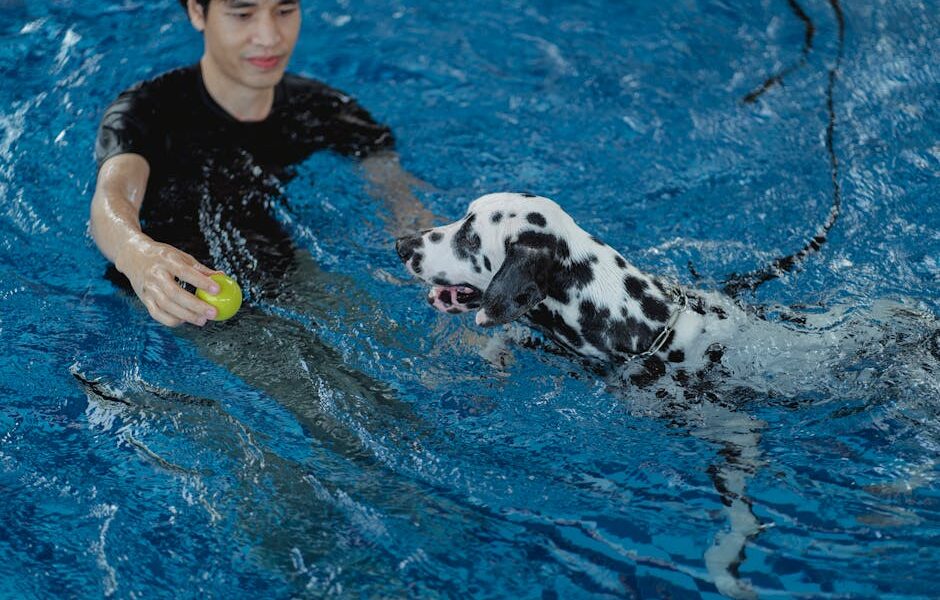
Games are an excellent way to build water confidence. Tossing a floating toy a short distance and encouraging your dog to retrieve it combines their natural drive with swimming practice. Start with very short throws and gradually increase the distance as your dog’s comfort grows. Fetch in the water is particularly effective for breeds with strong retrieving instincts.
Swimming with other confident, calm dogs can also help. Dogs are social learners, and watching a relaxed companion enjoy the water can encourage a hesitant dog to join in. However, avoid pairing your beginner swimmer with overly boisterous dogs that might splash, jump on, or overwhelm them.
Celebrate every milestone, no matter how small. The first time your dog voluntarily enters the water, the first time they swim to you, the first time they retrieve a toy from deeper water, these are all victories worth rewarding generously.
Pool vs Lake vs Ocean: Understanding the Differences
Each type of water environment presents unique challenges and benefits for your dog. Understanding these differences helps you prepare appropriately and keep your dog safe.
Swimming Pools: Pools offer controlled, calm water without currents or waves, making them excellent for learning. The main risks are chemical exposure (chlorine can irritate eyes, skin, and stomachs if swallowed) and the inability to exit. Always show your dog where the steps or ramp are before every pool session. Rinse your dog thoroughly with fresh water after pool swimming to remove chlorine residue. Never leave your dog unattended near a pool, even if they are a strong swimmer.
Lakes and Ponds: Natural freshwater bodies are often ideal for dogs because they typically have gradual shorelines and calm water. However, watch for blue-green algae, which can be toxic and even fatal to dogs. Avoid lakes with visible algae blooms, scummy surfaces, or posted warnings. Also be aware of submerged hazards like fallen branches, fishing hooks, and uneven bottom surfaces.
Oceans and Beaches: Saltwater swimming adds the challenges of waves, currents, and tides. Even small waves can knock a dog off their feet, and rip currents can pull a strong swimmer away from shore quickly. If you take your dog to the beach, choose days with calm surf, stay in shallow water, and never let your dog swim in areas where you would not swim yourself. Rinse your dog thoroughly after ocean swimming to remove salt, which can dry out skin and cause stomach upset if ingested in large amounts.
Essential Water Safety Rules
Water safety for dogs follows many of the same principles as water safety for children. These rules should be followed every single time your dog is near water, regardless of their swimming ability.
Never leave your dog unsupervised near water. Drowning can happen in minutes, even to experienced swimmers. Fatigue, injury, or panic can strike without warning.
Always provide a clear, easy exit. Whether it is pool steps, a boat ramp, or a gradually sloped shoreline, your dog must be able to get out of the water independently at all times.
Watch for signs of exhaustion. Dogs will often keep swimming to stay with their owner even when they are dangerously tired. Set time limits for swim sessions and enforce rest breaks.
Provide fresh drinking water. Dogs that are thirsty will drink pool water, lake water, or ocean water, all of which can cause illness. Bring a portable bowl and fresh water to every swim outing.
Know the water conditions before your dog enters. Check for algae warnings, current advisories, water temperature, and any posted hazards. If conditions are questionable, skip the swim.
Learn canine CPR. In the unlikely event that your dog inhales water and stops breathing, knowing how to perform rescue breathing and chest compressions can save their life. Ask your veterinarian about pet first aid courses in your area.
After-Swim Care: Ears and Coat
What you do after a swim session is just as important as what you do during one. Proper after-swim care prevents infections, skin irritation, and other health issues that can develop when moisture is left unmanaged.
Ears: Dogs with floppy ears, such as Cocker Spaniels, Basset Hounds, and Golden Retrievers, are especially vulnerable to ear infections after swimming. Water gets trapped in the ear canal, creating a warm, moist environment where bacteria and yeast thrive. After every swim, gently dry your dog’s ears with a soft towel or cotton ball. If your veterinarian recommends it, use a dog-specific ear drying solution to help evaporate trapped moisture. Never insert cotton swabs into the ear canal.
Signs of an ear infection include head shaking, ear scratching, redness, swelling, discharge, or a foul smell from the ears. If you notice any of these symptoms within a few days of swimming, schedule a veterinary visit promptly.
Coat: Rinse your dog with clean, fresh water after every swim session, regardless of whether they were in a pool, lake, or ocean. This removes chlorine, salt, algae, bacteria, and other irritants that can dry out the coat and irritate the skin. Pay special attention to the belly, armpits, and groin, areas where moisture tends to linger.
For dogs with thick or double coats, like Huskies, German Shepherds, and Golden Retrievers, thorough drying is essential. A damp undercoat can develop hot spots, a painful bacterial skin infection, if left wet for extended periods. Use a towel to remove as much moisture as possible, and if your dog tolerates it, a pet-safe blow dryer on a cool or low-heat setting can help dry the undercoat completely.
Regular brushing after swim sessions also helps prevent matting in long-coated breeds and allows you to check for ticks, burrs, or skin irritation that may have occurred during outdoor water activities.
Recognizing and Responding to Signs of Water Fear
Not every dog will learn to love swimming, and that is perfectly fine. What matters most is that you can recognize when your dog is genuinely afraid and respond appropriately rather than pushing them past their comfort zone.
Common signs of water fear include tucking the tail, flattening the ears, whining or barking, refusing to move toward the water, trying to climb out immediately after entering, trembling, lip licking, yawning (a stress signal in dogs), and attempting to hide behind you or under objects.
If your dog shows these signs, do not punish them, drag them into the water, or use flooding techniques where you simply place them in deep water and hope they adjust. These methods destroy trust and can create a lifelong phobia.
Instead, take several steps back in your training. Return to simply spending time near the water without any expectation that your dog will enter it. Use extremely high-value treats, like small pieces of cooked chicken or cheese, to create positive associations. Keep sessions very short and always end before your dog becomes stressed.
Some dogs will eventually overcome their fear with patient, positive training. Others may never enjoy swimming, and that is a perfectly valid outcome. There are countless other ways to exercise and bond with your dog that do not involve water. If your dog is happier on land, respect that preference.
If you are in the process of finding the right dog to adopt and swimming is an important activity for your household, consider breeds with a natural affinity for water. Our dog breeds directory includes detailed information about each breed’s typical relationship with water and exercise needs.
Frequently Asked Questions
At what age can I start teaching my puppy to swim?
You can begin gentle water introductions as early as 8 to 10 weeks of age, but only in warm, calm, shallow water under close supervision. True swimming lessons are better suited for puppies that are at least 10 to 12 weeks old and have had their initial vaccinations. Always keep early sessions very short and entirely positive, letting the puppy set the pace for how deep they go.
How long does it take to teach a dog to swim?
The timeline varies widely depending on the individual dog. Some dogs are paddling confidently within one or two sessions, while others may need several weeks of gradual introductions before they feel comfortable in water beyond wading depth. Breeds with natural water instincts, like Labrador Retrievers and Portuguese Water Dogs, typically learn faster than brachycephalic or short-legged breeds. Patience and consistency matter far more than speed.
Do all dogs need a life jacket?
While not every dog needs a life jacket for calm, supervised swimming in shallow water, every dog benefits from wearing one during the learning phase. Life jackets are especially important for brachycephalic breeds, senior dogs, dogs with health conditions, and any dog swimming in deep water, currents, or from a boat. Even strong swimmers should wear a life jacket during boating trips or in unfamiliar water.
Can swimming help dogs with arthritis or joint problems?
Yes, swimming is one of the best low-impact exercises for dogs with arthritis, hip dysplasia, or recovering from orthopedic surgery. The buoyancy of water supports the dog’s body weight, reducing stress on joints while allowing full range of motion and muscle strengthening. Many veterinary rehabilitation centers use hydrotherapy as a core part of their treatment programs. Always consult your veterinarian before starting a swim program for a dog with existing health conditions.
What should I do if my dog swallows too much water while swimming?
Dogs commonly swallow small amounts of water during swimming, which usually causes no harm beyond mild stomach upset. However, if your dog swallows a large amount of water, a condition sometimes called water intoxication or hyponatremia, it can be a medical emergency. Symptoms include vomiting, bloating, lethargy, loss of coordination, glazed eyes, and in severe cases, seizures. If you notice any of these symptoms, stop swimming immediately and contact your veterinarian or an emergency animal hospital right away.
Is it safe for dogs to swim in chlorinated pools?
Most dogs can swim in chlorinated pools without serious health risks, provided the chlorine levels are within the normal range for human use. However, chlorine can irritate a dog’s eyes and skin with prolonged exposure, and swallowing chlorinated water can cause mild gastrointestinal upset. Always rinse your dog with fresh water after pool swimming, prevent them from drinking pool water by offering a bowl of fresh water nearby, and limit pool sessions to reasonable durations.


