Last updated: April 27, 2026
In this article
Overview
The Donskoy, also known as the Don Sphynx or Russian Hairless, is a striking hairless cat breed that originated in Rostov-on-Don, Russia, in 1987. Unlike the better-known Canadian Sphynx, whose hairlessness comes from a recessive gene, the Donskoy’s lack of fur is caused by a dominant gene mutation. This Donskoy cat breed profile covers everything you need to know about this warm, wrinkly, and utterly charming feline.
The breed’s story begins with Elena Kovaleva, who rescued a kitten being mistreated by local boys. The kitten, named Varvara, began losing her fur as she matured. Varvara later produced both haired and hairless kittens, and the hairless offspring became the foundation of the Donskoy breed. Professional breeder Irina Nemikina developed the breed further, and the Donskoy gained international recognition through WCF in 1997 and TICA in 2005.
Quick Facts
- Breed Group: Hairless
- Size: Medium, 6-12 pounds
- Lifespan: 12-15 years
- Energy Level: High
- Grooming Needs: Moderate (skin care)
- Coat: Four varieties — rubber bald, flock, velour, brush
Temperament and Personality
Donskoys are known for their exceptionally affectionate and social personalities. These cats crave human interaction and will go to great lengths to be near their favorite people. They are often described as dog-like in their loyalty, following their owners around the house and greeting them at the door.
Intelligence is a hallmark of the breed. Donskoys are quick learners who can master tricks, respond to their names, and even play fetch. They are curious about everything in their environment and will investigate every new object, sound, or visitor with enthusiasm.
Despite their high energy, Donskoys also have a deeply affectionate side. They love to cuddle and will seek out warm laps, cozy blankets, and snug sleeping spots. Their lack of fur makes them natural heat-seekers, and they will happily share your bed, tuck into your sweater, or curl up on any warm surface they can find.
Donskoys are sociable with other pets and generally do well in multi-pet households. They can be playful with other cats and often befriend dogs. Their friendly, outgoing nature means they usually adapt well to new situations and enjoy meeting new people.
Size and Appearance
The Donskoy is a medium-sized cat with a sturdy, muscular body that feels surprisingly solid and warm to the touch. Adults typically weigh between 6 and 12 pounds, with males being noticeably larger than females.
Their most distinctive feature is, of course, their hairlessness. However, not all Donskoys are completely bald. The breed has four recognized coat varieties:
- Rubber Bald: Born completely hairless and remains so for life
- Flock: Born with a fine, chamois-like coat that often disappears with age
- Velour: Born with a wavy, short coat on the body with a bald spot on the head; the coat usually thins over time
- Brush: Retains a partial, wiry coat throughout life; these cats are often used in breeding programs
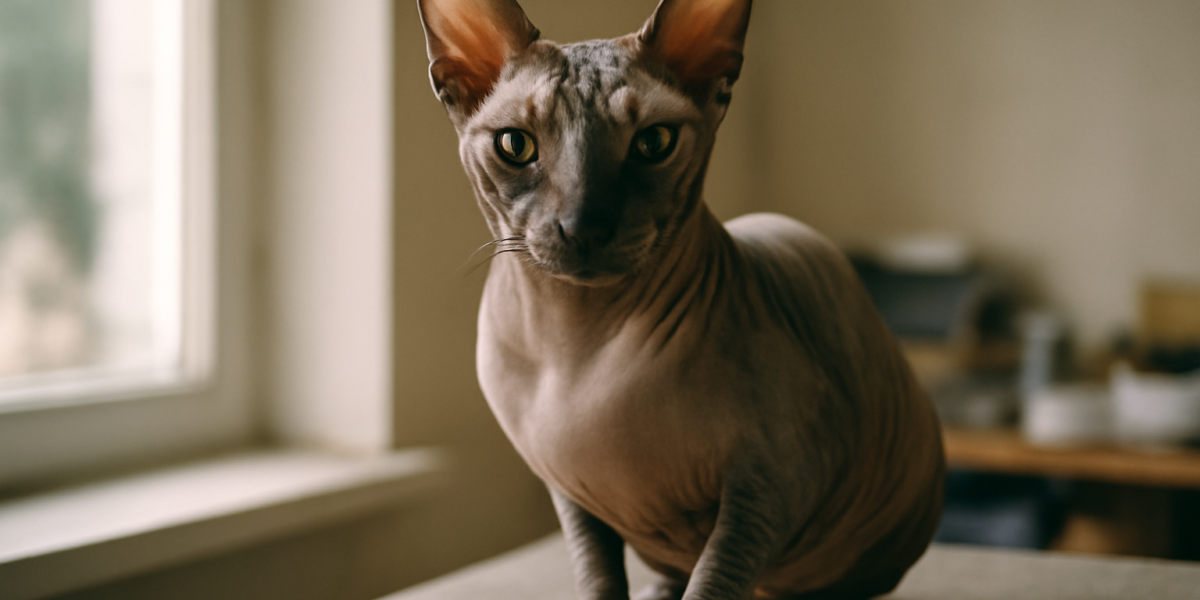
The Donskoy’s skin is elastic and wrinkled, particularly around the head, neck, and belly. When you pick up a Donskoy, you will notice that their skin feels like warm suede or a hot water bottle. Their body temperature runs slightly higher than furred cats, which makes them wonderful cuddle companions.
They have large, wide-set ears, almond-shaped eyes that can be any color, and a wedge-shaped head with prominent cheekbones. Their long toes are almost finger-like, and many Donskoys use them with remarkable dexterity to manipulate toys and objects.
Exercise and Activity Needs
Donskoys are active, playful cats that need regular exercise and mental stimulation to stay happy. They retain their kitten-like energy well into adulthood and are always up for a game or adventure.
Interactive play sessions are essential for this breed. Wand toys, laser pointers, and feather teasers all appeal to their strong prey drive. Aim for at least two dedicated play sessions of 15 to 20 minutes each day, plus access to self-play toys throughout the day.
Cat trees and climbing structures are important for Donskoys, who enjoy surveying their territory from high vantage points. Because they lack fur to protect them from rough surfaces, choose cat trees with soft, padded platforms rather than rough sisal-covered shelves.
Puzzle feeders and treat-dispensing toys engage the Donskoy’s sharp mind. These cats genuinely enjoy the challenge of figuring out how to access their food and will spend extended periods working on a good puzzle. Rotate enrichment activities regularly to prevent boredom.
Grooming and Care
While you will never need to brush a Donskoy, their skin requires regular attention. Without fur to absorb natural body oils, the skin can become oily and may develop a buildup that looks like a brownish residue. Regular bathing, typically once a week to once every two weeks, is necessary to keep their skin clean and healthy.
Use a gentle, fragrance-free cat shampoo or a mild baby shampoo for baths. After bathing, dry your Donskoy thoroughly, as their hairless skin is vulnerable to chills. Many Donskoy owners follow baths with a light application of pet-safe, fragrance-free moisturizer to prevent dry skin.
Sun protection is critical for hairless cats. If your Donskoy spends any time near windows with direct sunlight, they can get sunburned. Use pet-safe sunscreen on exposed skin or provide shaded resting spots away from direct sun. In cooler months, your Donskoy may appreciate cat sweaters or heated beds to stay comfortable.
Ear cleaning is especially important for Donskoys, as their large, open ears can accumulate wax and debris quickly. Clean ears weekly with a vet-approved ear cleaner. Nail trimming every one to two weeks and regular dental care complete the grooming routine.
Health and Lifespan
Donskoys are generally healthy cats with a lifespan of 12 to 15 years. However, there are some health considerations specific to hairless breeds that prospective owners should understand.
Skin conditions are the most common health concern. Without the protective barrier of fur, Donskoys can be prone to skin infections, acne, and fungal issues. Maintaining a consistent bathing schedule and keeping their environment clean helps prevent most skin problems. Consult your veterinarian if you notice any persistent skin changes.
Dental health requires extra attention in Donskoys. The breed can be prone to dental issues including gum disease and tooth decay. Daily tooth brushing with cat-safe toothpaste and regular dental checkups are strongly recommended.
Because they lack insulating fur, Donskoys have a higher metabolic rate to maintain body heat. This means they typically need more calories than furred cats of the same size. Feed a high-quality, calorie-dense diet and work with your veterinarian to ensure your Donskoy maintains a healthy weight.
Other conditions to monitor include hypertrophic cardiomyopathy and ectodermal dysplasia. Responsible breeders screen for these conditions. Regular veterinary checkups at least once a year, or twice yearly for seniors, are essential for catching any issues early.
Is the Donskoy Right for You?
The Donskoy is ideal for owners who want an intensely interactive, affectionate companion and are willing to commit to the breed’s grooming needs. If you love the idea of a cat that acts more like a loyal dog, following you everywhere and demanding cuddles, the Donskoy delivers.
This breed is not a good fit for households where the cat will be alone for long hours. Donskoys genuinely need companionship and can develop anxiety or depression if left isolated. If you work long hours, consider getting two cats or a Donskoy and another social breed to keep each other company.
Be prepared for the ongoing skin care routine. While you will not deal with shedding or hairballs, the weekly baths and skin maintenance are non-negotiable for this breed’s health and comfort. If you are considering a hairless breed, also explore the Peterbald, which shares some Donskoy ancestry but has its own distinct personality.
If allergies are your motivation for considering a hairless cat, note that cat allergies are triggered by proteins in saliva and dander, not fur itself. While some allergy sufferers report fewer symptoms with hairless breeds, Donskoys are not truly hypoallergenic. Spend time with a Donskoy before committing to ensure your allergies are manageable. Visit our adoption hub to explore cats looking for homes, and check our cat care guides for more breed information.
Frequently Asked Questions
What is the difference between a Donskoy and a Sphynx?
The main genetic difference is that the Donskoy’s hairlessness comes from a dominant gene, while the Sphynx’s comes from a recessive gene. This means a Donskoy only needs one copy of the hairless gene to lose its fur. Physically, Donskoys tend to have more angular features and a sturdier build compared to the Sphynx. They are entirely separate breeds with different origins — the Donskoy from Russia and the Sphynx from Canada.
Are Donskoys good with children?
Yes, Donskoys are generally excellent family cats. Their playful, affectionate nature makes them wonderful companions for children. However, teach children to handle them gently, as their exposed skin is more vulnerable to scratches and rough handling than a furred cat’s. Supervise interactions with very young children to ensure both the child and the cat stay safe.
Do Donskoys need to wear clothes?
In cooler climates or during winter months, many Donskoy owners provide cat sweaters or jackets to help their cats stay warm. This is not strictly necessary if your home is kept at a comfortable temperature, but most Donskoys appreciate the extra warmth. Choose soft, breathable fabrics and ensure the clothing does not restrict movement or cause skin irritation.
How much do Donskoy cats cost?
Donskoy kittens from reputable breeders typically cost between $1,000 and $2,500, depending on pedigree, coat type, and location. Rubber bald kittens tend to be the most expensive. Factor in ongoing costs for skin care products, veterinary care, and the higher caloric diet this breed requires when budgeting for a Donskoy.
Looking to adopt a Donskoy Cat Breed Profile?
Browse Donskoy Cat Breed Profile cats and mixes available for adoption from shelters and rescues near you.
Find Donskoy Cat Breed Profile Cats for Adoption