Last updated: April 27, 2026
In this article
Overview
The Peterbald is an elegant, athletic hairless cat breed that originated in St. Petersburg, Russia, in 1994. Created by crossing a Donskoy (Don Sphynx) with an Oriental Shorthair, the Peterbald combines the hairlessness of its Russian ancestor with the refined, elongated body type of its Oriental parent. This Peterbald cat breed profile explores what makes this sophisticated feline such a captivating companion.
Russian breeder Olga S. Mironova is credited with developing the Peterbald, and the breed was accepted by TICA in 1997 and WCF shortly after. Though still relatively rare outside of Russia and Europe, the Peterbald has been steadily gaining fans worldwide thanks to its striking appearance, vibrant personality, and deep devotion to its human family.
Quick Facts
- Breed Group: Hairless / Oriental type
- Size: Medium, 6-10 pounds
- Lifespan: 12-15 years
- Energy Level: Very high
- Grooming Needs: Moderate (skin care)
- Coat: Five types — bald, flock, velour, brush, straight
Temperament and Personality
Peterbalds are extraordinarily social and affectionate cats that bond deeply with their families. They are often described as “velcro cats” because of their strong desire to be physically close to their owners at all times. A Peterbald will follow you from room to room, sit on your lap during work, and sleep tucked against you at night.
Their Oriental Shorthair heritage gives them a vocal, expressive personality. Peterbalds are chatty cats who will tell you about their day, demand your attention with melodious meows, and respond when you talk to them. If you enjoy having conversations with your cat, the Peterbald will not disappoint.
Intelligence runs high in this breed. Peterbalds are problem-solvers who enjoy puzzle toys, learning tricks, and figuring out how things work. They can learn to open doors, play fetch, and even walk on a leash. Their nimble, long-toed paws give them an almost hand-like ability to manipulate objects.
Peterbalds get along well with other pets and children, making them wonderful family cats. They are friendly with strangers and do not tend toward shyness or aggression. Their social nature means they do not tolerate being left alone and are happiest in homes where someone is usually present or where they have a companion animal.
Size and Appearance
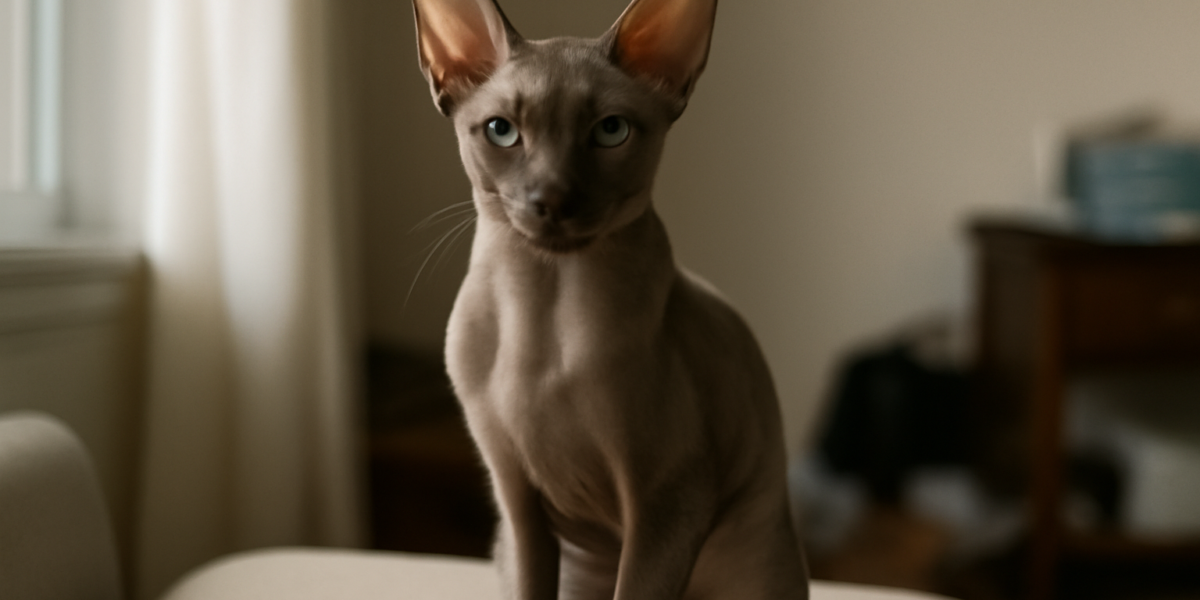
The Peterbald has a distinctly Oriental body type — long, slim, and graceful with fine bones and lean muscles. Adults weigh between 6 and 10 pounds, though their long bodies can make them appear larger. Everything about the Peterbald is elongated: the body, the legs, the tail, the face, and the ears.
Their head is a long, narrow wedge with a flat forehead, straight profile, and large, flaring ears set wide apart. The eyes are almond-shaped and can be any color, including green, blue, and odd-eyed combinations. The overall facial expression is alert, intelligent, and slightly exotic.
Like the Donskoy, the Peterbald comes in multiple coat varieties:
- Bald: Completely hairless with a warm, slightly sticky-feeling skin
- Flock: Covered in an ultra-short, peach-fuzz coating that is barely visible
- Velour: Short, soft coat of about 1-3mm that may thin over time
- Brush: Wiry, coarse coat of varying density; these cats are often used for breeding
- Straight: A full, normal coat; these cats carry the breed type but not the hair-loss gene
The skin of hairless and near-hairless Peterbalds feels warm and soft, sometimes described as feeling like chamois leather. Wrinkles are common, especially around the head and body. Their long, whip-like tail and elegant proportions give them a graceful, almost deer-like appearance when they move.
Exercise and Activity Needs
Peterbalds are among the most energetic cat breeds, and they need vigorous daily exercise to stay happy and healthy. Their athletic build is built for action, and they are impressive jumpers, climbers, and sprinters.
Plan for at least two to three interactive play sessions daily, lasting 15 to 20 minutes each. Wand toys, interactive laser games, and feather teasers appeal to their strong prey drive. Many Peterbalds also enjoy playing fetch and will retrieve small toys tossed across the room.
Vertical space is essential for this breed. Install tall cat trees, wall-mounted climbing shelves, and high perching spots throughout your home. Peterbalds love to survey their domain from above and will use every inch of vertical space you provide. Choose structures with soft, padded surfaces to protect their exposed skin.
Mental stimulation is just as important as physical exercise. Puzzle feeders, treat-dispensing balls, and rotating toy selections keep the Peterbald’s agile mind engaged. These cats can become destructive or develop behavioral issues if they are bored, so enrichment should be a daily priority.
Grooming and Care
Grooming a Peterbald depends on their coat type. Bald and flock-coated Peterbalds require the most skin care, while brush and straight-coated individuals need more traditional grooming.
For hairless Peterbalds, weekly bathing is essential to remove the oily buildup that accumulates on their skin. Use a gentle, fragrance-free cat shampoo and warm water. After bathing, dry them thoroughly and apply a light, pet-safe moisturizer if the skin appears dry. Between baths, you can use unscented baby wipes to spot-clean oily areas.
Sun protection is non-negotiable for hairless Peterbalds. Direct sunlight can cause sunburn quickly. Keep your cat away from prolonged sun exposure, provide shaded resting areas, and use pet-safe sunscreen on exposed skin if needed. In cold weather, cat sweaters and heated beds help these warmth-loving cats stay comfortable.
Ear care requires weekly attention, as the large, open ears collect wax and debris readily. Use a vet-approved ear cleaner and soft cotton pads. Regular nail trimming every one to two weeks and daily dental care with cat-safe toothpaste round out the grooming routine. For brush and straight-coated Peterbalds, weekly brushing replaces the bathing routine.
Health and Lifespan
Peterbalds have an average lifespan of 12 to 15 years and are generally healthy cats when properly cared for. However, several health considerations are worth understanding before bringing one home.
Skin issues are the most common concern for hairless varieties. Bacterial and fungal skin infections can occur if bathing routines are inconsistent. Skin allergies and sensitivities are also possible. Work closely with your veterinarian to establish a skin care protocol that works for your individual cat.
The Peterbald’s higher metabolic rate means they burn more calories to maintain body temperature. Feed a high-quality, protein-rich diet and provide larger portions than you might for a furred cat of similar size. Your veterinarian can help you calculate the right caloric intake for your Peterbald.
Dental health is an area that deserves special attention. Peterbalds can be prone to gum disease and dental issues, so preventive dental care is crucial. Schedule professional dental cleanings as recommended by your vet, and make home dental care a regular part of your routine.
Other conditions to watch for include hypertrophic cardiomyopathy and progressive retinal atrophy. Responsible breeders screen for these conditions. Regular veterinary visits, at least annually for healthy adults and more frequently for seniors, are essential for early detection and management of any health issues.
Is the Peterbald Right for You?
The Peterbald is perfect for owners who want an intensely interactive, devoted companion and can match the breed’s high energy level. If you work from home or have a flexible schedule that allows you to spend significant time with your cat, a Peterbald will reward you with unparalleled companionship.
This breed is not suitable for households where the cat will be alone for eight or more hours daily. Peterbalds genuinely suffer from isolation and can develop separation anxiety, excessive vocalization, and destructive behaviors when lonely. If you are away frequently, consider adopting a pair so they can keep each other company.
Be honest about your willingness to maintain the grooming routine. Hairless Peterbalds need consistent skin care that goes beyond what most cat owners are used to. If weekly baths, ear cleaning, and sun protection feel like too much, a coated breed may be a better match.
If the Peterbald sounds appealing, also explore related breeds to find the best fit. The Donskoy is a close relative with a stockier build, while the Oriental Shorthair offers a similar personality in a fully furred package. Visit our cat adoption hub to see cats waiting for their forever homes, and browse our cat care resources for more breed comparisons.
Frequently Asked Questions
Are Peterbalds hypoallergenic?
No cat is truly hypoallergenic, including the Peterbald. Cat allergies are caused by proteins in saliva and skin secretions, not by fur itself. Some allergy sufferers do report fewer symptoms around hairless breeds because there is less fur to spread allergens, but this varies by individual. Spend time with a Peterbald before committing to ensure your allergies are manageable.
Do Peterbalds get cold easily?
Yes, hairless and near-hairless Peterbalds are sensitive to cold temperatures. They naturally seek out warm spots and may shiver in cool environments. Keep your home at a comfortable temperature, provide heated beds or warm blankets, and consider cat clothing for colder months. Most Peterbalds enjoy wearing sweaters once they are accustomed to them.
Can a Peterbald live with dogs?
Peterbalds generally get along very well with dogs, especially dogs that are calm and cat-friendly. Their confident, outgoing personality helps them adapt to canine housemates. Proper introductions are important, and supervision during the initial adjustment period ensures a smooth transition for both animals.
How are Peterbalds different from Sphynx cats?
Peterbalds and Sphynx cats are separate breeds with different genetics and body types. The Peterbald has a more Oriental build — long, slim, and angular — while the Sphynx has a rounder, more barrel-chested body. The Peterbald’s hairlessness comes from a dominant gene (inherited from the Donskoy), while the Sphynx’s hairlessness is recessive. Personality-wise, both are affectionate and social, but Peterbalds tend to be more vocal and energetic.
Looking to adopt a Peterbald Cat Breed Profile?
Browse Peterbald Cat Breed Profile cats and mixes available for adoption from shelters and rescues near you.
Find Peterbald Cat Breed Profile Cats for Adoption