
Why the FeLV Vaccine Decision Is Personal
The feline leukemia vaccine decision is one of the cleanest examples of risk-stratified preventive medicine in cats. The American Association of Feline Practitioners (AAFP) classifies FeLV vaccine differently for kittens and adults: as a core vaccine for all kittens (because exposure risk in early life is uncertain and the disease consequences in young cats are severe), and as a “lifestyle” vaccine for adult cats whose risk profile is now stable.
In this article
- Why the FeLV Vaccine Decision Is Personal
- How FeLV Spreads
- The AAFP Lifestyle Recommendation
- Indoor-Only Cats: When to Defer
- Indoor-Outdoor and Outdoor Cats: When to Continue
- Multi-Cat Households and FeLV-Positive Members
- Schedule and Boosters
- Site Selection and Sarcoma Prevention
- The FIV Question and Where It Differs
- Working the Decision With Your Veterinarian
- Frequently Asked Questions
For adult cats, the decision turns on whether the cat is realistically going to encounter feline leukemia virus. An indoor-only single-cat household with a closed-population history has very different risk than a multi-cat household, an indoor-outdoor cat with neighborhood interactions, or a household with an FeLV-positive resident.
Start with the disease side at feline leukemia FeLV and the deeper virological pillar at feline leukemia virus. If you are considering adopting an FeLV-positive cat, our adopting an FeLV-positive cat guide covers the household dynamics in detail.
How FeLV Spreads
FeLV is transmitted primarily through prolonged close contact between cats — shared food and water bowls, mutual grooming, fighting with bite wounds. Saliva is the highest-load body fluid for transmission. Vertical transmission from queen to kittens during pregnancy or nursing is also significant.
The virus is not particularly hardy in the environment — it is killed by routine disinfectants and does not survive long outside the host. This means casual contact between cats in clinic waiting rooms or short-duration interactions are unlikely to transmit. Sustained close-contact exposure is the high-risk scenario.
Cats living indoor-only in single-cat households with no new-cat introductions and no fostering activity have very low FeLV exposure risk. Cats with outdoor access, cats in multi-cat households with rotating membership, cats living with FeLV-positive housemates, and cats in shelter or rescue environments have elevated risk on a continuum from modest to substantial.
The AAFP Lifestyle Recommendation
AAFP recommends FeLV vaccination as core for all kittens — typically a two-dose initial series given at the kitten visits, with a one-year booster. This recommendation is not because every kitten is at high risk, but because exposure risk during the first year is genuinely uncertain (kittens are commonly fostered, rehomed, and exposed to other cats during this period), and the disease consequences in young cats are severe (FeLV-positive kittens often progress to clinical disease and have shortened lifespans).
For adult cats past the one-year booster, AAFP shifts to a lifestyle-based recommendation: continue boosting for cats with realistic exposure risk, defer boosters for adult cats now living truly low-risk lifestyles. The shift recognizes that the risk-benefit calculus changes meaningfully once a cat is established in a stable household with a known exposure pattern.
This is also the inflection point where injection-site sarcoma prevention becomes part of the conversation. FeLV vaccines are among the products historically associated with feline injection-site sarcoma, and avoiding unnecessary boosters in genuinely low-risk adult cats is part of the broader sarcoma-prevention framework. See our companion guide on vaccine-associated sarcoma prevention in cats for the deeper context.
Indoor-Only Cats: When to Defer
For an adult indoor-only cat in a stable household with no new-cat introductions, no fostering activity, no FeLV-positive housemates, and no realistic outdoor exposure, deferring FeLV boosters after the one-year mark is reasonable and AAFP-aligned. The combination of low exposure risk and modest sarcoma-prevention benefit tips the calculus toward fewer boosters in adulthood.
This recommendation assumes the household truly is closed. If a new cat is being introduced — adoption, fostering, a roommate moving in with their cat — the risk profile changes and FeLV vaccination should be revisited. Boarding visits and visits to homes with other cats can also shift the conversation, although a single occasional exposure is not the same as ongoing close contact.
Cats with established health concerns, particularly cats with prior vaccine reactions or known injection-site lumps, are stronger candidates for deferral if the underlying risk is genuinely low. Document the decision with your veterinarian so the rationale is part of the medical record.
Indoor-Outdoor and Outdoor Cats: When to Continue
Cats with outdoor access — supervised garden time, catio access with potential for stray-cat encounters, free-roaming indoor-outdoor cats — should continue FeLV vaccination on the standard schedule. Encounters with unvaccinated free-roaming cats are the highest-risk transmission scenario for FeLV, and vaccination is the meaningful prevention layer.
Even occasional encounters matter. A primarily indoor cat who occasionally escapes to the yard, a cat who watches outdoor cats through an unscreened window where contact could happen during a fight, or a cat in a home where outdoor cats sometimes get inside through pet doors all have residual risk that vaccination addresses.
The vaccination schedule for at-risk adults is a one-year booster after the kitten series, then boosters every one to three years depending on the product and the exposure intensity. Some manufacturers’ products have longer duration of immunity claims than others; your veterinarian will choose accordingly.
Multi-Cat Households and FeLV-Positive Members
Cats living with an FeLV-positive housemate are at sustained close-contact risk. The standard recommendation is FeLV testing of all household cats (including the new arrival), vaccination of FeLV-negative cats, and management strategies to limit transmission within the household. AAFP and ACVIM internal medicine consensus supports continued vaccination in these households as long as the FeLV-positive cat is present.
Vaccination is not a guarantee of protection in a sustained-exposure scenario, and households with FeLV-positive and FeLV-negative cats should have a transparent conversation with their veterinarian about realistic outcomes. Some households decide to manage as a closed group and let the negatives’ immunity from kitten vaccination plus continued boosting provide the protection they can; some households choose to separate physically; some households choose to have no further FeLV-negative cats join the home.
The adopting an FeLV-positive cat guide covers the household management framework in more detail, including bowl separation, litter box separation, and grooming patterns that influence transmission risk.
Schedule and Boosters
The kitten FeLV series is two doses given two to four weeks apart, starting around 8-9 weeks of age, with a one-year booster. After the one-year booster, the schedule for at-risk adults is annual or every-three-years boosters depending on the product. For genuinely low-risk adults, deferral is reasonable.
FeLV testing is recommended before vaccination, particularly for kittens of unknown background and for adult cats in new households. A FeLV-positive cat does not benefit from vaccination, and vaccinating an unknowingly FeLV-positive cat creates needless injection-site exposure without any protective benefit.
Recombinant non-adjuvanted FeLV vaccines are available and are the preferred product where available because of the sarcoma-prevention benefit. Adjuvanted FeLV vaccines have been more strongly associated with injection-site sarcoma historically. Talk to your veterinarian about which product they use.
Site Selection and Sarcoma Prevention
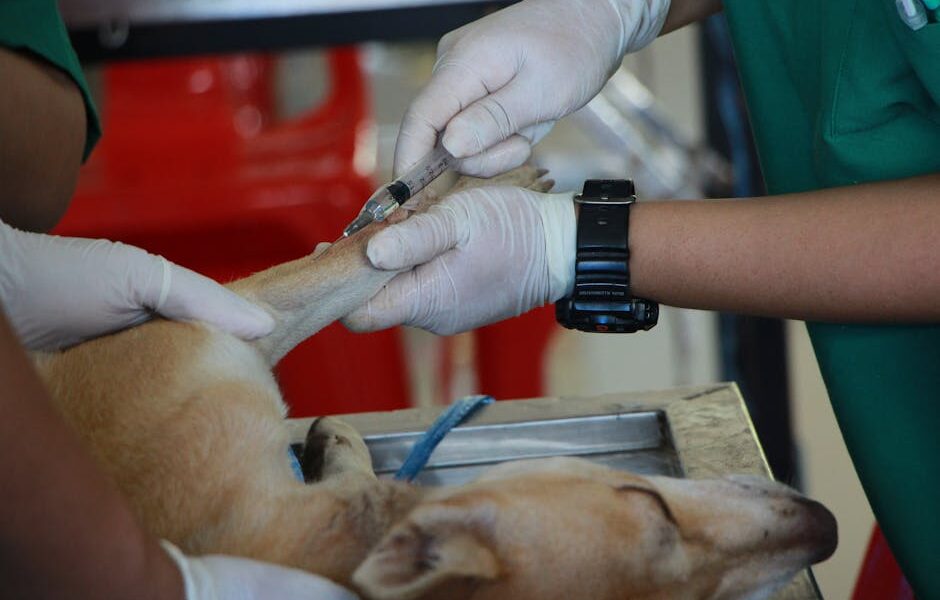
Where the FeLV vaccine is given matters as much as whether it is given. Current AAFP-aligned practice is to give FeLV vaccine in the distal left rear leg, in a position low enough that amputation would be feasible if a sarcoma developed. This is the foundation of the “vaccine site map” used in feline-only and Cat Friendly Practice clinics.
Some practices have moved to even more distal sites — the tip of the tail or the lateral hock area — where retrieval surgery is even more straightforward. Whichever site is used, documentation matters: every vaccine should be recorded with location, manufacturer, and lot number so that any subsequent injection-site lump can be traced to its origin.
The “1-2-3 rule” for evaluating injection-site lumps remains the foundation of sarcoma surveillance: lumps larger than 2 cm, persisting more than 3 months, or growing within 1 month should be biopsied. Our companion guide on fibrosarcoma injection-site cats covers the diagnosis and treatment side once a sarcoma is identified.
The FIV Question and Where It Differs
Owners often ask about feline immunodeficiency virus (FIV) vaccination alongside FeLV. The two are different. FIV vaccine has been controversial — efficacy is debated, vaccinated cats test positive on some FIV antibody tests in ways that can complicate later interpretation, and AAFP no longer recommends routine FIV vaccination in most populations. FeLV vaccine, by contrast, is well-established and is the standard recommendation for at-risk cats.
If you are considering FIV vaccination for a cat with realistic FIV exposure risk, that is a separate conversation to have with your veterinarian rather than assuming it parallels the FeLV decision. See FIV in cats for the disease side.
Both viruses share some lifestyle risk factors (outdoor cats, multi-cat households with fighting), so reducing exposure by keeping cats indoors and resolving inter-cat aggression has cross-cutting benefit beyond either vaccine alone.
Working the Decision With Your Veterinarian
The FeLV vaccine decision benefits from a structured conversation about your cat’s actual lifestyle, household composition, and risk tolerance. Bring your cat’s full vaccination history, your sense of any future household changes (planning to foster? planning to adopt another cat?), and any concerns about prior vaccine reactions or injection-site lumps.
For cats with complex histories or established injection-site concerns, ACVIM internal medicine or veterinary oncology consultation can help frame the calculus. The veterinary specialist cost breakdown covers what to expect at a referral hospital.
If you are weighing FeLV alongside titer testing for the core vaccines, see our vaccine titer testing for cats guide. If you are weighing other non-core feline vaccines like chlamydia, see chlamydia vaccine for cats. The conversations are related but not identical.
Frequently Asked Questions
Should every kitten get the FeLV vaccine?
AAFP recommends FeLV vaccination for all kittens regardless of intended adult lifestyle, because exposure risk in the first year is genuinely uncertain and disease consequences in young cats are severe. The lifestyle-based decision applies to adults after the one-year booster.
If my cat is strictly indoor-only, do I need to keep boosting FeLV?
For a stable indoor-only single-cat household with no new-cat introductions or fostering activity, deferring boosters after the one-year visit is reasonable and AAFP-aligned. Document the decision with your veterinarian and revisit if household circumstances change.
What is the sarcoma risk from FeLV vaccine?
Injection-site sarcoma is a rare but serious complication associated with vaccines (particularly historical adjuvanted FeLV and rabies products). Modern non-adjuvanted recombinant vaccines reduce but do not eliminate this risk. Site selection (distal limb), vaccine choice, and avoidance of unnecessary boosters together form the prevention framework.
Can my FeLV-vaccinated cat still get FeLV?
Vaccination is not 100% protective. Cats with sustained close-contact exposure to an FeLV-positive cat — particularly through bite wounds — can occasionally still become infected. Vaccination is one layer of protection alongside lifestyle management.
Do I need to FeLV-test my cat before vaccinating?
FeLV testing before initial vaccination is recommended, particularly for kittens of unknown background and adult cats in new households. Vaccinating an already-positive cat provides no benefit and creates needless injection exposure. In-house point-of-care tests give same-day results.


