
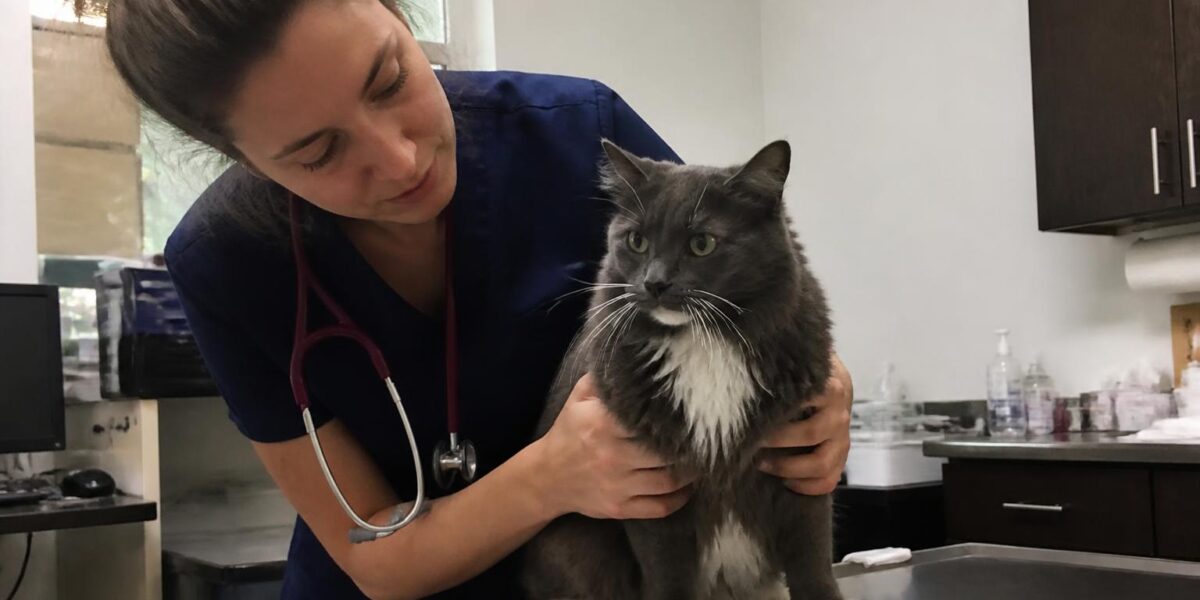
Why Titer Testing Looks Different in Cats
Vaccine titer testing for cats is less established than the canine equivalent for several reasons, and understanding why is the foundation of any sensible booster discussion. The American Association of Feline Practitioners (AAFP) feline vaccination guidelines accept titers as a tool but explicitly note the data on antibody-protection correlations in cats is weaker than in dogs, particularly for feline herpesvirus and feline calicivirus.
In this article
- Why Titer Testing Looks Different in Cats
- FVRCP: The Three Diseases the Core Vaccine Covers
- Rabies in Cats: Same Constraint as Dogs
- How a Cat Titer Appointment Works
- Best Candidates for Feline Titer Testing
- Where Titer Testing Falls Short
- Interpreting Results in the Cat-Specific Context
- Pulling Sarcoma Prevention Into the Decision
- Working With Your Veterinarian and Specialists
- Frequently Asked Questions
The practical context that drives much of the cat conversation is feline injection-site sarcoma (ISS) — a rare but aggressive complication where a tumor develops at the site of a previous injection, including vaccines. ISS gives feline practitioners and owners a real reason to think carefully about every booster, and titer testing is one of the tools that has emerged as a way to defer unnecessary FVRCP shots in adult cats with stable immunity. See our companion guide on vaccine-associated sarcoma prevention in cats for the deeper sarcoma context.
If you are still mapping the basic schedule, see cat vaccination schedule or the adult cat vaccination schedule. For brand-new kittens, the kitten series itself is not a candidate for titering — see kitten vaccination schedule for that timeline.
FVRCP: The Three Diseases the Core Vaccine Covers
FVRCP stands for feline viral rhinotracheitis (caused by feline herpesvirus-1), calicivirus, and panleukopenia. These three are bundled into one combination vaccine in nearly every veterinary clinic, and they are categorized as core in the AAFP guidelines — every cat needs them regardless of indoor/outdoor lifestyle or risk profile.
The disease side of each one is covered separately on the site: feline panleukopenia, feline calicivirus, and feline herpesvirus. Reading those pillars makes the case for FVRCP vivid: panleukopenia is a parvovirus-family infection with very high mortality in kittens, calicivirus contributes to chronic upper respiratory disease and ulcerative stomatitis, and herpesvirus is the leading cause of feline upper respiratory infection.
Titer-based decision-making works best for panleukopenia among these three. The antibody-protection relationship for panleukopenia is strong and well-characterized, similar to canine parvovirus. For herpesvirus and calicivirus, antibody levels correlate less cleanly with protection, and AAFP explicitly cautions that low titers do not necessarily indicate susceptibility because cellular immunity and local mucosal immunity matter.
Rabies in Cats: Same Constraint as Dogs
Rabies titers in cats use the same RFFIT methodology as in dogs and have the same regulatory limitations. State and country laws on rabies booster intervals vary qualitatively from jurisdiction to jurisdiction, and a titer typically does not replace a current vaccination certificate even when the antibody level is clearly protective.
The ISS-prevention angle is sharpest with rabies vaccines specifically — the recombinant canarypox-vectored rabies (Purevax Feline Rabies) is widely used because it lacks the adjuvants implicated in injection-site sarcoma development. Many feline-only and Cat Friendly Practice clinics have moved entirely to recombinant rabies for this reason. If you have a choice of products, that is a conversation worth having with your veterinarian.
Where rabies titers are practically valuable is international travel certification. The protocols for entering rabies-controlled countries from the United States or Singapore typically include serology, and your veterinarian will work with you on timing if travel is planned. Within the US, state law generally still expects a current booster certificate.
How a Cat Titer Appointment Works
The visit looks similar to any feline blood draw — exam, brief restraint, small blood sample, in-house point-of-care test or send-out depending on what the clinic uses. Point-of-care tests for FVRCP titers report a “positive/protective” or “negative/equivocal” result for each of the three core antigens, often within a single appointment.
Cats are generally more stress-sensitive than dogs at the clinic, and a high-stress visit affects the experience more than the test result. Pheromone calming with Feliway, gabapentin pre-visit (see gabapentin for cats), and Cat Friendly Practice handling techniques all help. For cats with severe carrier or vet anxiety, titering during a low-stress mobile-vet visit is sometimes the right call rather than dragging a fearful cat to a busy clinic.
Cost varies by clinic and lab. As a rule of thumb, a feline FVRCP titer panel costs more than the FVRCP vaccine itself for a single visit, but less than the cumulative cost of multiple unnecessary boosters over a long-lived cat’s life when sarcoma-avoidance benefit is factored in.
Best Candidates for Feline Titer Testing
Adult cats with a complete kitten and one-year FVRCP series who are now indoor-only and at low exposure risk are the cleanest candidates. The probability of protective panleukopenia titers years out is high, and avoiding unnecessary boosters aligns with both ISS-prevention principles and the AAFP recommendation to vaccinate based on lifestyle risk in adults.
Cats with prior vaccine reactions or known immune-mediated disease — see our IMHA in cats guide for context on the immune-mediated disease side — are stronger candidates still. Avoiding any unnecessary antigen exposure when antibodies are already protective is sensible practice in this population.
Cats with established injection-site lumps under the “1-2-3 rule” (lumps larger than 2 cm, persisting more than 3 months, or growing within 1 month) are not titer candidates as such — they need biopsy and oncology workup. But cats with no current sarcoma but past concern about reaction history are reasonable candidates for titer-based booster avoidance.
Where Titer Testing Falls Short
Kittens during the initial vaccine series should not be titered in lieu of completing the schedule. The same maternal antibody interference issues that complicate puppy titers apply, and the standard kitten series spaced through the first 16 weeks of life remains the right approach.
FeLV titers are not standard practice for booster decisions. The decision to vaccinate or not vaccinate a cat against feline leukemia virus is driven by lifestyle (indoor versus outdoor, multi-cat versus single-cat household, FeLV-positive housemate versus none) rather than by serology. See feline leukemia vaccine decision for the longer answer and feline leukemia FeLV for the disease side.
Non-core feline vaccines — Bordetella, Chlamydia felis, FIV — likewise do not have useful titer correlates for booster decision-making. AAFP recommends these on a lifestyle-risk basis, and titering is not part of the standard workflow. If you are weighing the chlamydia question specifically, see chlamydia vaccine for cats.
Interpreting Results in the Cat-Specific Context
A clearly positive panleukopenia titer in an adult cat with documented prior vaccination is the cleanest result — supports skipping the booster, with a recheck schedule (often every three years) confirming continued immunity. A clearly negative result in any of the FVRCP antigens warrants a booster, again with the ISS-prevention point that the booster should be given at a site that supports surveillance and, if needed, retrieval surgery.
Borderline FVRCP results are common given the imperfect antibody-protection correlation in cats. Most feline practitioners treat borderline as a prompt to boost rather than a true protective result, especially for herpesvirus and calicivirus where local mucosal immunity matters and serum antibody is a particularly indirect measure.
If a cat consistently fails to seroconvert after a booster, the next step is investigating for underlying immune dysfunction. FIV can blunt vaccine response, and so can chronic stress and concurrent illness. ACVIM internal medicine referral is reasonable for a healthy-appearing adult cat with surprising titer failures.
Pulling Sarcoma Prevention Into the Decision
The link between FVRCP and ISS is contested, but the link between adjuvanted vaccines (historically rabies and FeLV) and ISS is well-recognized. The current recommendation across AAFP-aligned practices is to use recombinant or non-adjuvanted vaccines where available, give vaccines distally (low on the leg or in the tail, where amputation is feasible if a sarcoma develops), and avoid unnecessary boosters.
Titer testing fits into this framework as one of the unnecessary-booster-avoidance tools. A clearly protective titer is a documented reason to skip a booster. The savings is not measured per vaccine — it is measured over a 15-20 year cat lifespan, where avoiding three or four unneeded vaccines reduces cumulative injection-site exposure.
If you are a multi-cat household weighing this for several cats, the math changes again. Discuss with your veterinarian whether titering all cats annually or staggering titers across pets is the right cadence.
Working With Your Veterinarian and Specialists
The titer-versus-booster conversation in cats benefits from a dedicated consult, not a tag-on at a vaccine appointment. Bring your cat’s complete vaccination history, any record of prior lumps, any specialist correspondence on immune-mediated disease, and a clear sense of indoor-versus-outdoor lifestyle.
For cats with complex histories, board-certified internal medicine (ACVIM) referral helps. Veterinary preventive medicine (ACVPM) specialists also occasionally consult on practice-wide vaccination protocols, although individual-pet referrals are usually internal medicine first. Cost guidance is in the veterinary specialist cost breakdown.
If your cat is older with multiple chronic conditions on top of vaccine decisions, our senior pet multi-organ disease management guide walks through how to prioritize the various decisions in that situation.
Frequently Asked Questions
Are feline titers as well-validated as canine titers?
No. The antibody-protection relationship is best characterized for feline panleukopenia and weakest for herpesvirus and calicivirus. AAFP accepts titers as a tool but is more cautious about feline data than AAHA is about canine data. Your veterinarian will interpret feline results with appropriate caveats.
Should I titer my indoor-only cat?
It is reasonable for an adult indoor-only cat with a complete kitten and one-year booster history. Skipping unnecessary boosters in this population fits the broader sarcoma-prevention framework. Your veterinarian will weigh this against the very low but non-zero infectious risk that even indoor cats face.
Does a protective rabies titer satisfy local rabies law?
Generally no. Rabies booster requirements are set by state, country, or municipality and usually require a current vaccination certificate rather than a titer. Rabies titers are most useful for international travel certification. Always check local regulations and import requirements before relying on a titer.
Should I be more worried about FVRCP boosters because of sarcoma risk?
Sarcoma risk is meaningful enough to warrant thoughtful vaccination protocols, but FVRCP itself is core and necessary in cats. The risk-mitigation tools are recombinant vaccines where available, distal injection sites for surveillance and retrieval surgery, and titer-based booster avoidance when titers are clearly protective.
Can I titer my newly adopted adult cat with unknown vaccine history?
Yes, this is one of the strongest use cases. Rather than re-vaccinating blind on the assumption that the cat has no prior immunity, a titer panel can confirm prior vaccination quickly. Cats with negative results then receive the appropriate boosters; cats with positive results avoid unnecessary stimulation.


