
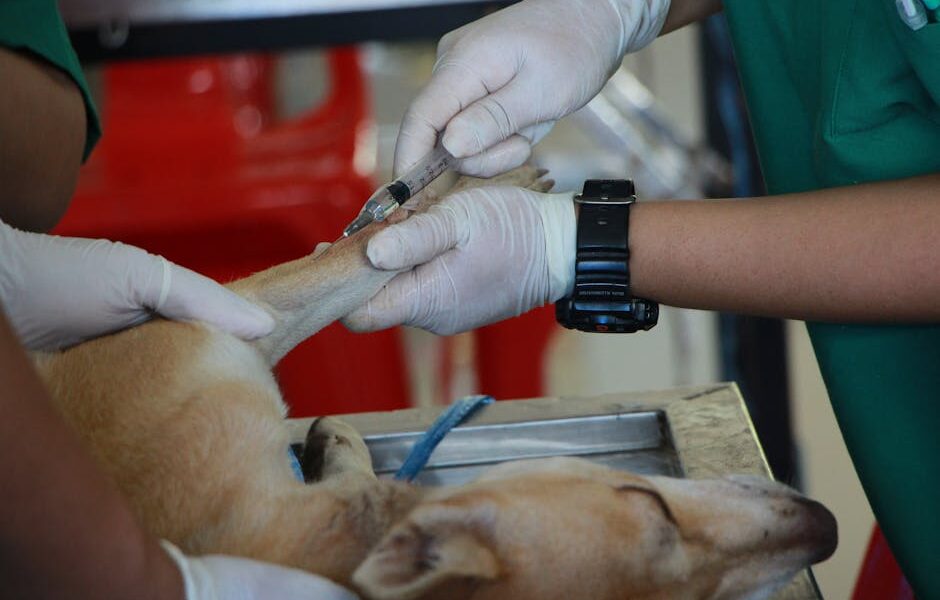
What the Ferret Rabies Vaccine Is
The standard ferret rabies vaccine in the United States has been IMRAB 3 (Merial/Boehringer Ingelheim) — an inactivated rabies virus vaccine licensed by USDA specifically for use in ferrets. The vaccine is administered subcutaneously, typically at twelve weeks of age for the first dose, with annual boosters lifelong. Brand availability shifts over time and your exotic vet uses the currently licensed product at the time of your appointment.
In this article
- What the Ferret Rabies Vaccine Is
- State and Local Laws Vary Widely
- Why Ferret Rabies Is Annual, Not Triennial
- What Happens If My Ferret Bites Someone
- If Your Ferret Is Bitten
- Vaccine Reactions in Ferrets
- Documentation You Should Keep
- Wildlife Exposure Risk Reduction
- Why Vaccination Is Non-Negotiable
- Frequently Asked Questions
Rabies is a fatal viral encephalitis transmitted through bite wounds from infected mammals. Ferrets are susceptible to rabies and, while infection in pet ferrets in the US is uncommon, the consequences of an unvaccinated ferret biting a person — or being bitten by a wildlife reservoir species — are severe under public health law. Vaccination protects both the ferret and the legal status of the household after any bite event.
This is exotic-medicine territory at the intersection of clinical care and public health law. An exotic-experienced veterinarian familiar with local rabies regulations should manage every ferret rabies vaccine appointment.
State and Local Laws Vary Widely
Rabies vaccination law for ferrets varies considerably by US state, by local jurisdiction within state, and by country. Some states require all ferrets over a specified age to be vaccinated by a licensed veterinarian and registered with local animal control. Others have lighter requirements but still strongly recommend vaccination. A few jurisdictions prohibit ferret ownership entirely or impose specific registration constraints.
Frame your local situation qualitatively: check your state and local rules before adopting or moving with a ferret. Hawaii has historically prohibited ferret import and ownership; New York City has its own restrictions distinct from New York State; California has specific rules; some local cities impose ordinances stricter than the state framework. These specifics change over time — always verify current local rules through your state department of agriculture, state veterinarian, or local animal control rather than relying on outdated summaries online.
If you are planning to move with a ferret across state lines or internationally, consult both origin and destination jurisdictions well before the move. International travel typically requires advance documentation including current rabies vaccination, microchip, and sometimes a rabies antibody titer drawn at specified intervals before travel.
Why Ferret Rabies Is Annual, Not Triennial
Many state dog and cat protocols allow rabies vaccination every three years using a triennial-licensed product. The currently USDA-licensed ferret rabies vaccine, however, is approved for one-year duration of immunity. There is no extended-duration ferret-specific rabies vaccine in routine US use.
This means annual rabies vaccination is the standard of care for pet ferrets in most US jurisdictions. State laws frequently codify this by requiring “vaccination consistent with vaccine label” — which for ferret rabies means annual.
Some owners ask about using a three-year canine or feline rabies vaccine off-label in ferrets. This is generally inappropriate — extended-duration products are not labeled for ferret use, may not satisfy legal vaccination requirements, and risk reactions when used outside their species license.
What Happens If My Ferret Bites Someone
Bite incidents involving any mammal trigger public health follow-up in the US. The default framework is the “ten-day biting animal observation period” — derived from rabies biology, this is the window during which a rabid mammal would shed virus before death. For dogs and cats with current rabies vaccination, ten-day home observation is typically permitted. The protocols for ferrets vary by jurisdiction and have evolved over the years.
A vaccinated ferret with a documented current rabies vaccination certificate is in dramatically better legal standing after a bite than an unvaccinated ferret. The certificate itself — physical or digital — needs to be retrievable on demand from your records. Your exotic vet maintains a copy but you should have your own.
An unvaccinated ferret that bites a person can face severe outcomes under local public health law, ranging from extended quarantine to mandated euthanasia for rabies testing. This is one of the most concrete reasons not to skip rabies vaccination regardless of perceived risk.
If Your Ferret Is Bitten
If your ferret is bitten by another animal — particularly wildlife or an unvaccinated dog or cat — contact your exotic vet immediately. Wound care, antibiotic considerations, and rabies post-exposure assessment all matter. Your vet may recommend a rabies booster for the exposed ferret even if it is currently vaccinated, as accelerated boosters can supplement immunity after exposure.
The biting animal’s vaccination status drives the response. A bite from a vaccinated dog or cat carries different risk than a bite from a raccoon, fox, skunk, or bat. In raccoon-strain-endemic regions of the eastern US, wildlife bite exposures are taken particularly seriously.
Document the date, location, and circumstances of any bite event. Photographs of injuries, written notes on the biting animal’s appearance and behavior, and contact information for any witnesses help if public health follow-up becomes complex.
Vaccine Reactions in Ferrets
Ferret rabies vaccine reactions are recognized in clinical practice. Most are mild — transient lethargy, decreased appetite, mild fever — and resolve in twenty-four to forty-eight hours. Moderate reactions including facial swelling, urticaria, or vomiting are less common but recognized. Severe anaphylactic reactions are uncommon but possible.
To reduce reaction risk, many exotic practices separate rabies and distemper vaccinations by two to three weeks rather than co-administering. This approach lets reactions, if they occur, be attributed to a single product. The ferret vaccination schedule covers the full framework for distemper and rabies timing, including reaction management for ferrets with prior reaction history.
Ferrets with prior rabies vaccine reactions can sometimes be pre-treated with antihistamine before subsequent doses, observed in clinic for thirty to sixty minutes after administration, and monitored closely at home. Skipping rabies vaccination because of reaction history is rarely the right answer — legal and public health consequences of lapsed vaccination usually outweigh reaction risk.
Documentation You Should Keep
Keep a physical or digital rabies certificate for every annual vaccine. The certificate documents the vaccine product, lot number, expiration date, route of administration, administering veterinarian, and the ferret’s identification details. Some jurisdictions require microchip identification linked to the rabies certificate.
Renew certificates annually before the previous one expires — a lapsed certificate creates a window during which your ferret is legally unvaccinated even if you intend to re-vaccinate soon. Schedule annual boosters in the same month each year as a routine.
For travel — interstate or international — carry copies of recent certificates with you and verify destination requirements before departure. International travel often requires advance health certificates, microchip verification, and sometimes pre-travel rabies titer testing performed at a specified interval before the trip.
Wildlife Exposure Risk Reduction
Indoor-only ferrets face lower direct exposure to wildlife but are not zero-risk. Bats entering homes through chimneys or open windows are a documented source of human and pet rabies exposure across the US. Wildlife — raccoons, foxes, skunks — entering yards or interacting through fences create indirect contact risks for ferrets allowed outdoor time.
Supervise outdoor time. Use a harness and leash for any outdoor access. Keep ferrets away from areas with known wildlife activity. Block crawlspace and chimney access so bats cannot enter the home.
If you discover a bat in any room where your ferret has been — even if you did not directly observe contact — contact your exotic vet and local public health authority. Bats can deliver bites too small to be visually obvious on a ferret, and a “no obvious bite” history is not sufficient to exclude exposure when a wild bat shared a room with the animal.
Why Vaccination Is Non-Negotiable
Rabies in any mammal is an essentially fatal disease once clinical signs appear. There is no meaningful treatment for a clinical case. Vaccination prevents disease in the individual ferret and protects public health by reducing the population of potentially infectious mammals. It also protects your legal standing as a ferret owner under state law.
Whatever your views on vaccination practice in general, the case for ferret rabies vaccine combines clinical, legal, and public health considerations that align in the same direction. Skip it only with full understanding of the consequences — and your exotic vet should walk through those consequences with you in detail before any decision to defer.
Keep ferret canine distemper virus vaccination current on the same annual schedule. The two ferret vaccines together cover the major preventable infectious threats and form the foundation of every responsible ferret-care plan. Pair them with year-round ferret heartworm prevention for the full preventive triad.
Frequently Asked Questions
Is ferret rabies vaccine required by law in every US state?
Requirements vary by state and local jurisdiction. Check your state department of agriculture, state veterinarian, or local animal control for current rules — verify rather than rely on outdated summaries.
Can I use a three-year rabies vaccine in my ferret?
Generally no. The currently USDA-licensed ferret rabies product is approved for one-year duration. Off-label extended-duration products typically do not satisfy legal vaccination requirements for ferrets.
What if my ferret bites a guest?
Contact your exotic vet and local public health authority immediately. A current rabies vaccination certificate dramatically improves the legal and welfare outcome compared to an unvaccinated bite scenario.
Are some states banning ferret ownership entirely?
A small number of US jurisdictions have prohibited or restricted ferret ownership. Check current local rules before adopting or moving with a ferret — these specifics change.
Can I travel internationally with my ferret?
Yes with advance planning. Most countries require current rabies vaccination, microchip identification, and sometimes pre-travel rabies titer testing performed at specified intervals. Begin documentation months before travel.


