Last updated: April 27, 2026
In this article
French Bulldog Breed Profile
The French Bulldog is one of the most popular companion dogs in the world, and it is easy to see why. With their distinctive bat-shaped ears, compact muscular build, and endlessly expressive faces, French Bulldogs have a way of winning over everyone they meet. Despite their somewhat serious appearance, they are warm, playful, and deeply devoted to their families. Originally bred as a companion dog, the French Bulldog thrives on human connection and adapts remarkably well to a wide range of living situations, including city apartments, suburban homes, and everything in between. Whether you are a first-time dog owner or an experienced pet parent, the French Bulldog offers a rewarding and affectionate bond. If you are considering welcoming one into your home, adoption is a meaningful choice. This profile covers everything you need to know about the breed before you commit.
Quick Facts
| Attribute | Details |
|---|---|
| Breed Group | Non-Sporting |
| Size | Small to Medium |
| Weight | Under 28 lbs (under 13 kg) |
| Height | 11–13 inches at the shoulder |
| Lifespan | 10–12 years |
| Coat | Short, smooth, fine |
| Common Colors | Brindle, fawn, white, cream, pied |
| Shedding Level | Low to Moderate |
| Energy Level | Low to Moderate |
| Good With Kids | Yes |
| Good With Other Pets | Generally Yes |
| Trainability | Moderate |
| Hypoallergenic | No |
Personality and Temperament
The French Bulldog is a genuinely affectionate dog that forms deep bonds with its family. They are known for being playful and entertaining, often developing their own comedic routines to get attention from the people they love. Unlike some small breeds that can be yappy or nervous, French Bulldogs tend to be calm and confident in temperament, making them excellent companions for a variety of households.
Adaptability is one of the breed’s greatest strengths. French Bulldogs are just as comfortable curled up on a couch watching television as they are playing in the yard. They do not require large amounts of space or intense daily activity, which makes them particularly well-suited for apartment dwellers and urban lifestyles.
They are social dogs that generally enjoy the company of people and other animals. However, they can develop separation anxiety if left alone for long periods. French Bulldogs are best suited to households where someone is home for much of the day, or where they have consistent companionship. Their even temperament, loyalty, and genuine warmth make them one of the most beloved companion breeds in the world.
Appearance
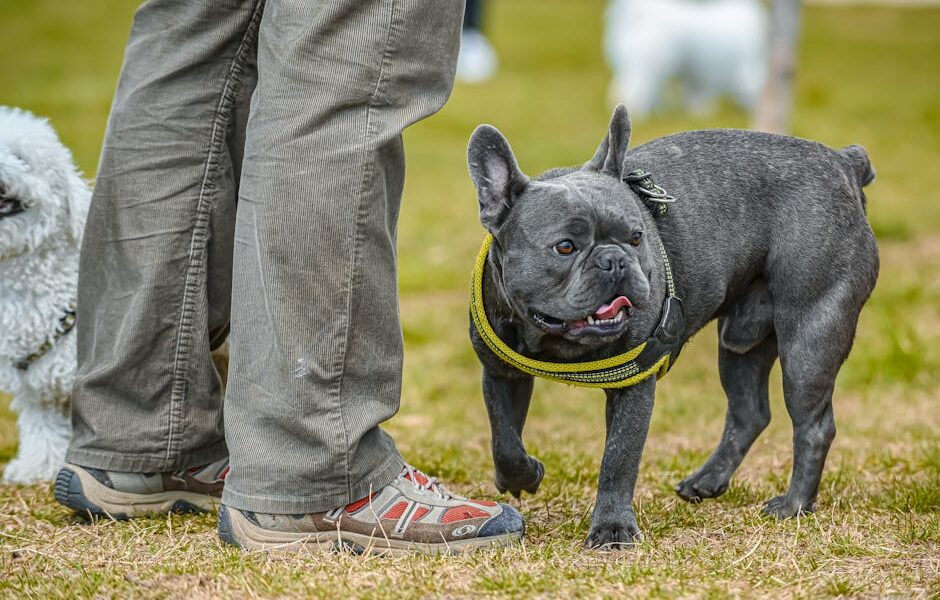
The French Bulldog’s appearance is immediately recognizable. Their most iconic feature is their large, erect bat ears, which stand upright and give them an alert, curious expression. They have a broad, square head, a flat face, and a pushed-in nose — the result of their brachycephalic skull structure, which is shared by breeds such as the English Bulldog and Pug.
Their body is compact and muscular, with a short, smooth coat that lies close to the skin. Despite their small stature, they are solid and sturdy, with a broad chest and a distinctive roach back that curves slightly upward toward the hindquarters. Their tail is short and can be straight or screwed, carried low.
French Bulldogs come in a range of accepted coat colors, including brindle, fawn, white, cream, and various pied combinations. Their skin may have visible folds, particularly around the face and nose, which require regular cleaning to maintain hygiene and prevent irritation. Overall, their appearance is charming, distinctive, and undeniably striking.
Exercise Needs
French Bulldogs have low to moderate exercise requirements compared to many other breeds. A couple of short walks each day, combined with brief periods of indoor play, is generally sufficient to keep them healthy and content. They enjoy interactive playtime with their owners and can be surprisingly energetic in short bursts, but they tire quickly and are happy to rest afterward.
One of the most important considerations for this breed is their sensitivity to heat. Because of their brachycephalic anatomy — their shortened airways and flat facial structure — French Bulldogs struggle to regulate body temperature efficiently. They can overheat rapidly in warm or humid conditions, which can become a serious and life-threatening situation. Exercise should always be scheduled during the cooler parts of the day, particularly in summer, and access to shade and fresh water is essential.
Swimming is not recommended unsupervised, as their heavy, compact build and short snout make it difficult for them to stay afloat safely. Mental stimulation through puzzle toys, training sessions, and social interaction can be just as tiring and rewarding for this breed as physical activity. For more general dog care guidance, visit our dog care blog.
Grooming Needs
The French Bulldog’s short, smooth coat is relatively low-maintenance. Weekly brushing with a soft-bristle brush or grooming mitt is usually sufficient to remove loose hair and keep the coat looking clean and healthy. They shed moderately throughout the year, with slightly heavier shedding during seasonal changes.
The most important aspect of French Bulldog grooming is cleaning the facial folds and wrinkles. Moisture, debris, and bacteria can accumulate in the skin folds around the nose and face, leading to irritation, odor, and infection if not addressed regularly. Use a damp cloth or pet-safe wipe to gently clean inside each fold, and dry thoroughly afterward to prevent moisture buildup.
Ears should be checked weekly for signs of redness, odor, or wax buildup, and cleaned with a veterinarian-approved ear cleaner when needed. Nails should be trimmed every three to four weeks, and teeth brushed regularly to support good dental health. Bathing every four to six weeks, or as needed, is generally appropriate for this breed. Overall, their grooming routine is manageable and straightforward for most owners.
Health and Common Issues
The French Bulldog is a breed that comes with a number of known health considerations, and prospective owners should be well-informed before adopting. The most significant concern is Brachycephalic Obstructive Airway Syndrome (BOAS), a condition caused by their flat facial structure that can restrict airflow and cause breathing difficulties. Symptoms range from snoring and snorting to more serious respiratory distress, and surgical intervention is sometimes required.
Spinal issues, including hemivertebrae and intervertebral disc disease (IVDD), are also relatively common in the breed due to their compact body structure. These conditions can cause pain, weakness, or in severe cases, paralysis. Regular veterinary checkups are essential for early detection.
French Bulldogs are also prone to skin allergies, which can manifest as itching, redness, or recurrent ear infections. Eye conditions such as cherry eye, entropion, and corneal ulcers are seen with some frequency as well. Maintaining a relationship with a knowledgeable veterinarian, feeding a high-quality diet, and avoiding environmental triggers can help manage many of these concerns proactively.
Are French Bulldogs Good With Kids and Other Pets?
French Bulldogs are generally excellent with children. They are patient, gentle, and enjoy the energy and attention that kids bring. Their playful nature makes them wonderful companions for older children who understand how to interact respectfully with dogs. As with any breed, interactions between young children and dogs should always be supervised to ensure safety for both parties.
With other pets, French Bulldogs tend to be sociable and adaptable. They can coexist comfortably with other dogs, including larger breeds, provided introductions are handled carefully and both animals have space to establish their comfort levels. Early socialization during puppyhood significantly improves outcomes in multi-pet households.
French Bulldogs may occasionally show stubbornness or possessiveness around food or toys, so monitoring mealtimes in multi-pet homes is advisable. On the whole, this is a breed that integrates well into family life and generally gets along with both people and animals when given proper guidance and a stable, loving environment.
Training Tips
French Bulldogs are intelligent dogs, but they are also known for their independent streak. They can be stubborn at times, which means patience and consistency are essential components of any training program. Positive reinforcement methods — using treats, praise, and play as rewards — work far better with this breed than harsh corrections or repetitive drills, which can cause them to disengage entirely.
Short, engaging training sessions of five to ten minutes are more effective than long sessions that lead to boredom. Early socialization is critical. Exposing a French Bulldog to a variety of people, environments, sounds, and other animals from a young age helps build a confident and well-adjusted adult dog.
Basic commands such as sit, stay, come, and leave it form a solid foundation, and many French Bulldogs can go on to learn more complex behaviors with time and motivation. Crate training, when introduced positively, can provide a sense of security and support house-training. Enrolling in a group puppy class is a great way to combine training with socialization in a structured setting.
History and Origin
The French Bulldog’s history is a fascinating journey across two countries and several decades. The breed traces its roots to England in the mid-nineteenth century, where English lace workers in the Nottingham region kept small bulldog-type dogs as companions. When many of these workers relocated to France during the Industrial Revolution in search of work, they brought their dogs with them.
In France, these small bulldogs were crossbred with local terrier and ratter breeds, gradually developing the distinctive bat ears and refined compact form associated with the breed today. They became enormously fashionable in Paris, particularly among working-class communities, and their popularity quickly spread through all levels of society, including artists, writers, and the wealthy elite.
By the late 1800s, the French Bulldog had been exported to the United States and England, where breed clubs were established to preserve the standard. The breed was recognized by the American Kennel Club in 1898. Today, the French Bulldog consistently ranks among the most popular dog breeds in the United States, valued above all else as a devoted and adaptable companion dog.
Frequently Asked Questions About French Bulldogs
Do French Bulldogs bark a lot?
French Bulldogs are not considered excessive barkers. They tend to be relatively quiet compared to many other small breeds, though they may bark to alert their owners to visitors or unusual sounds. Their communication style often involves a range of snorts, grunts, and yodels rather than prolonged barking, which many owners find charming.
Can French Bulldogs be left alone during the day?
French Bulldogs can tolerate being alone for moderate periods, but they are companion-oriented dogs that thrive on human presence. Extended periods of isolation can lead to separation anxiety, which may manifest as destructive behavior or excessive vocalization. If you work long hours, arranging for a dog walker, pet sitter, or doggy daycare is highly recommended for this breed.
Do French Bulldogs do well in hot weather?
No. French Bulldogs are highly sensitive to heat due to their brachycephalic anatomy, which limits their ability to cool themselves through panting. Hot or humid conditions can quickly become dangerous for this breed. During warm months, walks should be limited to early morning or evening, air conditioning should be available indoors, and the dog should never be left in a parked vehicle.
Is the French Bulldog a good choice for first-time dog owners?
Yes, in many respects. French Bulldogs are affectionate, adaptable, and do not require intense exercise, which makes them a manageable choice for first-time owners. However, new owners should be prepared for potential health costs related to the breed’s known conditions and should be consistent with training despite the occasional stubbornness. Researching the breed thoroughly and connecting with a trusted veterinarian before adopting is always advisable.
Adopt a French Bulldog
If you are ready to open your home to a French Bulldog, adoption is a wonderful way to give a dog in need a second chance at a loving life. French Bulldogs do enter rescue, and many are waiting for caring families who understand their needs and are committed to their wellbeing. At Walk Me Home Rescue, we work hard to match dogs with the right homes based on temperament, lifestyle, and experience.
Browse our available dogs and begin your adoption journey today. Visit our adopt a dog page to see current listings and learn about our adoption process. You can also explore our dog care blog for practical advice on preparing your home and supporting your new companion through the transition.
Looking to adopt a French Bulldog?
Browse French Bulldog dogs and mixes available for adoption from shelters and rescues near you.
Find French Bulldog Dogs for Adoption