
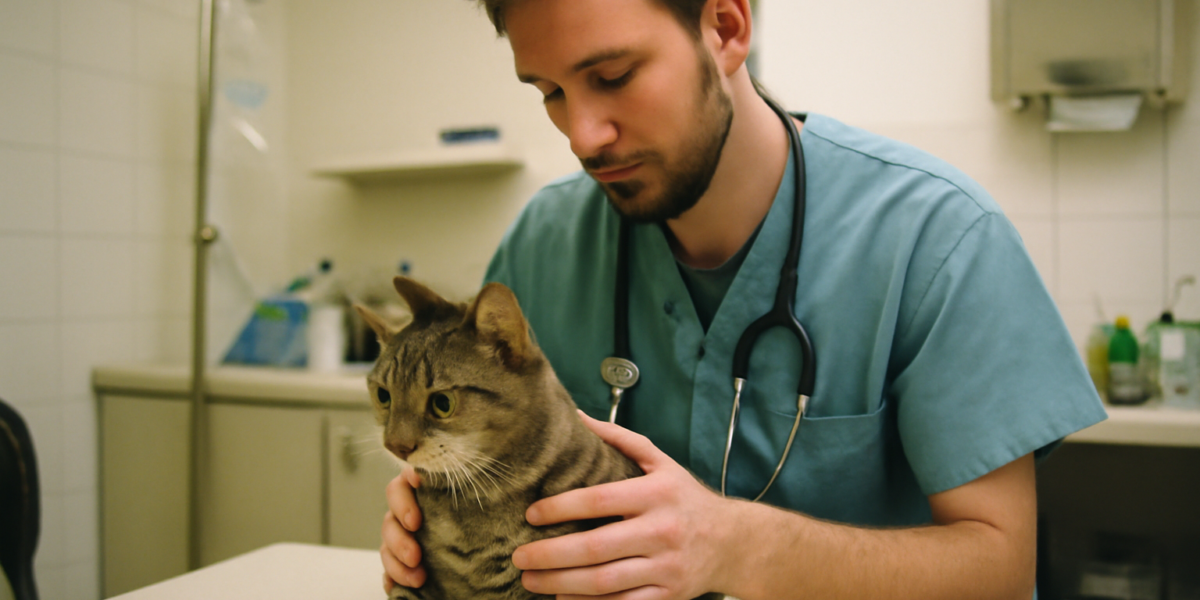
What Griseofulvin Is and Why Vets Use It in Cats
Griseofulvin is an oral antifungal antibiotic that has been used for decades to treat dermatophyte infections — most commonly ringworm. For griseofulvin cats, the medication targets the fungi that cause ringworm (Microsporum canis being the most common in cats) by interfering with fungal cell division. Unlike topical antifungals that just treat the surface, griseofulvin gets incorporated into the keratin of growing skin, hair, and nails, providing systemic coverage.
In this article
- What Griseofulvin Is and Why Vets Use It in Cats
- How Griseofulvin Works
- Critical Caution: Teratogenicity
- Critical Caution: Bone Marrow Suppression in FIV-Positive Cats
- Conditions Vets Treat With Griseofulvin in Cats
- Side Effects in Cats
- How Griseofulvin Is Given
- The Importance of Environmental Decontamination
- Drug Interactions
- Cats Who May Need Extra Caution or a Different Antifungal
- Frequently Asked Questions
- The Bottom Line
Griseofulvin used to be the go-to oral antifungal for feline ringworm. Today, newer drugs like itraconazole and terbinafine have largely replaced it in many practices because they have a better safety profile and shorter treatment courses. However, griseofulvin still has a role — particularly when itraconazole is not tolerated or available, when cost is a major factor, or in shelter and rescue settings where the established protocol is well understood. The drug works, but it carries some specific safety concerns that owners and vets must take seriously.
This guide covers what griseofulvin is used for in cats, how it works, the critical teratogenicity caution, the bone marrow risk in FIV-positive cats, side effects, and how the drug compares with safer modern alternatives.
How Griseofulvin Works
Griseofulvin works by binding to a protein called tubulin in fungal cells, disrupting the microtubules that fungi need for cell division. Without functional cell division, the fungi cannot grow or spread. The drug is selectively concentrated in keratin-containing tissues — skin, hair, and nails — where dermatophyte infections live.
This mechanism has a few practical consequences:
- The drug only works on growing tissue. Existing infected hair shafts continue to carry the infection until they are shed and replaced.
- Treatment takes time. A full course often runs six to eight weeks or longer, until all infected hair has been shed and replaced with healthy fungus-free hair.
- Treatment is monitored by negative cultures, not just visible improvement. Cats often look better long before they actually clear the fungus.
The drug is given orally and absorbed best when taken with a fatty meal. The fat content in the food helps the drug dissolve and absorb properly.
Critical Caution: Teratogenicity
The single most important safety issue with griseofulvin is that it is teratogenic — it can cause severe birth defects in developing fetuses. This applies to two distinct populations:
- Pregnant cats must never receive griseofulvin. The drug crosses the placenta and can cause major malformations in kittens.
- Pregnant women should not handle griseofulvin tablets or compounded liquids. Skin or mucous membrane exposure carries a real risk of fetal harm.
If you are pregnant, trying to conceive, or might be pregnant, do not handle this medication. Have another household member give the dose, or ask your vet about alternative antifungals like itraconazole or terbinafine that do not carry the same teratogenic risk.
Female cats of breeding age should not receive griseofulvin without first ruling out pregnancy and ensuring no breeding will occur during treatment. Spayed cats are not at risk for pregnancy themselves, but the human handling caution still applies.
Critical Caution: Bone Marrow Suppression in FIV-Positive Cats
Griseofulvin can cause bone marrow suppression in cats, leading to reduced production of red blood cells, white blood cells, and platelets. The risk is particularly elevated in cats infected with feline immunodeficiency virus (FIV), where the immune system and bone marrow are already compromised. Severe, sometimes fatal, bone marrow suppression has been reported in FIV-positive cats on griseofulvin.
For this reason:
- FIV testing should be considered before starting griseofulvin, particularly in cats from rescue or shelter backgrounds, outdoor cats, or cats with unknown FIV status.
- FIV-positive cats should generally receive a different antifungal — itraconazole or terbinafine are usually safer choices.
- Bloodwork monitoring is essential for any cat on griseofulvin, even more so for cats with any concern for immune compromise.
This is one of the major reasons many vets default to itraconazole or terbinafine for feline ringworm rather than griseofulvin in modern practice.
Conditions Vets Treat With Griseofulvin in Cats
Veterinarians may prescribe griseofulvin for cats with:
- Ringworm (dermatophytosis) caused by Microsporum canis, the most common feline dermatophyte. See cat ringworm for the broader picture.
- Other dermatophyte infections caused by Trichophyton or Microsporum gypseum
- Severe or generalized ringworm where topical treatment alone is insufficient
- Multi-cat household outbreaks where systemic coverage is needed
Most modern vets reach for itraconazole or terbinafine first. Griseofulvin is more often considered when those drugs are unavailable, when cost is a major issue, or when established shelter protocols use it. For more on safer alternatives, see itraconazole and terbinafine.
Side Effects in Cats
Cats tolerate griseofulvin less reliably than many other antifungals. Reported side effects include:
- Bone marrow suppression — the most serious concern, particularly in FIV-positive cats
- Gastrointestinal upset — vomiting, decreased appetite, diarrhea
- Liver injury — uncommon but possible
- Skin reactions — including photosensitivity
- Lethargy and behavioral changes
- Neurologic signs — uncommon but reported with high doses
Stop griseofulvin and call your vet promptly for vomiting that does not resolve, persistent diarrhea, signs of weakness or lethargy, pale gums, unusual bruising or bleeding, yellow gums or skin (jaundice), or any signs of an allergic reaction.
How Griseofulvin Is Given
Griseofulvin for cats is given as oral tablets, typically once or twice daily depending on the formulation. Two formulations exist — microsize and ultramicrosize — with different dosing because they are absorbed differently. Always confirm with your vet which formulation has been prescribed and at what dose.
Important administration points:
- Always wear gloves when handling the medication, particularly if anyone in the household is or might become pregnant.
- Give with a fatty meal. Absorption improves dramatically with dietary fat — a small amount of canned cat food or a fish-based topper works well.
- Complete the full prescribed course, even if your cat looks better. Treatment is monitored by negative fungal cultures, not just visible improvement.
- Give doses at consistent intervals as directed.
- Combine with topical therapy (lime sulfur dips, antifungal shampoos, environmental decontamination) — oral drugs alone rarely clear ringworm efficiently.
Always confirm the right dose with your veterinarian. For longer courses, periodic bloodwork is appropriate.
The Importance of Environmental Decontamination
Ringworm is not just a pet problem — it lives in the environment on shed hairs and skin flakes. Even the best antifungal treatment will fail if the environment continues to reinfect the cat. Environmental management includes:
- Vacuuming daily to remove hair and skin flakes
- Washing bedding, towels, and fabric items in hot water with bleach when possible
- Cleaning hard surfaces with a dilute bleach solution or a veterinary disinfectant labeled for dermatophytes
- Discarding non-cleanable items like heavily contaminated cat trees
- Restricting the infected cat to one easy-to-clean room during the contagious phase
Multi-cat households face particular challenges. Your vet may recommend treating all cats topically even if only one is showing signs, since exposed cats can carry spores without visible disease.
Drug Interactions
Griseofulvin can interact with several other medications:
- Phenobarbital can reduce griseofulvin absorption and effect.
- Warfarin and other anticoagulants may have reduced effect.
- Cyclosporine levels may be affected.
- Some hormonal medications may have altered metabolism.
Tell your vet about every medication and supplement your cat is on before starting griseofulvin so the plan can be adjusted as needed.
Cats Who May Need Extra Caution or a Different Antifungal
Vets often choose a different antifungal for cats with:
- FIV-positive status or unknown FIV status without testing
- Pre-existing low blood cell counts
- Pregnancy or potential breeding plans
- Significant liver disease
- Concurrent use of bone marrow-suppressive medications
- Households with pregnant women, those trying to conceive, or anyone with bone marrow disease
For all of these populations, itraconazole or terbinafine is usually a better choice. The decision is always individualized, and your vet will help you choose.
How Griseofulvin Compares With Modern Alternatives
The two most common alternatives to griseofulvin for feline ringworm are:
Itraconazole — A triazole antifungal with excellent activity against dermatophytes and a better feline safety profile than griseofulvin. Often given on a pulse schedule rather than daily, which simplifies dosing and reduces side effect risk. The most common modern first-line choice.
Terbinafine — An allylamine antifungal with good dermatophyte activity. Generally well tolerated in cats and a reasonable alternative to itraconazole. May be the choice when itraconazole is unavailable or not tolerated.
Compared with these drugs, griseofulvin requires longer treatment, has a worse safety profile in FIV-positive cats, carries the teratogenicity caution for handlers, and demands more bloodwork monitoring. Most vets reach for itraconazole or terbinafine first, with griseofulvin as a backup.
Frequently Asked Questions
Why is my vet still prescribing griseofulvin instead of itraconazole?
Possible reasons include cost, availability, established shelter or rescue protocols, individual cat factors, or local prescribing practices. Ask your vet to walk through their reasoning. If the choice does not make sense given your cat’s situation, it is reasonable to ask whether itraconazole or terbinafine would be a better fit.
How long does ringworm treatment take?
Treatment usually runs six to eight weeks at minimum, sometimes longer. Length is determined by negative fungal cultures, not just visible improvement. Cats often look clear long before they actually are clear, and stopping early invites relapse and continued environmental contamination.
I am pregnant — can my partner give the cat the medication?
Yes, ideally another household member who is not pregnant should handle and administer griseofulvin. If no one else is available, consider asking your vet about itraconazole or terbinafine, which do not carry the same handling risk for pregnant women.
Should my cat be tested for FIV before starting griseofulvin?
If FIV status is unknown — particularly in cats from rescue, shelter, or outdoor backgrounds — yes, testing is reasonable before starting griseofulvin. FIV-positive cats are at higher risk for severe bone marrow suppression and usually need a different antifungal.
Can ringworm spread to humans?
Yes. Ringworm is zoonotic — it can spread from cats to people, especially children, elderly people, and anyone with a compromised immune system. Wash hands after handling an infected cat, restrict cuddling during the contagious phase, and watch household members for any circular, scaly, itchy rashes that need a doctor’s evaluation.
What if I miss a dose?
Give the missed dose as soon as you remember unless it is close to the next scheduled dose, in which case skip it and continue on schedule. Do not double up to catch up.
The Bottom Line
Griseofulvin is a long-established oral antifungal that still has a role for feline ringworm in selected situations, but it has been largely replaced by safer modern alternatives like itraconazole and terbinafine in many practices. The most important cautions are the teratogenicity (no pregnant cats, no pregnant women handling) and the elevated bone marrow suppression risk in FIV-positive cats. When griseofulvin is the right choice, treatment requires patience — six to eight weeks or more, monitored by negative fungal cultures — combined with topical therapy and aggressive environmental decontamination.
If your vet has prescribed griseofulvin, follow the dosing schedule carefully, wear gloves every time you handle the medication, complete the entire course, monitor for side effects, and stay current on the bloodwork your vet schedules. When in doubt about the safety of this drug for your cat or your household, ask about itraconazole or terbinafine as alternatives — for most modern feline ringworm cases, those drugs are the safer first choice.


