Last updated: May 6, 2026
In this article
Himalayan Cat Breed Profile: The Complete Guide to the Persian-Siamese Cross
With the luxurious long coat of a Persian and the striking color points and vivid blue eyes of a Siamese, the Himalayan cat is one of the most beautiful and beloved breeds in the feline world. Often called “Himmies” by their devoted fans, these gentle, affectionate cats combine the best qualities of their two parent breeds into a companion that is as visually stunning as it is sweet-natured.
Whether you are already smitten with the Himalayan cat breed or just beginning your research, this comprehensive profile covers everything from the breed’s fascinating creation to its grooming demands, health considerations, and ideal living situation. Read on to discover why the Himalayan has captured hearts around the world.
History and Origins
Unlike many cat breeds that developed naturally over centuries, the Himalayan was deliberately created through a breeding program designed to combine the Persian’s luxurious coat with the Siamese’s distinctive color-point pattern. The effort began in the 1930s when researchers at Harvard University crossed Siamese and Persian cats as part of a genetics study. The resulting kittens demonstrated that the color-point pattern could be transferred to a Persian-type cat.
Independent breeding programs in the United States and United Kingdom continued to refine the cross throughout the 1940s and 1950s. Breeder Marguerita Goforth is credited with achieving recognition for the Himalayan from the Cat Fanciers’ Association in 1957. In the United Kingdom, the breed was developed separately and is known as the Colourpoint Longhair.
The breed’s name comes from the color-point pattern, which resembles that of the Himalayan rabbit, not from the Himalayan mountain range. The CFA eventually merged the Himalayan into the Persian breed in 1984, classifying it as a color division of the Persian rather than a separate breed. However, TICA and several other registries continue to recognize the Himalayan as a distinct breed.
Today, the Himalayan remains one of the most popular cat breeds in North America, consistently ranking among the top breeds registered with major cat associations. Its beauty, gentle temperament, and manageable activity level make it a perennial favorite among cat lovers. For a comparison of the Himalayan with its Persian parent, see our guide on Persian vs Himalayan cat.
Appearance and Physical Characteristics
The Himalayan shares the Persian’s distinctive cobby body type, meaning a compact, heavily boned, and well-rounded physique. These are medium to large cats, with males typically weighing 9 to 14 pounds and females weighing 7 to 11 pounds. The body is low to the ground, with short, thick legs and large, round paws tufted with fur between the toes.
The head is round and massive, with full cheeks, a broad skull, and a short, flat nose. Like Persians, Himalayans come in two face types: the traditional or “doll face,” which has a more moderate nose length, and the “peke face” or extreme type, which has a very flat facial profile. The extreme type is more prone to breathing difficulties and eye problems, while the traditional type generally enjoys better respiratory health.
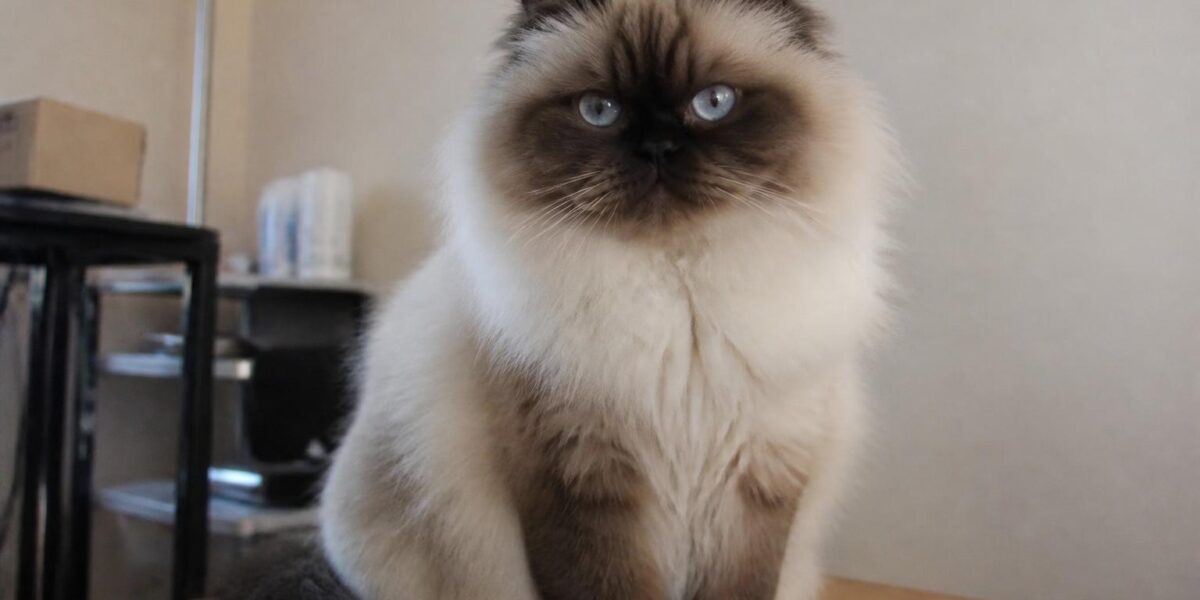
The Himalayan’s most captivating features are its large, round, deep blue eyes, inherited from the Siamese, and its color-point coat. The body coat is a pale cream or white, with darker color concentrated on the “points,” which include the face, ears, paws, and tail. Point colors include seal, blue, chocolate, lilac, red, cream, tortoiseshell, and lynx (tabby-pointed), providing a wide range of beautiful color combinations.
The coat itself is long, thick, and flowing, with a dense undercoat that gives it volume and a luxurious, cloud-like texture. A full ruff around the neck and chest frames the face beautifully, and the tail is a magnificent plume of flowing fur. The coat requires significant grooming to maintain, which is one of the most important considerations for prospective Himalayan owners.
Temperament and Personality
The Himalayan’s temperament beautifully balances the Persian’s serenity with a touch of the Siamese’s sociability and expressiveness. These cats are gentle, calm, and affectionate companions that form deep bonds with their families. They enjoy being close to their people and will often follow their favorite person from room to room, settling nearby to observe and keep company.
Himalayans are not as vocal as purebred Siamese cats, but they are more communicative than most Persians. They may use soft, melodious meows and purrs to express their needs and desires, and they are skilled at using their expressive blue eyes to get what they want. Their demeanor is sweet and undemanding; they will appreciate attention when offered but are generally content to wait patiently rather than demanding it.
These cats are playful in a gentle, dignified way. They enjoy batting at feather toys, chasing the occasional ball, and engaging in brief bursts of activity followed by long periods of rest. They are not climbers or jumpers by nature and prefer to stay at ground level or on low furniture rather than scaling cat trees to their highest perches.
Himalayans are generally good with children who are gentle and respectful, and they can coexist peacefully with other cats and cat-friendly dogs. They do not appreciate rough handling or chaotic environments, so homes with very young, active children may be stressful for them. Their calm nature and love of human companionship make them outstanding lap cats, and they are a popular choice among those seeking the best lap cat breeds.
Exercise and Enrichment
The Himalayan is a low to moderate energy breed that does not require the extensive exercise and enrichment programs needed by more active breeds. A few short play sessions each day, combined with access to toys, a scratching post, and comfortable resting spots, is typically sufficient to keep a Himalayan happy and healthy.
Interactive play is important for preventing obesity, which is a common concern in this breed. Feather wands, laser pointers used responsibly, and small balls or mice toys can encourage movement and provide mental stimulation. Puzzle feeders are an excellent tool for slowing down eating and providing cognitive engagement.
While Himalayans are not as demanding as active breeds, they do need companionship and can become depressed if left alone for long periods. They thrive in households where someone is home for most of the day or where they have the company of another calm, compatible cat. If you work full time, providing a window perch, leaving a radio on for background noise, and ensuring the cat has toys available can help ease the solitude.
Training a Himalayan is possible but requires patience and gentle methods. These cats are intelligent enough to learn simple tricks and commands but may not be as motivated as more food-driven or playful breeds. Clicker training with high-value treats can be effective for cats that show interest. Most Himalayans respond well to routine and appreciate a predictable daily schedule.
Health and Lifespan
The Himalayan has a lifespan of approximately 9 to 15 years, with many cats living into their mid-teens with proper care. However, the breed is predisposed to several health conditions that prospective owners should understand and prepare for.
Polycystic kidney disease is one of the most significant health concerns in the Himalayan breed, inherited from the Persian lineage. PKD causes fluid-filled cysts to develop in the kidneys, which can lead to kidney failure over time. DNA testing is available, and responsible breeders screen their cats for the PKD gene to reduce its prevalence in the breed.
Respiratory issues related to the brachycephalic facial structure are common, particularly in extreme-type Himalayans. The shortened nasal passages can cause noisy breathing, snoring, and increased susceptibility to upper respiratory infections. Cats with more moderate facial structures tend to have fewer breathing problems.
Other health concerns include hypertrophic cardiomyopathy, the most common heart disease in cats; dental disease, which can be exacerbated by the shortened jaw; eye conditions including cherry eye, entropion, and excessive tearing; and ringworm, to which Himalayans may be more susceptible than some other breeds.
Obesity is a significant concern because of the breed’s sedentary nature and tendency to overeat. Maintaining a healthy weight through portion control and regular play is one of the most important things owners can do to support their Himalayan’s long-term health. Regular veterinary checkups, ideally twice a year for older cats, help catch potential issues early. For more on the Himalayan’s parent breed, see our Persian cat breed profile.
Grooming Requirements
Grooming is the single biggest commitment of Himalayan ownership, and prospective owners must be honest with themselves about their willingness to maintain the breed’s beautiful but demanding coat. The Himalayan’s long, dense double coat mats and tangles easily and requires daily brushing to stay in good condition.
A high-quality metal comb and a slicker brush are the primary grooming tools for a Himalayan. Daily combing through the entire coat, paying particular attention to the areas behind the ears, under the legs, and around the hindquarters where mats form most readily, is essential. Neglecting daily grooming can quickly lead to severe matting that may require professional grooming or even shaving to resolve.
Bathing is recommended every four to six weeks to keep the coat clean, reduce oil buildup, and minimize tangles. Using a cat-specific shampoo and conditioner and thoroughly drying the coat after bathing helps maintain its texture and health. Many Himalayan owners establish a regular bathing schedule from kittenhood to acclimate the cat to the process.
Facial grooming is another daily necessity. Himalayans, especially those with the extreme flat face, are prone to excessive tearing that can stain the light-colored fur around the eyes. Wiping the face daily with a soft, damp cloth or pet-safe facial wipe removes tear stains and prevents skin irritation. Keeping the facial folds clean and dry is important for preventing bacterial and yeast infections.
Some owners opt to keep their Himalayans in a “lion cut” or other short trim, especially during warm months. While this eliminates the daily brushing requirement, it does mean regular trips to a professional groomer. Even trimmed Himalayans need regular facial cleaning, ear cleaning, nail trimming, and dental care.
Who Is the Himalayan Cat Best For?
The Himalayan is an ideal companion for individuals and families who appreciate beauty, enjoy grooming rituals, and are looking for a calm, affectionate, and relatively low-energy cat. The breed is particularly well-suited to the following types of owners.
Singles and couples who spend significant time at home and want a devoted, companionable cat will find the Himalayan to be a perfect match. These cats thrive on routine and one-on-one attention, and they reward their owners with deep affection and a calming presence.
Seniors and retirees often find the Himalayan to be an outstanding companion. The breed’s calm demeanor, manageable exercise needs, and love of lap time align well with a quieter lifestyle. The daily grooming routine can actually become a bonding ritual that both cat and owner enjoy.
Families with older, gentle children can enjoy a Himalayan, provided the children understand the importance of treating the cat with respect and care. The breed’s patient, tolerant nature makes it forgiving of minor mistakes, but rough handling or a chaotic household will stress a Himalayan.
The Himalayan is not the best choice for owners who travel frequently, work very long hours, or are unwilling to commit to daily grooming. It is also not ideal for households seeking a highly active, playful cat or for hot climates where the thick coat can cause discomfort. Air conditioning is recommended for Himalayan owners in warmer regions.
Frequently Asked Questions About the Himalayan Cat
Is the Himalayan a separate breed from the Persian?
This depends on the registry. The Cat Fanciers’ Association classifies the Himalayan as a color division of the Persian breed, meaning they are shown and registered as Persians with color-point coats. However, TICA and several other international registries recognize the Himalayan as a distinct breed. Regardless of classification, the Himalayan is distinct from the standard Persian in its color-point pattern and blue eyes, which come from the Siamese ancestry in its background.
How much grooming does a Himalayan cat need?
Himalayan cats require daily grooming to prevent their long, dense coats from matting and tangling. This includes thorough combing with a metal comb and slicker brush, paying attention to problem areas like behind the ears and under the legs. Daily facial cleaning is also necessary to manage tear staining. Bathing every four to six weeks is recommended. Owners who are not prepared for this level of grooming commitment should consider a shorter-coated breed.
Are Himalayan cats good for apartments?
Himalayan cats are excellent apartment cats. Their calm, low-energy temperament and preference for quiet, stable environments make them well-suited to apartment living. They do not need large spaces to be happy, provided they have comfortable resting spots, a few toys, and regular companionship from their owners. Their quiet voices and non-destructive nature also make them considerate neighbors in multi-unit buildings.
Do Himalayan cats get along with other pets?
Himalayan cats generally get along well with other calm, respectful pets. They can coexist peacefully with other cats, especially if both are introduced gradually and have access to separate resources. Cat-friendly dogs that are gentle and not overly boisterous can also be good companions for Himalayans. However, the breed’s quiet, gentle nature means it may be stressed by very energetic or dominant pets that invade its space or disrupt its routine.
Looking to adopt a Himalayan Cat Breed Profile?
Browse Himalayan Cat Breed Profile cats and mixes available for adoption from shelters and rescues near you.
Find Himalayan Cat Breed Profile Cats for Adoption