
Last updated: April 10, 2026
In this article
Are Lilac Bushes Toxic to Cats?
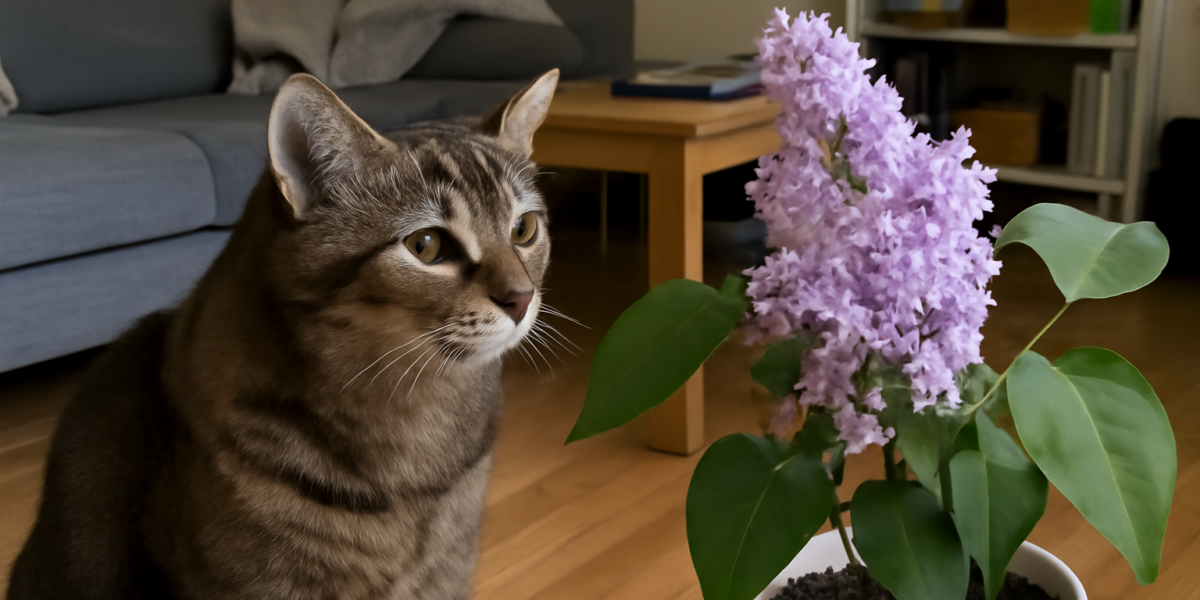
Here is some good news for cat owners who love spring blooms: common lilac (Syringa vulgaris) is generally considered non-toxic to cats. The ASPCA lists the common lilac as a non-toxic plant for cats, dogs, and horses. However, the story does not end there, because several plants with “lilac” in their name are genuinely dangerous to cats. Understanding the distinction between true lilacs and toxic look-alikes is critical for keeping your feline companion safe.
While common lilac is not classified as toxic, that does not mean it is a salad bar for cats. Eating any non-food plant material can cause mild gastrointestinal upset in cats, including drooling, nausea, or a bout of vomiting. The plant material itself is indigestible, and the natural oils and compounds in the leaves and flowers can irritate a sensitive stomach. The key point is that lilac does not contain the specific toxins that cause organ damage, neurological effects, or life-threatening poisoning.
The real danger lies in mistaken identity. Persian lilac (Melia azedarach), also called chinaberry, is highly toxic to cats and is an entirely different plant species despite sharing the “lilac” name. If you are unsure which plant you have in your yard, proper identification is essential before assuming your cat is safe.
Common Lilac vs Toxic Look-Alikes
The name “lilac” gets applied to several unrelated plants, and this creates a dangerous confusion for pet owners. Let’s clear it up.
Common lilac (Syringa vulgaris): This is the classic garden shrub with clusters of fragrant purple, white, or pink flowers that bloom in spring. It belongs to the olive family (Oleaceae). Common lilac is non-toxic to cats. The flowers are fragrant, the leaves are heart-shaped, and the plant grows as a multi-stemmed shrub or small tree reaching 8 to 15 feet tall.
Persian lilac (Melia azedarach): Despite its name, this is not a true lilac. It is a tree in the mahogany family (Meliaceae), also known as chinaberry tree or white cedar. This plant is highly toxic to cats, dogs, and horses. It contains tetranortriterpenes (meliatoxins) that can cause severe vomiting, diarrhea, seizures, and death. All parts are poisonous, with the berries being especially dangerous. If you have a “Persian lilac” in your yard, this is a serious risk to your cat.
French lilac (Galega officinalis): Also called goat’s rue, this herbaceous plant is toxic to livestock and can cause gastrointestinal problems in cats. It is not commonly grown in residential gardens but does grow wild in some areas.
Indian lilac (Azadirachta indica): Also called neem tree, this plant contains compounds that are toxic to cats. Neem oil and neem tree parts can cause vomiting, lethargy, and liver damage in felines.
If you have a bush or tree labeled “lilac” and you are not certain which species it is, take a clear photo and consult your local nursery, extension service, or a plant identification app. Getting this right matters for your cat’s safety.
Symptoms to Watch For If Your Cat Eats Lilac
Even though common lilac is non-toxic, your cat could still experience mild discomfort after eating lilac plant material. Here is what to look for and when to escalate your concern.
After eating common lilac (Syringa):
- Mild drooling from the bitter taste
- One or two episodes of vomiting as the body rejects the indigestible material
- Temporary loss of appetite lasting a few hours
- Possible mild diarrhea
These symptoms should resolve on their own within 12 to 24 hours. If they persist beyond that or if your cat seems lethargic or in pain, call your veterinarian. Prolonged symptoms could indicate your cat ate more than you realized or that the plant was not actually a common lilac.
After eating Persian lilac / chinaberry (Melia azedarach):
- Severe vomiting beginning within a few hours
- Profuse, watery diarrhea
- Drooling and abdominal pain
- Weakness and lethargy
- Tremors, incoordination, or seizures
- Difficulty breathing
- Collapse
Persian lilac poisoning is a veterinary emergency. The meliatoxins affect the gastrointestinal tract, nervous system, and liver. Without treatment, large ingestions can be fatal. If you suspect your cat has eaten any part of a chinaberry tree, contact your veterinarian or the ASPCA Animal Poison Control Center at (888) 426-4435 immediately.
Severity Rating
Common lilac (Syringa vulgaris): Non-toxic. Mild gastrointestinal upset possible from eating indigestible plant material, but no specific toxic compounds of concern. Severity: minimal.
Persian lilac (Melia azedarach): Highly toxic. Contains meliatoxins that can cause multi-system organ damage and death. Severity: severe.
What to Do If Your Cat Eats Lilac Plant Material
Your response should be guided by which type of “lilac” your cat has encountered.
If you are certain it is common lilac (Syringa):
- Remove your cat from the area and prevent further munching.
- Check for any leaf or flower fragments in your cat’s mouth and remove them if possible.
- Offer fresh water to help settle the stomach.
- Monitor your cat for the next 12 to 24 hours. Mild vomiting or drooling should resolve on its own.
- Call your vet if symptoms persist beyond 24 hours, if your cat refuses to eat for more than a day, or if you notice lethargy, blood in vomit or stool, or any unusual behavior.
If you suspect it is Persian lilac, chinaberry, or you are unsure of the species:
- Remove your cat from the plant immediately.
- Take a photo of the plant, including the leaves, flowers or berries, and bark.
- Call your veterinarian or the ASPCA Poison Control Center right away. Do not wait for symptoms to develop.
- Do not induce vomiting unless explicitly instructed by your vet.
- Transport your cat to the vet clinic if directed, bringing the plant photo and any chewed fragments.
When you are unsure about the plant’s identity, always err on the side of caution and contact your vet. A quick phone call can help you determine whether your cat needs emergency treatment or simple monitoring at home.
Making Your Garden Cat-Friendly with Lilacs
Since common lilac is non-toxic, it is actually one of the better choices for a cat-friendly garden. Here are some tips for incorporating lilac into your landscape while keeping your cat safe from other garden hazards.
Plant common lilac with confidence. Syringa vulgaris and its cultivated varieties (including ‘Sensation’, ‘Miss Kim’, and ‘Charles Joly’) are safe choices. Japanese tree lilac (Syringa reticulata) and dwarf Korean lilac (Syringa meyeri) also belong to the Syringa genus and share the same non-toxic classification.
Remove chinaberry trees if present. If you discover a Melia azedarach (Persian lilac / chinaberry) on your property, consider having it removed, especially if your cat goes outdoors. The fallen berries are the most commonly ingested part and can persist on the ground for months.
Pair lilacs with other cat-safe plants. Build a garden that is both beautiful and safe by combining lilacs with roses (thorns aside, the petals are non-toxic), snapdragons, zinnias, and sunflowers. Adding a patch of cat grass (wheatgrass or oat grass) gives your cat a dedicated plant to munch on.
Audit the rest of your garden. Common lilac may be safe, but what about the other plants in your yard? Many popular garden favorites, including hyacinths, lantana, and clematis, are toxic to cats. A thorough plant-by-plant audit protects your cat from hidden dangers.
If you are getting ready to bring a new cat home, checking every plant in your home and yard should be on your pre-adoption checklist. Your new feline family member will thank you for the safe space to explore.
Why Cats Eat Plants in the First Place
Understanding why cats nibble on plants can help you redirect this behavior away from anything potentially harmful.
Fiber and digestive aid: Many veterinary behaviorists believe cats eat grass and plant material to aid digestion or to help move hairballs through the digestive tract. This instinct does not distinguish between safe and unsafe plants.
Boredom and stimulation: Indoor cats with limited enrichment may chew on plants simply because they are one of the more interesting objects in their environment. Providing interactive toys, puzzle feeders, and window perches can reduce plant-chewing behavior.
Texture appeal: Some cats enjoy the texture of certain leaves and stems. Lilac leaves, with their smooth, broad surface, may be appealing to cats that like to chew on similar textures.
Nutritional seeking: Rarely, a cat that persistently eats plants may be seeking specific nutrients. If your cat is an aggressive plant eater, mention this to your vet, who may recommend a dietary adjustment or blood work to check for deficiencies.
Providing a safe outlet like cat grass satisfies the urge to chew on greenery. Place a pot of cat grass near your cat’s favorite lounging spots and replace it regularly to keep it fresh and appealing.
Frequently Asked Questions
Can I put lilac flowers in a vase indoors if I have cats?
Yes, cut common lilac (Syringa) branches are safe to display in your home around cats. The flowers and leaves are non-toxic. However, any cat that chews on the stems could experience mild stomach upset from the indigestible plant fiber. If your cat is a known plant chewer, place the vase out of reach as a precaution.
Is lilac essential oil safe to diffuse around cats?
This is a separate concern from the plant itself. Essential oils, including lilac oil, can be harmful to cats when diffused because cats lack the liver enzyme (glucuronyl transferase) needed to metabolize many volatile organic compounds. Avoid diffusing concentrated essential oils in rooms where your cat spends time. The fragrance of a fresh lilac bouquet is a safer alternative to synthetic or concentrated oils.
My cat ate several lilac leaves and is vomiting. Should I call the vet?
If you are certain the plant is common lilac (Syringa), one or two episodes of vomiting after eating leaves is a normal response to indigestible material. Offer water and withhold food for a few hours. If vomiting continues beyond two or three episodes, if your cat seems lethargic or in pain, or if you are not 100 percent certain about the plant’s identity, call your vet to be safe.
How can I tell the difference between common lilac and Persian lilac?
Common lilac (Syringa) is a shrub with heart-shaped leaves and dense clusters of small, fragrant flowers. Persian lilac (Melia azedarach) is a tree that can reach 30 to 50 feet tall, with compound (feather-like) leaves and clusters of lavender flowers followed by round yellow berries. The berries are the easiest identifier. If your plant produces round, bead-like berries, it is likely chinaberry, not common lilac.
Are any varieties of true lilac (Syringa) toxic?
No varieties within the Syringa genus are classified as toxic to cats by the ASPCA. This includes common lilac, Japanese tree lilac, Korean lilac, and all their cultivated varieties. The non-toxic status applies to the entire Syringa genus, so you can choose any lilac cultivar with confidence.


