
Last updated: April 9, 2026
In this article
Are Hyacinths Toxic to Cats?
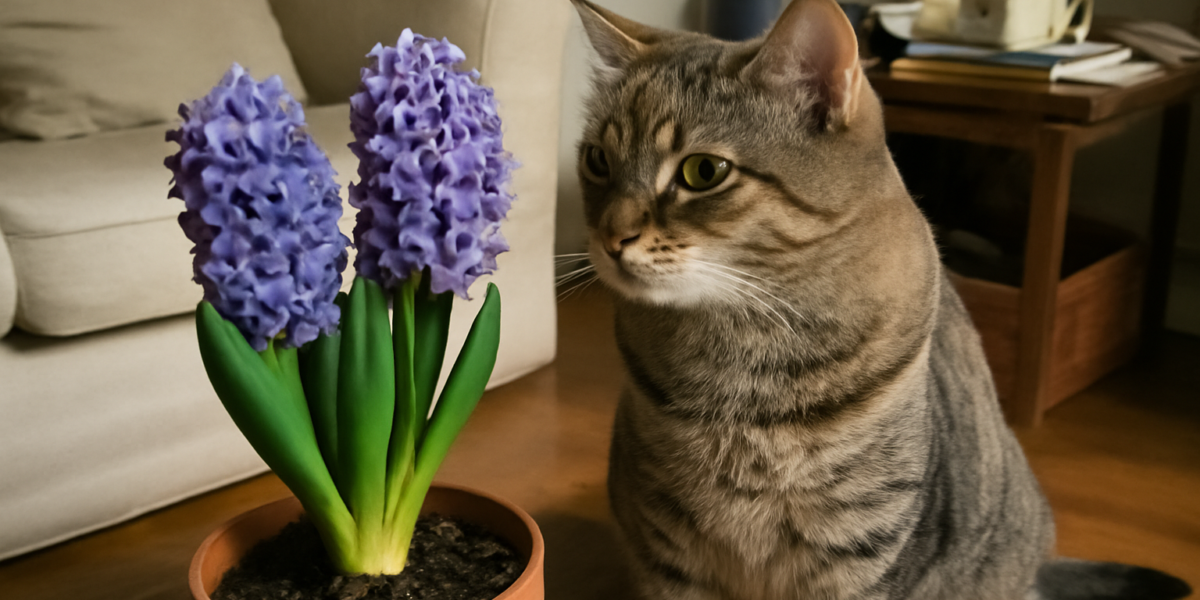
Yes, hyacinths (Hyacinthus orientalis) are toxic to cats. Every part of the hyacinth plant contains harmful compounds, but the bulb is by far the most dangerous. If your cat digs up, chews on, or ingests any portion of a hyacinth, they could experience symptoms ranging from mild oral irritation to serious gastrointestinal distress. For cat owners who love spring gardens, understanding the risk hyacinths pose is essential.
The primary toxic substances in hyacinths are allergenic lactones, with the most significant being lycorine-like alkaloids and calcium oxalate crystals concentrated in the bulb. These compounds cause immediate irritation to the tissues of the mouth, esophagus, and stomach. Even handling hyacinth bulbs can cause skin irritation in humans, which gives you a sense of how potent these substances are for a small animal like a cat.
Hyacinths are a beloved spring flower found in gardens, window boxes, and indoor forcing vases across the country. Their popularity means the risk of feline exposure is high, especially during planting season in fall and when bulbs are stored indoors.
Why Hyacinth Bulbs Are the Greatest Danger
While the entire hyacinth plant is toxic, the bulb concentrates the harmful compounds at levels many times higher than the leaves, stems, or flowers. This is an important distinction because it changes the urgency of your response.
Hyacinth bulbs contain dense concentrations of calcium oxalate raphides, which are microscopic needle-shaped crystals. When a cat bites into a bulb, these crystals penetrate the soft tissues of the mouth and throat, causing immediate intense pain, swelling, and inflammation. This mechanical damage is separate from the chemical toxicity of the alkaloids also present in the bulb.
The alkaloids in the bulb, particularly lycorine, cause gastrointestinal symptoms including severe vomiting, diarrhea, and abdominal cramping. Lycorine acts as an emetic, which means it triggers vomiting directly. In large doses, it can also affect the central nervous system.
Cats may encounter hyacinth bulbs in several scenarios. Indoor storage of bulbs before planting is a common one. Bulbs left in open bags or on counters are easily accessible to curious cats. Freshly planted bulbs in garden beds are another risk, especially for cats that dig in soft soil. Forcing vases, where bulbs sit partially exposed in water, bring the most toxic part of the plant directly to your cat’s eye level on a table or windowsill.
If your cat has chewed on a hyacinth bulb, treat it as a moderate to serious poisoning event and contact your veterinarian immediately.
Symptoms of Hyacinth Poisoning in Cats
Symptoms of hyacinth poisoning can appear within minutes if the bulb was chewed, or within a few hours if leaves or flowers were eaten. The speed and severity of symptoms depend on the quantity consumed and which part of the plant was involved.
Oral and throat symptoms (appear first, especially with bulb exposure):
- Intense drooling and hypersalivation
- Pawing at the mouth or face
- Swelling of the lips, tongue, or throat
- Difficulty swallowing
- Gagging or retching
Gastrointestinal symptoms:
- Vomiting, often severe and repeated
- Diarrhea, which may contain blood
- Abdominal pain and tenderness
- Refusal to eat
Systemic symptoms (with larger ingestions):
- Tremors or muscle twitching
- Elevated heart rate
- Labored breathing
- Lethargy progressing to depression
The calcium oxalate crystals cause the most immediately visible symptoms. A cat that has bitten into a hyacinth bulb will typically drop the material quickly due to the intense mouth pain and begin drooling heavily. This rapid onset of oral pain is actually somewhat protective because it discourages the cat from eating more.
Severity Rating
Hyacinth toxicity in cats is rated moderate. Leaf or flower ingestion typically causes mild to moderate gastrointestinal upset. Bulb ingestion is more serious due to the higher toxin concentration and the mechanical damage from oxalate crystals. Fatalities are uncommon but possible with very large bulb ingestions, especially in kittens or debilitated cats. Prompt veterinary care significantly improves the prognosis.
What to Do If Your Cat Eats a Hyacinth
Quick, calm action is the best approach when you suspect hyacinth ingestion. Here is what to do, step by step.
- Remove the plant material. Take the hyacinth away from your cat and move your cat to a safe area. If you can see fragments of bulb or plant in your cat’s mouth, gently remove them. Wear gloves if possible, as the bulb sap can irritate your skin too.
- Rinse your cat’s mouth if they allow it. Using a syringe or squeeze bottle of clean water, gently rinse the inside of your cat’s mouth to help wash away calcium oxalate crystals. Do not force this if your cat is resistant or if doing so could cause you to get bitten.
- Identify the plant part consumed. Was it the bulb, leaves, flowers, or stem? Approximately how much? Photograph the plant and any remaining chewed material. This information directly affects your vet’s treatment plan.
- Call your veterinarian or an emergency poison hotline right away. Contact your vet clinic or the ASPCA Animal Poison Control Center at (888) 426-4435. For bulb ingestion, do not wait for symptoms to worsen. Early intervention is important.
- Do not try to induce vomiting at home. Inducing vomiting in cats is risky and can cause aspiration pneumonia. Your vet has safer methods and can make the judgment call about whether vomiting should be induced based on your cat’s specific situation.
- Transport to the vet if advised. Bring the plant sample or your photos with you. Your vet may administer activated charcoal, IV fluids, anti-nausea medication, and pain relief depending on the severity.
Most cats that receive treatment within the first few hours recover fully. The oral irritation from oxalate crystals resolves within 24 to 48 hours, and gastrointestinal symptoms typically clear within one to three days.
Keeping Cats Safe During Hyacinth Season
Hyacinth season creates two distinct windows of risk for cat owners: fall planting season when bulbs are handled and stored, and spring blooming season when flowers and foliage are present.
Fall bulb storage safety: Store hyacinth bulbs in sealed containers in a location your cat cannot access, such as a locked garage cabinet or a high shelf in a closed room. Never leave bulbs in open bags on floors, tables, or counters. Bulbs have an earthy, slightly sweet smell that may attract curious cats.
Planting precautions: If you plant hyacinths in your garden, consider areas that are fenced off or otherwise inaccessible to your cat. Cover freshly planted beds with chicken wire or decorative mulch that discourages digging. Indoor cats that go out on supervised walks should be steered away from garden beds during planting and blooming seasons.
Indoor forcing vases: Water-forcing hyacinth bulbs on a windowsill is a popular winter activity, but it puts an exposed bulb right where your cat can reach it. If you force hyacinths indoors, place them in a room your cat does not enter, or choose a cat-safe alternative like paperwhite narcissus placed well out of reach. Actually, narcissus is also toxic to cats, so the safest choice is to skip forcing bulbs altogether if you have feline companions.
Cut flower bouquets: Hyacinth stems in a vase pose a lower risk than bulbs, but the water in the vase can leach toxins. Cats that drink from flower vases can ingest alkaloids dissolved in the water. If you receive hyacinths as cut flowers, keep the vase in a room your cat cannot access.
If you are building a cat-safe garden, plenty of beautiful alternatives exist. Consider planting snapdragons, zinnias, or sunflowers instead. For more information on garden plants and feline safety, read our guides on honeysuckle and cats and snowdrops and cat safety.
Hyacinths Compared to Other Spring Bulbs
Hyacinths are not the only spring bulb that threatens cats. If you are evaluating your garden for feline safety, here is how hyacinths compare to other popular bulbs.
Tulips: Like hyacinths, tulips belong to the family Liliaceae and contain allergenic lactones concentrated in the bulb. Toxicity is similar to hyacinths. Both warrant the same level of caution.
Daffodils (Narcissus): Daffodil bulbs contain lycorine in higher concentrations than hyacinths, making them slightly more dangerous. All parts of the daffodil are toxic, and the bulb can cause severe vomiting, cardiac arrhythmias, and respiratory depression in cats.
True lilies (Lilium and Hemerocallis): These are far more dangerous than hyacinths. Even small exposures to true lilies can cause acute kidney failure in cats, which can be fatal. Lilies are the single most dangerous common garden plant for cats.
Crocus: Spring crocus (Crocus vernus) is mildly toxic, less so than hyacinths. However, autumn crocus (Colchicum autumnale) is highly toxic and can cause multi-organ failure. Learn more in our article on crocus toxicity in cats.
Compared to true lilies, hyacinths are less likely to cause life-threatening poisoning. But they still require prompt attention, especially when the bulb is involved. Never assume a plant is safe just because it is less dangerous than the worst offenders.
If you are preparing your home for a new feline family member, a thorough plant audit is one of the most important safety steps you can take.
Frequently Asked Questions
Can the smell of hyacinths harm my cat?
The fragrance of hyacinths is not toxic to cats when they simply sniff the flowers. The danger comes from ingesting plant material, particularly the bulb. Some cats may sneeze or turn away from the strong scent, which is a normal reaction to the potent fragrance, not a sign of poisoning.
Are grape hyacinths (Muscari) also toxic to cats?
Grape hyacinths (Muscari spp.) are a different genus from true hyacinths and are generally considered non-toxic to cats by the ASPCA. If you want a hyacinth-like look in your garden without the risk, grape hyacinths are a much safer alternative. However, eating any non-food plant can cause mild stomach upset in cats.
How long do symptoms of hyacinth poisoning last?
Oral irritation from calcium oxalate crystals typically peaks within the first few hours and resolves within 24 to 48 hours. Gastrointestinal symptoms like vomiting and diarrhea usually resolve within one to three days with supportive care. If symptoms persist beyond 72 hours, follow up with your veterinarian.
My cat knocked over a hyacinth forcing vase and drank the water. Is that dangerous?
Yes, this is a concern. The water in a hyacinth forcing vase can contain dissolved alkaloids and other toxic compounds that have leached from the bulb. If your cat drank this water, call your vet. The amount of toxin in the water is likely lower than what they would get from eating the bulb directly, but gastrointestinal symptoms are still possible.
Are hyacinths toxic to dogs too?
Yes, hyacinths are toxic to dogs as well. The symptoms and toxic compounds are similar. Dogs are more likely to dig up and chew bulbs, making them particularly vulnerable during planting season. Read our full guide on hyacinths and dog safety for species-specific information.


