
Last updated: May 16, 2026
In this article
Are Hyacinths Toxic to Dogs?
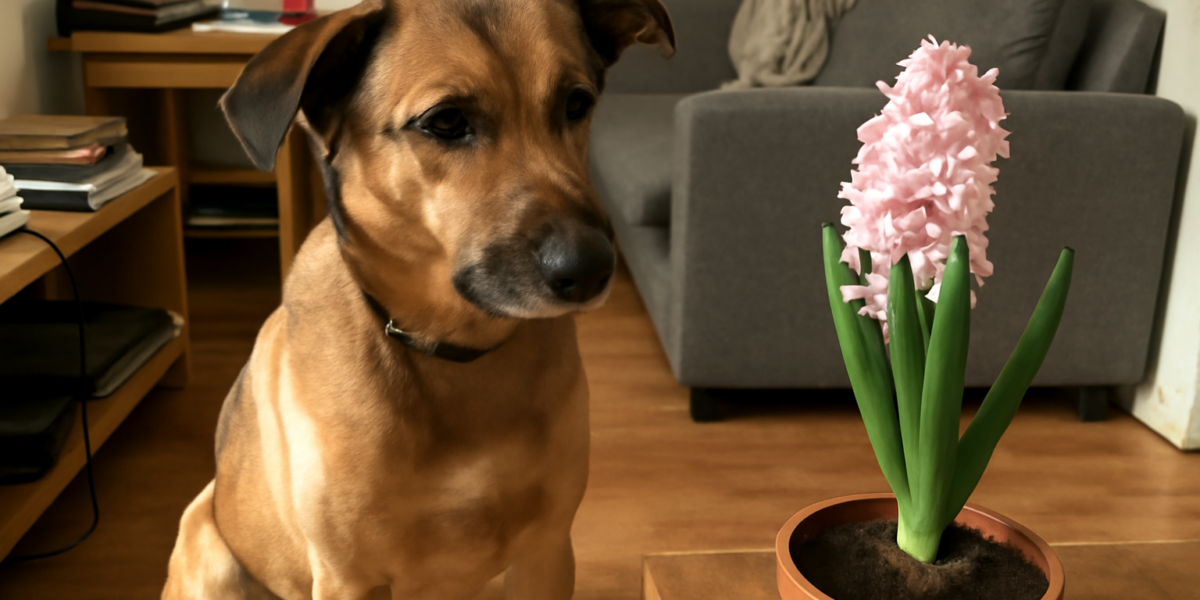
Yes, hyacinths (Hyacinthus orientalis) are toxic to dogs. The entire plant poses a risk, but the bulb contains the highest concentration of toxic compounds and represents the greatest danger. Dogs that dig in garden beds are especially vulnerable during fall planting and early spring when bulbs are near the soil surface. If your dog has gotten into your hyacinth bed, knowing what to watch for and how to respond could save you an emergency vet visit or worse.
The toxic agents in hyacinths include allergenic lactones and calcium oxalate crystals. The bulb packs these substances in dense concentrations that can cause painful oral irritation, intense vomiting, and diarrhea. Even the leaves and flowers contain enough toxins to upset your dog’s stomach, though the risk is proportionally lower than with bulb ingestion.
Spring planting season is prime time for hyacinth-related poisoning in dogs. Freshly turned soil is irresistible to many dogs, and unearthing a bulb is practically a game. Stored bulbs awaiting planting are another common source of exposure.
How Hyacinth Toxins Affect Your Dog
Two categories of toxic compounds work together to make hyacinths harmful to dogs. Understanding both helps you gauge the seriousness of an exposure.
Calcium oxalate raphides are microscopic needle-shaped crystals embedded in the plant tissue, especially the bulb. When a dog bites into a hyacinth bulb, these crystals are released and physically penetrate the soft tissues of the mouth, tongue, and throat. The result is immediate, sharp pain, intense drooling, and swelling. Some dogs drop the bulb almost instantly because the pain is so sudden. Others, particularly determined chewers, may continue gnawing long enough to ingest significant material before the discomfort registers.
Allergenic lactones and lycorine-related alkaloids are chemical toxins found throughout the plant but concentrated in the bulb. Lycorine is a powerful emetic, meaning it triggers vomiting by acting directly on the brain’s chemoreceptor trigger zone. It also irritates the stomach lining. In larger doses, these alkaloids can affect the cardiovascular and nervous systems, though this level of toxicity is uncommon in dogs that eat only a small amount.
Together, the mechanical damage from oxalate crystals and the chemical effects of the alkaloids create a one-two punch that explains why hyacinth bulb ingestion is more serious than eating other parts of the plant.
Symptoms of Hyacinth Poisoning in Dogs
Clinical signs vary based on the amount eaten and the part of the plant involved. Bulb ingestion produces the most rapid and severe symptoms.
Early signs (within minutes to one hour):
- Profuse drooling
- Pawing at the mouth or rubbing the face on the ground
- Whimpering or vocalizing due to oral pain
- Swollen lips, tongue, or gums
- Gagging or retching
Gastrointestinal signs (within one to four hours):
- Persistent vomiting, sometimes with blood
- Diarrhea, potentially bloody
- Abdominal pain, shown by a hunched posture or reluctance to be touched
- Complete refusal of food and water
Advanced signs (with significant bulb ingestion):
- Tremors or shaking
- Rapid or irregular heartbeat
- Difficulty breathing
- Marked lethargy or depression
- Dehydration from prolonged vomiting and diarrhea
Most dogs will show only the early and gastrointestinal signs. Advanced symptoms are unusual and typically only occur when a dog has consumed multiple bulbs or large portions of bulb material. Smaller breeds face higher risk because the toxin-to-body-weight ratio is greater.
Severity Rating
Hyacinth toxicity in dogs is classified as moderate. Flower or leaf ingestion is generally mild and self-limiting. Bulb ingestion is moderate and requires veterinary attention. Fatalities are rare but documented in cases involving very large ingestions in small dogs without treatment. With prompt care, the prognosis is excellent.
What to Do If Your Dog Eats a Hyacinth Bulb
Time is important, especially if your dog has chewed on or swallowed bulb material. Here is your action plan.
- Remove your dog from the garden bed. Leash your dog or bring them inside. Check the area to assess how many bulbs may have been disturbed or eaten. Collect any chewed bulb fragments as evidence for your vet.
- Inspect your dog’s mouth. Look for pieces of bulb material, swelling, or redness. If your dog allows it, gently rinse the mouth with clean water using a syringe or squeeze bottle. This helps flush out oxalate crystals and reduces ongoing irritation.
- Call your veterinarian. Describe what happened, including the plant involved, the estimated amount eaten, your dog’s weight, and any symptoms you see. Your vet will tell you whether to bring your dog in immediately or monitor at home. For after-hours situations, call the ASPCA Animal Poison Control Center at (888) 426-4435.
- Follow veterinary instructions precisely. Your vet may ask you to induce vomiting with hydrogen peroxide at a specific dose. Only do this if your vet explicitly directs you to and provides the correct dosage for your dog’s weight. Never induce vomiting on your own.
- Keep your dog comfortable. Offer small amounts of water. Do not feed a meal until your vet advises it. Keep your dog in a quiet, comfortable space and monitor for new or worsening symptoms.
Veterinary treatment typically includes anti-nausea medication, pain management for oral irritation, IV fluids if vomiting or diarrhea is significant, and monitoring of vital signs. Most dogs bounce back within 24 to 48 hours with appropriate care.
Spring Planting Safety Tips for Dog Owners
Fall is when most gardeners plant spring-blooming bulbs like hyacinths, tulips, and daffodils. This is also when bulbs are most accessible to dogs. Here is how to protect your pet during planting season and beyond.
Store bulbs securely. Keep bags of bulbs in sealed plastic bins or metal containers in a location your dog cannot reach. Many dogs are attracted to the earthy, slightly organic smell of bulbs. A bag left on the garage floor or a shelf within nose reach is an invitation for trouble.
Plant in protected areas. Choose garden beds that are fenced, elevated, or otherwise difficult for your dog to access. Raised beds with edges at least two feet high can deter many dogs. If your dog is a dedicated digger, a low garden fence or decorative edging can help.
Cover freshly planted beds. Lay chicken wire or hardware cloth over newly planted bulb beds and cover it with a thin layer of mulch. Dogs are drawn to freshly turned soil, and the wire barrier prevents digging without affecting the bulbs’ growth. Remove the wire once the plants are established and the soil has settled.
Supervise garden time. If your dog has access to areas where bulbs are planted, supervise their outdoor time during planting season and early spring when shoots emerge. Dogs that show interest in digging near plants should be redirected to an appropriate digging spot.
Choose dog-safe alternatives. If your dog is a persistent digger and you cannot fully secure your beds, consider replacing hyacinths with dog-safe flowers like marigolds, petunias, or sunflowers. These provide seasonal color without the toxicity risk.
For more guidance on creating a pet-safe yard, review our articles on clematis and dog safety and snowdrop toxicity in dogs. Knowing which popular garden plants are safe and which are not helps you build a beautiful yard that is also safe for your four-legged family members.
Hyacinths vs Other Toxic Bulbs for Dogs
Hyacinths are one of several common spring bulbs that are toxic to dogs. Here is how they stack up.
Tulips: Closely related to hyacinths and similarly toxic. Tulip bulbs contain allergenic lactones and tulipalin A and B. Symptoms mirror those of hyacinth poisoning. If you are removing hyacinths from a dog-accessible garden, remove tulips too.
Daffodils: Contain lycorine at higher concentrations than hyacinths. Daffodil bulb ingestion can cause more severe vomiting, cardiac arrhythmias, and low blood pressure. Daffodils are often considered more dangerous than hyacinths for dogs.
Autumn crocus (Colchicum autumnale): Far more dangerous than hyacinths. Contains colchicine, which can cause multi-organ failure and death even in small amounts. Do not confuse autumn crocus with spring crocus, which is mildly toxic at most.
Iris: Iris rhizomes and bulbs contain irisin, which causes gastrointestinal upset similar to hyacinths but generally at a milder level. The highest concentration is in the rootstock.
All bulb plants should be treated with caution in a dog-friendly garden. If you are preparing your home for a new rescue dog, doing a thorough audit of your garden and removing or securing toxic bulbs is an essential step.
Frequently Asked Questions
My dog dug up a hyacinth bulb but did not eat it. Is there still a risk?
If your dog only handled the bulb in their mouth and dropped it without chewing or swallowing, the risk is minimal. However, even brief contact with the bulb can release some calcium oxalate crystals and cause mild oral irritation. Watch for drooling or pawing at the mouth. If those signs appear but resolve within an hour and no other symptoms develop, your dog is likely fine.
Can hyacinth pollen harm my dog?
Hyacinth pollen is not considered toxic to dogs. If your dog sniffs a hyacinth flower and gets pollen on their nose, it may cause sneezing but not poisoning. The danger is from ingesting solid plant material, particularly the bulb.
Are water hyacinths the same as garden hyacinths?
No. Water hyacinths (Eichhornia crassipes) are an entirely different plant species. They are aquatic floating plants found in ponds and waterways. Water hyacinths are not closely related to garden hyacinths and have a different toxicity profile. They are generally considered non-toxic to dogs but can cause mild stomach upset if eaten.
How many hyacinth bulbs would be dangerous for a large dog?
There is no precise toxic dose established for hyacinths in dogs. Even a few bites of a single bulb can cause significant oral irritation and vomiting due to the calcium oxalate crystals. For a large dog, one partially chewed bulb will likely cause moderate gastrointestinal upset. Multiple bulbs increase the risk of more serious systemic effects. Always contact your vet regardless of the amount.
Will my dog learn to avoid hyacinths after getting sick?
Some dogs do develop an aversion to a plant after a bad experience, but this is not reliable. Many dogs, especially young ones, will return to the same garden bed and dig up more bulbs despite previous illness. Do not rely on a learned aversion to keep your dog safe. Physical barriers and supervision are the only dependable prevention strategies.


